Windows Errors? Fix Them Before They Spread
Repair common Windows errors and clear accumulated junk for a smoother, more stable PC - no reinstall needed.Free scan · no reinstallCrashes, No Sound, or Screen Glitches?
Random freezes, missing sound and display glitches usually trace back to one bad driver. Find and replace yours safely.Free scan · under a minuteThe safest way to get rid of hornets is often to leave an out-of-the-way nest alone. If a nest threatens people or pets, call a pest-management professional when it is high, hidden, inside a wall, large or mature, difficult to reach, or near someone with a sting allergy; consider DIY treatment only for an accessible nest when you can follow the current pesticide label exactly. Keep children and animals away from the nest and treated area. Never use fire, gasoline, or other home remedies.
“Hornet” is an imprecise everyday term: bald-faced hornets are aerial yellowjackets, and honey bees are not hornets. Identify the insect from a safe distance and assess the nest’s location, size, accessibility, and risk before choosing what to do.
First decide whether the nest needs to be removed
Wasps and hornets can provide ecological benefits, so a nest that people and pets can avoid may be left undisturbed. A nest beside a doorway, walkway, play area, pet run, or other routine activity presents a different risk.
From a safe distance, note whether the nest is exposed or hidden and where insects are entering. Do not poke, shake, strike, shine a light at, or reach into a nest or cavity. A distant photograph may help an extension office or qualified professional identify the insect.
What’s actually slowing this PC down?
Pick the symptom - the matching free tool is one click away.
#1 Best Overall

- Two 14 oz cans of Raid Wasp & Hornet Killer Spray kill flying, stinging bugs on contact, including paper wasps, yellow jackets, mud daubers, bald-face hornets, and more
- Raid Hornet Killer is electrically non-conducting up to 32,500 volts for an effective option
- This pest killer comes in an easy-to-use can that sprays up to 22 feet so you can spray from a safe distance and kill the entire nest
- Raid Hornet Killer Spray is ideal for use outside your home to take care of your bug problem quickly
- Try other Raid bug spray and insect killer products for all of your pesticide and insecticide needs to keep your environment pest free
| What you find | Practical choice | Why |
|---|---|---|
| Nest away from routine activity and easy to avoid | Leave it undisturbed and keep people and pets away. | Disturbing a nest can provoke defense, and removal may not be necessary. |
| Small, exposed nest accessible from the ground | DIY treatment may be considered only if you are comfortable with the risk and the current product label covers the pest, site, and method. | The label gives the product-specific directions and precautions. |
| High, hidden, mature or large nest; nest in a wall; or nest difficult to reach | Contact a pest-management professional. | Extension guidance advises professional help for difficult nests. |
| Someone nearby has a sting allergy | Do not attempt DIY treatment; arrange professional control and keep the area off-limits. | Distance and protective clothing do not remove sting risk. |
| Possible honey bees | Pause and contact a beekeeper or specialized removal service. | Do not treat bees as hornets without identification. |
| Seasonal nest can safely be avoided | Consider waiting for natural colony decline when local guidance supports it. | Species and local climate affect the appropriate choice. |
Compare options by proximity to people and routine activity, accessibility, species and nest location, nest size and maturity, allergy risk, and whether the area can be avoided. University of New Hampshire, Penn State, University of Maryland, and Kansas State extension guidance supports professional help for high-risk or difficult nests.
Is it really a hornet?
Common names cover insects with different nesting habits, so identification matters. If you cannot identify the insect confidently, leave it alone and ask an extension office or qualified professional for help.
Bald-faced hornets
Bald-faced hornets are aerial yellowjackets that build enclosed paper nests, often in trees, shrubs, or sheltered elevated locations. Iowa State Extension advises treating colonies at night if treatment is warranted; large or hard-to-reach nests are better handled professionally.
European hornets
European hornets may nest in hollow trees, wall voids, attics, chimneys, or other protected spaces. Do not block an active entrance in a wall: Penn State Extension warns that hornets may chew through interior wall coverings and enter living spaces.
Do these 3 things before closing this tab:
1Scan for outdated or missing drivers - takes under a minute2Clear out junk files and repair common Windows errors3Fix the driver behind crashes, sound loss and screen glitchesYellowjackets
Yellowjackets may nest underground, in cavities, or in aerial locations. Do not excavate, flood, or probe a suspected nest. Seeing insects in the yard does not by itself establish where the nest is.
Rank #2
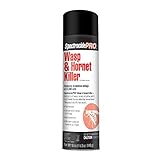
- FAST KNOCKDOWN: Kills wasps, hornets, yellow jackets and mud daubers
- JET SPRAY: This product reaches nests up to 20 feet away
- ELIMINATES THE NEST: SpectracidePRO Wasp & Hornet Killer kills the entire nest and kills returning wasps and hornets for up to 4 weeks
- OUTDOOR USE ONLY: Dielectric breakdown voltage of 47,300 volts
- WHEN TO APPLY: Apply at sunrise or sunset when insects are least active
Paper wasps
Paper wasps usually build an open comb rather than a fully enclosed paper envelope. Avoid disturbing a colony beside a high-traffic area.
Honey bees and bumble bees
Honey bees and bumble bees are not hornets. Contact a beekeeper or specialized service if honey bees may be involved.
How to treat a small exposed nest, if DIY treatment is genuinely safe
This guidance applies only to a nest that is exposed and safely reachable from the ground. It does not make a high, hidden, underground, indoor, mature, or allergy-risk nest suitable for DIY treatment.
- Assess the site from a safe distance. Confirm that you can remain on the ground, keep people and pets away, and follow the product’s directions without approaching or standing underneath the nest.
- Read the complete current label. Use only a pesticide labeled for the target pest, site, and application method. EPA guidance treats the label as the legal directions for use; do not rely on old advice or assume products have identical instructions.
- Prepare the area. Bring pets indoors, keep children away, and protect food, water, and animal supplies. Follow the label’s environmental and site restrictions.
- Treat only when activity is low and conditions meet the label. Extension sources generally recommend nighttime or another low-activity period when treatment is warranted. The EPA labels reviewed also direct users to maintain a safe distance, avoid standing underneath the nest, and follow their stated spray directions. Do not shine a light at the nest.
- Apply exactly as directed, then leave. Do not improvise, mix products, exceed the amount, or stand nearby to watch. Keep people and pets out for the label’s required period.
- Wait at least 24 hours before removing the nest. The EPA labels reviewed direct users to wait at least 24 hours. Follow the purchased product’s current label, including any longer wait or additional instructions. Remove an exposed nest only if it is inactive and removal requires no ladder or contact with hidden insects.
- Stop if treatment does not control the nest. Do not keep spraying or escalate to a stronger chemical or home remedy. Move people and pets away and contact a professional.
What not to do
- Do not use fire, gasoline, or flooding. University of Maryland Extension warns against such home-remedy approaches.
- Do not strike, shine a light at, mow directly beneath, or reach into a nest. These actions can disturb the colony or expose you to stings.
- Do not use a ladder near an active nest. A sting can cause a fall.
- Do not plug a wall-void entrance while hornets may remain inside. They may chew through interior coverings and enter the living space.
- Do not assume every flying wasp is a hornet. Ask for help identifying possible bees before treatment.
- Do not treat generic traps as a universal hornet solution. University of Maine Extension notes commercial traps can help with yellowjackets but are typically not attractive to bald-faced hornets or paper wasps.
Special situations that need professional control
Hornets in a wall, attic, chimney, or soffit
Do not seal an active entrance. Seek professional advice about locating and controlling the colony and about any later repair. Keep people and pets away from the affected area.
Underground nests
Do not pour liquids into, cover, or probe an entrance. Keep children and pets away and seek professional help if the nest creates a risk.
Rank #3

- FAST KNOCKDOWN: Kills wasps, hornets & yellow jackets.
- ELIMINATES THE NEST: Eliminates the nest where insects live & breed.
- JET SPRAY: Reaches nests up to 27 feet away.
- OUTDOOR USE ONLY: Spray at sunrise or sunset when insects are least active.
- NON-STAINING FORMULA: Non-staining to most home siding depending on age & cleanliness.
High nests and nests near doors
Do not climb or stand in a doorway to treat an active nest. Redirect foot traffic and pet access, then contact a professional if the nest cannot safely be avoided.
How to keep hornets and yellowjackets out
No prevention plan can guarantee that a new queen will not choose a property. Focus on reducing food and waste attractants, inspecting likely nesting areas without disturbing them, and closing access points after any active colony has been controlled.
Free tools Windows power users keep installed
One-click scans. No signup required.
1. Seal openings only after active control
After the colony is confirmed inactive, inspect and repair cracks around siding, windows, pipes, and other openings that can provide access to wall voids. Do not seal an active entrance. Penn State Extension recommends sealing such access points to reduce opportunities for European hornets to enter protected spaces.
2. Remove food and waste attractants
- Keep outdoor food and drinks covered.
- Use tightly covered trash cans and remove waste frequently.
- Clean food and drink spills around eating areas and bins.
- Pick up fallen or overripe fruit.
- Keep pet food indoors when possible and do not leave it exposed for long periods.
University of Maine Extension recommends reducing exposed food and refuse. Sanitation can reduce visits but does not eliminate a nearby colony.
3. Inspect likely nesting areas
From the ground, inspect eaves, sheds, porch ceilings, vents, siding, and other likely nesting areas in spring and early summer. Cornell IPM advises scouting for hidden nest locations that could cause later conflicts. Do not reach into cavities or disturb a nest.
Rank #4

- Sprays up to 27 feet
- Kills on contact
- Eliminates the nest
4. Use traps only for the problem they address
Traps are not a universal solution for hornets. University of Maine Extension notes that commercial traps can help with yellowjackets but are typically not attractive to bald-faced hornets or paper wasps. Do not rely on traps to control a nest.
5. Consider lighting where European hornets are a problem
University of Maryland Extension notes that European hornets are drawn to artificial light; warmer-colored LED bulbs may attract fewer insects overall, but this is not a guarantee.
Pesticide and pet-safety rules
The current product label gives the permitted pest, site, application method, precautions, reentry instructions, environmental warnings, storage, and disposal directions. The EPA labels reviewed for this article are dated February 2 and June 1, 2026; formulations and directions can change, so read the label on the product you use.
- Use only a product labeled for the intended pest, location, and method.
- Keep children and pets away until the label’s reentry conditions are met.
- Do not apply pesticide to pets, pet bowls, food, bedding, toys, or animal enclosures unless the exact label expressly permits that use.
- Follow label restrictions around bees, plants, and water.
- Keep pesticide in its original container and follow the label’s storage and disposal directions.
If pesticide gets on a pet, in its eyes or mouth, or on fur it may lick, move the animal away and promptly contact a veterinarian or animal poison-control resource. Keep the product container or label available.
Independent reader supportYour contribution helps us test, update, and keep practical guides available for everyone.What to do after a sting
For a person
Move away from the nest to prevent further stings. For a routine sting, wash the area with soap and water and apply a cold pack. Breathing difficulty, throat or tongue swelling, widespread hives, faintness, collapse, or symptoms involving multiple body systems may indicate anaphylaxis. Use prescribed epinephrine immediately and contact emergency medical services; anyone who uses epinephrine still needs emergency medical care.
Best Value

- The information below is per-pack only
- Two 14 oz cans of Raid Wasp & Hornet Killer Spray kill flying, stinging bugs on contact, including paper wasps, yellow jackets, mud daubers, bald-face hornets, and more
- Raid Hornet Killer is electrically non-conducting up to 32,500 volts for an effective option
- This pest killer comes in an easy-to-use can that sprays up to 22 feet so you can spray from a safe distance and kill the entire nest
- Raid Hornet Killer Spray is ideal for use outside your home to take care of your bug problem quickly
For a dog or cat
Move the pet away from the nest. Contact a veterinarian promptly for a mouth or throat sting, multiple stings, facial swelling, hives, vomiting, weakness, breathing changes, collapse, or rapidly worsening symptoms. Do not give medication unless a veterinarian tells you what product and dose to use.
Frequently Asked Questions
Should I remove a hornet nest that is far from my house?
Not necessarily. If people and pets can avoid it, leaving the nest undisturbed may be the safer choice. Consider the nest’s location, accessibility, size, species, and any sting-allergy risk.
Can I treat a hornet nest at night?
Extension sources generally recommend treatment when activity is low, often at night, if treatment is warranted. The product label controls the permitted timing, distance, method, and reentry directions. Do not shine a light at the nest or attempt a high or hidden nest yourself.
Should I seal a hole where hornets enter my wall?
Not while hornets may remain inside. Penn State Extension warns they may chew through interior wall coverings and enter living spaces. Seek professional advice about control and subsequent repair.
Recommended Free Tools
When can I remove a treated nest?
The EPA labels reviewed direct users to wait at least 24 hours before removal. Follow the current product label, including any longer wait, and remove the nest only if it is inactive and can be reached without a ladder or disturbing hidden insects.
The Bottom Line
Leave nests that can safely be avoided undisturbed. Use a professional for a high, hidden, mature, large, wall-void, difficult-to-reach, or allergy-risk nest. For a genuinely accessible DIY case, follow the current pesticide label exactly and wait at least 24 hours before removing the nest, as directed by the EPA labels reviewed. Prevent future conflicts by covering food, securing waste, inspecting likely nesting areas, and sealing access points only after active control.
Quick Recap
Product prices and availability are accurate as of the date/time indicated and are subject to change. Any price and availability information displayed on Amazon at the time of purchase will apply.




