What’s actually slowing this PC down?
Pick the symptom - the matching free tool is one click away.
Use Epsom salt as a short, separate, closely monitored immersion only when you have a specific suspected problem. The documented freshwater formulation is 30 g of magnesium sulfate plus 7 g of sodium chloride per liter for 5–10 minutes. It is not a routine display-tank additive and is not a universal treatment for swelling or dropsy.
Short answer: Give a fish Epsom salt only as a short, separate immersion when you have a specific reason and can monitor the fish continuously. The documented freshwater-fish immersion concentration is 30 grams of magnesium sulfate per liter of water, with 7 grams of sodium chloride per liter, for 5–10 minutes. This is not a routine treatment for every swollen fish, and it is not a substitute for diagnosing dropsy, infection, parasites, organ disease, or poor water quality.
As an Amazon Associate I earn from qualifying purchases.
Because this concentration is strong and the evidence comes from aquaculture and fish-medicine contexts rather than one universally validated home-aquarium protocol, do not use it automatically or repeat it on a daily schedule. If the fish is seriously ill, seek an aquatic veterinarian or fish-health specialist instead of relying on a salt bath.
Do these 3 things before closing this tab:
1Repair Windows errors before they cause bigger problems2Scan for outdated or missing drivers - takes under a minute3Clear out junk files and repair common Windows errorsWhat Epsom salt is—and what it is not
Epsom salt is magnesium sulfate. It is chemically different from aquarium salt, pond salt, and marine salt, which are based primarily on sodium chloride or mixtures of salts.
#1 Best Overall

- Contains one (1) API AQUARIUM SALT Freshwater Aquarium Salt 36-Ounce Box
Use only plain, unscented Epsom salt labeled as magnesium sulfate. Do not use bath products containing fragrance, colorants, essential oils, moisturizers, or other additives. If you are buying a product specifically for this purpose, a plain magnesium-sulfate product, preferably pharmaceutical or USP grade when available, is the most straightforward choice.
Magnesium sulfate is sometimes used in fish-medicine discussions for a short immersion when constipation is suspected. FDA aquaculture guidance also documents a magnesium-sulfate-and-sodium-chloride immersion for external monogenean trematodes and external crustacean infestations. That does not establish Epsom salt as a universal cure for swelling or dropsy.
First decide whether an Epsom-salt bath is appropriate
A fish with a large belly or swollen body may be constipated, but swelling can also result from edema, dropsy, infection, parasites, kidney or liver disease, tumors, reproductive problems, or a swim-bladder disorder. These conditions do not have the same treatment.
An Epsom-salt bath may be considered only when:
- you have a specific, plausible reason for using magnesium sulfate;
- the fish is stable enough to tolerate handling;
- you can prepare a separate, closely monitored treatment container; and
- you have checked the aquarium environment rather than assuming the problem is purely medical.
Do not assume constipation from swelling alone. Pinecone-like scales, rapid abdominal enlargement, open sores, abnormal breathing, severe weakness, or loss of balance point to a problem that needs more than a home bath.
Rank #2

- SHIPMENT CONTAINS: One 3-pound resealable bag of fragrance free epsom salt for relaxing baths and soaks
- RELAXING SOAK: Dissolves easily in warm water to create a soothing bath experience that helps relax muscles and reduce tension
- VERSATILE USES: Perfect for full baths, foot soaks, and gardening applications to provide magnesium to plants
- EASY APPLICATION: For a relaxing bath, generously pour into warm running water; for foot soaks, dissolve in a small basin and soak for 15-20 minutes
- PURE FORMULA: Contains pure magnesium sulfate with no added fragrances, dyes, or fillers for a natural soaking experience
Documented immersion concentration
The most specific formulation in the available research is:
| Ingredient | Concentration | Amount for 1 liter |
|---|---|---|
| Magnesium sulfate | 30,000 mg/L (30 g/L) | 30 grams |
| Sodium chloride | 7,000 mg/L (7 g/L) | 7 grams |
| Duration | 5–10 minutes | |
For reference, one U.S. gallon is approximately 3.785 liters. At the same concentration, that would be about 113.6 grams of magnesium sulfate and 26.5 grams of sodium chloride per U.S. gallon. Measuring by weight is substantially more reliable than using spoons. Do not guess the water volume or scale the dose by the size of the fish.
The sodium chloride component belongs to the documented combined immersion formulation; it is not a reason to substitute aquarium salt for Epsom salt. If a fish-health professional has given you a different protocol for your species and diagnosis, follow that protocol rather than combining treatments on your own.
The Tool Desk
Outbyte Driver Updater FREEScan for outdated or missing drivers - takes under a minuteDriver Scan →Outbyte PC Repair FREERepair Windows errors before they cause bigger problemsFix Now →What you need
- Plain, unscented magnesium sulfate (Epsom salt).
- Accurately measured, conditioned water.
- A clean treatment container that has never held soap, disinfectant, or chemicals.
- A reliable thermometer and, when practical, a way to check pH.
- A gram scale for weighing the salts.
- A timer and a soft fish net or suitable transfer container.
- Gentle aeration if the container, species, temperature, or duration makes oxygen support appropriate.
- Separate equipment for quarantine or treatment if disease transmission is possible.
A basic aquarium water test kit is also useful before deciding whether to repeat any treatment. Test ammonia and nitrite and review temperature, pH, filtration, stocking, feeding, and recent changes. A bath cannot correct toxic water or an unstable nitrogen cycle.
Rank #3
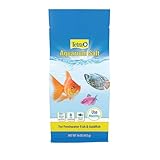
- HIGH-QUALITY SALT: Enhance the health and well-being of your aquatic pets with Tetra Aquarium Salt.
- FOR FRESHWATER FISH & GOLDFISH: Specifically formulated for freshwater tanks, including topical and goldfish aquariums. For aquarium use only.
- FISH HEALTH: Adds beneficial electrolytes to the water and reduces stress in your pet.
- MONTHLY MAINTENANCE: It safely cleans aquariums and accessories, conditions water, buffers nitrite levels and recharges aquarium water softener units.
- COMPATIBILITY: Safely use with water conditioners and all Tetra products, including all Tetra tropical fish care remedies.
How to give a fish an Epsom-salt bath
- Prepare a separate container. Do not add the bath mixture to the display aquarium. Use enough water for the fish to remain fully immersed and upright, while keeping the container small enough that you can observe it closely.
- Match the water. Fill the container with conditioned water whose temperature and pH match the aquarium as closely as practicable. Abrupt temperature or pH changes can add stress to an already sick fish.
- Measure the volume accurately. Calculate the amount of each ingredient from the actual water volume. For the documented formulation, use 30 g magnesium sulfate and 7 g sodium chloride per liter.
- Dissolve the salts completely. Stir the water until no crystals remain. Never place dry crystals directly on the fish or add undissolved salt while the fish is in the container.
- Transfer the fish gently. Minimize the time it spends out of water. Avoid chasing it repeatedly, squeezing it, or handling it unnecessarily.
- Start a timer and watch continuously. The documented immersion duration is 5–10 minutes, but the fish’s condition matters more than completing the maximum time. Stay with the fish for the entire bath.
- Remove the fish immediately if it deteriorates. End the bath if it rolls onto its side, loses balance, gasps, becomes unresponsive, shows marked distress, or behaves substantially worse. Rolling onto the side is an emergency sign during a fish dip.
- Move the fish to clean recovery water. Return it to appropriately conditioned water, ideally a clean quarantine or recovery container. Do not pour treatment water into the display aquarium.
- Reassess instead of automatically repeating. Observe breathing, posture, appetite, feces, swelling, and activity. A temporary change after a bath does not prove that the underlying problem has been treated.
Should you put Epsom salt in the aquarium?
Usually, no—not as a routine practice. A separate immersion prevents unnecessary changes to the display aquarium and makes it possible to remove the fish if it reacts badly. It also avoids exposing unaffected fish, plants, invertebrates, and biological-filter communities to a treatment that may not be appropriate for them.
Do not treat magnesium sulfate as interchangeable with sodium-chloride aquarium salt. They have different chemical compositions and different uses. High or prolonged exposure to magnesium sulfate can be harmful, and the research does not establish a single safe long-term aquarium dose for every ornamental species, life stage, or water chemistry.
Why Epsom salt is not a general dropsy cure
“Dropsy” describes a visible pattern—fluid accumulation and often protruding scales—rather than one precise disease. It can be associated with infection, internal organ failure, severe systemic illness, or other causes. A bath might alter fluid balance or temporarily change the appearance of a fish, but it does not necessarily eliminate the cause.
Similarly, a swollen abdomen may be caused by constipation, but it may also reflect an internal mass, egg retention, organ disease, or another condition. Treating every swollen fish with the same salt bath can delay diagnosis and add stress.
Rank #4

- PURE EPSOM SALT: Made with pharmacy-grade magnesium sulfate to help ease aches and soreness from muscle pains
- FRAGRANCE FREE: Fragrance-free and fast dissolving, ultra-fine crystals dissolve quickly in water
- HOW TO USE: At bedtime, pour 2 cups under warm, running bath water and soak for 20 minutes
- FREE FROM WORRY: Paraben free, phthalate free, and never tested on animals
What not to do
- Do not use aquarium salt, pond salt, or marine salt as a replacement for magnesium sulfate.
- Do not use scented, colored, moisturising, or essential-oil-containing bath salts.
- Do not add undissolved crystals directly to the fish or the display tank.
- Do not leave the fish unattended during the immersion.
- Do not use a repeated daily schedule as a generic recommendation.
- Do not assume that swelling means constipation or that a bath has cured dropsy.
- Do not use a bath to compensate for detectable ammonia, nitrite, poor filtration, overcrowding, or other husbandry problems.
- Do not share nets, siphons, or containers between aquariums when infection or parasites may be involved unless they have been properly cleaned and disinfected.
When to get veterinary help
Contact an aquatic veterinarian or fish-health specialist when:
- swelling persists or worsens;
- the scales protrude in a pinecone pattern;
- breathing is rapid, labored, or abnormal;
- the fish stops eating;
- the fish cannot maintain balance or remains at the surface or bottom;
- there are sores, ulcers, bleeding, or severe discoloration;
- more than one fish is affected;
- ammonia or nitrite is detectable, or other water-quality values are abnormal; or
- the fish becomes worse during or after the bath.
Professional advice is especially important when the species is delicate, the fish is very small or juvenile, the diagnosis is uncertain, or medication may be needed. Veterinary and regulatory requirements also matter for food fish: an unapproved aquaculture chemical should not be used outside applicable professional and legal guidance.
Independent reader supportYour contribution helps us test, update, and keep practical guides available for everyone.After the bath: the checks that matter most
- Test ammonia and nitrite. Any detectable level deserves immediate attention, because water toxicity can cause lethargy, breathing problems, and secondary illness.
- Review recent changes. Note water changes, new fish, temperature shifts, medications, cleaning products, filter maintenance, feeding changes, and possible toxins.
- Inspect the fish and tankmates. Look for parasites, lesions, clamped fins, abnormal feces, rapid breathing, and similar signs in other fish.
- Use quarantine where appropriate. Keep an affected fish separate with dedicated equipment when contagious disease is possible, while maintaining stable, clean water.
- Record the response. Write down the water volume, ingredients, time, behavior during the bath, and condition afterward. This information is useful if a veterinarian or fish-health specialist becomes involved.
Bottom line
Epsom salt means magnesium sulfate, not aquarium salt. For a documented freshwater immersion, the formulation is 30 g/L magnesium sulfate plus 7 g/L sodium chloride for 5–10 minutes, in a separate container with matched water and constant observation. Use it only for a specific suspected problem, stop immediately if the fish shows distress, and do not treat it as a routine cure for swelling or dropsy. Persistent or severe signs call for diagnosis and veterinary fish-health guidance.
Windows Errors? Fix Them Before They Spread
Repair common Windows errors and clear accumulated junk for a smoother, more stable PC - no reinstall needed.Free scan · no reinstallOutdated Drivers Are Slowing You Down
One free scan finds every outdated or missing driver and matches the right update for your exact hardware.Free scan · exact hardware matchFrequently Asked Questions
Is Epsom salt the same as aquarium salt?
Epsom salt is magnesium sulfate. Aquarium salt and most pond salts are sodium chloride or salt mixtures, so they are not interchangeable.
Best Value

- Contains one (1) API AQUARIUM SALT Freshwater Aquarium Salt 17 Ounce Box
How much Epsom salt should I use for a fish bath?
The documented freshwater immersion uses 30 grams of magnesium sulfate and 7 grams of sodium chloride per liter of water for 5–10 minutes. It should be performed in a separate container with continuous observation, not treated as a universal home prescription.
Will Epsom salt cure dropsy?
No. A swollen fish may have constipation, but swelling can also result from dropsy, infection, parasites, organ disease, tumors, or other problems. Epsom salt may not treat the underlying cause.
What should I do if my fish reacts badly to the bath?
Stop immediately if the fish rolls onto its side, loses balance, gasps, becomes unresponsive, or shows marked distress. Transfer it to clean, appropriately conditioned recovery water.
Recommended Free Tools
Can I give my fish an Epsom-salt bath every day?
Do not automatically repeat the bath. Check ammonia, nitrite, temperature, pH, filtration, stocking, feeding, and recent changes, then seek aquatic-veterinary advice if the signs persist or worsen.
The Bottom Line
Use Epsom salt only as a short, monitored, separate immersion—not as a routine display-tank additive or universal dropsy cure. The documented formulation is 30 g/L magnesium sulfate plus 7 g/L sodium chloride for 5–10 minutes, but diagnosis, water quality, and the fish’s response must determine whether treatment is appropriate.
Quick Recap
Product prices and availability are accurate as of the date/time indicated and are subject to change. Any price and availability information displayed on Amazon at the time of purchase will apply.




