
Some links on this page are affiliate links: if you buy through them we may earn a commission, at no extra cost to you.
Two Chihuahuas can have a bigger world without being pushed into crowded parks, close greetings, or situations that frighten them. The practical goal is more choice: safe distance from triggers, activities that suit each dog, and gradual opportunities to sniff, learn, and explore.
Because “behavioral challenges” could mean very different things, treat your dogs as two individuals rather than a single training project. Watch what each dog can comfortably handle, prevent avoidable setbacks, and use reward-based teaching. If fear or distress is persistent, severe, or changing suddenly, involve your veterinarian and a qualified behavior professional.
As an Amazon Associate I earn from qualifying purchases.
The Tool Desk
Outbyte Driver Updater FREEScan for outdated or missing drivers - takes under a minuteDriver Scan →Outbyte PC Repair FREEClear out junk files and repair common Windows errorsFree Scan →What a bigger world should look like
For a small dog, expanding life is not measured by the number of people or dogs encountered. A successful outing may be watching bicycles from a quiet sidewalk, sniffing a new patch of grass, or resting on a mat while household activity happens nearby. The dogs should be able to move away, pause, or decline an interaction.
Socialization does not require greeting every dog. The American Kennel Club’s small-dog guidance emphasizes safe distances and considering the size and training of other dogs; interactions with larger dogs need close supervision. Read the guidance at Tips for Training Small Dog Breeds.
Popular on Amazon

- 【Safe quality material】The pet playpen is made of high-grade thick mesh and 600D waterproof polyester oxford with reinforced seams. Consists of 8 mesh side panels and a half mesh top, well ventilated. You can have a 360-degree view of your pet's condition, and you can also give your pet a panoramic view of its surroundings.
- 【Easy to use】The pet playpen on the side of this pet pen can be easily rolled up and pasted, making it easy for your pet to get in and out of the pet pen. Close the door and keep your pet safely inside. The detachable semi-mesh zipper top can be easily removed for indoor use and closed for outdoor use to provide shade. Make sure your pet is comfortable in any environment.
- 【No Assembly required】Opening the dog pen takes only a few seconds, is lightweight, strong, and does not require assembly. When not in use, it can be folded into the tote bag provided by us, which takes up minimal space and is easy to carry and store. Spacious interior Spaces allow your pet to play, sleep, hide or isolate. Perfect for indoors, lawns, beaches, parks, Tours, camping and more!
- 【Wide applicability】 This pet crate is suitable for cats, dogs, rabbits, ferrets, hamsters, chickens, pregnant pets, and pets in recovery. It also provides a safe and secure temporary isolation area, comprehensively meeting your pet's needs throughout different life stages.
- 【The dog pen tent is easy to clean】 simply wipe off any dirt or wash it with water, then let it air dry and continue to use. You can also put a blanket under the fence and wash it if it gets dirty.
Think of your plan as providing four things:
- Choice: each dog can approach, retreat, sniff, or rest.
- Predictability: familiar cues, equipment, and routines make new experiences easier to process.
- Physical safety: their size is taken seriously around doors, stairs, traffic, children, and larger dogs.
- Appropriate outlets: sniffing, movement, chewing, play, and training meet normal dog needs without flooding either dog.
Start with two individual baselines
Do not assume the dogs share the same triggers, threshold, or recovery time. Keep brief notes for each dog: where the event happened, what was visible or audible, the distance, the dog’s body position, whether food was accepted, and how long it took to settle afterward. Patterns are more useful than a single difficult moment.
Notice early signs
Early discomfort can be subtle: turning the head away, stopping a sniff, moving behind you, stiffening, scanning, lip-licking, or refusing a familiar treat. A dog who is already lunging, scrambling, barking continuously, or unable to eat is telling you the situation is too difficult at that distance. Calmly increase space instead of waiting for the behavior to intensify.
Measure recovery, not just approach
An experience is not automatically successful because a dog moved closer. Note whether the dog can resume sniffing, respond to an easy cue, take food normally, and relax afterward. If one dog recovers quickly and the other remains tense, plan separate sessions or use the easier dog as a quiet companion only when that helps rather than pressures the other.
Put safety and health before exposure
A veterinary check is sensible when behavior changes abruptly, distress is intense, or a dog seems painful, unusually tired, disoriented, or unable to settle. Medical problems can affect behavior, and a behavior plan should not substitute for diagnosis or treatment.
Use equipment that fits without restricting breathing or movement. Check harness fit regularly, especially after weight changes. Carry small dogs near hazards only when necessary and support the chest and hindquarters; do not use lifting as a way to force a greeting. Secure doors and gates, identify escape routes, and keep leashes attached before opening an exterior door.
Also popular on Amazon

- MADE IN USA DOG PLAYPEN: Create a dedicated space for puppies and small dogs to play, rest, or train. This 4-panel pet enclosure provides a practical containment solution for everyday use and can be customized with compatible add-on panels for more room.
- INDOOR & OUTDOOR PUPPY PLAYPEN: Heavy-duty molded plastic creates a durable pet play area for use around the home or outdoors. The easy-clean, rust-free material helps handle everyday messes while providing a dependable space for your pet.
- EASY ACCESS DOOR & NON-SKID FEET: Built-in door gives your dog convenient entry and exit without lifting them over the panels, while non-skid rubber feet help keep the dog pen in place and protect floors from scratches.
- TOOL-FREE ASSEMBLY & CUSTOMIZABLE: Quickly set up the 4-panel dog exercise pen without complicated tools. The configurable design lets you create a convenient puppy play area and makes the enclosure easy to reconfigure as your pet's needs change.
- DIMENSIONS: Measures 35"L x 35"W x 24"H with a 24-inch enclosure height, creating a comfortable contained area for puppies and small dogs while maintaining a compact footprint for your home.
For outdoor sessions, choose weather and surfaces your dogs can tolerate. A tiny dog may tire, chill, or overheat sooner than a larger dog. Keep water available, avoid hot pavement, and stop before fatigue makes coping harder. Safety management is not a failure of training; it is how you create enough calm repetitions for learning.
Recommended Free Tools
Use reward-based training as the foundation
The American Veterinary Society of Animal Behavior (AVSAB) says its 2021 statement remains its current authoritative position. It states: “Based on current scientific evidence, AVSAB recommends that only reward-based training methods are used for all dog training, including the treatment of behavior problems.” Read the AVSAB Humane Dog Training Position Statement and its public position-statements page.
Reward-based work means arranging an achievable behavior and reinforcing it with something that dog values: food, play, sniffing, praise, or permission to move away. It does not mean ignoring safety or allowing a dog to rehearse unwanted behavior. Avoid methods that rely on pain, intimidation, frightening equipment, or punishment. They can suppress visible signals without making the underlying situation feel safer.
Teach practical skills indoors first
- Name response: say the dog’s name once; when the dog turns toward you, reward immediately.
- Hand target: present an open hand at close range; reward a nose touch. This can guide a dog away without pulling.
- U-turn: pair a cheerful cue with turning and moving several steps in the opposite direction.
- Station: reward standing or resting on a mat for gradually longer periods.
- Check-in: reward voluntary eye contact outdoors, then release the dog to sniff.
Train each Chihuahua separately at first so you know who learned what. Short sessions—often a few minutes—are easier to end successfully than a long session that ends in frustration.
Build tolerance with distance and tiny steps
For a fearful or reactive response, the key variable is distance from the trigger. Start far enough away that the dog can notice the trigger and still eat, sniff, or respond to a familiar cue. The aim is not to make the dog endure the trigger; it is to create calm, predictable associations while the dog remains able to choose.
Also popular on Amazon
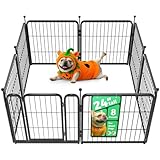
- A win-win solution: The FXW Dog Playpen is designed to bring a win-win solution to you and your lovely dog. Different from a narrow enclosure cage or kennel, the FXW dog pen provides a spacious semi-open activity area specifically for your dog. Your dog will have fun in its safe and sturdy kingdom. Meanwhile, you can take a real break and be truly relaxed without worrying about your beloved pet. Fun, Relaxation and Well-being is the orientation of the FXW team.
- Unlock your freedom, savor the moment: The stakes are designed with rounded ball tops to protect the dog's claws from injury. The rods are easily inserted into the ground for greater stability and rigidity, which won't collapse when the dog leans against them. Also, the automatic gravity-actioned locking mechanism will ensure you can open and close the door smoothly and reduces the chance of dogs unlocking by themselves. All of this is designed for absolute safety, so you can really relax.
- Super easy to assemble: It won’t take you more than 5 minutes to assemble these portable dog fences as well as pack them away due to the rod-connected design. Meanwhile, panels can be added or removed freely to give you a fully flexible area and arrange the dog pen in any shape you need.
- Multi-scenario use: The FXW dog playpen features a powder coating that will help protect against rust and extend its life, which makes it ideal for RV camping, traveling, or for use in the yard. When used indoors, we recommend placing it on a dog pad or carpet to prevent the rods from scratching the floor, or please try our new floor protectors or dog pee pad for the same purpose.
- Choose one trigger and one quiet location. Do not combine a new person, busy traffic, unfamiliar dogs, and a new route in the same first session.
- Find the starting distance. If the dog cannot take food or disengage, move farther away or leave.
- Mark the moment of noticing. Use a calm marker such as “yes,” then deliver several small treats while the trigger remains at a safe distance.
- Allow recovery. Pause, let the dog sniff, or walk away. The dog should not be held in place to watch.
- Repeat briefly. End while the dog is still coping. Several easy sessions are preferable to one exhausting session.
- Change only one variable. After multiple relaxed repetitions, reduce distance slightly or increase duration—not both. If the dog struggles, return to the last successful setup.
This approach is consistent with the AKC’s guidance on training fearful dogs, which stresses gradual work and professional help when anxiety is difficult to manage: Training a Dog With Anxiety: How to Train a Fearful Dog.
Give them a bigger world at home
Home enrichment can provide meaningful activity during a temporary break from difficult walks. AVSAB’s Staying Safe: Management for Fearful Dogs names sniffing, snuffle mats, training, and other home activities as options. These activities are enrichment, not a guaranteed treatment for fear or another behavioral disorder.
Low-pressure enrichment ideas
- Scatter part of a meal in a safe room or across a snuffle mat so the dog can search at its own pace.
- Hide a few pieces of food in easy-to-find cardboard boxes, then make the search harder only if the dog remains relaxed.
- Rotate safe chew items and food toys rather than presenting everything at once.
- Create a short “find it” trail from one room to another, keeping both dogs far enough apart to prevent competition.
- Practice simple cues, shaping, or trick training with one dog behind a gate while the other works.
- Offer a window view only if outside movement does not trigger repeated barking or frantic scanning; otherwise use curtains or move the resting area.
Supervise new food toys and separate the dogs when needed. Enrichment should lower pressure, not create guarding, chasing, or conflict.
Choose outings that preserve distance and escape routes
Use the following as a menu, not a progression that every dog must complete. Select the option each dog can handle comfortably.
| Activity | How to arrange it | Best fit when | Stop or change it if |
|---|---|---|---|
| Quiet sniff walk | Visit a low-traffic route at an off-peak time; let the dog investigate without rushing. | Sniffing helps the dog stay loose and the route has room to turn away. | Unexpected triggers leave no space to retreat or the dog stops taking food. |
| Observation session | Stand or sit far from a playground, street, or dog path, with a clear exit. | The dog can watch briefly, check in, and recover between sightings. | Scanning, vocalizing, or pulling continues despite increased distance. |
| Parallel walk | Walk in the same direction as a known, calm dog while keeping generous separation; do not force greetings. | Both dogs can move, sniff, and disengage without pressure. | Either dog fixates, hides, or cannot maintain the chosen distance. |
| Private outdoor space | Use a secure yard, enclosed area, or quiet patio where the dogs can explore safely. | You need novelty with predictable boundaries. | Fences, noises, or unfamiliar visitors create more distress than the outing relieves. |
For two dogs, a shared outing is worthwhile only when both can cope. Otherwise, give each dog individual time. One dog’s need for distance should not be overridden because the other appears ready to continue.
Also popular on Amazon

- Extra-Small 24-inch exercise play pen (single door) for dogs up to 16 inches tall or for other small pets
- 8 connected panels with thumb clips for connecting the ends together; 2 locking slide-bolt door latches; 8 ground anchors for secure placement outdoors; made of durable iron wire with a rustproof finish
- Can be easily configured into multiple stand-alone shapes (round, square, rectangle) for playtime or be used to block off a room
- Sets up in seconds; simply unfold, shape, and connect (no tools needed); folds flat for easy transport and storage
- Note: Do not leave pets unattended outdoors
Handle people and dog encounters without forced greetings
Tell visitors to ignore the dogs at first: no reaching, looming, direct staring, or calling them over. Let a dog approach from the side, sniff, and leave. A visitor can toss treats away from their body so the dog is rewarded for moving out and choosing distance, not lured into contact.
With other dogs, consider size, play style, arousal, and the handler’s ability to interrupt. A large, bouncy dog can injure a tiny Chihuahua even without hostile intent. Use barriers, wide paths, parked cars, or turns to prevent close passes. If an interaction is attempted, keep it brief, supervise continuously, and end at the first sign that either dog wants out.
Do not use a muzzle, carrier, or your arms to make a dog remain in an unwanted greeting. Those tools may have safety roles when introduced properly, but they should never remove the dog’s ability to escape a social situation.
Manage unavoidable triggers while behavior work continues
Management reduces rehearsal of frightening or explosive responses; it does not prove that the underlying problem is resolved. AVSAB’s management guidance describes choosing locations with fewer triggers, using an object or the environment to block visual access, and temporarily replacing difficult walks with home activities. Apply those ideas proactively:
- Check the route before leaving and carry high-value rewards for rapid turns.
- Cross the street, step behind a vehicle, or use a hedge as a visual screen.
- Walk at quieter times and avoid narrow paths with no exit.
- Use a baby gate, closed door, or opaque window covering at home when outside activity repeatedly sets a dog off.
- Arrange a safe room where each dog can rest undisturbed.
Management and training serve different purposes. Management keeps daily life safer today; a tailored behavior plan addresses what each dog learns over time.
Also popular on Amazon

- How We Achieve Stress-Free & Safe Play: Through a semi-open and expandable design, safe and sturdy build, and ease of access.
- Semi-Open & Expandable: Creates a stress-free environment and allows you to add more panels as your dog grows.
- Safe & Sturdy Build: No sharp edges and strong construction prevent injuries and withstand jumping.
- Ease of Access: Threshold-free gate allows easy walk-in cleaning for humans and worry-free running for dogs.
When to bring in professional help
Seek help if you cannot keep the dogs under threshold, progress repeatedly reverses, there is a bite or injury risk, or either dog spends much of the day distressed. Ask your veterinarian whether pain, illness, medication effects, or other medical factors should be assessed.
When choosing behavior support, ask these questions:
Crashes, No Sound, or Screen Glitches?
Random freezes, missing sound and display glitches usually trace back to one bad driver. Find and replace yours safely.Free scan · under a minutePC Slower Than It Used to Be?
A free scan shows the junk files, broken settings and background clutter dragging Windows down - then fixes them in one click.Free scan · Windows 10 & 11- Do you use reward-based methods for fear and behavior problems?
- What credentials and supervised experience do you have with small dogs and the specific behavior I observe?
- How will you keep each dog below its stress threshold during sessions?
- Will you coordinate with my veterinarian if medical assessment or medication might be appropriate?
- What management steps should we use between appointments, and how will progress be measured?
AVSAB identifies reward-based trainers, board-certified veterinary behaviorists, and certified applied animal behaviorists as possible referral options. Persistent distress when a dog is left alone also warrants veterinary and qualified behavior-professional input; see the AKC overview at Separation Anxiety in Dogs.
A realistic two-dog routine
A routine can expand experiences without making every day an exposure exercise:
- Morning: take each dog for a short, quiet sniff opportunity, separately if their walking needs differ.
- Midday: provide a food-search game or snuffle mat in separate areas, followed by rest.
- Afternoon: practice one skill indoors with each dog, then offer a brief observation session only if conditions are calm.
- Evening: choose relaxed chewing, gentle play, or a familiar route rather than adding novelty after a difficult day.
- Weekly review: compare notes on distance, recovery, food acceptance, and enjoyment. Keep what works, simplify what does not, and change one variable at a time.
The best measure of a bigger world is not how close the dogs get to a trigger. It is whether each Chihuahua has more safe choices, more rewarding ways to behave, and more opportunities to explore without being overwhelmed.





Leave a Reply