
Do these 3 things before closing this tab:
1Repair Windows errors before they cause bigger problems2Fix the driver behind crashes, sound loss and screen glitches3Clear out junk files and repair common Windows errorsSome links on this page are affiliate links: if you buy through them we may earn a commission, at no extra cost to you.
Help starts by treating separation anxiety as panic, not spite. First have a veterinarian check for medical problems and confirm what happens when you leave. Then prevent long, frightening absences, teach departures that end before anxiety starts, and add predictable rewards your dog can actually use. A sitter or other alternate care may be necessary while training. Dogs that cannot stay safe, cannot tolerate even seconds alone, or injure themselves need veterinary and behavior-professional help; medication can be appropriate alongside a structured behavior plan.
What is separation anxiety in dogs?
Separation anxiety is a distress response triggered by separation from an attached guardian. Signs may begin while you pick up keys or put on shoes, or within minutes after you leave. Common behaviors include persistent barking or howling, pacing, panting, drooling, trembling, destruction, attempts to escape, and urination or defecation. A dog may claw doors, windows, crates or walls hard enough to break nails or teeth.
As an Amazon Associate I earn from qualifying purchases.
The behavior is not a calculated act of revenge. The ASPCA describes anxious behavior as a distress response rather than disobedience or spite. Punishment after you return can increase fear and does not teach the dog how to remain calm.
How can I tell whether my dog has separation anxiety?
Look for a consistent relationship between your departure and the behavior, rather than judging the damage alone. A camera or short recordings show the first signs, the time they begin, and whether the dog ever settles.
Popular on Amazon

- Satisfy Instinctual Needs: The KONG Classic red rubber toy helps satisfy dogs' instinctual needs and provides mental stimulation; toy helps solve chewing, teething, boredom, crate training, digging, barking and more
- Enticing Chew Toy for Dogs: This unique toy has an erratic and unpredictable bounce, keeping all breeds of dogs engaged and entertained during interactive play sessions
- Treat-Filling Capabilities: The hollow interior allows for stuffing with kibble, peanut butter, or KONG Snacks or Easy Treat, offering an added challenge and extended play time for your pet; dishwasher safe for easy clean up
- Durable Natural Rubber Dog Toy: The KONG Classic red rubber formula is created for average chewing dogs, and is recommended by veterinarians and trainers worldwide
- Made in the USA. Globally sourced materials. KONG has been innovating since 1976 to enrich the lives of pets with the highest quality pet toys and treats. Covered by KONG's Satisfaction Guarantee
- Departure-linked signs: anxiety when you prepare to leave, following you from room to room, whining at the door, or frantic greetings when you return.
- During-absence signs: continuous vocalization, pacing, panting, salivation, trembling, escape attempts, destruction focused on exits, or toileting despite reliable house training.
- Safety signs: bleeding paws, broken teeth, damaged nails, choking hazards, ingestion of debris, or attempts to jump through windows.
Boredom, incomplete house training, noise sensitivity, confinement distress, cognitive decline, and territorial behavior can look similar. A dog that chews a range of objects, settles after exercise, or reacts mainly to outdoor sounds may need a different plan. Video gives your veterinarian the context that a report made after you return cannot.
What medical checks should happen before behavior training?
Arrange a veterinary examination when house-soiling is new, the dog is older, accidents occur without a clear separation pattern, or there are signs of pain or illness. Incontinence, urinary disease, endocrine disorders, gastrointestinal problems, neurologic disease, medication effects and pain can all cause accidents or restlessness. Merck Veterinary Manual notes that diagnosis requires medical evaluation and a careful history; the ASPCA likewise advises checking medical causes of incontinence.
Bring a timeline of departures, meals, medication, exercise, sleep and incidents. Include videos, the length of each absence, what the dog did first, and how long recovery took after you returned. A medical issue and separation anxiety can coexist, so treating one does not rule out the other.
How do I document what happens when I leave?
Record ordinary departures rather than staging a frightening episode. AAHA recommends collecting absence videos over seven days and keeping behavior logs; Merck identifies video monitoring as useful for diagnosis and for judging treatment progress.
- Place a camera where it shows the dog and likely exit or resting area. Test that audio and the full body are visible.
- Log the preparation cues, departure time, first sign of stress, peak behavior, any eating, and the time the dog first relaxes.
- Capture different absences, including very short ones, so your veterinarian can see the threshold rather than only the worst event.
- Stop a recording plan if the dog is escalating or attempting escape; the goal is information, not another panic rehearsal.
How can I prevent panic while my dog learns?
Training is unlikely to progress if the dog repeatedly experiences absences longer than it can tolerate. During the learning period, arrange a family member, sitter, in-home caregiver, daycare or boarding for unavoidable longer trips. This is management, not a failure of training: it prevents the dog from practicing the very panic you are trying to replace.
- Match the care option to the dog’s temperament, medical needs and comfort with unfamiliar people or groups.
- Give the caregiver the same feeding, medication, toilet and rest instructions used at home.
- Keep departures and returns quiet and predictable. A brief, calm greeting is preferable to an emotionally intense reunion.
- Do not use daycare or boarding if those settings create additional fear; an in-home person may be safer.
AAHA advises considering alternatives when a dog panics in a crate, refuses to enter, destroys the crate or injures itself. Physical containment is not a substitute for reducing fear.
Recommended Free Tools
How do I make keys, shoes and other departure cues less frightening?
If preparation cues trigger anxiety, practice them without leaving. Pick up keys, put them down, sit for a moment and continue your normal routine. Put on a coat, then remove it and do a quiet household activity. Repeat at a level the dog can watch without panting, pacing or vocalizing.
Vary the order and timing so the cue loses its reliable connection with a long absence. Keep sessions short and stop while the dog is relaxed. If merely touching the keys causes a reaction, begin with the keys at a distance and progress in smaller steps.
What is the safest way to build alone-time tolerance?
Use graduated departures: leave for less time than it takes the dog to become distressed, return while the dog is still calm, and increase duration gradually. For some dogs the first repetition is an out-of-sight stay inside the home; for others it is a one- or two-second exit. There is no useful universal starting duration.
Also popular on Amazon

- Satisfy Instinctual Needs: The KONG Classic red rubber toy helps satisfy dogs' instinctual needs and provides mental stimulation; toy helps solve chewing, teething, boredom, crate training, digging, barking and more
- Enticing Chew Toy for Dogs: This unique toy has an erratic and unpredictable bounce, keeping all breeds of dogs engaged and entertained during interactive play sessions
- Treat-Filling Capabilities: The hollow interior allows for stuffing with kibble, peanut butter, or KONG Snacks or Easy Treat, offering an added challenge and extended play time for your pet; dishwasher safe for easy clean up
- Durable Natural Rubber Dog Toy: The KONG Classic red rubber formula is created for average chewing dogs, and is recommended by veterinarians and trainers worldwide
- Made in the USA. Globally sourced materials. KONG has been innovating since 1976 to enrich the lives of pets with the highest quality pet toys and treats. Covered by KONG's Satisfaction Guarantee
- Find the threshold. With a camera or helper, identify the longest absence that produces no anxiety signs. Start well below it, especially if the dog has recently panicked.
- Prepare a calm setup. Meet toilet, water, temperature and exercise needs. Remove hazards and use the area in which the dog already rests comfortably.
- Make one brief departure. Leave without a dramatic goodbye and return before panting, pacing, salivation, trembling or vocalizing begins.
- Wait for full recovery. Allow the dog to relax before repeating. Several easy repetitions are more useful than one difficult attempt.
- Add time in small increments. Progress by seconds at first. Do not add duration after every repetition if the dog is showing uncertainty.
- Change only one variable. Keep the exit door, time of day and room consistent until duration is stable; then generalize gradually to other doors and routines.
- Back up after a reaction. If the dog pants, paces, salivates, trembles, vocalizes, scratches or greets frantically, shorten the next absence substantially and rebuild.
Many anxious responses occur during the first 40 minutes, according to ASPCA guidance, but that does not mean a dog should be left for 40 minutes as a test. Building reliable duration commonly takes weeks. The correct pace is the one that keeps each repetition below the dog’s anxiety threshold.
Can exercise make departures easier?
Appropriate activity can reduce unused energy and provide a predictable pre-departure routine, but it does not cure separation anxiety by itself. The ASPCA suggests about 30 minutes of aerobic activity daily, adjusted for age, breed, health and veterinary advice. Finish vigorous play early enough for the dog to cool down and settle before the departure exercise.
Pair activity with sniffing, chewing, rest and toileting rather than trying to exhaust the dog immediately before leaving. An overtired or overheated dog may be less able to learn, and forced exercise can worsen pain or arousal.
Does a food-stuffed puzzle toy help?
A food-stuffed puzzle toy can help a dog with mild anxiety by pairing a short departure with something rewarding. The ASPCA gives a KONG stuffed with food as an example and estimates that such a toy may occupy a dog for roughly 20–30 minutes in mild cases. Offer it just before a brief absence and remove it when you return so it remains a departure-specific benefit.
- Introduce the toy while you are home; the dog should already know how to use it.
- Use safe, veterinarian-approved foods and account for the calories in the daily ration.
- Choose a size and material the dog cannot break or swallow, and supervise initial use.
- Keep the absence shorter than the dog’s current threshold even if the toy lasts longer.
Food is an adjunct, not a replacement for graduated desensitization. Highly anxious dogs often will not eat when alone. If the dog ignores a favorite food, do not interpret that as stubbornness; it is evidence that the anxiety level is too high for this strategy.
Quick wins for a faster PC:
Scan for outdated or missing drivers - takes under a minuteDriver Scan →Clear out junk files and repair common Windows errorsFree Scan →Should I crate a dog with separation anxiety?
Crating is appropriate only when the dog already regards the crate as a comfortable resting place and can remain relaxed there. It does not treat separation anxiety. Heavy panting, excessive salivation, persistent vocalization, frantic escape attempts, bent bars, damaged teeth or bleeding paws mean the crate is increasing risk.
Never introduce a crate for the first time immediately before a long absence. Build pleasant, open-door crate time while you are home, then test very short separations. If confinement itself causes distress, use a dog-proof room, exercise pen or baby gate instead, provided the dog remains safe. A veterinarian or qualified behavior professional can help distinguish separation anxiety from confinement anxiety and design safer containment.
What home setup keeps a dog safer when alone?
Choose a low-stimulation area with secure windows, no accessible cords, toxic substances, medications, loose objects or climbable furniture. Block exits the dog has tried to break through, but do not create a tighter enclosure if confinement increases panic.
- Provide water and a comfortable resting surface.
- Use predictable background sound only if it has already been shown to be calming; sudden or loud audio can add stress.
- Keep identification current and check doors, gates and windows before every departure.
- Separate other pets if their movement, competition or distress raises arousal.
A camera is a monitoring aid, not treatment. Use it to decide whether a repetition stayed below threshold and to identify hazards, not to wait through escalating panic.
The Tool Desk
Outbyte PC Repair FREERepair Windows errors before they cause bigger problemsFix Now →Outbyte Driver Updater FREEFix the driver behind crashes, sound loss and screen glitchesFind Drivers →Also popular on Amazon
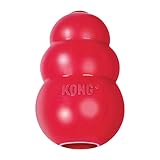
- Satisfy Instinctual Needs: The KONG Classic red rubber toy helps satisfy dogs' instinctual needs and provides mental stimulation; toy helps solve chewing, teething, boredom, crate training, digging, barking and more
- Enticing Chew Toy for Dogs: This unique toy has an erratic and unpredictable bounce, keeping all breeds of dogs engaged and entertained during interactive play sessions
- Treat-Filling Capabilities: The hollow interior allows for stuffing with kibble, peanut butter, or KONG Snacks or Easy Treat, offering an added challenge and extended play time for your pet; dishwasher safe for easy clean up
- Durable Natural Rubber Dog Toy: The KONG Classic red rubber formula is created for average chewing dogs, and is recommended by veterinarians and trainers worldwide
- Made in the USA. Globally sourced materials. KONG has been innovating since 1976 to enrich the lives of pets with the highest quality pet toys and treats. Covered by KONG's Satisfaction Guarantee
How do management, training and clinical care differ?
Each option solves a different part of the problem. The safest choice depends on whether the dog can remain below threshold, the severity of signs, the caregiver’s access to alternate care and the need for veterinary supervision.
| Option | Best use | Limits and risks | Supervision |
|---|---|---|---|
| Alternate care: family, sitter, in-home provider, daycare or boarding | Preventing unavoidable long absences while treatment begins | Requires reliable access, cost and a setting the dog tolerates; does not teach alone-time skills by itself | Caregiver oversight; veterinary input for medical needs |
| Graduated desensitization | Core treatment for dogs able to practice sub-threshold absences | Time-intensive; progress can regress after an overlong departure | Professional coaching is valuable for severe or complicated cases |
| Food-stuffed puzzle toy | Adjunct for mild anxiety when the dog eats during short absences | Often ineffective during high anxiety; choking, dietary and destruction risks require appropriate selection | Owner introduction and supervision; veterinarian for diet concerns |
| Crate or safe room | Management when the dog is already comfortable in that space | Can intensify panic or cause escape injury if forced | Monitor behavior; professional advice if distress appears |
| Prescription medication with behavior modification | Dogs whose anxiety prevents learning, threatens safety or remains severe | Requires diagnosis, dosing, monitoring and realistic expectations; medication alone does not teach coping | Veterinarian, with behavior follow-up |
When does a dog need medication?
Medication is a veterinary decision when anxiety is severe enough to prevent learning, the dog cannot tolerate even brief absences, panic causes self-injury, or management cannot prevent repeated crises. Medication should be combined with behavior modification and environmental management, not used as permission to leave a panicking dog alone for longer.
On May 6, 2026, the U.S. Food and Drug Administration announced approval of Tessie (tasipimidine oral solution) for noise aversion and separation anxiety in dogs. It is prescription-only. Your veterinarian must determine whether this product or another treatment is appropriate, review other medicines and health conditions, explain administration and monitor response. Never share human medication, change a dose, or stop treatment without veterinary direction.
Ask the veterinarian what improvement should look like, when a follow-up is due, and how to respond to sedation, agitation, gastrointestinal signs or any unexpected reaction. AAHA recommends rechecks every two to four weeks until a case is stable, then every three to six months; the schedule may differ for an individual dog.
When should I call a behavior professional?
Seek a board-certified veterinary behaviorist or another qualified behavior professional when the dog self-injures, cannot stay calm for even seconds, repeatedly regresses, panics in a crate, or needs medication. A professional can set a starting threshold, identify competing diagnoses, coach the timing of departures and coordinate with your veterinarian.
Ask about credentials, methods and communication with your primary veterinarian. Avoid anyone who recommends punishment, flooding, dominance-based corrections or deliberately leaving the dog to panic until it “gets used to it.” AAHA describes a stepwise program in which calm learned behaviors are established before desensitization and counterconditioning proceed.
What should I do if training goes wrong?
My dog panicked during a repetition
End the absence as safely and calmly as possible. For the next session, return to a much shorter duration or an easier version such as an out-of-sight stay. Review the video for a subtle earlier sign; the visible barking may have started after the useful threshold had already passed.
My dog stopped eating the departure toy
Remove the toy as a test of anxiety, not as a challenge. Practice the toy while you are present, lower the departure duration, and consult a professional if appetite remains absent during every separation. A dog that cannot eat may need a lower threshold or clinical support before food-based counterconditioning is useful.
Outdated Drivers Are Slowing You Down
One free scan finds every outdated or missing driver and matches the right update for your exact hardware.Free scan · exact hardware matchWindows Errors? Fix Them Before They Spread
Repair common Windows errors and clear accumulated junk for a smoother, more stable PC - no reinstall needed.Free scan · no reinstallMy dog improves, then suddenly regresses
Check for a long unavoidable absence, a change in schedule, illness, pain, construction noise, a new caregiver or a failed containment setup. Return to the last duration that was reliably calm and rebuild; tell the veterinarian if regression is abrupt or accompanied by physical signs.
Also popular on Amazon

- Perfect for stuffing with KONG treats
- Unpredictable bounce for games of fetch
- Recommended Worldwide by veterinarians, trainers and dog enthusiasts
- Made in the USA
- Available in six sizes: XS, s, M, L, XL and XXL
My dog is calm when I leave one way but not another
Different doors, shoes, times of day and household members can be separate cues. Train the easiest version first, then generalize one change at a time while keeping duration below threshold.
How long will treatment take?
There is no fixed cure time. Dogs that panic within seconds may need many short sessions over weeks or longer, especially when alternate care is limited. Progress means longer calm intervals, faster recovery and fewer anxiety signals—not simply surviving one long absence.
Keep a simple log of duration, earliest sign, food use, recovery and any management failure. Share it with your veterinarian or behavior professional. Consistent sub-threshold practice is more informative than occasional endurance tests, and a single overwhelming absence can temporarily reduce the duration a dog can handle.
What’s actually slowing this PC down?
Pick the symptom - the matching free tool is one click away.
What does a practical daily plan look like?
Build the day around prevention and repeatable learning rather than a single “test” departure.
- Complete the dog’s health review and identify a safe resting area.
- Arrange alternate care for absences longer than the current threshold.
- Provide suitable exercise, sniffing, toileting and quiet recovery time.
- Practice one departure cue without leaving if that cue triggers anxiety.
- Run several brief, successful absences with full relaxation between repetitions.
- Use a food-stuffed puzzle only if the dog eats calmly and the toy is safe.
- Record the session and adjust the next duration from the dog’s earliest sign, not from the clock.
- Review progress with a veterinarian or behavior professional if safety, learning or consistency remains difficult.
The aim is a dog that expects departures to be brief, predictable and safe enough to remain calm—not a dog forced to endure fear.
Frequently Asked Questions
Should I ignore my dog when I come home after an absence?
Use a calm, ordinary greeting rather than punishment or an excited reunion. Wait for relaxed behavior before starting play, feeding or other high-energy interaction, so arrivals remain predictable and do not become another source of arousal.
Can separation anxiety develop after a move or schedule change?
Yes. A move, new work schedule, illness, loss of a household member or a major change in routine can alter a dog’s sense of predictability. Treat the new pattern as a fresh training problem and have a veterinarian check sudden behavior changes.
Free tools Windows power users keep installed
One-click scans. No signup required.
Is barking alone enough to diagnose separation anxiety?
No. Barking can result from outside noises, territorial behavior, boredom or confinement distress. A recording that shows when barking starts, what else the dog does and whether it occurs only during separation helps distinguish these causes.
Can another dog cure separation anxiety?
Adding a dog is not a reliable treatment and can create welfare, compatibility and management problems. Some dogs remain distressed specifically because their guardian is absent, even when another pet is present; assess that pattern before considering any household change.





Leave a Reply