
PC Slower Than It Used to Be?
A free scan shows the junk files, broken settings and background clutter dragging Windows down - then fixes them in one click.Free scan · Windows 10 & 11Crashes, No Sound, or Screen Glitches?
Random freezes, missing sound and display glitches usually trace back to one bad driver. Find and replace yours safely.Free scan · under a minuteSome links on this page are affiliate links: if you buy through them we may earn a commission, at no extra cost to you.
Put safety before rescue. If a stray dog is aggressive, badly injured, trapped in traffic, or too frightened to approach, keep your distance and call animal control, a dog warden, a shelter, or emergency services as appropriate. If the dog is calm and the location is safe, coax it with food, secure it with a leash in a fenced or enclosed area, provide water and a quiet space away from children and pets, check for identification, arrange a microchip scan, and report the find to the responsible local authority. Finding the owner is a coordinated process, not a reason to take risks or assume the dog is legally yours.
What should I do first when I find a stray dog?
Stop at a safe distance, assess the surroundings, and decide whether you can help without approaching. Traffic, pain, fear, and unfamiliar people can make an otherwise friendly dog unpredictable. The ACT Government’s guidance is direct: “If you find a stray animal, your safety comes first.”
As an Amazon Associate I earn from qualifying purchases.
Recommended Free Tools
Assess the scene before moving
- Move away from traffic and other immediate hazards if you can do so without driving the dog toward danger.
- Keep your voice calm and your movements slow. Do not run toward, corner, or stare at the dog.
- Look for signs that the dog is injured, ill, panicked, or guarding something. Any of these can increase the chance of a bite.
- Keep children, bystanders, and your own animals back.
Choose between safe containment and professional pickup
Do not attempt to catch a dog simply because it is unattended. Use this decision guide:
| Situation | Safer choice | Why |
|---|---|---|
| Calm dog, low-traffic area, and a leash or secure enclosure available | Coax and contain it carefully | You may be able to move it out of danger while limiting contact. |
| Fearful dog that retreats, runs, or will not take food | Keep visual distance and call animal control, a dog warden, or a shelter | Chasing can drive the dog into traffic or make it harder for professionals to approach. |
| Growling, lunging, snapping, or showing teeth | Back away and request professional assistance | An attempted capture can trigger a bite. |
| Severe injury, immediate traffic danger, or a threat to people | Call emergency services or the appropriate animal-response authority | The location and condition require equipment or urgent intervention. |
| No way to isolate the dog from household pets or children | Arrange pickup rather than bringing it home | Unknown disease status and temperament create avoidable risks. |
How can I approach a scared dog without getting bitten?
Only approach when the dog is calm and you have a clear escape route. Turn your body slightly sideways, avoid sudden movements, speak softly, and let the dog choose whether to come closer. Never chase a shy dog; it may run farther away or into traffic.
Popular on Amazon
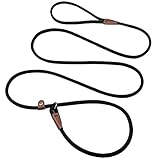
- Control for Behavior: No pull slip lead dog leash, 2 in 1 leash and collar design. Simple and easy use to correct behavior and stop dogs from pulling
- Classic colors: 13+ stylish colors for you choose to make your pets stand out. Bright colors make it easier to accurately see where it is on the pup’s neck and whether it needs to be adjusted. The slip leash make your dog safer and more fashionable
- Fit All: 7 feet long, 1/4 inch slip rope dog leash is a perfect balance between freedom and control, adjustable to fit any dog neck size, suitable for small medium dogs pets outdoor walking, hiking and training
- Sturdy Nylon Slip Lead: Slip knot rope leash is made of high density nylon rope, a sturdy leather connection and strong hardware o-ring. Flexible, lightweight yet durability
- Versatile for Training: This leash is perfect for dog training. Its length allows you to teach your dog commands like "heel" and "stay" effectively. The smooth texture of the nylon won't irritate your dog's neck during training, making the learning process more pleasant for both of you
Use food as an invitation, not a trap
Place small amounts of suitable dog food near you and wait. Avoid reaching over the dog, grabbing its collar, or making a fast move when it begins eating. If the dog backs away, stop advancing and call for professional help instead of repeatedly trying.
Read the dog’s behavior
A relaxed posture and willingness to approach do not guarantee that the dog is safe to handle. Pain, fear, and unfamiliar surroundings can change behavior suddenly. Treat growling, lunging, snapping, repeated retreat, or a rigid, intensely focused posture as a signal to stop and create distance.
Do these 3 things before closing this tab:
1Fix the driver behind crashes, sound loss and screen glitches2Clear out junk files and repair common Windows errors3Scan for outdated or missing drivers - takes under a minuteWhat is the safest way to contain a stray dog?
For a calm, approachable dog, use a leash and move it to a quiet, secure area away from roads. American Humane says dogs should ideally be secured with a leash or contained in a fenced yard. A slip lead can provide short-term containment, but it is a tool for a dog you can safely approach—not a reason to attempt a capture of an aggressive or panicked animal.
Containment steps
- Have the leash or slip lead ready before you move close. Keep the route to the enclosure clear.
- Let the dog come toward the food or your relaxed hand rather than pursuing it.
- Place the leash without jerking or tightening it suddenly. If the dog resists, release the attempt and step away.
- Walk slowly to a fenced yard, closed room, or other secure space. Close gates and doors before removing your attention from the dog.
- Tell everyone nearby that the dog is contained and ask them not to enter or handle it.
Do not tie a frightened dog to an exposed object, leave it unattended near a road, or rely on a loose collar that could slip off. If you cannot contain the dog without wrestling or cornering it, wait for animal-control staff or a dog warden.
How should I care for the dog while its owner is being located?
Provide fresh water, an appropriate amount of ordinary dog food, and a quiet resting place. Keep handling to a minimum until the dog’s health and temperament are known.
Separate the dog from your household
Use a closed room, secure yard, crate, or other area that your own pets cannot enter. VCA warns that stray animals may carry parasites or infectious disease and may fight with resident animals. Keep children away as well; even a dog that accepts food may react defensively to touching, noise, or attempts to move it.
What’s actually slowing this PC down?
Pick the symptom - the matching free tool is one click away.
Also popular on Amazon

- 【EASY AND CONVENIENT】- No collar or harness needed. With the adjustable loop, extremely simple and easy to put on or off
- 【STRONG & LIGHTWEIGHT】- These Premium Slip Leads for dogs are made of high strength nylon rope, super durable metal ring, and the knots bound with leather cover. 1/2” thick rope provide maximum durability and comfortable grip
- 【Reflective for Night Safety】- The reflective straps on the entire rope leash ensures great visibility and security during night walk or jogging
- 【Great for Training】– The slip leash tightens when your dog pulls and loosens when the behavior is corrected. Great dog training leash to correct the behavior under control. Anti-choke ring is included to prevent choking hazard
- 【Perfect Size】– 1/2” x 6 ft perfect length for Outside walking, jogging, hiking or training. Suit for Large and Medium Dogs
Avoid unnecessary treatment
Do not give medication, attempt to treat a wound, or force a bath unless a veterinary professional directs you. An injured dog may bite during handling, and a product that is safe for one animal can be harmful to another. Contact a veterinarian, shelter, or animal-control service for advice about urgent care.
Keep the environment calm
Limit visitors, loud sounds, and repeated attempts to pet or examine the dog. Note whether it is eating, drinking, vomiting, coughing, limping, or showing other concerning changes so you can report them accurately.
How do I check whether a stray dog has an owner?
Look for identification only from a safe position, then arrange a microchip scan as soon as the dog is securely contained. A missing collar or tag does not prove that the dog is ownerless.
Check visible identification
- Look for a collar, identification tag, or rabies tag.
- Read the information without putting your face near the dog or reaching under its neck.
- Use the telephone number or other contact route on the tag if it appears current.
Arrange a microchip scan
Local veterinary clinics, shelters, and animal-control facilities commonly have scanners. ACT Government guidance notes that veterinary clinics can scan dogs and that this is often the fastest way to identify and contact an owner. Call ahead when possible so staff can tell you whether they accept found animals and whether the dog must remain under your control during the visit.
The Tool Desk
Outbyte PC Repair FREERepair Windows errors before they cause bigger problemsFix Now →Outbyte Driver Updater FREEFix the driver behind crashes, sound loss and screen glitchesFind Drivers →A scan is an identification step, not proof that the listed contact information is current or that the person who answers is entitled to collect the dog. Let the responsible authority or shelter manage verification and reunification.
Where should I report a stray dog?
Report the find to the local authority responsible for stray dogs in the place where you found the animal. Depending on the jurisdiction, that may be a city or county council, animal-control office, dog warden, shelter, or equivalent service. Ask about after-hours response, collection arrangements, required reports, and where the dog must be taken.
Also popular on Amazon

- This slip leash acts as a leash and a collar in one. Simply slip the loop over your dogs neck and use the handle end as a leash. Leash and collar in one combination that is great for training and known for its ease of use.
- This slip leash & collar combination is a favoriate amongst dog trainers, handlers and show dogs. Soft on the hands with its Broken in Feel easy to use and pliable enough to fit in your coat pocket.
- Mendota Slip Leashes are hand made in the USA using premium quality material.
- 3/8″ x 4′ and 3/8″ x 6′ for dogs 50 pounds & under
- Brass, satin nickel or black metallic hardware and oil tanned leather splices.
Rules depend on location
Do not assume that another country’s process applies to you. GOV.UK states that in England and Wales, if you find a stray dog and cannot contact the owner, you must report it to the council. Local authorities there have statutory responsibility and must hold collected dogs for seven full days while providing appropriate food, fresh water, a safe environment, and veterinary care when needed. Other jurisdictions use different reporting channels, holding periods, and duties for finders.
NSW guidance likewise directs finders to their local councils, while RSPCA guidance identifies the local authority’s dog warden as responsible for stray dogs in its jurisdiction. Use those examples as reminders to find your own authority, not as universal law.
Free tools Windows power users keep installed
One-click scans. No signup required.
Information to give the authority
- The exact or approximate location, date, and time you found the dog.
- Whether it is contained, roaming, injured, ill, fearful, or aggressive.
- Its size, color, sex if known, distinctive markings, collar, and tags.
- Any traffic danger, bite, contact with another animal, or urgent medical concern.
- Your current location and the safest way for staff to reach the dog.
How can I publicize the find without creating another safety problem?
After you have reported the dog, share a clear photo, approximate find location, date, and a reliable contact route through local lost-and-found groups, neighborhood pages, rescue listings, or posters. Coordinate with the shelter or council and remove notices once the dog is reunited.
Make the notice useful
Describe observable facts rather than guessing the breed, age, medical history, or ownership. State whether the dog is safely contained and direct potential owners to the authority or agreed contact person. Keep your personal address private; use the official facility or a controlled contact method when possible.
Do not turn a post into a public capture attempt
Tell people not to chase, surround, or independently approach the dog. If it is still loose, too frightened to handle, or in a dangerous area, ask interested owners to contact animal control or the dog warden instead of converging on the location.
What should I do if the dog is injured, sick, aggressive, or in traffic?
Do not attempt a hands-on rescue when the condition or location makes approach unsafe. Call animal control, a dog warden, an animal centre, a veterinarian, or emergency services according to the urgency.
Also popular on Amazon

- Instant Control & Correction: Designed with zero-stretch mountain climbing rope to deliver immediate signals. Perfect for correcting pulling and teaching "heel" walking without a collar
- Slip & Go Convenience: One-size-fits-all design allows for a quick, 3-second slip-on. Ideal for dog shows, grooming sessions, or shelters where efficiency is key
- Anti-Chafe Padded Handle: Features a soft EVA foam handle that protects your hands from "leash burn" during sudden lunges by heavy pullers
- High-Visibility at Night: Integrated reflective stitching ensures your pup is seen from blocks away, providing peace of mind during late-night or early-morning walks
- Heavy Duty & Reliable: Small (up to 50 lbs), Medium (50-110 lbs), or Large (110-250 lbs) with a sturdy leather stopper to keep the lead in the correct position behind the ears for safe control
Injured or sick dog
Keep people and pets back, describe the visible problem, and ask the responding service where the dog should be taken. Avoid lifting, restraining, or transporting an injured animal unless professionals instruct you and you can do so without risk.
Aggressive or panicked dog
Back away slowly, put a solid barrier such as a closed vehicle or gate between you and the dog if one is available, and keep others from approaching. Do not use food to lure an animal that is actively threatening people, and do not attempt to loop a leash around it.
Dog in immediate danger
If the dog is in traffic or another location where a person could be seriously hurt, call emergency services. Give the dispatcher the precise location and explain the dog’s behavior so responders can bring the appropriate support.
What should I do if someone is bitten?
Wash the wound with soap and water, contact a healthcare provider, and report the bite to the relevant public-health or animal-control authority. NYC Health gives this same basic advice and says to call emergency services if the dog poses an immediate danger.
Record the location, time, circumstances, and a description of the dog without trying to catch it after the bite. Follow the healthcare provider’s instructions about further treatment and reporting.
Independent reader supportYour contribution helps us test, update, and keep practical guides available for everyone.Can I keep a stray dog until the owner is found?
You may be able to provide temporary care if the dog is safely contained and your local authority permits it, but temporary possession does not make you the legal owner. Reporting duties, authority collection, reclaim procedures, and holding periods vary by jurisdiction.
Also popular on Amazon

- 【EASY AND CONVENIENT】- No collar or harness needed. With the adjustable loop, extremely simple and easy to put on or off
- 【STRONG & LIGHTWEIGHT】- These Premium Slip Leads for dogs are made of high strength nylon rope, super durable metal ring, and the knots bound with leather cover. 1/2” thick rope provide maximum durability and comfortable grip
- 【Reflective for Night Safety】- The reflective straps on the entire rope leash ensures great visibility and security during night walk or jogging
- 【Great for Training】– The slip leash tightens when your dog pulls and loosens when the behavior is corrected. Great dog training leash to correct the behavior under control. Anti-choke ring is included to prevent choking hazard
- 【Perfect Size】– 1/2” x 6 ft perfect length for Outside walking, jogging, hiking or training. Suit for Large and Medium Dogs
Ask before taking the dog home
- Can the authority register you as the temporary finder or caregiver?
- Where must the dog be housed, and for how long?
- Who pays for scanning, veterinary care, or transport?
- What must happen if an owner comes forward or the dog cannot remain with you?
Follow the council, animal-control agency, dog warden, shelter, or veterinarian’s directions. Do not give the dog away, sell it, move it to another jurisdiction, or make permanent arrangements before the legal process is complete.
What mistakes should I avoid when helping a stray dog?
The most common errors are attempts to solve an authority and safety problem through speed or good intentions. Avoid these shortcuts:
Quick wins for a faster PC:
Clear out junk files and repair common Windows errorsFree Scan →Scan for outdated or missing drivers - takes under a minuteDriver Scan →- Chasing the dog: this can push it into traffic or make later professional capture harder.
- Assuming friendliness equals safety: pain and fear can produce a sudden bite.
- Bringing it straight into the house: isolate it from pets and children first.
- Skipping the microchip scan because there is no tag: owners can still be identified electronically.
- Delaying the report: local authorities need the location and condition details to meet their duties.
- Promising the dog to someone: a finder is not automatically the legal owner.
- Publishing a post that invites a crowd: uncontrolled approaches can frighten the dog and endanger people.
What is the safest handoff plan?
Keep the dog secure and separate, document what you know, and hand control to the appropriate authority or a veterinary or shelter professional. A clear handoff prevents lost information and avoids repeating risky handling.
- Write down when and where you found the dog and any changes in its condition.
- Tell the authority whether the dog is contained and what equipment or access responders will need.
- Share tag details, the microchip-scan result, photographs, and any bite or exposure information.
- Confirm who is responsible for the dog next and what you should do if an alleged owner contacts you.
- Remove public notices after reunification or an official transfer, and keep private records if the authority needs follow-up.
The safest outcome is not always personally transporting or housing the dog. It is getting the animal out of immediate danger while protecting people, household pets, and the dog’s legal path back to its owner.
Frequently Asked Questions
Does a dog without a collar or tag mean it has been abandoned?
No. Collars and tags can be lost, damaged, or removed, while a registered microchip may still identify the owner. Treat the dog as potentially owned until the authority or a scanning facility completes the identification process.
Can I drive a found dog to a shelter or veterinarian?
Only do so when the dog is calm, safely restrained, and the destination has agreed to receive it. If you cannot secure the dog or isolate it safely in the vehicle, arrange pickup through animal control, a dog warden, or the shelter instead.
Should I publish every detail about the dog in a lost-pet post?
Share enough information for a genuine owner to recognize the dog, but coordinate the wording with the authority handling the case. A controlled contact route helps staff verify claims and reduces unsafe crowds around a loose or frightened animal.
What records should I keep after reporting a stray dog?
Keep the date, time, location, photographs, tag or scan information, names of agencies contacted, and any instructions you received. These details help the next caregiver understand what happened without requiring repeated handling of the dog.
Quick Recap
Product prices and availability are accurate as of the date/time indicated and are subject to change. Any price and availability information displayed on Amazon at the time of purchase will apply.





Leave a Reply