
The Tool Desk
Outbyte Driver Updater FREEScan for outdated or missing drivers - takes under a minuteDriver Scan →Outbyte PC Repair FREERepair Windows errors before they cause bigger problemsFix Now →Some links on this page are affiliate links: if you buy through them we may earn a commission, at no extra cost to you.
The safest way to help an overweight dog lose weight is to combine a veterinarian-set calorie target with a nutritionally complete diet, accurately measured portions, controlled treats, gradual activity, and frequent rechecks. Simply serving much less of a maintenance food can cut protein, vitamins, minerals, and essential fatty acids along with calories. Your veterinarian should assess ideal weight, body- and muscle-condition scores, health problems, medications, and lifestyle before deciding whether to adjust the current food or use a therapeutic weight-management formula. Then monitor the trend and change the plan with the veterinary team rather than making repeated cuts on your own.
What is the safest way to help a dog lose weight?
Start with a veterinary examination and an individualized plan. The clinic should record current weight, body-condition score (BCS), muscle-condition score, diet and treat history, activity, medications, and signs such as pain, exercise intolerance, or unusual hunger. Ask whether endocrine disease, mobility problems, medication effects, or another condition could be contributing to weight gain or changing calorie needs.
As an Amazon Associate I earn from qualifying purchases.
Do these 3 things before closing this tab:
1Fix the driver behind crashes, sound loss and screen glitches2Clear out junk files and repair common Windows errors3Scan for outdated or missing drivers - takes under a minuteOn Cornell University College of Veterinary Medicine’s 1–9 BCS scale, 4 or 5 is described as ideal; each score above ideal represents approximately 10% excess body weight. That estimate helps the veterinarian set a target, but it is not a substitute for weighing and examining your individual dog. Merck Veterinary Manual puts the safety boundary plainly: “Starvation is never a safe or humane way to cause weight loss.”
The plan normally has five parts:
- A target weight and daily calorie allowance calculated for the dog’s age, size, neuter status, activity, body condition, medical history, medications, and current food.
- A complete-and-balanced food in a portion that supplies adequate nutrients while calories are reduced.
- A written accounting of meals, treats, chews, table food, toppers, and medication foods.
- Activity increased slowly enough for the dog’s joints, heart, lungs, age, and fitness.
- Regular weights and body-condition checks so the veterinary team can adjust the plan before a deficiency, muscle loss, or excessive restriction develops.
Why can simply feeding less of the regular food cause a deficiency?
Maintenance diets are formulated to meet nutrient requirements at their intended feeding level. If you cut that food substantially, you remove not only energy but also every nutrient delivered by each gram: amino acids, vitamins, minerals, and essential fats. A small reduction may be appropriate for some dogs under veterinary supervision, but a large reduction can leave the dog short even when the bowl still looks full enough.
Popular on Amazon
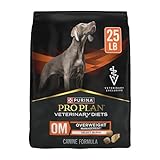
- Great-tasting high-fiber dog food that's low in fat and calories
- Purina Pro Plan weight management dog food featuring a high protein-to-calorie ratio promotes loss of body fat while helping maintain lean body mass
- Purina Pro Plan weight management dog food containing natural fiber to help contribute to satiety
- Healthy weight dog food, including isoflavones, helps reduce the risk of weight regain and fat accumulation
- Available by prescription in dry dog kibble and wet canned dog food to meet your dog's preference and help with weight loss or weight maintenance
Therapeutic weight-management diets are designed for this problem. They generally provide fewer calories per unit of food and adjust nutrient concentrations so a restricted portion still supplies essential nutrients. Higher protein can help preserve lean tissue, while fiber and the food’s moisture or structure may improve fullness. These features do not make one formula right for every patient; kidney, liver, gastrointestinal, urinary, food-allergy, and other conditions can change the choice.
AAHA’s 2021 guidance emphasizes screening every pet at every visit and using a complete-and-balanced main diet for the great majority of intake. A veterinarian may reduce a suitable maintenance food for a modest adjustment, but substantial restriction is safer with a diet formulated for weight management.
Recommended Free Tools
How does a veterinarian set a safe calorie target?
The calorie number must be calculated for the individual dog, not copied from a chart or another pet. Cornell veterinarian Dr. Aly Cohen notes that age, spay or neuter status, lifestyle, and body-condition score all affect the daily requirement. Current body weight, desired weight, muscle condition, medical problems, medications, and the energy density of the actual food also matter.
AAHA reported a mean intake of 63 ± 10.2 kcal/kg0.75 for canine weight loss over a 12-week period. That is a population figure, not a prescription. A small, elderly dog with arthritis and a young, intact working dog may need very different targets even if they weigh the same. Your veterinarian should use the dog’s response to refine the allowance.
Ask the clinic to write the target in a form you can use: calories per day, grams or cups of the selected food, meal frequency, and an allowance for treats. Confirm whether the calorie statement is “as fed” and whether the listed amount applies to the exact product and flavor you purchased. Formulas can differ within a brand, and changing products changes calorie density.
Which food supplies nutrients during calorie restriction?
Look first for a product with a nutritional-adequacy statement showing it is complete and balanced for the dog’s life stage, then follow the veterinarian’s recommendation. “Light,” “weight control,” and “reduced calorie” on a package do not by themselves prove that a particular food suits your dog or provides the needed nutrient profile at the proposed portion.
Also popular on Amazon

- Purina Pro Plan weight management dog food with a high protein-to-calorie ratio promotes loss of body fat while helping maintain lean body mass
- Great-tasting dog kibble that’s low in fat and calories and contains natural fiber to help contribute to satiety, plus antioxidants
- Healthy weight dog food featuring isoflavones to help reduce the risk of weight regain and fat accumulation
- Purina Pro Plan Veterinary Diets recipe that promotes a urinary environment unfavorable to the development of both sterile struvite* and calcium oxalate crystals
- Dog kibble that may be fed for weight loss or weight maintenance
A therapeutic weight-management formula may be preferable when the dog needs a sizeable calorie reduction, is very food-motivated, or must preserve lean mass. It can provide lower energy density and altered protein, fiber, vitamin, and mineral levels. A regular complete-and-balanced food may be reasonable when the required reduction is small and the dog maintains condition, but the veterinary team should make that call.
| Choice | How it can help | Questions to resolve with the veterinarian |
|---|---|---|
| Current complete-and-balanced food with a modest portion adjustment | Preserves a familiar taste and may avoid a transition if only a small reduction is needed. | Will the reduced portion still meet nutrient needs? Is the food calorie-dense enough that the bowl becomes too small? Is it suitable for concurrent disease? |
| Therapeutic weight-management food | Lower energy density and nutrient levels designed for restricted calories; protein and fiber may support lean tissue and satiety. | Does it fit kidney, liver, gastrointestinal, urinary, allergy, or other medical requirements? Will the dog eat it consistently? What transition schedule is appropriate? |
| Commercial over-the-counter “light” or “weight-control” food | May offer fewer calories than a standard maintenance product. | Check the actual calorie statement and adequacy information; the label term alone is not a personalized recommendation. |
| Home-prepared diet | Can be tailored to preferences or medical needs when professionally formulated. | Who will formulate and review it, which supplements are required, how will substitutions be handled, and can the household prepare every batch safely and consistently? |
Cost and availability vary by product and region; they should be weighed against nutrient adequacy, acceptance, and medical suitability rather than judged from the package label alone.
How should I measure every calorie?
Portion accuracy is often the difference between a plan that works and one that appears to “fail.” A cup can vary with kibble shape and how tightly it is packed, and handfuls are not repeatable. Use a digital kitchen scale when possible, or a single marked measuring tool used the same way every time.
- Record the exact food. Write down the manufacturer, product name, recipe or flavor, and the calorie density shown on that package. Do not assume a replacement bag has identical calories.
- Convert the daily target to a measurable ration. Have the clinic provide grams or a clearly defined volume for the selected food. If you change foods, obtain a new calculation.
- Set meal times. Divide the daily ration into two or more meals if that helps hunger or household routines. Measure the entire day’s food in the morning so extra scoops are visible.
- Reserve training rewards. Remove a portion of the daily ration before feeding and use those pieces as rewards. This keeps training calories inside the target.
- Log extras immediately. Include chews, dental products, table scraps, toppers, pill pockets, broth, and food used to give medication. A small item given repeatedly can materially change the daily total.
- Keep the method consistent. Weigh or measure at the same stage of preparation each day. Store the log where every family member can see it and decide who is responsible for feeding.
Package feeding directions are general starting points, not a prescription. Body weight, body condition, and the observed rate of loss determine whether the ration is appropriate.
How many treats can my dog have?
AAHA’s 2021 guidance recommends that treats and other food items provide no more than 10% of total intake, with the complete-and-balanced main diet supplying at least 90%. Treat calories come out of the daily allowance; they are not a free addition.
Choose tiny pieces, low-calorie rewards, or pieces of the dog’s regular diet. Break a larger biscuit into several rewards and use praise, play, sniffing opportunities, or a toy for some training repetitions. Read the calorie count per piece when it is available, because two products described as “small treats” may differ greatly in energy.
Also popular on Amazon
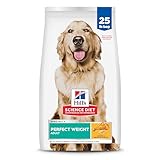
- Breakthrough formula made to positively impact the unique cell function of overweight pets, and support healthy metabolism and body weight
- Safe and effective weight loss with visible results within 10 weeks
- Made with natural ingredients
- Made in the USA with global ingredients you can trust
- Hill's Pet Nutrition is the US Veterinarians' #1 recommended brand
If the dog eats a therapeutic or prescription diet, ask whether a treat is compatible with it. A nutritionally incomplete treat should not displace a large share of the complete food, and a chew can be both calorie-dense and difficult to measure. Record every person who gives food so the 10% ceiling applies to the whole household, not just the main feeder.
Are homemade diets safe for weight loss?
A home-prepared plan can work, but it should be formulated and periodically reviewed by a veterinary nutrition professional. Weight-loss recipes are not automatically balanced recipes: changing meat, adding vegetables, removing an ingredient, or cooking differently can alter calcium, trace minerals, vitamins, amino acids, and calories.
Use the recipe exactly, including the specified supplement, preparation method, and weighing instructions. Do not add a general vitamin or mineral product “just in case,” and do not use supplements to compensate for an inadequately designed calorie-restricted diet. Unsupervised additions can create excesses as well as deficiencies.
Ask for the recipe’s calories per gram or serving and a method for scaling it to the dog’s target. Prepare batches consistently, refrigerate or freeze them safely, and keep a record of substitutions. If the dog has a medical condition, the nutrition professional and primary veterinarian should coordinate the diet and monitoring.
How can exercise support weight loss without causing injury?
Activity supports calorie control, muscle preservation, mobility, and mental wellbeing, but it cannot reliably offset unrestricted food. Increase exercise gradually and match it to orthopedic, cardiac, respiratory, age, and fitness limits.
Start with low-impact work
Short, easy walks, gentle sniffing games, controlled swimming where safe, and other low-impact activities can build endurance. Begin below the level that causes soreness, then increase duration or frequency in small steps rather than adding a long session abruptly. A dog that has been sedentary may need several brief outings instead of one strenuous walk.
Quick wins for a faster PC:
Fix the driver behind crashes, sound loss and screen glitchesFind Drivers →Repair Windows errors before they cause bigger problemsFix Now →Also popular on Amazon

- Purina Pro Plan weight management dog food with a high protein-to-calorie ratio promotes loss of body fat while helping maintain lean body mass
- Great-tasting dog kibble that’s low in fat and calories and contains natural fiber to help contribute to satiety, plus antioxidants
- Healthy weight dog food featuring isoflavones to help reduce the risk of weight regain and fat accumulation
- Purina Pro Plan Veterinary Diets recipe that promotes a urinary environment unfavorable to the development of both sterile struvite* and calcium oxalate crystals
- Dog kibble that may be fed for weight loss or weight maintenance
Watch the dog’s response
Stop and contact the veterinarian for pain, lameness, breathing difficulty, collapse, or marked fatigue. Delayed stiffness, reluctance to rise, or a sudden change in gait also warrants a call before the next increase. Dogs with arthritis, heart disease, airway disease, or severe obesity may need a specific rehabilitation plan.
Keep food rewards in the calorie plan
Use the reserved daily ration for exercise training. If an activity session consistently leads to extra treats or a larger meal, the apparent exercise benefit may disappear.
How fast should a dog lose weight?
Cornell University College of Veterinary Medicine says dogs on a weight-loss plan can be expected to lose about 1–2% of body weight per week, with weighing at least every two weeks. That range is a monitoring guide, not a promise or a target to force. Puppies, frail seniors, dogs with disease, and dogs with substantial muscle loss may need a different pace.
Use the same scale, at a similar time of day and under similar conditions, and record each result. Recheck body condition and muscle condition rather than relying on the scale alone. A dog can lose muscle while weight falls, so a veterinary examination remains important.
Crashes, No Sound, or Screen Glitches?
Random freezes, missing sound and display glitches usually trace back to one bad driver. Find and replace yours safely.Free scan · under a minutePC Slower Than It Used to Be?
A free scan shows the junk files, broken settings and background clutter dragging Windows down - then fixes them in one click.Free scan · Windows 10 & 11If loss is faster than the agreed plan, the ration may be too restrictive or illness may be present. If loss is slower or absent, verify the measured portions and every extra before cutting food again. The veterinary team may recalculate calories, reassess the diet’s energy density, review activity, or screen for a medical contributor.
Independent reader supportYour contribution helps us test, update, and keep practical guides available for everyone.What should I do when weight loss stalls?
Do not respond to a plateau with an immediate, large reduction. First audit the plan for overlooked calories: a second feeder, weekend table scraps, dental chews, flavored medications, toppers, or an inaccurate measuring cup. Check that the food in the bowl matches the product used in the calorie calculation and that the dog’s activity has not fallen because of pain or weather.
Also popular on Amazon
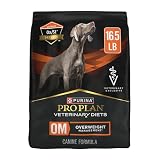
- Purina Pro Plan weight management dog food with a high protein-to-calorie ratio promotes loss of body fat while helping maintain lean body mass
- Great-tasting dog kibble that’s low in fat and calories and contains natural fiber to help contribute to satiety, plus antioxidants
- Healthy weight dog food featuring isoflavones to help reduce the risk of weight regain and fat accumulation
- Purina Pro Plan Veterinary Diets recipe that promotes a urinary environment unfavorable to the development of both sterile struvite* and calcium oxalate crystals
- Dog kibble that may be fed for weight loss or weight maintenance
Bring the food log and weight record to the clinic. The veterinarian can confirm the target weight, repeat the body- and muscle-condition assessment, look for endocrine or other medical causes, and decide whether to adjust portions, change formulation, or address mobility. A plateau can reflect measurement error, changing energy needs, fluid shifts, or loss of activity; it is not proof that the dog needs to be deprived.
What mistakes most often create nutritional problems?
- Cutting the bowl dramatically without changing the formulation: this reduces all nutrients supplied by the maintenance food.
- Relying on label words: “light” or “weight control” does not replace checking calories, adequacy, and medical fit.
- Ignoring extras: treats, chews, scraps, toppers, and medication foods count toward the daily total.
- Eyeballing portions: inconsistent scoops make a precise calorie target impossible to follow.
- Using supplements as insurance: unsupervised vitamins and minerals can produce new imbalances.
- Increasing exercise too quickly: pain or fatigue can reduce activity afterward and create an injury setback.
- Chasing a scale number: body condition and muscle condition show whether the loss is healthy.
- Changing several variables at once: altering food, portions, treats, and exercise simultaneously makes it hard to identify what helped or caused a problem.
What does a practical day on a weight-loss plan look like?
- Measure the full daily ration on a digital scale in the morning.
- Set aside the portion reserved for training and medication.
- Serve the remaining food at the scheduled meals, using the same bowl and routine.
- Offer only planned treats and log them immediately; stop when the treat allowance is used.
- Complete the veterinarian-approved activity at an intensity the dog can handle comfortably.
- Note appetite, energy, stool, gait, breathing, and any signs of pain.
- At least every two weeks during active loss, record a weight on the same scale and share the trend at the scheduled recheck.
Contact a veterinarian promptly if the dog refuses food, becomes weak, vomits repeatedly, has breathing difficulty, shows pain, or collapses. Those signs are not normal evidence that the diet is “working.”
What’s actually slowing this PC down?
Pick the symptom - the matching free tool is one click away.
Frequently Asked Questions
Can I add green beans, pumpkin, or other vegetables to make my dog feel full?
Only add them after asking the veterinarian, especially if the dog eats a therapeutic diet or has gastrointestinal, kidney, or other disease. The additions still contribute calories, can change nutrient balance, and may not be appropriate for every patient. If approved, measure the amount and record it as part of the daily plan.
How long does it take to see a visible change in an overweight dog?
The scale and body-condition trend usually provide a more reliable early signal than appearance. Take standardized photos only as a supplement to veterinary weigh-ins, because coat length, posture, and camera angle can hide gradual changes. The clinic can tell you when the target weight and muscle condition have been reached.
What can I do if my dog begs constantly between meals?
Use several smaller meals, food-dispensing toys loaded with part of the measured ration, and nonfood attention such as sniffing games or a short training session. Reward calm behavior with pieces already counted in the daily allowance. Persistent, unusual hunger should be reported because pain, medication effects, or disease can influence appetite.
Are over-the-counter weight-loss supplements safe for dogs?
Do not use a supplement to replace a nutritionally adequate diet or veterinary calorie plan. Products can add calories, interact with medications, or provide unbalanced amounts of nutrients, and their suitability depends on the individual dog. Discuss any proposed supplement with the veterinarian before giving it.





Leave a Reply