
Do these 3 things before closing this tab:
1Fix the driver behind crashes, sound loss and screen glitches2Clear out junk files and repair common Windows errors3Scan for outdated or missing drivers - takes under a minuteSome links on this page are affiliate links: if you buy through them we may earn a commission, at no extra cost to you.
The safest way to introduce a new cat is to slow the process down: begin with a health check and a closed transition room, then move from scent exchange to separated play, visual contact, supervised meetings and, finally, unsupervised time. Do not use a fixed deadline. Advance only when every cat is eating, using the litter box and behaving normally at the current stage. Depending on the cats, tolerance may take a day, several weeks or a few months; some introductions take longer.
What should I do before the new cat arrives?
Prepare the cats, the room and the household before they meet. A rushed arrival creates pressure that is difficult to undo.
As an Amazon Associate I earn from qualifying purchases.
Arrange veterinary care
Book recent veterinary checks for all cats. The incoming cat should be tested for common contagious diseases. Confirm that vaccinations are current and that worming and external-parasite control are up to date. Treating a health problem before contact protects the resident cats and prevents illness from being mistaken for “bad behavior.”
Set up a secure transition room
Choose a quiet room with a door that closes securely. It should be large enough for the newcomer to move, hide and play without being disturbed. Put the carrier inside before opening it, and keep the room off-limits to other pets during the settling period.
Popular on Amazon
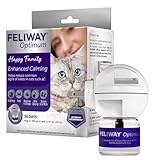
- HELPS REDUCE SIGNS OF STRESS USING A PATENTED PHEROMONE: FELIWAY Optimum is an advanced cat pheromone diffuser that helps reduce signs of stress in cats and helps ease tension between cats.*
- HELPS CATS FEEL CALM IN EVERYDAY SITUATIONS: FELIWAY Optimum is a cat calming diffuser that helps reduce stress‑related behaviors like urine spraying, scratching, hiding, and fearful reactions to change. Cat parents reported noticeable reductions in these behaviors, including a 77% reduction in urine spraying.
- SUPPORTS HARMONY IN MULTI‑CAT HOMES: Helps promote calmer interactions between cats. 72% of cat parents noticed reduced tension between their cats
- SAFE** AND NON-SEDATING: FELIWAY Optimum is not a sedative. It’s safe for use around cats, kittens, people and other pets.
- CONTINUOUS CALMING SUPPORT: This plug‑in cat pheromone diffuser provides 24/7 support when used as directed. To get started, plug into an open outlet with the vents pointed upward, allow at least 4 feet of clearance, and follow the label instructions.
Buy and position duplicate resources
Provide one key resource per cat plus one extra. For two cats, that means at least three litter boxes, three food bowls, three water bowls, three beds and three scratching posts. Spread them through the home rather than lining them up together, and keep food, water, litter and resting areas visually separated so one cat cannot guard everything.
| Resource | What to provide | Placement principle |
|---|---|---|
| Litter boxes | One per cat plus one extra | Different, quiet locations with easy escape routes |
| Food and water | One set per cat plus one extra | Separate stations; do not force cats to eat side by side |
| Beds and hiding places | At least one preferred bed and several hiding options per cat | Include covered and open choices |
| Perches | Elevated resting spots | Give cats a way to observe without being cornered |
| Scratching surfaces | One post or pad per cat plus one extra | Place near sleeping areas and common routes |
| Toys | Several independent toys | Use play to build positive associations, not competition |
Consider optional pheromone support
The American Association of Feline Practitioners (AAFP) caregiver guide recommends placing feline synthetic pheromone diffusers in the main living area and transition room 24–48 hours before arrival. This is a comfort measure recommended by that guide, not a guarantee or a published success rate.
The Tool Desk
Outbyte Driver Updater FREEFix the driver behind crashes, sound loss and screen glitchesFind Drivers →Outbyte PC Repair FREEClear out junk files and repair common Windows errorsFree Scan →Protect the resident cat’s routine
Keep meal times, play and sleeping arrangements as predictable as possible. Give the resident cat individual attention while the newcomer settles. Make sure every interaction is voluntary; carrying a cat toward another cat or holding one in place usually increases fear.
How do I settle the new cat in a separate room?
Start separation immediately. The newcomer should not tour the house or meet the resident cat on arrival.
- Take the covered carrier directly to the transition room. Close the door before opening the carrier.
- Let the cat choose when to come out. Leave the carrier available as a retreat and provide additional hiding places.
- Keep the environment calm. Use quiet voices and predictable visits for food, water, litter care and play.
- Wait for confident exploration. Do not advance because a certain number of days has passed. The cat should be eating, using the litter box and moving around the room normally before you begin introductions.
A cat that remains hidden, refuses food, stops using the litter box or shows escalating distress is not ready for the next step. Ask your veterinarian for advice if those signs persist.
How should I introduce the cats’ scents?
Scent work lets the cats learn about one another without the pressure of face-to-face contact.
Also popular on Amazon

- Complete Calming Solution: This cat calming diffuser kit includes diffusers and refills (48mL per bottle). Each refill delivers a 30-day supply of continuous support to help ease your cat’s anxiety. Ideal for addressing stress triggered by vet visits, traffic noise, fireworks, thunderstorms, or loneliness, this cat pheromone calming diffuser creates a safe and serene environment for felines of all ages and breeds
- Effective Stress & Behavior Support: Our cat pheromone diffuser works to reduce common signs of feline stress such as excessive scratching, urine spraying, hiding, and restlessness. By mimicking natural feline pheromones, this cat calming diffuser provides gentle, drug-free relief, making it a reliable choice for multi-cat households or cats experiencing tension during home changes or new pet introductions
- Long-Lasting & Wide Coverage: Each refill of the cat calming diffuser releases calming pheromones for up to 30 days, with coverage for areas up to 700 square feet. The diffuser features an automatic operation with a simple press of a button, and proper placement (vents facing up) ensures optimal performance and leak prevention, maximizing the effectiveness of your cat diffuser
- Safe & Non-Toxic Formula: The cat pheromone calming diffuser uses an odorless, non-toxic, and chemical-free formula that is safe for both humans and pets. Unlike harsh treatments, this cat calming diffuser does not cause drowsiness and poses no risk to your cat’s health, making it a trusted choice for daily use in any living space
- Easy to Use & Maintain: Setting up the cat calming diffuser is effortless—simply plug it into a standard outlet, keep the bottle upright, and press the button to activate. The heated diffuser and refill system operates quietly and continuously, requiring minimal maintenance; just replace the refill every 30 days to maintain consistent calming support for your feline friend
Swap familiar items
Exchange bedding or toys daily. Place the other cat’s item at a distance, then move it closer only when the resident cat and newcomer remain relaxed. Sniffing and then walking away calmly is acceptable; hissing, avoidance or prolonged staring means the item is too intense or too close.
Transfer cheek and chin scent
When exchanged items no longer cause tension, use a soft cloth to collect one cat’s cheek and chin scent and place it in the other cat’s room. Cats rely heavily on facial scent, so this step can be more informative than swapping an item that has little body contact.
Read stress signals
Back up if either cat begins persistent hiding, pacing, growling, hissing, avoids the scented item, eats less or changes litter-box habits. Return to neutral bedding or toys and try again after several calm days.
When can cats explore each other’s spaces?
Site swapping comes after scent exchanges are calm. It allows each cat to investigate the other’s smell in a controlled way while the other cat is safely elsewhere.
PC Slower Than It Used to Be?
A free scan shows the junk files, broken settings and background clutter dragging Windows down - then fixes them in one click.Free scan · Windows 10 & 11Outdated Drivers Are Slowing You Down
One free scan finds every outdated or missing driver and matches the right update for your exact hardware.Free scan · exact hardware match- Put the resident cat in a comfortable room with its own resources.
- Let the newcomer explore part of the home, or allow the resident cat to investigate the transition room, while keeping the cats physically separated.
- End the exploration before either cat becomes agitated.
- Return each cat to its own area and repeat on later days.
Do not remove every hiding place or force an inspection. The goal is voluntary investigation, not a complete house tour.
How do I use food and play to create positive associations?
Once both cats are calm with scent and site swapping, feed treats or meals and play on opposite sides of the closed transition-room door. The door remains shut; the cats learn that the other cat’s presence predicts something worthwhile.
Also popular on Amazon

- SPECIFICALLY DESIGNED FOR MULTI-CAT HOMES: FELIWAY MultiCat is a cat calming diffuser that helps reduce tension between cats, including conflict, fighting, chasing, and blocking, supporting a calm home for cats living together
- HELPS CATS GET ALONG BETTER: This cat pheromone diffuser promotes calm interactions and helps ease ongoing tension, supporting more peaceful relationships in multi-cat households
- HELPS REDUCE TENSION BETWEEN CATS: 84% of cat parents noticed improvement in tension and conflict between their cats when using FELIWAY MultiCat
- SAFE* AND NON-SEDATING: FELIWAY MultiCat is not a sedative. It is safe for use around cats, kittens, people and other pets.
- CONTINUOUS CALMING SUPPORT FOR SHARED SPACES: Plug-in cat pheromone diffuser provides 24/7 calming support. To get started, plug into an open outlet with vents pointed upward and allow 4+ ft of clearance, and follow the label instructions.
Start at a comfortable distance
Place bowls far enough from the door that both cats will eat normally. Move them closer over repeated sessions only if eating remains relaxed. If either cat will not eat, increase the distance rather than withholding food.
Keep sessions brief and predictable
Use a favorite toy or small food rewards, stop while both cats are still calm and repeat at regular times. Do not punish hissing or growling; those behaviors communicate discomfort and tell you to add distance.
How do I let cats see each other safely?
Use a secure see-through barrier only after closed-door meals and play are routine. Suitable options include a glass door, mesh or screen barrier, an extra-tall cat gate or another setup that prevents squeezing through or reaching around it.
Run short visual sessions
The AAFP guide describes short play or visual sessions of about 5–20 minutes. Begin at the shorter end, offer treats or play for relaxed behavior and end before tension rises. Watch both cats rather than focusing on only the newcomer.
Know when to stop
Hard staring, tail flicking, crouching, growling, hissing, swatting or attempts to charge the barrier mean the session is too difficult. Block the view, separate the cats and return to closed-door play or scent work for several days. Do not repeatedly expose them to a barrier fight in the hope that they will “work it out.”
When can cats meet without a barrier?
Try physical contact only after several calm visual sessions. Choose a large room with escape routes, elevated spaces and separated resources. Keep the first meeting brief and supervised.
Free tools Windows power users keep installed
One-click scans. No signup required.
Also popular on Amazon

- Help Your Cat Feel Safe Again: Create a calmer, more comfortable home with advanced calming pheromone technology that helps reduce common signs of stress including hiding, scratching, urine spraying, conflicts between cats, and nervous behavior. Ideal for everyday emotional support
- Continuous 120-Days Comfort: Each refill delivers calming support for up to 30 days when used continuously, package include: 2 diffusers, 4 refills. Designed to cover rooms up to approximately 750 sq ft, making it perfect for bedrooms, living rooms, and multi-cat households
- Supports Positive Everyday Behavior: Whether introducing a new pet, moving into a new home, welcoming visitors, or dealing with loud noises such as fireworks or thunderstorms, the diffuser helps cats feel more secure and adapt to changes more comfortably
- Easy Plug-In, No Daily Effort: Simply plug the diffuser into an open wall outlet and let it work around the clock. No sprays, no pills, no complicated routines—continuous calming support with minimal maintenance
- Trusted Care for Cats of Every Age: Suitable for kittens, adult cats, senior cats, and multi-cat families. Designed to support a peaceful home environment while helping strengthen the bond between cats and their owners
- Open the barrier and allow the cats to choose whether to approach.
- Use treats or interactive play to reinforce calm glances, sniffing and walking away.
- Keep a towel, pillow, piece of cardboard or blanket within reach to block eye contact if needed.
- End the meeting while both cats are still composed, then return them to separate rooms.
A partially covered carrier or a harness-and-leash arrangement can provide additional control only if the cat is already comfortable with that equipment. Introducing unfamiliar equipment during the first meeting can add stress.
How do I increase time together and prevent fights?
Repeat successful meetings for several days, extending the time together in small increments. Continue to separate the cats whenever no adult can supervise until their interactions are reliably relaxed.
Interrupt safely
If tension rises, place the towel, pillow, cardboard or blanket between the cats to break eye contact and guide them apart. Never put your hands between fighting cats and never pick up a cat during a tense moment; bites and scratches can be severe.
Separate after aggression
Give both cats time to recover in separate rooms. Once they are eating and behaving normally again, restart at the last stage that was consistently calm, not at the point where the fight occurred.
What’s actually slowing this PC down?
Pick the symptom - the matching free tool is one click away.
Distinguish play from conflict
Loose bodies, pauses, reciprocal chasing and easy disengagement are more reassuring than stiff posture, hard staring, cornering, ambushing, repeated swatting or one-sided pursuit. When in doubt, interrupt early and consult your veterinarian or a qualified behavior professional.
What body language shows that cats are ready to advance?
Readiness is behavioral, not calendar-based. Advance only when every cat meets the current-stage checks.
Also popular on Amazon

- Valua Pack – This cat pheromone diffuser set includes 3 pack, making it easier to provide a calming environment in multiple rooms or for multiple cats.
- SUITABLE FOR CATS OF ALL AGES – Designed for kittens, adult cats, and seniors, this diffuser helps create a soothing atmosphere. For optimal performance, replace the diffuser head every six months.
- LONG-LASTING SUPPORT – Each refill vial provides continuous use for up to 30 days. The diffuser is odorless, making it a great choice for households sensitive to scents.
- VISIBLE RESULTS IN TWO WEEKS – Many cat owners notice a reduction in common unwanted behaviors such as excessive grooming, meowing, or restlessness within two weeks of use. Individual results may vary.
- EASY TO USE – Simply plug the diffuser into a standard electrical outlet to begin releasing calming pheromones throughout your home. Its compact design makes it suitable for travel or temporary environmental changes.
| Ready signs | Warning signs | What to do |
|---|---|---|
| Eating normally | Refusing food | Stop and increase distance; seek veterinary advice if it persists |
| Normal litter-box use | Urinating or defecating outside the box | Return to an earlier stage and check for medical problems |
| Exploring and resting normally | Persistent hiding or pacing | Restore quiet separation and predictable routines |
| Soft posture and ability to disengage | Hard staring, tail flicking or crouching | End the session before contact escalates |
| Calm sniffing or brief interest | Growling, hissing, swatting, chasing or biting | Separate safely and restart more gradually |
How long does it take for cats to get used to each other?
There is no dependable universal timetable. Cats Protection gives a range from a day to many weeks; UC Davis describes a few days to a few months; and the AAFP guide says a few days to a few months, sometimes longer. These are guidance ranges, not population success statistics.
Use behavior as your schedule. A confident pair may progress through stages quickly, while fearful, territorial or easily overstimulated cats may need repeated sessions at one level. A pause of several days at a stage is normal when the cats remain comfortable and continue their ordinary eating, elimination and resting patterns.
Quick wins for a faster PC:
Fix the driver behind crashes, sound loss and screen glitchesFind Drivers →Repair Windows errors before they cause bigger problemsFix Now →What are the most common introduction mistakes?
- Opening the carrier in a shared room: the newcomer has no secure retreat and the resident cat can rush the arrival.
- Advancing by date: a calendar deadline ignores the cats’ behavior and can create setbacks.
- Skipping scent and site work: sudden visual or physical contact removes the cats’ chance to process unfamiliar information gradually.
- Forcing proximity: holding, cornering or carrying cats together prevents voluntary escape and can produce defensive aggression.
- Providing too few resources: competition over litter, food, water or resting places can continue even after meetings appear calm.
- Leaving cats together too soon: one unsupervised chase can undo several calm sessions.
- Punishing warnings: scolding hissing or growling suppresses communication without reducing the underlying fear.
When should a veterinarian help?
Contact a veterinarian for injuries, bites, illness signs, persistent refusal to eat, elimination changes or aggression that does not improve with slower introductions. Medical pain and contagious disease can alter behavior, and a professional can help determine whether the cats need a different plan. Keep cats separated until you have guidance when there has been a serious fight.
What supplies make a multi-cat introduction easier?
Gather equipment before arrival so you do not improvise during a stressful interaction.
- A securely closable transition room
- A covered carrier large enough for the newcomer to turn around comfortably
- Food and water bowls, litter boxes, beds and scratching surfaces in the recommended quantity
- Hiding boxes and elevated perches
- Washable bedding and soft cloths for scent transfer
- An extra-tall cat gate, glass or mesh barrier for visual sessions
- Interactive toys and small treats
- A towel, pillow, cardboard or blanket for safe visual blocking
- An optional feline synthetic pheromone diffuser, installed 24–48 hours before arrival as recommended by the AAFP guide
Frequently Asked Questions
Can I leave the cats together while I run a quick errand?
No. Keep them in separate rooms whenever no adult can watch them, even if the last few meetings were peaceful. Unsupervised access should wait until calm behavior is reliable over repeated sessions, not merely after one good encounter.
What should I do if one cat will not approach the barrier?
Do not lure or carry that cat closer. Move food or play farther from the barrier, allow the cat to choose the distance and build comfort through scent and closed-door sessions before trying visual contact again.
Is hissing always a sign that the introduction has failed?
No. A brief hiss can be a distance-increasing warning, but repeated hissing combined with staring, crouching, swatting or refusal to eat means the session is too intense. End it calmly and resume an earlier stage.
How can I tell whether the cats are ready for more time together?
Look for normal eating, litter-box use, exploration and the ability to disengage from the other cat without pursuit. Readiness requires all cats to show those behaviors at the current stage; one relaxed cat is not enough.
What if the cats never become close friends?
The practical goal is safe, low-conflict coexistence, not forced affection. Maintain separate resources, predictable routines and retreat spaces, and continue management if the cats prefer distance.





Leave a Reply