
Recommended Free Tools
Some links on this page are affiliate links: if you buy through them we may earn a commission, at no extra cost to you.
Introduce a newly adopted dog in stages, not in one busy family welcome. Give the dog a quiet retreat and several low-pressure days, then arrange brief, controlled meetings: one calm child at a time, resident dogs first on neutral ground, and cats behind a barrier with escape routes. An adult must supervise every child interaction, and animals should be separated whenever no adult can actively watch them. Loose bodies, easy disengagement and the ability to settle afterward show that you can progress; lip licking, yawning, stiffness, avoidance, growling, snapping or lunging mean you should add distance and return to an easier stage.
What should I do before my adopted dog arrives?
Prepare the home so the dog can decompress without being pushed into contact. Adoption is a major change in smells, people, sounds and routines. A predictable first few days give you a clearer picture of the dog’s normal behavior and prevent resident pets or children from becoming another source of pressure.
As an Amazon Associate I earn from qualifying purchases.
What’s actually slowing this PC down?
Pick the symptom - the matching free tool is one click away.
Create a quiet retreat
Set up a room, gated area or crate-free resting zone with bedding, fresh water and safe enrichment. The dog must be able to enter and leave the retreat without being followed. A crate can serve as a positive retreat or temporary separation tool, but never force the dog inside or use it as punishment.
Make the house safe and boring
- Check fences, doors, windows and baby gates before the dog arrives.
- Remove household hazards and secure anything the dog might chew or swallow.
- Limit visitors, parties and high-energy games during the first days.
- Keep feeding, toileting, exercise and rest at consistent times.
- Give resident dogs separate resting and feeding areas.
- Put away bones, chews, toys and other high-value items that could trigger guarding.
Plan health and logistics
Before close contact with resident animals, consider the new dog’s health status, vaccination history and parasite control. Have two handlers available for a dog-to-dog meeting, a secure leash and a second route for separating animals. For a cat, install a baby gate or use a glass door, and make sure high perches and hiding places cannot be reached by the dog.
Popular on Amazon

- Auto-Close Baby Gate: Designed with an intelligent self-closing system, this dog gate automatically swings shut at angle under 90°, providing reliable protection against accidental openings
- Dual-Lock Safety: This baby gate for stairs features a secure dual-lock mechanism, ensuring curious children and pets stay safely contained while allowing adults to open it effortlessly with one hand. Parents can pass through the baby gates for doorways with ease even while carrying groceries or a baby
- Tool-Free Installation: The pressure-mounted dog gate indoor provides a secure hold while protecting your walls or furniture from damage, ideal for renters and hassle-free setups. The dog gates for doorways offer a quick, temporary solution that's both safe and convenient. The attached sticky pads are provided to keep the wall cups in place, so you don't need to drill
- Stroller-Friendly Baby Gate for Stairs: Features an anti-stumble pedal, ensuring a seamless transition between the pet gate and the floor. This design reduces the risk of tripping and allows strollers to roll through the child gate effortlessly, making the pressure mounted baby gate ideal for families with elderly members and young children
- Adjustable Pet Gate Indoor: With an adjustable width from 29 to 40 inches, the baby gate with door fits most standard doorways and stair openings, creating a safety environment for your little ones and furry friends while giving you peace of mind. Please measure the width of the openings you want to place the child gate before installation
How do I introduce the new dog to my children?
Introduce one child at a time in a calm room, with a responsible adult supervising directly. Let the dog choose whether to approach, sniff or leave. The first meeting should be quiet and short; it is not a test of affection or obedience.
Teach the rules before the dog comes home
Explain that dogs communicate through posture, ears, tails, movement and facial behavior. Children should never hug, kiss, grab, pull, chase, wake or climb on the dog. They must not take food, toys, chews or resting places from the dog. The dog always needs a route to its retreat, and a child may not follow it there.
The Tool Desk
Outbyte Driver Updater FREEScan for outdated or missing drivers - takes under a minuteDriver Scan →Outbyte PC Repair FREEClear out junk files and repair common Windows errorsFree Scan →Use a calm first meeting
- Choose a quiet room with the dog’s retreat available and remove exciting toys or food.
- Have the child sit still and speak softly. Avoid crowding the doorway or surrounding the dog.
- Allow the dog to approach if it wants. If it stays away, do not lure it into contact or send the child after it.
- When both are relaxed, let the child make one gentle stroke on the shoulder or chest with an open hand. Avoid the top of the head and the tail.
- Reward calm behavior, then redirect the child to a quiet activity such as reading while the dog rests or explores.
- End the interaction while it is still calm and return the dog to its retreat or another separated area.
RSPCA Australia’s guidance, updated April 16, 2025, states: “Children should always be directly supervised by a responsible adult when they’re with any dog or puppy.” Direct supervision means an adult is close enough to intervene immediately, not merely in the same house or looking at a phone.
When should a child-dog session stop?
Stop at the first sign that either participant is uncomfortable. A child who becomes loud, fast or overexcited needs a break. A dog that turns away, avoids eye contact, licks its lips, yawns when not tired, blinks repeatedly, pins its ears back, lowers its tail or moves away is asking for space. Calmly guide the child away and let the dog retreat; do not insist on a “friendly” greeting.
How do I introduce a newly adopted dog to a resident dog?
Use a sequence of scent exchange, neutral-territory walking and short supervised home sessions. Two handlers should keep both dogs on leash, begin far enough apart for relaxed behavior and close the distance only while both dogs remain loose and able to disengage.
Start with scent, not face-to-face contact
Swap bedding, towels or other safe-smelling items while each dog is in a separate area. You can also let one dog investigate the other’s scent when the other dog is absent. Observe whether each dog can sniff and then settle; intense fixation, frantic searching or persistent vocalizing means the setup is too difficult.
Crashes, No Sound, or Screen Glitches?
Random freezes, missing sound and display glitches usually trace back to one bad driver. Find and replace yours safely.Free scan · under a minutePC Slower Than It Used to Be?
A free scan shows the junk files, broken settings and background clutter dragging Windows down - then fixes them in one click.Free scan · Windows 10 & 11Also popular on Amazon

- [Worry-Free Safety]: Our expandable dog gate is great for doorways and blocking off other indoor spaces to keep your pet safe and secure. This durable puppy gate is made of strong, appealing fieldstone gray plastic with adorable paw print accents.
- [Convenient and Portable]: This gate for dogs is 23" tall, fits a variety of openings 26" - 40" wide. Please measure carefully: it will not work in a wider doorway. It is easy to take down and install - which means you can use it anywhere you need it!
- [Perfect for Modern Homes]: Our portable, adjustable pet gate features rubber bumpers that protect your walls and are positioned higher than other gates to accommodate up to 4" molding. It's an ideal indoor dog gate.
- [Easy and Comfortable to Use]: The sturdy, curved handle allows for a firm grip, which makes mounting and disassembling a breeze!
- [Proud USA-Owned Company]: Our rigorously tested gates & yards bring peace of mind to your family. We stand for the highest safety & quality standards while creating the ideal products for your furry friends. This item is proudly made in the USA!
Meet on neutral territory
- Choose an outdoor location that neither dog treats as home territory. RSPCA UK’s dog-introduction factsheet says, “It is best to introduce dogs on neutral territory.”
- Assign one handler to each dog. Use secure, ordinary leashes that allow control without forcing the dogs together.
- Begin with enough distance that both dogs can walk, sniff and respond to their handlers. Reward relaxed glances and loose movement.
- Walk in parallel rather than marching directly toward one another. A parallel walk reduces the pressure of a forced face-to-face greeting.
- Shorten the distance in small increments only while both dogs remain relaxed. If either dog stiffens, freezes, pulls, avoids, growls or lunges, turn away and increase distance.
- Finish after a calm segment, even if the dogs have not touched. Several easy meetings are safer than one prolonged encounter.
Move indoors in stages
After a calm outdoor meeting, enter a neutral part of the home for a brief, supervised session. Keep leashes available for safe guidance, but do not use them to drag dogs into interaction. Remove food bowls, toys, bones, chews and other valued objects before the dogs share space. Give each dog an independent retreat and separate them whenever tension rises.
Feed the dogs separately. Do not leave them alone together until they have shown reliable comfort over time; the American Animal Hospital Association advises waiting several weeks before allowing unsupervised dog-to-dog time. “They seem fine” after one meeting is not enough evidence for unsupervised access.
What factors change the pace?
Match the plan to personality, activity level, age, health and previous experience. A highly active dog may overwhelm a quiet dog even when neither is aggressive. Pain, illness, incomplete vaccination or parasite control can also make close contact inappropriate until a veterinarian has assessed the situation. Each dog needs a place where the other cannot follow.
Can my new dog and cat meet right away?
No. Begin with a physical barrier and progress only while both animals remain comfortable. Cats need to feel safe at all times when introduced to a new dog, so the cat must have elevated escape routes and hiding spaces that the dog cannot block.
Set up a cat-safe zone
Use a baby gate, glass door or another secure barrier between the dog and cat. Keep the cat’s food, litter box, bedding and hiding areas inaccessible to the dog. Add a cat tree, shelf or other high perch, and check that the cat can reach it without passing the dog.
Progress through barrier sessions
- Keep the dog on the far side of the barrier and allow the cat to observe from a distance of its choosing.
- Reward calm behavior in both animals. A calm dog may look away, sniff the floor or settle; a comfortable cat may watch without crouching, fleeing or hiding continuously.
- Keep sessions short and end before either animal becomes tense. The more cautious animal sets the pace.
- Gradually reduce distance or increase session length only after repeated relaxed sessions.
- Do not permit chasing, cornering or blocking a route to safety. If the dog fixates or the cat shows fear, increase separation and return to the previous stage.
Never test the cat’s speed or the dog’s recall by allowing a chase. Chasing can become self-rewarding and can destroy the cat’s sense of safety even when no physical injury occurs.
Also popular on Amazon

- ✅ TESTED & TRUSTED BABY SAFETY GATE FOR OVER 30 YEARS: Parent-trusted baby safety product certified by the Baby Safety Alliance. Designed to support everyday baby proofing and help keep babies and toddlers safe at home.
- ❤️AMERICAN DESIGNED & FAMILY OWNED BABY GATE BRAND: Designed in the USA by parents, for parents. Regalo delivers dependable baby gates and baby safety products trusted by families for over 30 years.
- 🔒EXTRA WIDE BABY GATE FOR DOORWAYS & BOTTOM OF STAIRS: Expands to fit openings 29–38.5" wide and stands 30" tall. Ideal for bottom of stairs, hallways, and wide openings. FITS OPENINGS: 29–32" no extension, 35.5–38.5" with 6". DOES NOT FIT OPENINGS: 32–35.5".
- EASY SETUP WITH PRESSURE MOUNT DESIGN: ⚠️Install according to manufacturer’s instructions. ⚠️Wall cups must be used to keep the gate securely in place. ⚠️ To prevent falls, never use at the top of stairs.
- 🐾 CHILD & PET SAFE | PUERTA DE SEGURIDAD PARA BEBÉS Y MASCOTAS: Walk-through safety gate designed for babies ⚠️6–24 months and small to medium pets. Features a secure safety locking system for parent convenience.
How should I introduce the dog to birds, rabbits or reptiles?
The available guidance does not provide species-specific protocols for birds, rabbits, reptiles or other non-dog, non-cat pets. Use secure physical separation so the dog cannot reach, frighten or overturn the other animal’s enclosure, and obtain advice from a veterinarian or qualified veterinary behaviorist before attempting closer exposure.
Keep these pets’ enclosures, food, bedding and hiding areas in a room the dog cannot enter freely. Do not rely on a small latch, an unattended gate or the dog’s apparent calmness; predatory behavior can be rapid and difficult to interrupt.
Which body-language signs mean I should stop?
Intervene early rather than waiting for a snap or bite. Stress signals can be subtle, and a dog or cat that is still and silent may be more overwhelmed than one that is moving around.
| Sign | What to do |
|---|---|
| Lip licking, yawning when not tired, frequent blinking or excessive panting | Pause the interaction, add distance and allow a quiet reset. |
| Tense posture, pinned-back ears, low tail, avoidance or moving away | Stop contact and restore an unobstructed route to the animal’s retreat. |
| Stiff stillness, raised hair, hard staring or escalating barking | Separate immediately with calm movement; do not force a greeting. |
| Growling, snapping or lunging | End the session, secure both animals separately and return to a much easier stage. |
RSPCA WA lists lip licking, yawning, excessive panting, frequent blinking, tense posture, ears pinned back, a low tail and moving away as common stress signs. RSPCA Australia also notes avoiding eye contact and visible discomfort during child meetings. A growl is a warning that the animal needs more space, not behavior to punish. Punishment can suppress the warning while leaving the fear or conflict unresolved.
How long should I keep the new dog separated?
There is no universal number of days. Use behavior, not a calendar, to decide whether to progress. AAHA recommends waiting several weeks before unsupervised dog-to-dog time, while RSPCA guidance says to proceed only when the animals are clearly comfortable.
Track five practical measures:
- Body-language quality: bodies remain loose, and each animal can disengage from the other.
- Distance tolerated: the animals can be nearer without staring, freezing, fleeing or pulling.
- Session length: calm behavior lasts longer without a stress spike.
- Resource risk: food, resting places and valued objects can be managed without guarding or conflict.
- Recovery: each animal settles normally after the session instead of pacing, hiding or remaining keyed up.
If one measure worsens, keep the current stage or step back. A quiet day followed by a tense day is not a reason to push forward; it is information that the previous step was too difficult or that the animal needs more rest.
Also popular on Amazon

- WORRY FREE SAFETY: Our expandable dog gate is great for doorways and blocking off other indoor spaces to keep your pet safe and secure. This durable puppy gate is made of strong, appealing light gray plastic with adorable paw print accents.
- CONVENIENT AND PORTABLE: This gate for dogs is 23" tall, fits a variety of openings 26" - 40" wide. Please measure carefully: it will not work in a wider doorway. It is easy to take down and install - which means you can use it anywhere you need it!
- PERFECT FOR MODERN HOMES: Our portable, adjustable pet gate features rubber bumpers that protect your walls and are positioned higher than other gates to accommodate up to 4" molding. It's an ideal indoor dog gate.
- EASY AND COMFORTABLE TO USE: The sturdy, curved handle allows for a firm grip, which makes mounting and disassembling a breeze!
- PROUDLY MADE IN THE USA: Our rigorously tested gates, yards & pens bring peace of mind to the entire family. We stand for the highest safety, quality and operational standards while creating the ideal collection of products for your furry friends. This item is proudly made in the USA!
How do I manage the household between meetings?
Management prevents rehearsal of chasing, guarding and conflict while trust develops. Separate animals whenever an adult cannot actively supervise, including during sleep, showers, errands and busy family routines.
Use physical barriers and predictable routes
Baby gates, closed doors and secure pens allow the dog and resident pets to hear and smell one another without direct contact. Arrange furniture so no animal can be trapped in a corner or have its route to food, water, litter, bedding or a retreat blocked.
Control valuable resources
Feed animals in separate rooms or behind barriers. Remove bones, chews, favorite toys and food bowls from shared areas during early meetings. Keep children away when an animal is eating, sleeping or using a valued item, and never ask a child to retrieve something from the dog.
Protect rest and routine
Maintain regular toileting, exercise, feeding and quiet periods. A tired or overstimulated dog may have less capacity to cope, while a cat that cannot sleep undisturbed may become increasingly fearful. Keep visitors and boisterous activities limited until the household can settle reliably.
Quick wins for a faster PC:
Clear out junk files and repair common Windows errorsFree Scan →Fix the driver behind crashes, sound loss and screen glitchesFind Drivers →What should I do if my new dog growls at my child?
Move the child away, give the dog space and separate them behind a gate or closed door. Do not scold, grab or corner the dog, and do not ask the child to try again immediately.
- Stay calm and create distance without reaching over the dog.
- Guide the child to a quiet activity in another area.
- Let the dog settle in its retreat with no one following.
- Review what happened: proximity, touch, noise, food, sleep, a toy or a blocked escape route may have been involved.
- Restart later at an easier stage, such as seeing the child through a barrier, with an adult supervising directly.
Repeated growling, snapping, lunging or an inability to create safe distance requires professional help before further child-dog contact. Contact a veterinarian, qualified reward-based trainer or veterinary behaviorist. Children should not be asked to manage the dog’s behavior themselves.
Also popular on Amazon
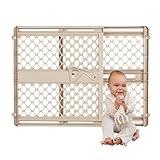
- PROVIDES PEACE OF MIND - The kids gate creates a secure barrier to help prevent access to stairs, bathrooms, kitchens, and other off-limit areas, so your little one can safely explore.
- ADJUSTABLE SAFETY GATE - This plastic child safety gate is adjustable, fits openings 26 to 42 inches wide, and is 26 inches tall. It is designed to be difficult for kids to climb. Our baby gate is perfect for stairs, doorways, hallways, and more.
- EASY TO INSTALL - Two installation options, pressure-mounted baby gate for a quick setup or hardware-mounted for use as a stairway safety gate that swings open. All necessary hardware is included. For stairway use, hardware mounting is required.
- COMFORTABLE HANDLE - Our baby gate for doorways features an ergonomic, easy-press handle that allows smooth opening and secure locking in seconds, even with one hand.
- MADE IN USA - Our JPMA-certified baby gate brings peace of mind to the entire family. We stand for the highest safety, quality, and operational standards while creating the ideal collection of products for babies ages 6-24 months. Proudly made in the USA!
When should I call a professional?
Stop home experimentation and seek help if stress repeats, conflict escalates, an animal cannot recover after sessions, or you cannot maintain reliable physical separation. A veterinarian can assess pain, illness and health risks; a qualified reward-based trainer can help with handling and staged exposure; a veterinary behaviorist can address serious fear, aggression or predatory behavior.
Bring a written log of triggers, distances, session lengths and recovery behavior. If safe, note what happened immediately before a warning signal, but never recreate a dangerous event to obtain a video. Professional guidance is especially important for households with small children, a history of bites, a dog that has lunged at a cat, or non-dog/non-cat pets that could be injured quickly.
What equipment supports a safer introduction?
Equipment does not replace supervision or training, but it can make the stages manageable:
- Baby gate: creates the barrier needed for cat introductions and controlled separation around children or resident pets.
- Positive crate or retreat: provides a protected resting place or temporary separation; it must never be punishment.
- Leash or long training line: supports two-handler neutral-territory walks and distance control.
- Cat tree or elevated perch: gives the cat an escape route above the dog’s reach.
- Professional support: a qualified trainer or veterinary behaviorist is the appropriate next step for repeated stress, growling, snapping, lunging or failed introductions.
Frequently Asked Questions
Should the new dog have free access to the whole house on the first day?
No. Start with a quiet, manageable area and expand access as the dog can rest, toilet and move around without persistent stress. Limiting territory also makes it easier to keep children and resident pets separated when you are not actively supervising.
What if my cat hides whenever the dog is nearby?
Keep the barrier in place and make sure the cat has food, water, litter and elevated or concealed resting places that the dog cannot reach. Do not pull the cat out or carry it toward the dog; if hiding and fear persist, ask a veterinarian or veterinary behaviorist to adjust the plan.
Can I use treats to make the dog approach my child?
Use rewards for calm behavior at a comfortable distance, not to lure the dog into unwanted touching or corner it. The dog should retain the choice to approach, pause or leave, with an adult ready to end the interaction.
How should I prepare if the adopted dog has an unknown history?
Assume the dog may need more space and slower steps until you observe its responses across ordinary routines. Arrange a veterinary check, verify vaccination and parasite-control needs, and keep children and resident pets separated until you can supervise safely.
When can the dogs share toys or chews?
Keep high-value items out of shared spaces during the early stages and feed the dogs separately. Reintroduce any item only when both dogs have shown sustained comfort, with an adult present and a clear way to separate them immediately if tension appears.





Leave a Reply