Recommended Free Tools
Start with the quietest safe outdoor place you can find, keep your rescue dog on a leash, and let the dog decide how close to get and how long to stay. Build familiarity in small steps; if the dog freezes, panics, or tries to escape, increase distance or end the outing. A busy park or dog park is optional—not a required milestone.
How do I introduce my rescue dog to grass?
Offer grass as one possible place to explore, not as a treatment for fear or a surface every dog will automatically enjoy. A dog may be uncertain about the feel underfoot, unfamiliar smells, nearby movement, or simply being outside in a new home. There is no established rule that grass must be the first outdoor surface or that it is inherently calming.
As an Amazon Associate I earn from qualifying purchases.
Choose a quiet, controllable spot
Look for a small area with little foot traffic and room to step away. Keep the dog leashed and stay far enough from people, dogs, traffic, and other distractions that the dog can look around without becoming overwhelmed. A yard or quiet patch near home may be easier to manage than a popular lawn, but the best starting place depends on the individual dog and what is available.
PC Slower Than It Used to Be?
A free scan shows the junk files, broken settings and background clutter dragging Windows down - then fixes them in one click.Free scan · Windows 10 & 11Outdated Drivers Are Slowing You Down
One free scan finds every outdated or missing driver and matches the right update for your exact hardware.Free scan · exact hardware matchLet the dog investigate voluntarily
Stand still or move slowly, keeping the leash slack when it is safe to do so. Give the dog time to look, sniff, or step onto the grass. You can offer a small food reward, praise, or play if the dog welcomes it. ASPCA guidance recognizes food, praise, petting, and play as possible rewards; use what your dog actually enjoys, and do not rely on food if the dog is too worried to take it.
#1 Best Overall

- Engineered for Ultimate Strength: Constructed from 1/2 inch diameter rock climbing rope, this heavy duty dog leash is distinctively durable and strong. It is designed to withstand the strongest pulls from large and energetic dogs, giving you peace of mind that your pup won't break free during walks
- Comfortable Padded Handle: Say goodbye to rope burn. Our soft, cushioned foam handle provides an amazing grip and protects your hands from sudden tugs. Enjoy longer walks and extended training sessions with total comfort, even if your dog is a puller
- Maximum Nighttime Visibility: Highly reflective threads are woven through the entire length of the rope (not just painted on), keeping you and your fur baby visible to passing cars and cyclists during early morning jogs or late-night strolls. Perfect for urban streets and low-light environments
- Tangle-Free 360° Swivel: Featuring a heavy-duty metal clasp that rotates 360 degrees, this ensures the rope never gets twisted or tangled, no matter how much your dog moves around. The zinc alloy hook is rust-proof and easy to clip onto any dog collar or harness in seconds
- Versatile for Any Activity: Park walks, trail hikes, or yard training. Offers ideal balance of freedom and control. Comes in 4ft, 5ft, 6ft lengths and 12 colors. 3/8" diameter suits small to medium dogs – lightweight and non-bulky. For medium and large dogs, choose 1/2" diameter
Do not pull the dog onto the grass, drag it forward, or use a treat to coax it past a point where it is uncomfortable. A dog that chooses to watch from the path or remain on a familiar surface is still learning that the outing is safe. AVMA advises controlled, gradual exposure and removing an uneasy dog from the situation.
Read the response, not the calendar
End or simplify the outing if your dog freezes, repeatedly tries to retreat, pulls hard to escape, panics, or cannot settle enough to explore. Move farther from the source of worry or return home. If the dog remains relaxed and curious, allow a little more investigation next time. The sources do not establish a required number of minutes, visits, or successful steps; progress should be based on the dog’s observable comfort.
Before the first outing: prepare at home and check what is known
A move into a new home can be a major change, especially when the dog’s past experiences or health are only partly known. ASPCA’s “3-3-3 Guideline” describes broad adjustment periods of the first 3 days, next 3 weeks, and first 3 months. Treat it as a general guideline, not a scientific deadline or a promise that every dog will follow the same timetable. Outdoor confidence may develop sooner or later than those periods.
The Tool Desk
Outbyte PC Repair FREEClear out junk files and repair common Windows errorsFree Scan →Outbyte Driver Updater FREEScan for outdated or missing drivers - takes under a minuteDriver Scan →Ask about the dog’s experience
If you adopted through a rescue or are fostering, ask what is known about the dog’s previous outdoor routines. Useful questions include whether the dog has encountered grass, stairs, traffic, crowds, unfamiliar dogs, leashes, or harnesses, and what situations have seemed comfortable or difficult. The answers may be incomplete; do not assume that an unknown history proves trauma or that a dog has already learned ordinary home and walking routines.
Rank #2

- 【Professional Retractable Dog Leash】 The ultimate combination: 16 ft strong nylon reflective tape, impact-resistant ABS housing, and a stainless steel anti-chew cable. This design greatly reduces the risk of being bitten through, extending the leash’s lifespan. Augwind’s retractable leash is specifically designed for small to medium dogs under 50 lbs, offering the best value on the market
- 【Safe & Effective】16 ft Strong Reflective nylon webbing; Over 100,000 retraction times; Max anti-jerk tensile strength: 350 lbs; . Whether day or night, on the street or lawn, the Augwind retractable leash makes every walk safe and easy
- 【Quick Lock System】 Operate the pause, lock, and unlock buttons with a single thumb. Enjoy smooth braking and instant response. The Augwind retractable dog leash ensures the safety of both you and your pet on every outing
- 【2026 Equipment Upgrades】1. Reflective webbing 2. Chrome-plated, rust-proof 360° rotating clasp 3. Ergonomic soft silicone handle 4. Reserved slot for poop bag holder 5. Stainless steel anti-chew cable
- 【2-Year Warranty】 We are a professional pet products company committed to bringing the safest, most practical, and affordable pet products to pets and their owners. We promise to solve any quality issues within 2 years. We provide 24/7 after-sales service. If you have any questions, please feel free to contact us
Make home a secure base
Set up a quiet resting place and a predictable routine for meals, rest, toileting, and calm interaction. ASPCA adoption guidance recommends patience, a safe place, routine, and avoiding forced interaction. Let the dog approach people and investigate the home at its own pace. If the dog is still settling, a quieter outing close to home may be more manageable than adding a busy destination and a long walk at the same time.
Arrange veterinary guidance
Plan a veterinary visit and ask about the dog’s health, vaccination status, and parasite concerns before choosing public places. The appropriate advice depends on the dog’s age, health, and vaccination history. Best Friends Animal Society advises avoiding high-traffic places such as dog parks for puppies and kittens until they are fully vaccinated. That advice is specific to puppies and kittens; it should not be generalized into a blanket rule for every adult rescue dog. Ask a veterinarian about the individual dog.
Prepare for safe handling
Use a sturdy leash in public, follow local leash rules, and use off-leash access only in a securely enclosed area. ASPCA’s general dog-care guidance includes a leash, collar, license, and ID tag among relevant dog-care supplies and advises leash use outside a secure fenced area. Check that the dog’s collar and ID tag are secure before leaving. If you are unsure whether you can safely hold or guide the dog in a particular setting, choose an easier, more controlled location.
How do I get a newly adopted dog used to walks?
Think of a walk as a sequence of manageable outdoor experiences, not a test of obedience or distance. Start with the easiest context the dog can tolerate, then change one challenge at a time. For example, keep the location and noise level similar while gradually allowing more time to sniff; on another outing, you might observe a person from a greater distance without adding a crowded route as well.
Rank #3
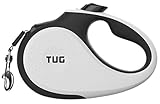
- Small Retractable Dog Leash is Suitable for Dogs Under 35 lbs; Medium For Dogs Under 55 lbs; Large For Dogs Under 110 lbs; Retractable Leashes Not Suitable For Chewing
- 16 ft Tape Retractable Dog Leash With Easy-Adjust Retraction; 360 Degree Tangle-Free Inlet
- Quick Lock And Unlock Feature - Easy Roll-On and Roll-Off With Your Thumb
- Super Comfortable Grip For Those Long Walks! Ergonomic Anti-Slip Handle
- Heavy Duty Internal Coil For Consistent Retraction and Recoil
- Begin somewhere quiet. Choose a low-distraction area with a clear route back to home or another safe place. Use a leash and make sure the equipment is secure.
- Pause and observe. Give the dog a chance to notice the surroundings. Let it sniff or look around rather than setting a distance target.
- Follow the dog’s comfortable pace. If the dog is willing to move, walk a short, easy route. If it wants to pause, give it time as long as the location remains safe.
- Reward relaxed engagement. Offer an appropriate reward when the dog is comfortable enough to respond. Rewards can be food, praise, petting, or play, depending on the dog and the moment.
- Make the next outing only slightly harder. Adjust one factor—such as duration, distance from other people, ambient noise, or location—while keeping other parts familiar.
- Back up when the dog is uneasy. If the dog freezes, pulls to escape, panics, or cannot settle, increase distance or end the session. Try an easier setting another time rather than pushing through.
This progression applies AVMA’s advice on controlled, gradual exposure. It is practical guidance, not a validated schedule with a set number of walks or minutes. A short outing that stays within the dog’s comfort is more useful than a longer one that leaves the dog distressed.
Do not make greetings the goal
A dog does not need to greet every person or dog to become familiar with outdoor life. Let the dog observe from a distance it can tolerate. Avoid close greetings by default, particularly when the dog’s behavior around unfamiliar animals or people is not yet clear. If another person or dog approaches and your dog appears uncomfortable, use the leash to create space and leave the situation if needed.
Why is my rescue dog scared to go outside?
There may be more than one reason, and the dog’s full history may not be known. Outside can combine unfamiliar surfaces, sounds, smells, people, dogs, movement, and the challenge of walking on leash. A change of home can add uncertainty of its own. The available guidance supports gradual exposure and attention to the dog’s response; it does not establish a single cause for outdoor fear or justify assuming a particular past experience.
Free tools Windows power users keep installed
One-click scans. No signup required.
Look for the situation that changes the dog’s response
Notice whether the dog is more comfortable in one place than another, or when a particular distraction is farther away. Compare practical features such as noise, crowd level, distance from unfamiliar people and dogs, ability to retreat, security of the leash or enclosure, surface familiarity, and the dog’s observable comfort. These are decision aids, not a formal scoring system. No cited source establishes a universally best surface or park type.
Rank #4

- ENHANCED NIGHT VISIBILITY: Keep your dog safe during early morning or evening walks. The upgraded double-sided reflective stitching catches streetlights and car headlights brightly, ensuring you both remain highly visible to traffic in low-light conditions
- CUSHIONED ANTI-BURN HANDLE: A savior for hands when walking active dogs that pull. The soft, thick interior padding prevents painful rope burn and strain, providing a secure, comfortable grip for better control when your furry friend lunges. Includes a sturdy metal D-ring for clipping poop bag dispensers
- PERFECT 6FT BALANCE: The ideal length for urban walks, offering your dog enough freedom to sniff around while keeping them close enough for easy command in busy areas. Choose the 3/4'' width for small breeds, or the robust 1.0'' width for powerful medium to large dogs
- HEAVY-DUTY TANGLE-FREE CLASP: Features a strong metal spinning snap that allows 360° movement, preventing frustrating leash tangles so your dog can move freely around you. Built with high-density nylon webbing for reliable daily strength. NOTE: While tough for pulling, this nylon material is NOT chew-proof. Don't leave unattended with chewers
- COMPLETE THE LOOK: Available in vibrant colors tailored to match your dog's style. For the ultimate coordinated walking set, pair this leash with our matching Joytale reflective nylon collar
Respond to unease by creating space
When the dog becomes uneasy, do not insist on staying nearby to “get used to it.” AVMA advises removing an uneasy dog from the situation, and ASPCA’s dog-bite-prevention guidance says to progress at the dog’s pace, never force a fearful or uncomfortable dog, and leave crowds if the dog is stressed or panicked. Move to a quieter area, increase distance, or end the outing. Forcing exposure can make the immediate situation harder and does not show that the dog is ready to move closer.
Independent reader supportYour contribution helps us test, update, and keep practical guides available for everyone.When can I take my rescue dog to the park?
There is no universal waiting period. Consider a quiet park only when the dog can be safely handled, has some comfortable experience outdoors, and can observe activity from a distance without becoming overwhelmed. Ask your veterinarian about whether the dog’s age, health, and vaccination status make a particular public setting appropriate. A park visit can begin at its edge; entering the busiest area is not the starting requirement.
Compare destinations by how much control they offer
| Setting | What may make it easier or harder | How to use it as a first step |
|---|---|---|
| Quiet area close to home | Often easier to leave quickly and keep the outing familiar; the actual noise, foot traffic, and surface still matter. | Offer a brief opportunity to sniff and observe, then return home while the dog remains comfortable. |
| Quiet edge of a park | May provide a view of people or dogs at a distance, but activity can change unexpectedly. | Observe from outside or at a quiet edge. Increase distance or leave if the dog becomes uneasy. |
| Busy park path or gathering area | More people, dogs, sound, and movement can reduce the dog’s ability to retreat or stay relaxed. | Do not choose it as a default first destination. Try it only if the dog is comfortable with easier settings and you can leave promptly. |
| Off-leash dog park | Close, unpredictable dog interactions and limited control may be difficult for a dog whose comfort and behavior are not yet established. | It is optional, not a socialization requirement. Consider individual behavior and veterinary health advice before deciding whether to enter. |
The setting descriptions are practical comparisons, not guarantees: a quiet park can become crowded, and a familiar area can still contain a difficult distraction. Choose a place where you can maintain a safe leash setup, keep distance, and retreat without delay.
Decide whether a dog park is appropriate separately
ASPCA supports dog parks as a community resource, but that does not mean every dog is ready for one or needs to visit. Consider the individual dog’s comfort around other dogs, ability to be handled safely, and veterinary guidance on health. Do not treat dog-park attendance as proof of successful socialization. For puppies and kittens, follow the veterinarian’s advice on vaccination before entering high-traffic places; the Best Friends recommendation about waiting until fully vaccinated is specifically phrased for puppies and kittens.
Best Value

- Upgrade: The product has been modified to use nylon thread directly sewing, very strong.All handles was sewn onto the leash instead of the cord ties.Package includes: frosted zipper bag,two handles dog leash.
- MAXIMUM TOUGHNESS AND DURABILITY: Nearly 2X thicker and stronger than standard dog leashes. 3mm thick and 1” wide with tightly webbed nylon for enhanced rugged construction.
- DUAL HANDLES FOR TOTAL CONTROL: Soft Neoprene and padded handle, comfortable than ever ;Equipped with an extra traffic handle for amazing control. Use the standard handle for those casual dog walks or quickly grab the built in traffic handle to guide your pup through crowded areas with ease.
- 360° Rotating Clasp: Swivel clasp prevents the leash from twisting and dog getting tangled. Heavy-duty metal clasp makes our training leashes last longer than most ones. Premium components for maximum strength
- BE SAFE AND VISIBLE AT NIGHT: Luminous reflective threading keeps you both safe and visible on your late-evening walks. Enjoy a large 2” heavy duty clip for added safety and thick D-ring to attach your favorite dog training clicker or dog poop bag holder.Packaging details:Frosted zipper bag,Dog leash with D ring
Which equipment helps keep an outdoor introduction safe?
Equipment supports safe management; it does not make a frightened dog comfortable by itself. Select items the dog can wear safely and that you can use without causing distress.
- Sturdy dog leash: Use one in public and obey local leash requirements. ASPCA advises using a leash outside a secure fenced area.
- Dog ID tag: A collar with identification is a sensible precaution before an outing. ASPCA’s dog-care checklist includes a collar, license, and ID tag.
- Well-fitted dog harness: A harness may be an optional management choice for some dogs. ASPCA described using one in rehabilitation with severely fearful dogs who struggled with leash walks. That is a case example, not evidence that every dog needs a harness or that a harness treats fear. Choose equipment that fits and does not cause discomfort.
- Small training treats: Food can be one reward option if the dog is willing to eat and finds it motivating. ASPCA also names praise, petting, and play as reward options. Rewards should support a comfortable choice, not lure the dog past a limit.
ASPCA’s position on training aids and methods supports humane, reward-based approaches and advises avoiding tools that cause discomfort or undue anxiety. If handling equipment itself worries the dog, take a step back and seek qualified guidance rather than tightening, pulling, or forcing the dog to wear it through distress.
When should I pause the plan and get help?
Stop trying to increase exposure and seek help if fear is severe or persistent, the dog cannot be safely handled, or fear or aggression creates a risk of injury. AVMA recommends veterinary consultation for excessive or apparently unprovoked fear or aggression. ASPCA recommends referral to a behavior specialist when distress is severe or injury is a concern.
Do these 3 things before closing this tab:
1Repair Windows errors before they cause bigger problems2Fix the driver behind crashes, sound loss and screen glitches3Clear out junk files and repair common Windows errorsA veterinarian can discuss health and vaccination questions and help assess whether fear or behavior needs additional support. For behavior help, look for a qualified professional who uses reward-based methods. Until you have guidance, prioritize distance, a secure leash setup, and situations you can leave safely; do not test the dog’s limits in a crowded or off-leash setting.
What progress should look like
Progress is not a particular number of walks, a fixed time in a new home, or a visit to a dog park. It is the dog being able to experience a manageable setting with less distress and more voluntary investigation over time. Some outings may be easier than others; a difficult day is a reason to choose a simpler context, not to force the next step.
ASPCA’s adjustment guideline can help adopters remember that settling in takes patience, while AVMA and ASPCA guidance on exposure emphasizes control, choice, and removing a distressed dog from the situation. Let the dog’s response determine whether to stay, step back, or try again later.
Quick Recap
Product prices and availability are accurate as of the date/time indicated and are subject to change. Any price and availability information displayed on Amazon at the time of purchase will apply.




