The Tool Desk
Outbyte PC Repair FREEClear out junk files and repair common Windows errorsFree Scan →Outbyte Driver Updater FREEScan for outdated or missing drivers - takes under a minuteDriver Scan →First decide whether the cat should be at school at all. A classroom is not automatically a suitable home. New South Wales Department of Education guidance says cats generally are not suitable for housing at school and favors observation with only limited, well-supervised handling for visiting cats. If your school does permit a cat, safety depends on a quiet secure area, one accountable adult, controlled student contact, hygiene procedures, veterinary access, and written plans for weekends, holidays, emergencies, and closure.
Start with a suitability decision, not a cage
Keeping a cat in a school is a continuing welfare responsibility, not a classroom activity that can be improvised. Consider the individual cat’s temperament, age, health, toilet habits, tolerance of noise and handling, need for uninterrupted sleep, and ability to retreat. Also consider whether the school can provide reliable care every day the building is occupied and when it is empty.
As an Amazon Associate I earn from qualifying purchases.
New South Wales Department of Education’s Cats – introduction guidance states that cats generally are not considered suitable animals for housing at school. For a cat that visits, the guidance favors observation and only limited, well-supervised handling. That is a substantial welfare caution even where another jurisdiction’s rules are less restrictive.
Check your own school and district policy before making arrangements. Requirements can differ by jurisdiction and may involve animal welfare, public health, insurance, licensing, building management, or occupational safety. Queensland’s education guideline, for example, requires a school-specific activity risk plan and a registered teacher responsible for the activity; it is a Queensland planning model, not a universal law.
#1 Best Overall
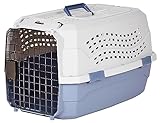
- Hard sided pet carrier with 2 doors for front and top entry; suitable for cat or medium size dog weighing 12 - 20 pounds
- Durable plastic construction with steel wire doors; screws keep the top and bottom sections securely connected
- Spring load latches ensure easy one-handed door opening and closing; top door swings open to the left or right and includes a top carry handle
- Plenty of air ventilation on the sides, top, and back of the carrier
- Note: Be sure to measure the size of the pet when choosing carrier size
Compare the realistic options
| Arrangement | Welfare and safety profile | Questions to answer before approval |
|---|---|---|
| Permanent resident cat | Highest demand for daily staffing, quiet space, cleaning, veterinary access, and holiday coverage. NSW guidance specifically cautions against school housing. | Can the cat rest undisturbed? Who checks it every day, including weekends and holidays? What happens during closure or evacuation? |
| Short, supervised visit | Limits the time exposed to noise and handling, but still requires escape prevention, allergy controls, hygiene, and a calm retreat. | Is the visit appropriate for this cat? Which adult controls contact, doors, windows, transport, and departure? |
| Observation without handling | Usually the least intrusive educational option when a cat is present. | Can students learn without crowding, touching, feeding, or photographing the cat? |
If staff cannot answer these questions in writing, do not bring the cat onto campus.
Assign accountability before the cat arrives
One knowledgeable adult must be responsible for the animal, with a named backup. The UK Health Security Agency and Department for Education guidance calls for a knowledgeable staff member to take responsibility. Children may help with age-appropriate activities, but they do not replace adult care or decision-making.
- Write the primary caregiver’s name, contact details, duties, and working hours on the care plan.
- Name a backup who knows the cat’s normal behavior, feeding routine, medication instructions, carrier location, and emergency contacts.
- Record who performs morning, midday, and end-of-day checks; who cleans litter and bedding; and who documents concerns.
- Arrange routine veterinary care and a way to reach a veterinarian at short notice. NSW school animal-welfare guidance requires access to veterinary care and daily inspection, including weekends and holidays.
- Keep the care plan, veterinary details, consent records, and emergency instructions accessible to authorized staff rather than relying on one person’s memory.
The accountable adult decides when contact must stop. A cat that hides, freezes, flattens its ears, hisses, swats, pants, repeatedly licks itself, or shows another change from normal behavior needs space and assessment, not encouragement to interact.
Prepare a secure, quiet room or area
Choose a low-traffic location away from doorways, noisy equipment, food preparation, service, and eating areas. The cat needs a secure enclosure or room, a hiding place, washable bedding, water, litter facilities, and opportunities for uninterrupted rest. Provide suitable temperature, light, and shade; avoid a location that becomes hot, cold, brightly lit, or inaccessible when classes change.
Rank #2
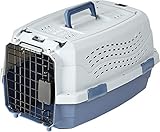
- Hard sided pet carrier with 2 doors for front and top entry; suitable for cat or extra-small dog breeds, such as chihuahuas and toy poodles (up to 11 pounds)
- Durable plastic construction with steel wire front door; screws keep the top and bottom sections securely connected
- Top door can swing open to the left or right for easy access and convenience
- Plenty of ventilation on sides, top, and back of the carrier
- Note: Be sure to measure the size of the pet when choosing carrier size
Containment and escape prevention
- Use an enclosure that is stable, appropriately sized, and secure for the individual cat. It must be securable whenever an adult is not present.
- Close and check doors and windows before opening a carrier or allowing any handling. NSW handling guidance emphasizes escape prevention and secure transport containers.
- Do not allow the cat to roam freely through a classroom or corridor. A sudden bell, crowd, or open exit can trigger a dash.
- Keep the carrier, food, litter tools, and cleaning supplies in known locations so staff do not have to search during an emergency.
- Never tether a cat as a substitute for a secure room or enclosure.
Reduce indoor-air and allergy risks
Ask families and staff about allergies, asthma, and other health concerns before approval. The U.S. Environmental Protection Agency identifies classroom animals as potential sources of allergens, asthma triggers, and microorganisms. Its indoor-air guidance recommends considering separation from carpets, upholstered furniture, stuffed toys, and return-air ducts, and avoiding placement near students with known allergy or asthma concerns.
Keep animal food and equipment away from human food. Do not place bowls, litter tools, or bedding in food preparation, storage, service, or eating areas. If the room cannot provide that separation, it is not an appropriate location.
Give the cat a predictable retreat
Students should be told that the hiding place is private. No one should reach into it, pull the cat out, tap on the enclosure, or follow it when it withdraws. Maintain a behavior diary with brief entries on appetite, drinking, toileting, activity, hiding, interactions, and any unusual signs. The diary lets a backup caregiver recognize a meaningful change rather than treating every quiet day as normal.
Outdated Drivers Are Slowing You Down
One free scan finds every outdated or missing driver and matches the right update for your exact hardware.Free scan · exact hardware matchPC Slower Than It Used to Be?
A free scan shows the junk files, broken settings and background clutter dragging Windows down - then fixes them in one click.Free scan · Windows 10 & 11Set rules for student contact
Every interaction must be supervised by an adult. Contact should be calm, brief, and limited to what the cat tolerates. Avoid crowding or allowing many students to handle the cat simultaneously; excessive handling can cause stress and defensive aggression.
Rank #3

- Hard sided pet carrier with 1 door for front entry; suitable for a cat, dog, or other small pet
- Durable molded plastic construction; locking door mechanism for secure closure
- Top handle for easy carrying
- Metal wire door and side panels provide ventilation
- Product Dimensions: 23.6 x 15.7 x 13 inches (LxWxH)
- Before students enter, secure doors and windows and confirm that the cat has access to a retreat.
- Invite a small number of students at a time. Establish a clear line or waiting area so the cat is not surrounded.
- Teach students to approach quietly, let the cat choose whether to come closer, and stop when the cat moves away.
- Do not permit chasing, grabbing, dressing, teasing, loud voices, flash photography, or unsupervised feeding.
- End the session immediately if the cat shows stress, illness, defensive behavior, or a strong desire to hide.
If lifting is permitted, NSW guidance says students should support the chest and rump. They must never pull a cat up by its front legs or lift an adult cat by the scruff. Young children need direct supervision for both handling and handwashing.
Use a daily school-day routine
| Time | Adult check | Record or action |
|---|---|---|
| Before students arrive | Confirm the cat is present, responsive, breathing normally, and has water, food as scheduled, clean litter, and a safe temperature. | Record appetite, toileting, behavior, and any visible concern. Check doors, windows, enclosure latches, and carrier location. |
| During the day | Observe without disturbing rest. Supervise every contact and maintain the student limit. | Note changes in behavior, eating, drinking, elimination, hiding, or signs of stress. Stop contact when the cat needs privacy. |
| End of day | Remove students, secure the room or enclosure, and confirm the cat has water, appropriate food, clean bedding, and litter. | Complete the diary, remove waste, store food safely, and confirm the named after-hours caregiver. |
A daily check is not a quick glance from the corridor. The responsible adult must be able to identify what is normal for this cat and act when it is not.
Feed, clean, and handle equipment hygienically
Food and water
Keep feeding surfaces clean and animal food separate from human food. Under the UK infection-prevention guidance, food not eaten within 20 minutes should be removed or covered; apply that specific timing only when following that UK guidance. Do not let students share food with the cat or place hands in bowls.
Free tools Windows power users keep installed
One-click scans. No signup required.
Litter and bedding
Clean litter trays daily with disposable gloves and keep them away from food preparation, storage, and eating areas. The UK guidance advises that pregnant staff should not clean cat litter because of toxoplasmosis risk. Assign another trained adult and provide handwashing afterward.
Rank #4
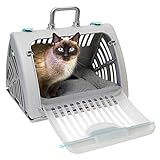
- DESIGNED SPECIFICALLY FOR CATS – PATENTED SIDE-OPENING DOOR - Original SportPet patented wide side-opening door allows cats to walk in naturally reducing fear, stress, and resistance. Ideal for anxious cats, vet visits, grooming, and everyday transport. Veterinarian recommended design for easier handling.
- HARD-SIDED CAT CARRIER WITH COMFORT BED INCLUDED - Includes 1 light gray hard-shell carrier with gray door plus an extra-comfy removable pet bed. Sturdy construction provides a safe, enclosed space cats prefer, while the soft bed adds comfort for travel or waiting rooms.
- TRAVEL-READY & VET VISIT ESSENTIAL - Perfect cat carrier for car travel, road trips, moving, and trips to the veterinarian. Smooth-closing secure door keeps pets safely contained while allowing fast, stress-free loading and unloading.
- EASY TO CLEAN & FOLD-FLAT STORAGE - Wide door opening makes cleaning quick after accidents. Carrier folds down flat for compact storage in closets, cabinets, or vehicles. Machine-washable & dryer-safe bed for hassle-free maintenance.
- IDEAL SIZE FOR LARGE CATS & SMALL PETS - Carrier dimensions: 18.5” L x 15.25” W x 14.25” H. Bed dimensions: 18” L x 13.75” W. Supports pets up to 25 lbs. Works great for large cats, small dogs, and small animals like rabbits, ferrets, and guinea pigs.
Launder bedding regularly and remove visibly soiled material promptly. The Centers for Disease Control and Prevention advises cleaning and disinfecting animal areas and not cleaning animal equipment in sinks or areas used for food. Use a designated utility or cleaning area approved by the school.
Handwashing
Everyone must wash hands after touching the cat, its bedding, food, bowls, litter, carrier, enclosure, or other habitat items. Use soap and running water; supervise young children so the step is completed properly. Hand sanitizer is not a reason to skip washing when hands are visibly dirty.
Plan illness, injury, bites, and veterinary care
Keep the veterinarian’s contact details, the cat’s medical information, and a secure carrier available. Follow local vaccination and veterinary requirements. If the cat becomes sick, isolate it from student contact and call a veterinarian. CDC guidance notes that sick or stressed animals may be more likely to shed germs and bite, so staff should use extra caution.
Recommended Free Tools
- Do not ask students to diagnose, restrain, medicate, or transport the cat.
- After a bite or scratch, separate the cat safely, provide first aid under school procedure, notify the appropriate adults, and seek medical advice according to local requirements.
- After a fall, escape attempt, breathing problem, repeated vomiting, severe lethargy, or other acute concern, contact a veterinarian promptly rather than waiting for the next school day.
- Document what happened, when it occurred, who was present, and what action was taken.
Cover weekends, holidays, closures, and emergencies
A plan that works only from 8 a.m. to 3 p.m. is incomplete. Decide in advance who provides care when the school is closed, including weekends, public holidays, term breaks, snow days, power failures, and unexpected building closures. NSW animal-welfare guidance requires daily inspection and holiday coverage; Agriculture Victoria’s classroom guidance also calls for emergency planning and veterinary contacts.
Best Value

- Multi-Scenario Safe Travel: Measuring 22.8" L x 14.6" W x 13.4" H, this premium hard shell cat carrier is fully airline approved. It serves perfectly as a cat carrier, dog carrier, cat crate and small dog crate, comfortably holding small pets up to 22 lbs. Suitable for air travel, car rides, vet visits, house moving and daily outdoor outings.
- Full Surround Ventilation: This hard cat carrier is designed with four-sided hollow ventilation to achieve smooth 360° air circulation. The breathable cat carrier hard shell maintains a fresh and cool interior environment, effectively alleviating pets’ travel anxiety and stress during long trips
- Impact Resistant & Durable: Made of high-strength impact-resistant plastic material, this pet carrier features an integral sturdy frame that resists cracking and deformation. It can withstand frequent carrying and bumpy transit, supporting long-term daily and travel use.
- Dual Door & Comfort Handle: Comes with top and front dual-door design, making it convenient to load and unload pets. Equipped with a built-in foldable ergonomic handle for effortless carrying. This portable pet carrier can be stacked neatly to save storage space when not in use.
- Reinforced Secure Lock & Integrated Food Bowl: Adopts reinforced hardware buckles and thickened connection structure to ensure tight closure and prevent accidental separation. This airline approved cat carrier and dog carrier is equipped with an integrated food bowl, great for long-distance travel and outdoor feeding on the go.
Closure and holiday checklist
- Name the caregiver for each closure period and obtain confirmation that the person accepts the duty.
- Specify feeding, water, litter, medication, cleaning, behavior checks, and escalation instructions.
- Decide whether the cat will remain in its approved area or be transported to an appropriate alternative. Do not leave it unattended because no one can collect it.
- Provide access instructions, keys, alarm procedures, emergency contacts, and the carrier.
- Check supplies before the building closes and keep animal food separate from human food.
Evacuation and building emergencies
Include the cat in fire, flood, electrical-outage, severe-weather, and evacuation plans. Identify who retrieves the carrier, who closes internal doors, where the cat goes, and how staff confirm that it has been moved. Practice the plan without creating unnecessary stress. Never release the cat outdoors during an evacuation unless directed by emergency authorities and a safe, controlled relocation is possible.
Independent reader supportYour contribution helps us test, update, and keep practical guides available for everyone.Use equipment only as part of the care plan
| Equipment | Purpose | Safeguard |
|---|---|---|
| Hard-sided cat carrier | Secure transport to and from school, veterinary visits, or an evacuation point. | Keep it accessible, intact, and large enough for the cat; secure the cat before opening exterior doors. |
| Secure enclosure | Containment when an adult is not present or when controlled observation is needed. | Match size and design to the cat; secure latches and provide a hiding area. |
| Hiding place and washable bedding | Privacy, rest, and a retreat from noise. | Keep the retreat undisturbed and clean bedding regularly. |
| Scratching post and suitable toys | Species-appropriate activity and enrichment where the cat’s temperament permits. | Inspect for damage and remove items that create swallowing, entanglement, or injury risks. |
| Separate bowls and litter tools | Routine feeding, watering, and cleaning. | Store and clean them away from human food areas. |
Victoria’s classroom guidance lists common animal supplies, while NSW cat guidance specifically mentions toys and scratching posts. Equipment cannot compensate for an unsuitable room, inadequate staffing, or a cat that is distressed by school life.
Make the approval decision in writing
Before the first school day, the principal or designated authority should be able to review a short written plan containing:
- the reason the cat is being considered and whether observation without handling would meet the educational aim;
- the school-policy and local-requirement checks completed;
- the cat’s temperament, health, toilet-training status, veterinary details, and vaccination information required locally;
- the room layout, enclosure, hiding area, cleaning arrangements, and allergy or asthma controls;
- the primary adult, backup adult, student-contact rules, and daily diary;
- weekend, holiday, closure, evacuation, illness, bite, escape, and veterinary procedures;
- the date for reviewing whether the arrangement remains in the cat’s best interests.
The UK guidance expects a mature, toilet-trained cat when its school infection-prevention provisions are applied. Other jurisdictions may set different conditions, so record which local rule is being followed rather than assuming one country’s guidance applies everywhere.
Common unsafe shortcuts and their fixes
| Shortcut | Why it fails | Safer correction |
|---|---|---|
| “The cat is friendly, so students can approach freely.” | Friendly behavior does not remove escape, stress, allergy, or bite risk. | Use small supervised groups and let the cat end contact. |
| “A cage makes the classroom safe.” | Containment does not provide quiet, hygiene, ventilation, rest, or holiday care. | Assess the full room, routine, staffing, and closure plan. |
| “Students can share the cleaning.” | Young people may lack the training, protective equipment, or judgment required. | Assign trained adults; involve students only in approved, supervised learning tasks. |
| “Someone will check on the cat later.” | Unassigned care is missed care, especially during weekends and closures. | Name a person and backup for every calendar day. |
| “We can decide what to do in an emergency.” | Evacuation and escape events leave little time to improvise. | Keep a carrier ready and rehearse responsibilities in the school emergency plan. |
Bottom line for a school cat
A school cat is safe only when the school can protect the animal’s welfare as consistently as it protects students: quiet retreat, secure containment, limited supervised contact, clean facilities, allergy-aware placement, daily observation, prompt veterinary access, and reliable care whenever the building is closed. Because NSW guidance generally does not recommend housing cats at school, a supervised visit or observation-only activity may be more appropriate than a resident classroom cat. Follow your own school’s policy and local authority requirements, and decline the arrangement if any essential safeguard cannot be guaranteed.
Quick Recap
Product prices and availability are accurate as of the date/time indicated and are subject to change. Any price and availability information displayed on Amazon at the time of purchase will apply.




