
Some links on this page are affiliate links: if you buy through them we may earn a commission, at no extra cost to you.
The safest system is a two-copy record: the veterinary practice’s complete medical record and signed certificates remain authoritative, while you keep current paper and digital copies for emergencies, boarding, a change of veterinarian, licensing, and travel. Update your copy after every appointment, retain the original rabies certificate, and record the microchip number with the medical history. A notebook or organizer can make reminders and summaries convenient, but it cannot replace the clinic record or a veterinarian-signed certificate.
Why does an accurate pet record matter?
A complete file lets another professional verify what your pet received, when it was given, and what should happen next. That matters when a vaccine is due, a medication causes a reaction, an emergency hospital needs history outside normal office hours, or a boarding facility asks for proof on short notice.

As an Amazon Associate I earn from qualifying purchases.
What’s actually slowing this PC down?
Pick the symptom - the matching free tool is one click away.
The clinic’s underlying medical record is the source of truth. Your files are continuity copies: they should preserve certificates, laboratory reports, prescriptions, discharge instructions, and other documents rather than only a list of dates. A personal log is useful for organization, but it is not independent proof that a vaccine was administered.
What should be recorded for each dog or cat?
Create a separate profile for every animal, even when several pets live in the same household. Use the following fields so a new clinic can identify the correct patient and verify each entry.
Popular on Amazon

- "COMPLETE MEDICAL RECORDS FOR DOGS & PUPPIES: Comprehensive health record booklets designed to track vaccinations, deworming, exams, and treatments. Ideal for maintaining organized, accurate medical histories for individual dogs or entire litters."
- 25 INDIVIDUAL BOOKLETS PER PACK: Includes 25 separate health records, making it easy for breeders, shelters, rescues, or clinics to document care for multiple pets. A convenient, cost-effective option for professional use."
- CLEAR, CUSTOMIZABLE FORMAT FOR EASY RECORDING: Each booklet includes clearly labeled sections for vaccines, dates, and notes. Simple, organized design allows pet owners and professionals to record information quickly and legibly at home or during vet visits."
- PORTABLE & DURABLE DESIGN: Compact size fits easily into travel folders, puppy packets, or veterinary files. Sturdy paper stock ensures each record withstands handling over time, ideal for breeders and adopters."
- IDEAL FOR PET OWNERS, BREEDERS & CLINICS: A must-have tool for dog owners, shelters, veterinarians, and groomers to track a pet’s complete health history. Simplifies communication between caregivers, adopters, and clinics."
| Record area | Information to capture | Why it matters |
|---|---|---|
| Identity | Name, species, breed or mix, sex, age or birth date, color, markings, and a recent identifying description or photograph | Prevents records from being attached to the wrong animal, especially in multi-pet homes. |
| Owner and contacts | Owner name, address, telephone number, email, emergency contact, and the current veterinary practice’s telephone number | Allows a clinic, boarding facility, or emergency service to reach the right person. |
| Microchip | Full chip number, implantation date, registry name if known, and the date contact details were last checked | Connects the physical pet to identification records and travel paperwork. |
| Vaccination entry | Vaccine product and manufacturer, lot or serial number, expiration date when supplied, administration date, next due date, administering veterinarian, clinic details, and signature or license information | Supports verification of the exact product and timing instead of relying on memory. |
| Rabies certificate | Animal and owner identity, vaccine manufacturer and serial number, vaccination date, next-booster date, duration of immunity or expiration information when required, and veterinarian credentials | Many licensing, travel, and animal-control authorities treat the signed certificate as official proof. |
| Other care | Visit dates, diagnoses, examination notes, test results, medications and doses, allergies, prior adverse reactions, procedures, and discharge instructions | Gives a future clinician the context needed to make safe decisions. |
Keep laboratory reports, imaging summaries, referral letters, prescriptions, and certificates with the same pet profile. If a document belongs to more than one animal, make a labeled copy for each profile and note the original location.
How do I set up a reliable record for a new pet?
- Start with identification. Enter the pet’s name, species, breed, sex, birth date or estimated age, color and markings, owner contacts, and microchip number. If the pet is not chipped, leave a clearly labeled field for the implantation date rather than guessing.
- Request the full history. Ask the shelter, breeder, previous owner, or prior veterinary practice for every available certificate, laboratory result, medication list, and discharge instruction. Keep the original wording and dates.
- Separate confirmed facts from unknowns. Mark a missing lot number or uncertain vaccine date as “not verified” and ask the current veterinarian how it should be handled. Do not reconstruct a schedule from memory.
- Have the current veterinarian reconcile the file. Bring the pet and all documents so the practice can verify identity, scan the microchip, assess prior reactions, and write an individualized plan.
- Choose a storage structure. Use one profile per pet in the clinic portal or a clearly named digital folder, plus a paper folder or record book for originals and quick reference.
How should vaccine timing be managed?
Vaccination is not a generic calendar copied from the internet. The American Animal Hospital Association says a protocol should reflect lifestyle, geography, and other risk factors, while the World Small Animal Veterinary Association’s 2024 guidance emphasizes using core and non-core vaccines only as frequently as necessary for the diseases that threaten a particular dog or cat where it lives or travels.
At each appointment, ask the veterinarian to document the next due date and why that vaccine is recommended. The explanation may involve age, local disease exposure, travel, boarding, contact with wildlife, household risk, or a previous reaction. Record the administration site, route, age requirement, and frequency when the practice supplies those details.
Use the clinic portal, a personal calendar, or both for reminders, then compare the reminder with the signed record at the visit. A reminder is an alert, not evidence that a dose was given. After the appointment, replace the pending reminder with the actual administration date and the next date written by the clinic.
What is required on a rabies certificate?
Keep the original rabies certificate and a legible scan together with the rest of the file. Requirements differ by jurisdiction, but examples from Rhode Island and Minnesota include the animal and owner identity, vaccine manufacturer, serial or lot information, vaccination date, next-booster date, veterinarian credentials, and, where applicable, expiration or duration-of-immunity information.
Also popular on Amazon
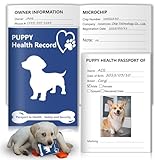
- Product Include:When you choose our dog vaccines records tracker, you'll receive one notebook.This 12-page puppy health journal has 8 dedicated pages for tracking your pup’s health, vet visits, and key details, with 4 blank pages at the end for jotting down extra notes, pet-related info, or anything else you want to record.
- Ideal Size for Record Keeping:Each dog vaccine record book measures 5x3.5 inches folded; 5x7 inches unfolded, allowing for easy portability and storage.These handy health records notebook for dogs with double sided printing, featuring enough space for all your pets important information,plus, it has dedicated spots for sticking on vaccine stickers and adding cute puppy photos.They offer a stylish and organized approach to pet health documentation, a must have addition to your pet supplies.
- Premium Quality: The puppy health record tracker’s cover features 300gsm coated paper with vibrant full-color printing and a protective laminate finish. Inside, 100gsm high-quality offset paper pages are durable and ink-resistant, ensuring no bleeding from pens or markers—so your records stay neat and easy to read.
- Effortlessly Track Vaccinations and More:The canine health record booklets pages include:owner and puppy information,medical history and hospitalizations,vaccination record and sticker,dog service providers,fecal examinations and de-worming,heartworm screening, prevention and treatment etc.This record keeping tool will ensure every important detail is accounted for and make this task easy, organized, and straightforward.Add this essential tool to your pet supplies for a happier, healthier pet.
- Essential for Pet Owners:Designed for veterinary clinics and pet owners, these puppy vaccination record books make tracking key health details—like shots, checkups—simple and organized. When you’re away and leave your pup with a sitter or family, the dog medical record and vaccine book serves as a quick reference for their medical history. Plus, dedicated sections for photos, physical markings, and ID info prepare you for emergencies, helping you recover your friend quickly if they get lost.
A screenshot of a practice app may help a staff member locate the entry, but it may not satisfy a licensing officer, airline, border official, or boarding facility that asks for a certificate. Ask the issuing practice for its signed certificate in the format accepted by the destination authority, and carry the original or a certified copy when instructions call for one.
Windows Errors? Fix Them Before They Spread
Repair common Windows errors and clear accumulated junk for a smoother, more stable PC - no reinstall needed.Free scan · no reinstallOutdated Drivers Are Slowing You Down
One free scan finds every outdated or missing driver and matches the right update for your exact hardware.Free scan · exact hardware matchHow do U.S. import rules affect rabies documentation?
CDC U.S.-import instructions are separate from an ordinary domestic vaccination schedule. For an initial rabies vaccination, the instruction requires administration on or after 12 weeks (84 days) of age, and the form generally cannot be issued until 28 days after an initial or qualifying booster. For foreign-rabies documentation, CDC requires a readable microchip implanted before the documented rabies vaccination. Confirm the current import category and forms for the destination; do not apply these import intervals automatically to every pet in every situation.
How do I link a microchip to the medical record?
Enter the complete microchip number and implantation date in the pet profile, then copy the number onto any rabies or travel document that requests it. Ask the clinic to scan the chip during routine visits so a transcription error or a non-reading chip can be found while the pet is present.
The American Veterinary Medical Association explains that a microchip normally stores an identification number; it is not a GPS tracker and does not replace a collar, identification tag, or rabies tag. Scan it at least annually and keep the registry’s owner contact details current. A changed telephone number or address should be updated with the registry even if the veterinary record itself is unchanged.
What is the best way to keep paper and digital copies?
No single format does every job well. Compare systems by whether they preserve original certificates, how quickly you can update them after a visit, portability, backup and sharing, and support for multiple pets.
Free tools Windows power users keep installed
One-click scans. No signup required.
Also popular on Amazon

- [Measurement] Unfolded Size: 10.5 x 8 Inch. Folded Size: 3.6 x 7.8 Inch. Health Record for All of the Important Information: Pet’s Weight, Recording Immunizations, Deworming Schedule, Fecal Exams, Vet appointments, and Medical History, etc.
- Anzon Mories 24 Bulk Pack is suitable for Vet’s Offices and Pet’s Owner Who Need to Supply Patients with a Shot and Keeping Canine’s Health Information.
- The 47lb/175gsm Heavy Weight Cardstock Material is suitable to Prevent Bleeding and Ghosting.
- Convenient Pocket Design to Keep Your Receipts, Cards, Memo Notes, Microchips and Accessories.
| System | Strengths | Limitations and safeguards |
|---|---|---|
| Clinic portal or electronic export | Closest to the authoritative record; often shareable with another practice and updated by the clinic | Access may depend on the practice’s software or account. Export dated PDFs so you still have access during an outage or after changing clinics. |
| Paper binder or pet vaccination record book | Works without power, is easy to carry, and keeps certificates and notes together | Pages can be lost or damaged. Photograph or scan every completed page and store a backup. |
| Digital folder or cloud drive | Searchable, easy to duplicate, and convenient to send to a boarding facility or emergency hospital | Use clear filenames, restrict sharing, and keep an offline copy in case you cannot connect. |
| Card sleeve or small organizer | Keeps several paper cards together for quick access | It is a supplement, not proof by itself; retain the full clinic documents elsewhere. |
| Notebook-only log | Fast for reminders and brief observations | Usually lacks signed certificates, lot data, laboratory reports, and complete clinical notes, so it should not be the only record. |
A practical setup is a clinic portal or export as the primary electronic copy, a backed-up digital folder for sharing, and a waterproof paper folder for originals. Give every file a consistent name such as “PetName_2026-10-27_RabiesCertificate.pdf” and keep separate folders when more than one pet is involved.
What should I do after every veterinary visit?
- Review before leaving. Check that the pet’s name, administration date, product, lot or serial number, next due date, and veterinarian details are legible. Ask immediately about a missing field.
- Collect source documents. Request the updated invoice or medical summary, vaccine certificates, laboratory reports, prescriptions, and discharge instructions that apply to the visit.
- Export or scan. Save a dated PDF or a clear photograph while the documents are easy to find. Include both sides of cards and every page of multi-page instructions.
- Update the profile. Add diagnoses, test results, medications, allergies, reactions, procedures, and follow-up instructions. Record the actual next appointment or due date supplied by the practice.
- Back up and file. Put one copy in the paper folder and one in a backed-up digital location. Keep the rabies certificate with the other documents rather than in a separate place that can be forgotten.
- Replace superseded copies. If the clinic corrects a date, product, or due date, save the corrected version and mark the older copy as superseded so two conflicting versions are not used.
Which records should I bring when my pet travels?
Before travel, ask the destination authority, airline, border service, municipality, event, or boarding facility exactly what it accepts and how recent each document must be. Rules can differ between jurisdictions, and a certificate that is sufficient for local licensing may not meet an import requirement.
- Carry the current rabies certificate and any other vaccination proof specifically requested.
- Bring a readable microchip number and implantation record when the destination asks for identification.
- Keep copies of relevant laboratory results, prescriptions, diagnoses, and discharge instructions, especially for a pet with a chronic condition.
- Carry paper copies in a waterproof folder and keep digital copies accessible offline on a phone or secure drive.
- Use the same spelling of the pet’s name, owner name, microchip number, and dates on every document; inconsistencies can delay verification.
The AVMA lists proof of vaccination, relevant medical records, and microchip documentation among useful travel documents. Check the destination’s instructions early enough for laboratory processing, waiting periods, or an appointment with an accredited veterinarian when those are required.
What should I send to a new veterinarian, boarding facility, or emergency hospital?
Send the newest clinic export plus the signed certificates rather than a typed summary alone. Include the pet’s identification and microchip page, current medications and doses, allergies or previous adverse reactions, recent diagnoses and test results, and discharge instructions that affect daily care.
Quick wins for a faster PC:
Clear out junk files and repair common Windows errorsFree Scan →Fix the driver behind crashes, sound loss and screen glitchesFind Drivers →Repair Windows errors before they cause bigger problemsFix Now →For boarding or grooming, ask which pages they actually need and provide only the necessary documents through a secure channel. For an emergency hospital, bring the complete file if possible; a short medication and allergy summary placed at the front can help staff act quickly while they review the underlying notes.
Also popular on Amazon
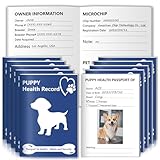
- Sufficient Quantity:When you choose our dog vaccines records, you'll receive 10 notebook.Whether you're a breeder, veterinary practice, or multi pet household, this will ensure you have enough documentation on hand for managing each pet's health history。Every puppy vaccination record book has 12-page puppy health journal has 8 dedicated pages for tracking your pup’s health, vet visits, and key details, with 4 blank pages at the end for jotting down extra notes, pet-related info, or anything else you want to record.
- .Ideal Size for Record Keeping:Each dog vaccine record book measures 5x3.5 inches folded; 5x7 inches unfolded, allowing for easy portability and storage.These handy health records notebook for dogs with double sided printing, featuring enough space and columns for all your pets important information,plus, it has dedicated spots for sticking on vaccine stickers and adding cute puppy photos.They offer a stylish and organized approach to pet health documentation, a must have addition to your pet supplies.
- Premium Quality: The puppy health record tracker’s cover features 300gsm coated paper with vibrant full-color printing and a protective laminate finish. Inside, 100gsm high-quality offset paper pages are durable and ink-resistant, ensuring no bleeding from pens or markers—so your records stay neat and easy to read.
- .Effortlessly Track Vaccinations and More:The canine health record booklets pages include:owner and puppy information,medical history and hospitalizations,vaccination record and sticker,dog service providers,fecal examinations and de-worming,heartworm screening, prevention and treatment etc.This record keeping tool will ensure every important detail is accounted for and make this task easy, organized, and straightforward.Add this essential tool to your pet supplies for a happier, healthier pet.
- Essential for Pet Owners:Designed for veterinary clinics and pet owners, these puppy vaccination record books make tracking key health details—like shots, checkups, and treatments—simple and organized. When you’re away and leave your pup with a sitter or family, the dog medical record and vaccine book serves as a quick reference for their medical history, ensuring care stays on track even in your absence. Plus, dedicated sections for photos, physical markings, and ID info prepare you for emergencies, helping you recover your friend quickly if they ever get lost.
How can I recover records that are missing or incorrect?
Contact the prior clinic and request the underlying medical record, not merely a new handwritten card. Ask for certificates, vaccine product and lot information, laboratory reports, prescriptions, and visit notes. If the practice has closed, follow the jurisdiction’s instructions for obtaining records from its custodian.
Bring the recovered documents and the pet to the current veterinarian. The veterinarian can verify identity, scan the microchip, compare dates and products, and decide whether an unverified dose should be repeated or documented as unknown. Never fill a gap by estimating a date or copying a remembered vaccine name.
CDC forms rely on official, verifiable records and can require additional vaccination or documentation when required fields cannot be confirmed. Keep a note showing which items remain unverified so a future clinic does not mistake an assumption for a recorded dose.
How long should veterinary records be kept?
Retention and certificate rules are local rather than nationwide. Massachusetts guidance gives a four-year-after-last-contact example for veterinary medical records, while Rhode Island specifies rabies record and certificate fields. Those examples do not create a universal retention period.
Check the rule that applies to the pet’s state, country, municipality, licensing authority, airline, boarding facility, or event. Until you confirm a shorter period is acceptable, retain the complete file and all rabies certificates for as long as they may be relevant to licensing, travel, chronic treatment, or a future veterinarian’s decisions.
Also popular on Amazon
What common record-keeping mistakes should I avoid?
- Relying on a reminder app alone: a calendar entry does not prove administration. Reconcile it with the signed certificate after the appointment.
- Keeping only a vaccine sticker: preserve the complete certificate and the clinic’s medical summary, including veterinarian credentials and next due date.
- Leaving the microchip out: a certificate with a missing or mistyped chip number may not match the animal at a checkpoint.
- Using one file for multiple pets: separate profiles prevent a dose, allergy, or laboratory result from being attributed to the wrong animal.
- Assuming every jurisdiction uses the same form: verify local or destination requirements before licensing or travel.
- Editing a document without an audit trail: keep the clinic’s corrected version and label older copies as superseded.
- Storing only one copy: water, lost phones, account problems, or clinic-system changes can make a single format unavailable.
- Guessing missing history: mark the field unverified and ask a veterinarian to determine the safe next step.
Can I use a pet vaccination record book or card holder?
Yes, as an organizer. A cited 116-page paperback record book is described as providing space for vaccination, veterinary-visit, and pet-detail notes, and a separate card sleeve is designed to keep multiple paper cards together. These products can make a checklist portable, but neither is itself proof of vaccination. Paste or file copies of official certificates and keep a digital backup of every completed page.
What is the minimum ready-to-go record set?
For each pet, keep one current folder containing the identity and microchip page, signed rabies certificate, other vaccine entries, medication and allergy list, recent test results, relevant diagnoses and discharge instructions, owner and clinic contacts, and the latest clinic export. Store it both as a waterproof paper set and as a backed-up digital set. Review it after every visit and before any trip, boarding stay, licensing renewal, or transfer to another veterinarian.
Do these 3 things before closing this tab:
1Scan for outdated or missing drivers - takes under a minute2Clear out junk files and repair common Windows errors3Fix the driver behind crashes, sound loss and screen glitchesFrequently Asked Questions
Is a photo of a vaccine sticker enough for boarding or travel?
Usually it is only a convenience copy. A facility or authority may require the complete signed certificate with the animal’s identity, vaccine details, dates, and veterinarian credentials, so ask what format it accepts and carry the original or an official copy when required.
What if my pet’s microchip number does not match an old certificate?
Do not alter the certificate yourself. Ask the veterinary practice to scan the pet, compare the number with the clinic record, and issue a corrected document or written clarification; then update the registry and every stored copy.
Should medications and allergies be kept with vaccination records?
Yes. A concise medication, allergy, and prior-reaction list helps an emergency clinician make safer decisions, while the full prescriptions and visit notes provide the supporting detail.
Can a new veterinarian request records directly from the old clinic?
Often the practices can transfer records after you authorize the release, but you should still request a personal export or copies. Keeping your own set avoids delays if the transfer is incomplete or the old practice’s system is unavailable.
Recommended Free Tools
Do indoor-only cats need the same record system as traveling pets?
They still need an identifiable medical history, vaccine documentation, microchip information, and medication or reaction notes. The veterinarian can tailor which vaccines are appropriate to indoor exposure, geography, household contacts, and any future boarding or travel plans.





Leave a Reply