
Some links on this page are affiliate links: if you buy through them we may earn a commission, at no extra cost to you.
To keep your dog calmer during video calls, check basic needs first, set up a safe activity and familiar resting place, and reward settling before the meeting—not only after barking starts. The right plan depends on why your dog is vocalizing: asking for attention, reacting to something outside, and feeling distressed when left alone call for different responses.
Why dogs interrupt video calls
Barking or pawing during a meeting can mean your dog needs a toilet break, food, exercise, attention, or a response to a sound or passerby. Start by looking for the likely trigger rather than assuming the dog is being difficult. The American Kennel Club’s advice for online meetings recommends addressing needs before a call. The Cummings School of Veterinary Medicine at Tufts University explains that attention given immediately after demand behavior can reinforce it.
As an Amazon Associate I earn from qualifying purchases.
Free tools Windows power users keep installed
One-click scans. No signup required.
Notice when and where the behavior happens. A dog barking directly at you during a call may be seeking interaction; barking at the window may be a response to activity outside. Vocalizing and restlessness when you leave the room or home may point to a different concern. The cause matters because a strategy that helps with one pattern may not address another.
Prepare before the call
Use your dog’s usual routine as a starting point. Before a scheduled meeting, offer a toilet break, time for appropriate exercise or play, and a little attention. Consider meal timing too, so hunger is less likely to interrupt. These steps can make it easier for a dog to settle, but they do not guarantee silence; adjust activity to your individual dog rather than trying to exhaust them.
Popular on Amazon

- New Smart Play Ball: Made from durable, chew-resistant, and pet-safe materials, keeps dogs joyfully active and mentally engaged, even when you’re away. It frees your hands to focus on what you truly enjoy.
- 3 Interactive Modes: Easily switch between Normal (blue light), Passive (green light), and Gentle (pink light) to match your dog’s play style and energy level. Simply press and hold the power button until the red light appears to turn off the toy.
- Ideal for Small-Medium-Large Breeds:This smart dog ball is designed for dogs of all sizes, so multiple pets at home can enjoy playtime together. Ensure safe and fun play by supervising your dogs and guiding them to interact with the toy, rather than just chewing it.
- Easy to Clean & USB-C Rechargeable: Keeping the smart dog toy ball clean is effortless—simply wipe away dirt and rinse the outer shell after ensuring it’s securely closed. With a single USB-C charge, the toy provides up to 4 hours of continuous playtime, keeping your dog entertained for longer.
- Versatile & Customizable Fun: Let your dog enjoy playtime indoors or outdoors. Swap out different outer shells to keep the toy fresh and exciting, ensuring your furry friend stays happy, engaged, and entertained during every play session.
Choose a safe activity and resting place
A dog food puzzle toy, slow feeder, or familiar food-filled toy can give your dog something appropriate to do during a call. Choose an activity that fits your dog’s food needs and habits, and consider whether it is safe to leave the dog with it without supervision. An item that occupies one dog may not suit another.
Use only edible chews your dog has already handled safely. The AKC warns that a chew that does not suit a dog’s chewing style can pose choking or intestinal blockage risks.
Outdated Drivers Are Slowing You Down
One free scan finds every outdated or missing driver and matches the right update for your exact hardware.Free scan · exact hardware matchPC Slower Than It Used to Be?
A free scan shows the junk files, broken settings and background clutter dragging Windows down - then fixes them in one click.Free scan · Windows 10 & 11A familiar bed or mat can be a useful resting place. A crate is another possibility only if your dog is comfortable there and has been positively taught to settle in it. Practice the resting behavior outside meetings, and pair the place with an appropriate activity. Confinement is not a remedy for a dog that is panicking or distressed.
Teach settling and quiet behavior outside meetings
Practice in short sessions when you are not under pressure to stay on camera. Reward calm behavior—such as lying on the mat or pausing after a bark—so your dog learns what you want them to do. You can gradually build the time they remain settled before adding distractions or using the behavior during a call.
A quiet cue should be taught gradually rather than repeated over ongoing barking. The AKC describes rewarding a pause and building duration before introducing a verbal cue. Avoid relying on scolding: barking has different causes, and punishment does not teach the dog the alternative behavior you want.
Be consistent about attention. If barking reliably makes you talk to, look at, or approach your dog, that response can teach them that barking works. Instead, when practical, give attention and rewards for calm requests or settling. Make sure you have checked basic needs first; ignoring a dog that needs to go outside is not a training plan.
Quick wins for a faster PC:
Clear out junk files and repair common Windows errorsFree Scan →Scan for outdated or missing drivers - takes under a minuteDriver Scan →Also popular on Amazon
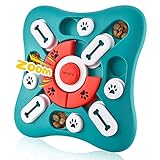
- 【PRODUCT SIZE】10 inch*10 inch*1.3 inch.
- 【3 WAYS TO PLAY, UPGRADE SLOW FEEDER】Our dog mental stimulation toys have a unique squeak button in the middle, which make it easier to attract the attention of dogs and cats. Three different difficulty designs and the 16-hole dog treat dispenser design maximize slow feeding time, even beyond 20 minutes.
- 【FUNNY STIMULATING TOYS】All kinds of dogs and cats love the puzzle game of Spin & Slide and the Seek & Hide with their smell sense and paw skills to find food. Combining circular orbit sliding game and linear orbit sliding game, smart dog and cat must move the slider correctly to get the food reward hidden in the maze.
- 【NON-REMOVABLE PARTS DOG PUZZLE】Our dog treat puzzle is made of non-toxic materials, very durable and suitable for pets to play for a long time. This dog toy has no removable parts because the design has built-in play parts that fold tightly and won't fall off easily.
- 【ANTI-SLIP & EASY TO CLEAN】: The four corners of the bottom are equipped with four anti-skid pads, which can be well fixed during the dog's slow food process; It is easy to clean, also dishwasher safe.
Match your response to the pattern
If your dog is asking you for attention
Meet reasonable needs before the meeting, then reward quiet interaction or settling when you can provide it. Avoid making barking the reliable route to attention. Tufts’ guidance on attention-seeking behavior emphasizes that the response can maintain the behavior.
If sounds or people outside trigger barking
Notice which sights or sounds set the dog off and manage the immediate trigger where feasible—for example, by choosing a quieter resting spot away from a window. Then practice calm behavior in situations your dog can handle. A dog reacting to outside activity is not necessarily asking for attention, so simply withholding attention may not solve the problem.
If the behavior appears when you leave
Look for a broader pattern rather than treating a meeting interruption as proof of separation anxiety. If feasible, record what happens when your dog is alone and review the video for vocalizing, restlessness, panting, lip licking, or other signs of distress. The American Veterinary Society of Animal Behavior notes that video can help assess possible separation anxiety, and the American Animal Hospital Association describes video as useful for helping a veterinarian or veterinary behavior professional understand the problem.
Contact your veterinarian if distress is persistent or severe, if your dog cannot settle, or if they injure themselves. A veterinarian can help assess possible causes and advise whether a qualified behavior professional should be involved. Cornell’s guidance on anxious behavior recommends tailoring the approach to the cause and using experienced, positive-reinforcement support where appropriate.
What’s actually slowing this PC down?
Pick the symptom - the matching free tool is one click away.
Make remote work manageable over time
Keep daily routines reasonably predictable and provide suitable enrichment beyond meeting time. If your dog needs to become more comfortable apart from you, begin with short, manageable periods while they are calm, then increase gradually rather than suddenly leaving them for a long stretch. The AVSAB’s guidance on preparing dogs for time apart recommends gradual absences and positive associations. For separation-related problems, stepwise desensitization and counterconditioning may need professional coaching, as described in the AAHA sample case.
For each call, choose an activity and resting setup by considering whether your dog can use it safely, whether it suits their chewing and food needs, whether it is likely to hold their interest for the meeting, and whether they are comfortable in the chosen place. These are practical considerations, not a guarantee that any toy or bed will stop barking.





Leave a Reply