
Crashes, No Sound, or Screen Glitches?
Random freezes, missing sound and display glitches usually trace back to one bad driver. Find and replace yours safely.Free scan · under a minuteWindows Errors? Fix Them Before They Spread
Repair common Windows errors and clear accumulated junk for a smoother, more stable PC - no reinstall needed.Free scan · no reinstallSome links on this page are affiliate links: if you buy through them we may earn a commission, at no extra cost to you.
The most reliable shared pet-care plan has five parts: a recurring operating budget, monthly sinking funds for predictable annual bills, a separate emergency reserve, written rules for partner contributions and decisions, and a deliberate choice between pet insurance and self-funding. Start with your veterinarian’s estimates for this pet—not a generic internet average—then automate monthly transfers and review the plan whenever your pet, household or income changes.
This approach prevents routine costs from consuming emergency money and makes an expensive treatment decision less stressful. It also gives both partners a clear answer to practical questions: who pays, how much each person contributes, who can authorize care, and what happens when a bill exceeds the reserve.
As an Amazon Associate I earn from qualifying purchases.
What should a shared pet-care financial plan include?
A workable plan separates normal spending from irregular and catastrophic costs. Put every category in writing, assign funding and decision responsibility, and keep records in an account both partners can see.
1. An operating budget for routine spending
List recurring or regularly expected costs such as food, parasite prevention, vaccinations, examinations, medications, grooming, boarding, transport, toys, litter, bedding and replacement supplies. Include subscriptions and seasonal expenses if they apply. Record the actual amount and payment date for at least two or three months so the budget reflects your pet’s pattern rather than a guess.
Popular on Amazon
- Effective Budget Planning - Take control of your finances with the budget account book. This comprehensive planner allows you to plan and track your income, expenses, savings, and financial goals in one convenient place. With its intuitive layout and easy-to-use sections, you can stay organized and make informed decisions to achieve financial success.
- User-Friendly Layout - The budget planner features a user-friendly layout designed for easy navigation and organization. Each month, you'll find dedicated budget pages where you can set financial goals, track your income, and plan your expenses. Additional sections include debt trackers, savings goals, bill payment trackers, and more, making it simple to stay on top of your finances.
- Undated Monthly Calendar & Bonus Stickers - Featuring undated calendar each month, you'll have ample space to mark paydays, bills due, appointments, and important dates. Say goodbye to difficult writing spaces. Plus, we've included 3 cute sticker sheets that allow you to personalize your financial organizer and make budgeting more fun. Dates are not pre-printed and are completed by the user.
- Reliable and Convenient Design - Our monthly budget planner is designed for your convenience and built to last. The elastic band keeps everything securely in place, and the dual-sided pocket provides extra storage. Experience a budget planner that combines practicality and durability.
- Master Budgeting with Ease - Our financial planner includes a complete guidebook that provides valuable insights and instructions for optimal usage. From setting financial goals to tracking expenses, this guidebook offers step-by-step guidance and practical tips. Whether you're new to budgeting or an experienced user, this resource will help you make the most of your budget planner, empowering you to achieve financial success.
2. Annual sinking funds
Ask the veterinarian what examinations, vaccines, screening tests, parasite prevention, dental care, sterilization and other annual services are likely for your pet’s species, age, breed and health history. Add those annual estimates, divide each total by 12, and transfer the monthly amount into a dedicated pet-care account. The American Animal Hospital Association (AAHA) recommends estimating these categories before setting a budget.
3. A separate emergency reserve
Keep emergency money apart from routine spending and sinking funds. It is intended for unexpected illness, injury, hospitalization, surgery or another high-cost event. The Consumer Financial Protection Bureau (CFPB) recommends choosing a specific cash-reserve goal, making automatic recurring contributions and checking progress regularly.
Recommended Free Tools
4. Partner rules
Write down the contribution method, who approves elective care, who can authorize urgent treatment when the other person is unavailable, how reimbursements are recorded and when you will review the plan. A shared spreadsheet or account dashboard prevents a disagreement about a forgotten transfer from becoming a disagreement about the pet.
5. A risk-transfer decision
Compare pet insurance with saving the money yourselves. Review premiums, deductibles, copays, reimbursement calculation, exclusions, pre-existing-condition rules and annual or lifetime limits. Ask your veterinarian about policies you are considering, especially if your pet has an existing diagnosis.
How much should we budget for a dog or cat?
Use local veterinary quotes and your own pet’s needs as the working budget. Published averages are useful for a reasonableness check, not a promise of what care will cost in your location.
U.S. reference figures from the ASPCA
The ASPCA’s 2021 cost table reported average annual costs of $1,391 for a dog and $1,149 for a cat. Its categories include food, routine medical care, preventive medication, insurance, boarding, supplies and other expenses. The same table reported first-year totals of $3,221 for a dog and $1,904 for a cat because the first year includes setup and initial medical costs.
Quick wins for a faster PC:
Clear out junk files and repair common Windows errorsFree Scan →Scan for outdated or missing drivers - takes under a minuteDriver Scan →| Pet and period | ASPCA 2021 average | What the figure represents |
|---|---|---|
| Dog, ongoing year | $1,391 | Food, routine medical care, preventive medication, insurance, boarding, supplies and other listed categories |
| Cat, ongoing year | $1,149 | Food, routine medical care, preventive medication, insurance, boarding, supplies and other listed categories |
| Dog, first year | $3,221 | Ongoing categories plus setup and initial medical costs |
| Cat, first year | $1,904 | Ongoing categories plus setup and initial medical costs |
These are U.S. averages from 2021. They do not establish a current price for a particular city, clinic, breed or medical condition. Obtain current estimates from your veterinarian and local providers.
Also popular on Amazon

- Effective Budget Planning - Take control of your finances with the budget account book. This comprehensive planner allows you to plan and track your income, expenses, savings, and financial goals in one convenient place. With its intuitive layout and easy-to-use sections, you can stay organized and make informed decisions to achieve financial success.
- User-Friendly Layout - The budget planner features a user-friendly layout designed for easy navigation and organization. Each month, you'll find dedicated budget pages where you can set financial goals, track your income, and plan your expenses. Additional sections include debt trackers, savings goals, bill payment trackers, and more, making it simple to stay on top of your finances.
- Undated Monthly Calendar & Bonus Stickers - Featuring undated calendar each month, you'll have ample space to mark paydays, bills due, appointments, and important dates. Say goodbye to difficult writing spaces. Plus, we've included 3 cute sticker sheets that allow you to personalize your financial organizer and make budgeting more fun. Dates are not pre-printed and are completed by the user.
- Reliable and Convenient Design - Our monthly budget planner is designed for your convenience and built to last. The elastic band keeps everything securely in place, and the dual-sided pocket provides extra storage. Experience a budget planner that combines practicality and durability.
- Master Budgeting with Ease - Our financial planner includes a complete guidebook that provides valuable insights and instructions for optimal usage. From setting financial goals to tracking expenses, this guidebook offers step-by-step guidance and practical tips. Whether you're new to budgeting or an experienced user, this resource will help you make the most of your budget planner, empowering you to achieve financial success.
An Australia-specific benchmark
MoneySmart’s 2025 Pets in Australia report put average ongoing annual costs at $2,520 for dogs and $1,656 for cats in Australia. Those geography-specific figures should not be converted into a universal global budget; currency, veterinary pricing, insurance products and household practices differ by country.
Why lifetime estimates are wide
The Synchrony Lifetime of Care Study (2021), reproduced in AAHA’s 2022 preparation guide, illustrated 15-year expense ranges of $19,893 to $55,132 for dogs and $15,055 to $45,790 for cats. The low and high ends reflect the guide’s assumptions and are not a forecast for every pet. Use the ranges to understand why a reserve and a risk-transfer decision matter, not to set a single fixed lifetime number.
How do we turn annual vet estimates into a monthly plan?
Build the plan from the calendar backward: identify each expected bill, estimate its annual total, divide by 12 and automate the transfer before the money is available for discretionary spending.
- Request a preventive-care schedule. Ask the clinic for expected examinations, vaccines, screening tests, parasite prevention, dental work and other routine services for the next 12 months.
- Add non-veterinary categories. Include food, grooming, boarding, transport, medications, litter, training, equipment replacement and any recurring delivery charges.
- Convert each annual estimate. Divide a $600 annual category by 12 to create a $50 monthly sinking-fund transfer. Keep the category visible so you can adjust it when a quote changes.
- Set the transfer date. Schedule an automatic transfer on payday or the day after income arrives. If you are paid on different schedules, use two smaller transfers rather than relying on a manual reminder.
- Match the balance to the due date. Check that enough money will be available before annual vaccines, dental care, boarding or licensing bills are due. A sinking fund is not an emergency reserve; do not spend it on an unrelated urgent event without recording the shortfall.
- Reconcile monthly. Compare planned and actual spending, note refunds or reimbursements and update the next 12-month estimate.
A worksheet that both partners can use
Create one row per category and give both partners access. The following columns preserve the information needed to forecast, fund and review each item.
| Category | Expected frequency | Annual estimate | Monthly sinking-fund amount | Payer | Account | Review date |
|---|---|---|---|---|---|---|
| Routine examination | Once or twice yearly | Local clinic estimate | Annual estimate ÷ 12 | Named partner or shared account | Routine pet account | Before next appointment |
| Dental care | As advised by veterinarian | Clinic estimate, including likely diagnostics | Annual estimate ÷ 12 | Named partner or shared account | Dental sinking fund | At each examination |
| Food and preventive products | Monthly or quarterly | Recent spending × 12, adjusted for changes | Annual estimate ÷ 12 | Named partner | Routine pet account | Every three months |
| Emergency reserve | Unexpected | Household target | Agreed automatic contribution | Both partners | Separate reserve account | Monthly progress check |
Use estimates tailored to the pet’s species, age, breed, health history and location. A new diagnosis, move, adoption, change in income or change in insurance is a reason to recalculate rather than wait for the annual review.
Should we split pet costs equally or in proportion to income?
There is no universally fair formula. Choose a method you can apply consistently, document it and revisit it when income or responsibilities change.
| Method | How it works | Advantages | Trade-offs |
|---|---|---|---|
| Equal contributions | Each partner transfers the same dollar amount or pays half of each agreed category. | Simple to explain and reconcile; works well when disposable incomes are similar. | Can strain the lower-income partner and may feel inequitable when incomes fluctuate. |
| Proportional to income | Each partner contributes a percentage based on agreed take-home income. | Adjusts for income differences and can protect basic financial needs. | Requires accurate income updates and a clear rule for bonuses, freelance income and unpaid leave. |
| Responsibility-based | One partner pays specified categories, such as food and grooming, while the other funds veterinary care or insurance. | Convenient when each person already manages different tasks or accounts. | Categories can vary sharply in cost; one partner may carry more risk if an emergency occurs. |
| Hybrid | Use proportional funding for shared accounts, then assign small routine purchases by responsibility. | Balances fairness with practical convenience. | Needs a written reconciliation rule so purchases do not disappear from the shared total. |
How to calculate a proportional contribution
Add the partners’ agreed monthly take-home incomes. Divide each person’s income by that total to obtain a contribution percentage, then apply the percentage to the monthly routine budget, sinking funds and emergency-reserve contribution. Decide in advance whether the calculation uses regular pay only or includes commissions, bonuses and self-employment income.
What’s actually slowing this PC down?
Pick the symptom - the matching free tool is one click away.
Also popular on Amazon

- 🌙 MANAGE YOUR MONEY EFFECTIVELY - This budget planner will help to learn to achieve your financial goals, take to earn more money & take to cut your expenses for managing your money effectively. You can change some of your bad spending habits after a year of budgeting, so that you can better manage your money and spend it on some essential thing.
- 🌙 GOOD MONTHLY PLAN/BUDGET/REVIEW & EXPENSE TRACKER - Our budget planner with undated monthly planner has a well layout and can be started at any time. Monthly plan & budget pages have goals, upcoming purchase/bills, income, savings items with planned/actual/difference budget sheets all in a visually appealing 2-page layout. Expense tracker pages help you set up goals. At the end of the month, review what happened, spot bad spending habits, think about how you can improve.
- 🌙 EFFECTIVE ORGANIZATION - This budget book with twin-wire binding for easy lay-flat 360°, inner pocket for putting in some small cards & elastic closure for keeping the budget planner without falling off. These effective designs can make the accounting book better play its own role and bring you great convenience in the process of using it.
- 🌙 PRACTICAL & ELEGANT TOOLS FOR PERSONAL FINANCE -Golden Stem Green Leaves Budget planner starts with 2 pages for setting your financial goals. There are 2 pages for writing your day budget planning each month, 2 pages for monthly spend plan & budget plan, 4 pages for tracking exspense, followed by 1 idea & note page. At last, there are 4 pages for saving/debt tracker, 2 pages for holiday budgeting, 2 pages for bill tracker, 2 pages for an annual summary to track all year.
- 🌙 PREMIUM THICK PAPER - This bill organizer features 12-month archival-quality pages made from thick paper, which can prevent planner from damages of light and air then ensure long-lasting performance from one year to the next of this budget planner. The premium white papers in this undated finance planner are environmentally friendly and adequately protects your eyes.
How to handle reimbursements
Choose one shared account for planned pet expenses when possible. If one partner pays from a personal account, record the date, category, amount and receipt, then reimburse on a fixed date or credit the payment against that person’s next contribution. Do not mix reimbursements with emergency withdrawals; the ledger should show whether money was routine spending, a sinking-fund draw or an emergency event.
What rules should partners agree on before an emergency?
Decide the authority and communication process while the pet is healthy. In a crisis, the person at the clinic may have minutes to authorize diagnostics or stabilization.
Set treatment-approval thresholds
Agree on a dollar threshold for routine decisions, a threshold that requires both partners for elective care, and an emergency exception for immediate stabilization. Define whether the threshold applies to one visit, one condition or the full expected treatment course.
Name a backup decision-maker
Write down who can authorize care if one partner is unreachable, and give that person the clinic’s contact details, insurance information and permission to access the reserve. Tell the veterinary practice who is authorized; a private household agreement may not be visible to the clinic.
The Tool Desk
Outbyte PC Repair FREEClear out junk files and repair common Windows errorsFree Scan →Outbyte Driver Updater FREEFix the driver behind crashes, sound loss and screen glitchesFind Drivers →Define quality-of-life and second-opinion preferences
Discuss acceptable treatment intensity, referral to a specialist, second opinions and quality-of-life considerations before a crisis. This is not a decision to make solely from a spreadsheet, but prior conversations reduce conflict when emotions and time pressure are high.
Keep an emergency packet
- Current veterinary records and medication list
- Microchip and identification details
- Insurance policy number and claims instructions, if insured
- Reserve-account access instructions
- Both partners’ phone numbers and the backup decision-maker’s number
- Preferred emergency hospital and transport plan
Is pet insurance better than saving the money ourselves?
Insurance and self-funding solve different problems. Insurance exchanges a predictable premium for help with eligible large bills; self-funding preserves liquidity and avoids policy exclusions but requires enough cash to absorb the loss.
| Question | Pet insurance | Dedicated savings reserve |
|---|---|---|
| Cash-flow pattern | Recurring premium plus deductible or copay when a claim is eligible | Recurring contribution; no premium, but the account may be too small early on |
| Access to money | Often requires paying the clinic first and waiting for reimbursement, depending on policy | Funds are available immediately if the account has a sufficient balance |
| Coverage limits | Policy may have annual or lifetime limits, exclusions and reimbursement rules | No insurer-imposed coverage limit, but the reserve is limited to its balance |
| Pre-existing conditions | Commonly excluded; exact definition and waiting rules vary by policy | No underwriting exclusion, but you must fund the full cost |
| Predictability | Premiums are easier to schedule than a rare, very large bill | Monthly cost is controllable, but a major event can exceed savings |
Questions to ask before buying a policy
- Is reimbursement based on the invoice, a benefit schedule or the amount left after a deductible?
- Is the deductible annual, per condition or per incident?
- Are copays applied before or after the deductible?
- Which hereditary, congenital, dental, behavioral or preventive services are excluded?
- How are bilateral conditions and conditions that recur treated?
- What are the annual and lifetime limits, and can the insurer change premiums at renewal?
- How long does reimbursement usually take, and must you pay the clinic upfront?
Ask your veterinarian about policies under consideration, but read the policy wording yourself. A low premium can be paired with a high deductible, narrow reimbursement formula or substantial exclusions. Conversely, a higher premium may be worthwhile for a household that cannot comfortably pay a large covered bill from cash.
Also popular on Amazon

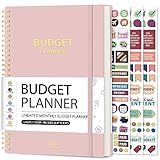
- Budget Planner: Stay on top of your finances and achieve your financial goals with our A5 Budget Planner. This beautifully designed budget book combines functionality and style, empowering you to effectively manage your budget month after month.
- Classic Design: The elegant pink cover with the striking "Budget Planner" in gold adds a touch of sophistication to your financial planner. Carry it with pride and make a statement as you take charge of your financial.
- Comprehensive Layout: Our monthly budget planner features a well-thought-out layout that simplifies your budgeting process. With a dedicated monthly budget page, four expense tracking pages, a monthly summary, and a notes section, you have all the tools you need for effective financial planning.
- 14-Month Duration: Unlike many other planners on the market, ours covers a total of 14 months, giving you an extended period of financial organization. Now you can make income and expense records at any time, ensuring every financial decision aligns with your long-term goals.
- Premium Quality and Convenience: Crafted with attention to detail, this budget planner boasts superior quality. The sturdy pink and gold coil binding allows for effortless flipping, while the A5 size makes it the perfect companion for your daily adventures, fitting into your bag or backpack without taking up too much space.
A practical hybrid
Some couples insure catastrophic risks while maintaining a reserve for deductibles, exclusions, waiting periods and routine care. Others self-fund and set a larger target. Compare the option you can maintain for the pet’s expected lifetime, not just the first month’s premium.
Do these 3 things before closing this tab:
1Fix the driver behind crashes, sound loss and screen glitches2Repair Windows errors before they cause bigger problems3Scan for outdated or missing drivers - takes under a minuteHow large should our pet emergency fund be?
Set a target from your veterinary practice’s likely emergency pathway and your household’s ability to borrow or pay immediately. The published lifetime ranges show how widely costs can vary, but they do not specify the reserve appropriate for your pet.
- Ask the clinic about the likely deposit and payment timing for emergency examination, diagnostics, hospitalization and referral.
- List the cash you could access without selling essential assets or missing housing, utility or debt payments.
- Choose an initial target you can reach, then increase it after the routine sinking funds are stable.
- Keep the reserve in a separate, readily accessible account; avoid investments that could lose value when treatment is urgent.
- Replace any amount withdrawn and record the event so the next monthly review shows the true balance.
The CFPB’s general emergency-savings guidance—specific goal, automatic contributions and regular progress checks—also applies to a dedicated pet reserve. The reserve should not be counted twice as a down payment, vacation fund or general household emergency fund unless both partners explicitly accept that trade-off.
Independent reader supportYour contribution helps us test, update, and keep practical guides available for everyone.What can we do when an emergency bill is larger than our savings?
Ask about every available payment route before treatment starts, and compare the total cost rather than the advertised monthly payment.
Veterinary financing
Outside financing can preserve access to treatment but may create expensive debt. Check the annual percentage rate, fees, repayment period and whether a promotional or deferred-interest offer charges accumulated interest if the balance is not paid by the deadline.
Clinic payment plans
A clinic may offer an installment arrangement with different fees, eligibility rules and repayment timing. Ask whether treatment can begin immediately, what happens after a missed payment and whether the plan is administered by the clinic or a finance company.
Credit reserves
An existing credit line can be faster than a new application, but interest can turn a medical emergency into a long-term budget problem. Decide in advance which account may be used and how its repayment fits alongside rent, utilities and other debt.
Also popular on Amazon

- EFFECTIVELY MANAGE YOUR MONEY - Our budget planner helps you take control of your finances by providing sections for financial goals, savings, debts, daily expenses, monthly budget, monthly budget review. This finance planner is a good finance book and will help you manage your money effectively.
- PREMIUM QUALITY - Our budget planner is made with high-quality 100gsm paper that reduces ink leakage, fraying, and shade issues. The sturdy and flexible cover,, helps protect the pages. The metal lay-flat twin-wire binding ensures durability and longevity.
- ORGANIZED MONTHLY GOALS & BUDGETS - Our 12-month budget planner helps you set monthly goals, budgets, reviews, and develop good monetary habits, strategies, and action plans. Write down monthly financial goals, put reminders of bills and payments on the calendar, plan your monthly budget in each category, track daily expenses, and review the monthly budget at the end of the month.
- FLEXIBLE USAGE - Our undated finance planner allows you to start at any time and place, making it convenient to use. It has a perfect size of 8.6x5.9 inches and fits in every bag, so it's always at hand.
- CREATE FINANCIAL FREEDOM - Our budget planner is your chance to develop monthly habits, monetary strategies, and action plans to start your journey to long-term financial freedom. It allows you to track monetary flow and review each area for improvements. With this 1-Years budget book, you can take the first step towards financial freedom.
Preventive-care plans
These plans generally spread listed routine services over scheduled payments. They can smooth predictable costs but do not necessarily cover an unexpected hospitalization or surgery; read the service list and cancellation terms.
When comparing a clinic plan with outside financing, write down total interest, promotional-period conditions, fees, repayment period and whether care can start immediately. Never choose solely on the smallest monthly payment.
How often should partners review the plan?
Review routine spending and reserve progress monthly, and perform a full reset after any event that changes expected costs or household capacity.
- Adopting another pet or bringing home a puppy or kitten
- A diagnosis, surgery, medication change or recurring symptom
- A move to a different city or country
- A major change in income, employment or work schedule
- A change in insurance, deductible, reimbursement rule or coverage limit
- Aging-related changes in examinations, dental care or medication
AAHA veterinary content specialist Emily Singler, VMD, advises that “you know your pet best. Any significant or consistent change in your pet’s behavior or condition is worth looking into.” A prompt veterinary assessment can change both the care plan and the financial forecast, so update the budget instead of waiting for the next scheduled review.
What mistakes make shared pet budgets fail?
- Using one average as a promise. Published averages are dated and geography-specific; replace them with current local estimates.
- Combining routine and emergency money. A full food balance can give a false sense of security if no cash is reserved for hospitalization.
- Leaving authority vague. Without an emergency authorization rule, a clinic may be waiting while partners try to reach one another.
- Ignoring reimbursement timing. Insurance may reimburse after you pay the clinic, so retain enough liquid cash for the initial bill.
- Tracking only the payer. Record the category and funding source as well as who used a card; otherwise annual costs remain invisible.
- Missing deferred-interest deadlines. A promotional financing offer can become costly if the balance is not cleared under its stated conditions.
- Failing to replace withdrawals. An emergency reserve is a target, not a one-time deposit; schedule replenishment after every draw.
What does a completed shared plan look like?
Both partners should be able to open one worksheet and answer seven questions without guessing:
- What will routine pet care cost this month?
- Which annual bills are we funding, and how much is transferred each month?
- Where is the separate emergency reserve, and what is its current balance?
- What contribution formula and income definition are we using?
- Who may authorize urgent care if one partner is unreachable?
- Are we insuring catastrophic risk, self-funding it or using a hybrid?
- When is the next review, and what event would trigger an earlier update?
If the answers are written, visible to both partners and backed by automatic transfers, the plan can adapt as your pet ages without turning every veterinary bill into a new negotiation.
Free tools Windows power users keep installed
One-click scans. No signup required.
Frequently Asked Questions
Should we open a joint bank account just for pet expenses?
A dedicated account can make contributions and reimbursements transparent, but it is not required. If you keep separate accounts, use a shared ledger, automatic transfers and a written reimbursement date so both partners can verify the balance and transactions.
How should we budget for a pet with a pre-existing condition?
Ask the veterinarian for a condition-specific forecast that separates recurring medication, monitoring and likely flare-ups from unrelated emergencies. If insurance excludes the condition, treat those expected costs as sinking-fund obligations and keep the emergency reserve for costs you cannot predict.
Can pet insurance premiums come from the emergency reserve?
They should normally be in the operating budget because premiums are recurring. Reserve money is better protected for deductibles, upfront clinic payments and treatment that is excluded or not yet reimbursed.
What records should we keep for insurance claims and partner accounting?
Save itemized invoices, medical records, payment confirmations, claim submissions and reimbursement statements in one shared folder. Note which account paid, the date submitted and the amount still outstanding so a delayed claim does not look like missing household money.





Leave a Reply