
Quick wins for a faster PC:
Clear out junk files and repair common Windows errorsFree Scan →Fix the driver behind crashes, sound loss and screen glitchesFind Drivers →Repair Windows errors before they cause bigger problemsFix Now →Some links on this page are affiliate links: if you buy through them we may earn a commission, at no extra cost to you.
The right dog sweater or winter coat starts with three measurements taken while your dog is standing: back length, chest girth, and neck girth. Chest girth usually determines the size, while back length determines how much of the body the garment covers. Measure with a soft tape, compare all three numbers with the exact product’s chart, and use the larger size when your dog falls between sizes only if the finished garment remains secure and cannot drag, snag, or restrict movement. A two-finger clearance at the neck and chest, a full movement check, and supervision every time the garment is worn help prevent discomfort and accidents.
What do I need before measuring my dog?
Use a flexible tailor’s tape. If you do not have one, wrap a piece of string, ribbon, or a shoelace around the required area, mark where the ends meet, and measure that length against a ruler. A helper can offer treats and keep the dog calm while you handle the tape.
As an Amazon Associate I earn from qualifying purchases.
Free tools Windows power users keep installed
One-click scans. No signup required.
- Measure on a level surface with your dog standing squarely on all four feet.
- Keep the dog in a natural stance rather than stretching the neck or pulling the legs forward.
- Record measurements in the same units used by the product chart, usually centimetres or inches.
- Repeat each measurement once. If the two results differ, measure again and use the careful, consistent reading rather than an average of rushed attempts.
Measuring a dog that is sitting, lying down, hunched, or twisting can change the tape position and produce a misleading size. Ask another person to hold the tape’s starting point if your dog will not stand still, but do not pull the tape tight to keep it in place.
How do I measure my dog’s back length?
Back length is the distance from the base of the neck to the base of the tail. It controls whether a sweater or coat covers enough of the back without extending so far that it gets in the way.
Popular on Amazon
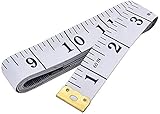
- Measuring range: 0 to 60 inches and 0 to 150 centimeters. There is a centimeter scale on the back, which is accurately printed in inches and centimeters. Both sides can be measured according to your requirements. You can put one in your pocket or backpack without taking up too much space
- Great Material: Tailor Vinyl tape measure won't stretch or deform, provides superior measurement consistence; Soft tape measure, a flexible and portable tape measure, made from soft plastic material, white color
- Operate and Read: Black markings on bright white tape is big enough for you to read, the tape has metal tabs on each end of the cloth tape measure to butt-up against the item your measuring; The metal ends also can prevent fraying
- Wide Application: Cloth tape measure; body tape measure,sewing tape measure,measuring tape tailor. Good sewing tool, accurate tape measuring for sewing, tailoring, body, waist measurement or measuring any curved surface. can provide you accurate measurements, suitable for a seamstress, a crafter, a quilter or whoever just need a flexible measuring tape
- Have your dog stand naturally with the head in a normal, relaxed position.
- Find the base of the neck where it joins the body—the area where a collar normally sits.
- Place the tape along the spine and run it straight over the back to the base of the tail.
- Stop where the tail begins. Do not include any part of the tail in the measurement.
- Write down the result and repeat it once to confirm the reading.
Do not follow the curve of a fluffy coat or pull the tape over the tail. For a very thick-coated dog, keep the tape on the body rather than measuring the loft of the fur. The product’s back-length range tells you how much coverage to expect; it does not replace the chest measurement.
How do I measure chest girth?
Chest girth is the circumference of the rib cage at its widest or deepest point, usually immediately behind the front legs. It is commonly the measurement that determines the garment size, so take it carefully.
What’s actually slowing this PC down?
Pick the symptom - the matching free tool is one click away.
- With the dog standing, slide the tape behind both front legs.
- Wrap it around the deepest part of the rib cage, keeping the tape level rather than angled up toward the shoulders.
- Bring the ends together over the back or side and read the measurement.
- Keep the tape snug against the coat and body, but do not compress the ribs or create a visible indentation.
- Repeat the measurement while the dog is relaxed, then record the larger consistent reading if the coat makes the tape placement difficult.
The tape should touch the dog without squeezing. A measurement taken too tightly can lead to a restrictive garment; one taken over a puffed-out chest or a loose loop can lead to a coat that shifts. If the dog is broad in front but narrows sharply at the waist, note that shape before choosing a style, because a straight-cut garment may fit the chest but hang loosely farther back.
How do I measure neck girth?
Neck girth is the circumference of the lower neck where the collar normally rests. It matters most for pull-over sweaters, high collars, and garments with a close neck opening.
- Place the tape around the lower part of the neck, at the usual collar position.
- Keep the tape level and comfortably close to the coat.
- Leave room for two fingers between the tape and the neck.
- Read and record the measurement without pulling the tape tight.
The two-finger space is a fit check, not an instruction to add an arbitrary number to every chart measurement. Compare your dog’s actual neck girth with the manufacturer’s neck range and then confirm the finished opening allows the same comfortable clearance.
How do I use the measurements to choose a size?
Read the chart for the exact sweater, coat, or overall you plan to buy. Size letters are not standardized between brands, and one maker may use different proportions for different styles. Compare the stated chest, back, and neck ranges rather than selecting a size from breed, body weight, or an old garment label.
Also popular on Amazon

- 60 In and 150 Cm, Meet your daily usage needs
- Made from soft high quality material, Won't stretch or deform
- It is light in weight, Convenient and flexible to use and won't take up too much space for you
- Perfectly applied body, sewing, tailoring, weight loss, ordering clothes online, waist measurement or measuring any curved surface
- If you have any questions after receiving the product, We will provide 24-hour online service and 1-year replacement, Your satisfaction is our motivation to move forward
| Measurement | Where to measure | What it controls | What to check on the chart |
|---|---|---|---|
| Chest girth | Widest/deepest rib cage, immediately behind the front legs | Overall circumference and freedom around the shoulders and ribs | The product’s chest range; this is often the primary size value |
| Back length | Base of neck to base of tail, excluding the tail | Coverage along the spine and position of the hem | Whether the garment will cover the dog without dragging |
| Neck girth | Lower neck where the collar rests | Comfort and security of the neck opening | Neck range, especially for pull-over or high-collar designs |
If one chart lists a single “back” number and another lists a range, use the format supplied by that product. A chart may be based on the garment’s finished dimensions rather than the dog’s body dimensions, so follow its instructions exactly. When the three measurements point to different sizes, start with the size that accommodates the chest, then verify that the back and neck remain within their ranges. Contact the seller or manufacturer if the chart does not explain which measurement takes priority.
Should I size up if my dog is between sizes?
Usually, choose the larger garment for comfort when a dog falls between chart points, but only if the coat remains secure and safe. A too-small garment can restrict shoulder movement; a too-large one can catch on furniture, drag on the ground, tangle, or interfere with toileting.
| Situation | Safer decision | Reason to reject that choice |
|---|---|---|
| Chest is between two listed ranges and the larger size still fits the neck and back | Try the larger size, then perform the movement and two-finger checks | Reject it if the hem drags, openings gape, or straps can catch a leg |
| Chest needs the larger size but neck opening is too loose | Choose a style with neck adjustment or a different cut | A loose opening can let the garment shift or snag |
| Back length needs the larger size but the body becomes baggy | Look for adjustable or shape-specific coverage | Excess fabric can tangle and may obstruct toileting |
| Smaller size fits the chart but compresses the chest or shoulders | Move up a size or select a roomier pattern | Compression can limit normal movement and breathing comfort |
Do not “size up” automatically just to add layers underneath. The coat should fit the dog’s measured body and the product’s intended use. If extra clothing is required, choose a design whose chart and construction allow that combination rather than making a very loose garment do the job.
What if my dog has an unusual body shape?
Breed and body shape can make a standard rectangle-shaped garment fit poorly even when one measurement looks correct. Use the measurements to identify the problem, then seek adjustability or a pattern designed for that proportion.
Deep-chested, narrow-waisted dogs
Sighthounds and other deep-chested, narrow-waisted dogs may need an adjustable waist or a breed-specific pattern. A coat cut to fit the rib cage can otherwise be loose behind the chest, while one tightened at the waist may restrict movement.
Long-and-low dogs
Dachshunds, corgis, and similar long-and-low dogs can have the opposite mismatch: a coat long enough to cover the back may be too loose around the body. Look for designs that separate back coverage from girth adjustment, and check the underside so the garment does not interfere with urination or defecation.
Also popular on Amazon

- 2 Pack Soft Fashion Measuring Tape Set. Double sided, 60 inch / 150 cm, portable,durable tape measure. Small and light pocket size measuring tape.
- Easy to Read and Accurate Measurements. The tape measure has accurate, large and clear markings in both inches and centimeters, easy and convenient to read. Wide Application on Home Office School Supplies: Cloth tape measure; body tape measure, sewing tape measure, measuring tape for body, waist tape measure, tailor tape measure. Great measuring tape for body, sewing, tailoring, weight loss, ordering clothes online, waist measurement or measuring any curved surface.
- NOTE: The black tape measure is retractable. There is a retract button in the center, just press on the button when pulling the tape out or retracting the tape back into it, or there will be loud noise.
- Package includes one soft fashion pink tape measure and one retractable black tape measure. Perfect multipurpose measuring tape for body fabric sewing tailor cloth knitting craft measurements. Great gift idea for family friends coworkers seamstress. (Retractable Black Measuring Tape, Size 2 x 2 x 0.5 inches, weight 0.7oz, portable and easy to carry or put into your bag.)
Using a manufacturer’s ease recommendation
Hurtta’s dogwear manual recommends that an overall chest be 5–20 cm (2–8 in) wider than the dog’s chest to preserve freedom of movement. That is the manufacturer’s guidance for its overall design, not a universal allowance for every sweater or coat. Use the exact product chart first, then apply the garment’s stated ease and confirm the finished fit on the dog.
Is a sweater or a winter coat better for my dog?
A sweater is generally a lighter warmth layer. A thicker coat or overall can provide more coverage in colder, wet, or windy conditions. Choose the lightest garment that meets the conditions while allowing normal movement.
| Consideration | Lighter sweater | Thicker coat or overall |
|---|---|---|
| Typical role | Extra warmth for mild cold or indoor-to-outdoor transitions | More coverage for colder, wet, or windy conditions |
| Coverage | Often focused on the torso | May cover more of the body and legs, depending on the design |
| Dogs more likely to benefit | Small, lean, short-coated, hairless, recently shaved, young, or older dogs when conditions call for it | The same vulnerable groups when exposure is colder, wetter, or windier |
| Risk to watch | Overheating in a dog that does not need extra insulation | Overheating, restricted movement, or snagging if the garment is too heavy or loose |
Small dogs, lean short-coated dogs, hairless breeds, puppies, seniors, and recently shaved dogs are more likely to need added warmth. Large, healthy dogs with thick coats may overheat in a sweater. The measurements establish fit; they do not determine whether a particular dog needs clothing in every weather condition. Observe comfort and normal behavior, and remove the garment if the dog shows signs of overheating or distress.
How should a sweater or coat fit after I put it on?
Use the garment’s finished fit—not just the tape measurements—as the final test. The coat should be secure without squeezing, and your dog should be able to move, breathe, and toilet normally.
- Slide two fingers under the neck and chest areas. You should be able to do this without forcing the fabric or leaving a large gap.
- Watch the dog walk, turn, sit, and run. Look for unrestricted shoulder movement and a hem that stays clear of the ground.
- Check the dog while toileting. The underside and rear opening must not obstruct urination or defecation.
- Look for rubbing at the armpits, neck, chest, and straps, especially after several minutes of movement.
- Inspect zippers, fasteners, elastic, and openings to make sure they cannot catch a leg or snag on nearby objects.
- Confirm that a harness, if used, sits as intended and that the coat does not force the harness into an unsafe position.
Remove the garment immediately if breathing appears obstructed, the dog cannot use the shoulders normally, or the fabric twists into a rope-like loop. A coat that looks neat while the dog is standing can still fail when the dog turns or runs, so test those movements before going outside.
What features should I compare when choosing between garments?
Once the measurements identify plausible sizes, compare the construction details that affect comfort and safety in daily use.
Also popular on Amazon

- Package Include:1 Pack Soft Retractable Black Dual Sided Tape Measure Body Measuring Tape Set, Dual sided, 150cm/60inch in length, large and clear markings in both Inches and CM for easier reading, Retractable black measuring tape size 2 x 2 x 0.5 inches, weight 0.02 KG/0.7 OZ
- Durable Material: Retractable Black Tape Measure is made of non-stretch fiberglass material, which is sturdy and wear resistant. With a portable handy plastic case outside, the inside flexible vinyl tape measure is 1.5M/60In in length, Soft Pink Tape Measure Tailor Vinyl tape measure won't stretch or deform, provides superior measurement consistence; Soft tape measure, a flexible and portable tape measure, made from soft plastic material
- Unique Design: The black tape measure is retractable, One of the magical features of the tape is that you simply press a button in the middle of the plastic box to retract the long ruler.It goes back in automatically,Portable tape measure, easy to carry, quick and easy to measure with ease
- Wide Application: Cloth tape measure; body tape measure,sewing tape measure,measuring tape tailor. Good sewing tool, accurate tape measuring for sewing, tailoring, body, waist measurement or measuring any curved surface. can provide you accurate measurements, suitable for a seamstress, a crafter, a quilter or whoever just need a flexible measuring tape
- Warm Prompt: When using a retractable black tape measure, if the tape measure extends a long length, you can press the button in the middle to make the tape measure retract quickly, or there will be loud noise.
| Feature | Question to ask | Why it matters |
|---|---|---|
| Chest-girth range | Does the chart include the measured rib-cage circumference? | Chest fit usually determines whether the dog can breathe and move comfortably |
| Back-length coverage | Does the hem reach the base of the tail without dragging? | Too little coverage leaves the back exposed; too much can interfere with movement |
| Neck opening | Can two fingers fit under it when fastened or pulled over? | Prevents squeezing while keeping the garment secure |
| Adjustability | Are the waist, chest, or neck adjustable? | Helps accommodate deep chests, narrow waists, and long-and-low bodies |
| Insulation level | Is it a light sweater or a thicker coat/overall? | Match warmth and coverage to the weather and the dog’s coat |
| Water and wind protection | Does the design provide the protection needed for the conditions? | Wet or windy exposure can require more coverage than a knit layer offers |
| Harness compatibility | Can the harness be attached without distorting the coat? | Misaligned straps can rub, shift, or catch |
| Toileting access | Is the underside clear during urination and defecation? | A long or closed underside can soil the garment or obstruct the dog |
| Movement | Can the dog walk, turn, sit, and run freely? | Fabric, straps, and closures must not restrict the shoulders or legs |
How do I introduce clothing to a dog that dislikes it?
Introduce the garment in short, positive stages rather than putting it on for a long outing immediately. The American Kennel Club recommends pairing calm investigation and brief wear with rewards.
- Place the sweater or coat on the floor and let the dog sniff it without pressure.
- Reward calm investigation with praise or treats.
- Put the garment on for a very short period, then reward the dog while it remains relaxed.
- Remove it before the dog becomes frustrated, and repeat the short session later.
- Increase wearing time gradually, adding walking, turning, and toileting checks as the dog accepts each stage.
If the dog shows stress or frustration, take the garment off and return to a shorter, easier step another time. Never force the dog through a struggling session; distress can make future fitting harder and can cause the dog to associate clothing with an unpleasant event.
Independent reader supportYour contribution helps us test, update, and keep practical guides available for everyone.What are the most common measuring and fitting mistakes?
Choosing by breed or weight alone
Breed labels, body weight, and size letters cannot account for individual chest, neck, and back proportions. Use them only as a starting clue, never as a substitute for the product chart and your dog’s measurements.
Measuring the tail or collar instead of the body
Back length ends at the base of the tail, not the tail tip. Neck girth is taken at the lower neck where the collar rests, not at the narrowest point beneath the jaw.
Do these 3 things before closing this tab:
1Clear out junk files and repair common Windows errors2Fix the driver behind crashes, sound loss and screen glitches3Repair Windows errors before they cause bigger problemsPulling the tape tight
A compressed chest or neck produces a falsely small number. Keep the tape snug and use the two-finger rule when checking the garment itself.
Ignoring movement after a static fit
A coat can match the chart while rubbing, twisting, or blocking a leg in motion. Always watch walking, turning, sitting, running, and toileting before deciding the fit is acceptable.
Also popular on Amazon

- DUAL COLOR/DUAL FUNCTION FULL BODY MEASURING TAPE - Only body tape with dedicated yellow side for easy error free circumference measurement. Yellow side automatically calculates body circumference with no extra adding or subtracting on your part.
- MEASURES UP TO 80 INCHES - Soft, Flexible, and durable vinyl tape with two side units. Measure to 1/16 inches. Width: 13mm Length: 80" / 2 meters.
- RETRACTABLE TAPE MEASURE WITH PIN LOCK - The measurement tape can be used as a circumference tape measure by locking into place and retracts easily with the push of a button.
- QUALITY SINCE 1912 - The Perfect Measuring Tape Company Produces and Supplies Quality Linear Measurement Products from Toledo, Ohio for Over 100 Years.
- MESSAGE US IF YOU HAVE ANY ISSUES - We are confident you will be satisfied with the quality of our products. If you are not, just message us and we will make it right. To discuss any issue or request a refund, please just message us directly via the Amazon Messaging Service.
Leaving the dog unattended
Clothing can snag, tangle, or become a choking hazard. Dogs wearing sweaters or coats should be supervised, and they should not be left crated or unattended in the garment.
Can measurements guarantee that a coat will be safe?
No. Measurements identify a likely size, but safety depends on the garment’s construction, the dog’s movements, the environment, and supervision. The available guidance does not establish independent population statistics for coat effectiveness, injury rates, or how often dogs need clothing. Treat the fit checks and supervision rules as practical safeguards, not as a guarantee that every design is suitable for every dog.
PC Slower Than It Used to Be?
A free scan shows the junk files, broken settings and background clutter dragging Windows down - then fixes them in one click.Free scan · Windows 10 & 11Outdated Drivers Are Slowing You Down
One free scan finds every outdated or missing driver and matches the right update for your exact hardware.Free scan · exact hardware matchRecheck fit whenever you change styles, because sizing is not standardized across brands or even across styles from one brand. A coat that fits one design’s chart may not fit another design with the same letter or nominal size.
What is the quickest reliable measuring routine?
For a purchase you need to make now, use this sequence:
- Stand the dog squarely on a level surface.
- Measure back length from the base of the neck to the base of the tail, excluding the tail.
- Measure chest girth around the deepest rib cage immediately behind the front legs, snug but not tight.
- Measure neck girth at the collar position, leaving room for two fingers.
- Repeat all three measurements and write them down with their units.
- Open the exact product chart and compare chest, back, and neck ranges.
- If between sizes, consider the larger one only when the neck, back, hem, closures, and movement checks remain safe.
- After delivery, test walking, turning, sitting, running, and toileting under supervision before relying on the garment outdoors.
Frequently Asked Questions
How often should I remeasure my dog for clothing?
Measure again whenever your dog has a noticeable change in body condition, coat length, or grooming. Puppies and dogs whose weight changes can move into a different chart range even if the same garment style worked previously.
Can my dog wear a harness over a sweater or coat?
Only if the garment has an opening or construction that lets the harness sit in its intended position without twisting or pressing into the neck and shoulders. Put both on together and check walking, turning, and strap clearance before a longer outing.
Recommended Free Tools
What should I do if the chest fits but the neck is too loose?
Do not rely on a loose neck opening to compensate for a correct chest size. Choose an adjustable design or a different cut, then confirm that two fingers fit under the neck while the coat stays secure during movement.
Why does my dog freeze when I put on a coat?
Freezing can indicate uncertainty, discomfort, or restricted movement. Remove the garment, inspect the neck, chest, armpits, and closures, and restart with brief sniffing and reward-based sessions; if the response continues, use a different fit or design.





Leave a Reply