
Do these 3 things before closing this tab:
1Repair Windows errors before they cause bigger problems2Scan for outdated or missing drivers - takes under a minute3Clear out junk files and repair common Windows errorsSome links on this page are affiliate links: if you buy through them we may earn a commission, at no extra cost to you.
Prepare your dog before the birth by practicing the routines, boundaries and calm behaviors that life with a newborn will require. Gradually introduce baby sounds, smells and equipment; reward relaxed behavior; decide whether the nursery is accessible; and arrange help for walks and supervision. When you return home, have another adult manage the dog on leash, let the dog greet the adults first, and allow only voluntary, brief contact if the dog is relaxed. A baby and dog must never be left together without an attentive adult, even if the dog has always been gentle.
What is the safest way to prepare a dog for a new baby?
The safest approach is gradual preparation plus active management. Teach practical cues, shift the dog’s schedule in small steps, pair baby-related sights and sounds with rewards, and establish access rules before the birth. After the baby arrives, use gates, closed doors, a settle spot and another adult’s help so that contact is always controlled rather than improvised.
As an Amazon Associate I earn from qualifying purchases.
Advice from the ASPCA, the American Academy of Pediatrics (AAP), the Centers for Disease Control and Prevention (CDC) and the American Veterinary Medical Association (AVMA) converges on the same fundamentals: prepare early, reward calm behavior, give the dog a safe way to move away, and never leave a baby or small child alone with a dog.
When should you start preparing your dog?
Start as soon as you know a baby is coming. The ASPCA describes introducing baby-related sights, sounds and smells around four months before the expected arrival and beginning routine changes one to two months beforehand. Those are planning suggestions, not deadlines: a later start still helps, provided you work at a pace the dog can handle.
Popular on Amazon

- Auto-Close Baby Gate: Designed with an intelligent self-closing system, this dog gate automatically swings shut at angle under 90°, providing reliable protection against accidental openings
- Dual-Lock Safety: This baby gate for stairs features a secure dual-lock mechanism, ensuring curious children and pets stay safely contained while allowing adults to open it effortlessly with one hand. Parents can pass through the baby gates for doorways with ease even while carrying groceries or a baby
- Tool-Free Installation: The pressure-mounted dog gate indoor provides a secure hold while protecting your walls or furniture from damage, ideal for renters and hassle-free setups. The dog gates for doorways offer a quick, temporary solution that's both safe and convenient. The attached sticky pads are provided to keep the wall cups in place, so you don't need to drill
- Stroller-Friendly Baby Gate for Stairs: Features an anti-stumble pedal, ensuring a seamless transition between the pet gate and the floor. This design reduces the risk of tripping and allows strollers to roll through the child gate effortlessly, making the pressure mounted baby gate ideal for families with elderly members and young children
- Adjustable Pet Gate Indoor: With an adjustable width from 29 to 40 inches, the baby gate with door fits most standard doorways and stair openings, creating a safety environment for your little ones and furry friends while giving you peace of mind. Please measure the width of the openings you want to place the child gate before installation
| Timing | Primary focus | What to do |
|---|---|---|
| About four months before the due date, if possible | Comfort with baby-related stimuli | Bring out supplies gradually; play recordings of crying or other baby sounds quietly; introduce new smells; reward relaxed investigation. |
| One to two months before | Routine and boundary practice | Shift walk, feeding, rest and attention schedules in small increments. Decide nursery access and rehearse the rule. |
| Final weeks | Reliable management | Refresh cues, set up gates and the dog’s bed or mat, confirm a helper for the return-home meeting, and arrange walking support if needed. |
| After birth | Supervised adjustment | Keep interactions short and calm, reward settling, and use physical separation whenever no adult can watch both dog and baby. |
Do not create a burst of attention just before the birth and then remove it suddenly. Short, predictable positive interactions are easier for a dog to understand than an unusually intense period followed by abrupt isolation.
Which cues should your dog know before the baby arrives?
Prioritize cues that let an adult move the dog safely, prevent jumping and create a calm place during feeding, carrying or settling the baby. Use rewards for the behavior you want; relying on corrections in a busy, stressful moment can increase conflict.
The Tool Desk
Outbyte Driver Updater FREEFix the driver behind crashes, sound loss and screen glitchesFind Drivers →Outbyte PC Repair FREEClear out junk files and repair common Windows errorsFree Scan →Core position and impulse-control cues
- Sit and down: useful starting positions for greetings and quiet time.
- Stay and wait: practice at doors, around the nursery entrance and before moving through narrow spaces.
- Leave it and drop it: teach the dog to disengage from a diaper, pacifier, blanket or other item without a chase.
- Move away: establish a cheerful cue that sends the dog several steps back or to another room.
Calm behavior and greetings
- Settle: reward lying quietly on a mat or bed for progressively longer periods.
- Polite greetings: reinforce four paws on the floor. A dog that jumps should not be practicing that behavior while an adult is holding the baby.
- Door manners: practice waiting while a door, gate or stroller is moved through an opening.
Train in short sessions when the dog can succeed. Increase distractions gradually, and keep a reward available so calm behavior is reinforced immediately.
How do you introduce baby sounds, smells and equipment?
Introduce one change at a time at an intensity the dog can tolerate. Pair the new sight, sound or smell with treats, play or calm attention. If the dog becomes very afraid, lower the volume or increase distance; do not force the exposure.
Baby sounds
- Play a recording at a barely noticeable volume while the dog is relaxed.
- Feed treats or offer a favorite quiet activity while the sound continues.
- Over multiple sessions, increase volume or duration only if the dog remains comfortable.
- If the dog hides, trembles, barks intensely or cannot take food, stop or make the sound softer and farther away. Seek qualified help if fear persists.
Smells and clothing
The AAP suggests bringing home a clothing item or blanket carrying the baby’s scent before the baby is discharged. Let the dog sniff without being pushed toward it, then reward calm behavior. Keep the item under adult control and remove it if the dog tries to chew or guard it.
Also popular on Amazon
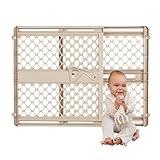
- PROVIDES PEACE OF MIND - The kids gate creates a secure barrier to help prevent access to stairs, bathrooms, kitchens, and other off-limit areas, so your little one can safely explore.
- ADJUSTABLE SAFETY GATE - This plastic child safety gate is adjustable, fits openings 26 to 42 inches wide, and is 26 inches tall. It is designed to be difficult for kids to climb. Our baby gate is perfect for stairs, doorways, hallways, and more.
- EASY TO INSTALL - Two installation options, pressure-mounted baby gate for a quick setup or hardware-mounted for use as a stairway safety gate that swings open. All necessary hardware is included. For stairway use, hardware mounting is required.
- COMFORTABLE HANDLE - Our baby gate for doorways features an ergonomic, easy-press handle that allows smooth opening and secure locking in seconds, even with one hand.
- MADE IN USA - Our JPMA-certified baby gate brings peace of mind to the entire family. We stand for the highest safety, quality, and operational standards while creating the ideal collection of products for babies ages 6-24 months. Proudly made in the USA!
Equipment and movement
Set up the bassinet, stroller, changing supplies and other equipment one or two pieces at a time. Supervise investigation and redirect the dog if it picks up an item. Practice rolling a stroller or carrying a wrapped bundle only when an adult can manage the dog, rewarding a quiet sit or settle at a safe distance.
Outdated Drivers Are Slowing You Down
One free scan finds every outdated or missing driver and matches the right update for your exact hardware.Free scan · exact hardware matchPC Slower Than It Used to Be?
A free scan shows the junk files, broken settings and background clutter dragging Windows down - then fixes them in one click.Free scan · Windows 10 & 11How should you change routines before the birth?
Map the routines that will change and rehearse them before the newborn is home. Gradual shifts reduce the chance that the dog associates every loss of access or attention with the baby.
Walks, meals and rest
If walks will occur at different times, move them gradually rather than changing the entire schedule overnight. Practice a shorter outing followed by a food puzzle or a calm settle period if that resembles the likely newborn routine. Keep feeding and rest predictable even when the household is busy.
Sharing attention
Practice giving the dog brief attention, then ending it calmly while you attend to another task. Reward the dog for remaining on its mat instead of demanding attention. Arrange a dog walker in advance if the family expects difficulty keeping up with exercise, and introduce the walker before the birth.
House rules
Decide now whether the dog may enter the nursery, sleep on the bed or approach changing and feeding areas. Apply the final rules before the baby arrives; introducing a prohibition for the first time while holding a newborn is harder for everyone.
Also popular on Amazon

- NO TRIP HAZARD, SPACE-SAVING: No bottom rail to trip over, and the mesh rolls away neatly when not in use—perfect for narrow hallways, doorways, and open-plan homes.
- NO BASEBOARD DAMAGE: The adjustable lower bracket slides up and down to fit any baseboard, so you get a snug, secure fit scratching your trim.
- SEE-THROUGH DURABLE MESH: Strong, tear-resistant mesh lets you keep an eye on children and pets while keeping them safely in their zone.
- ONE-HAND OPERATION: Open and close with a single hand while you carry your baby, laundry, or groceries—just press and pull.
- FITS EVERYWHERE, EASY INSTALL: Extends 0–54" wide, 34" tall for stairs, doorways, hallways, decks, and porches—comes complete with anchors, screws.
Should the dog be allowed in the nursery?
Either access plan can work if it is established early and paired with reliable supervision. The nursery should never be a place where the baby sleeps with the dog.
| Plan | Preparation | Management after birth |
|---|---|---|
| Nursery off-limits | Practice a stay at the doorway. Use a closed door or a tall baby gate when training is not happening. | Keep the barrier in place whenever an adult cannot actively supervise. A gate controls access; it does not replace supervision. |
| Nursery accessible | Teach the dog to settle on an out-of-the-way bed or mat. Reinforce staying there while an adult handles baby equipment. | Allow access only with an adult watching. Keep the dog away from the baby’s sleeping area and redirect it to the mat when needed. |
A tall baby gate for a nursery doorway, a washable bed or training mat, and an optional food-puzzle toy can make the chosen plan easier. Use enrichment only while an adult can monitor the dog and baby.
How do you plan the first meeting when you come home?
Plan the return-home meeting as a calm, flexible sequence, not as a one-time test of whether the dog is “safe.” The dog does not have to meet the baby immediately; the first goal is relaxed management.
- Prepare a helper. Have another adult ready to handle the dog, with a leash and small treats. The returning parent should be free to greet the dog without juggling the baby and equipment.
- Let the dog greet returning adults first. Keep voices and movements calm, allowing the dog to release excitement before introducing the baby.
- Choose a quiet room. Reduce crowding, noise and competing activity. Keep the leash loose while retaining control.
- Read body language. A relaxed dog may sniff, move normally and accept food. Stiffness, cowering, frantic movement, growling or avoidance means increase distance and pause.
- Offer voluntary contact only. If the dog remains relaxed, the helper can allow a brief sniff while the parent holds the baby securely. Do not bring the baby to the dog’s face or force a greeting.
- Reward calm behavior. Feed treats for looking away, sitting, settling or calmly sniffing. Stop before arousal builds.
- Separate when needed. Use a gate, closed door, crate if the dog is already comfortable there, or another safe room for a decompression break. Separation is a management choice, not a punishment.
- Try again later. Short, successful sessions are preferable to prolonged contact. There is no requirement to complete an introduction on the first day.
How should you supervise the dog and baby after arrival?
Keep an attentive adult within immediate reach whenever dog and baby share space. The AAP, CDC and AVMA all advise never leaving a baby or small child alone with a dog, regardless of the dog’s history or apparent gentleness.
What’s actually slowing this PC down?
Pick the symptom - the matching free tool is one click away.
Use active supervision
Active supervision means watching the interaction rather than merely being somewhere in the house. If you need to sleep, shower, answer the door, cook or focus on another child, place the dog behind a closed door or gate first. A barrier provides separation; it does not make unsupervised contact acceptable.
Also popular on Amazon

- WOODEN BABY GATE: Playtime is made safer in the blink of an eye with our wood baby gate. The wooden gate keeps babies and toddlers safely contained. Our child gate is the perfect solution for creating child-safe zones around the home.
- ADJUSTABLE SAFETY GATE: This wooden safety gate for toddlers is adjustable, fits openings 26.5 to 42 inches wide, and is 23 inches tall. It is designed to be difficult for kids to climb. Our baby gate is perfect for doorways, hallways, and more.
- EASY TO INSTALL: Our pressure mounted baby gate comes completely assembled and can be installed in a matter of seconds. No tools needed! Simply expand the gate to fit your space and press down on the sturdy locking bar to secure it.
- BUILT FOR EVERYDAY USE: The tension baby gate is made of durable American hardwood and rigid diamond mesh that stands up to daily wear while keeping your child safe and secure. The no-marking rubber bumpers keep the gate in place without marking walls.
- MADE IN USA: Our Baby Safety Alliance-certified baby gate brings peace of mind to the entire family. We stand for the highest safety, quality, and operational standards while creating the ideal collection of products for babies ages 6-24 months. Proudly made in the USA!
Make the baby predict good things
During supervised quiet routines, offer the dog a treat, calm attention, play or a food puzzle. Reward settling on the designated bed while you feed or hold the baby. Keep rewards and interactions predictable so the dog has an appropriate way to participate without crowding the infant.
Protect rest and resources
Do not disturb a dog while it is eating or sleeping. Give meals and chews in a location the baby cannot reach, and keep the dog’s supplies out of the infant’s sleep area. The CDC also advises washing hands after handling a dog, its food, waste or supplies and before caring for the baby.
What changes as the baby becomes mobile?
Mobility changes the risk profile. Crawling, grabbing, shrieking and pulling at fur can surprise a dog, so keep the same adult supervision and adjust barriers as the child’s reach expands.
- Teach age-appropriate gentle touching, but do not expect a baby or toddler to recognize stress signals or protect themselves.
- Give the dog a retreat the child cannot enter, such as a gated room or elevated resting area that is safe for that dog.
- Practice the dog moving away when called, and reward choosing distance.
- Keep food bowls, chews, toys and sleeping spaces separate from play areas.
- Increase management before the child becomes mobile, rather than waiting for the first grab or chase.
Close supervision remains an adult responsibility; teaching the child is an additional layer, not a substitute for it.
Independent reader supportYour contribution helps us test, update, and keep practical guides available for everyone.What should you do if the dog is afraid, growls or guards resources?
Create distance immediately, separate dog and baby, and obtain qualified professional guidance. Do not punish growling, snapping, showing teeth, resource guarding or other warning behavior: suppressing warnings can remove information that the dog is uncomfortable.
Also popular on Amazon

- CHILD AND PET FRIENDLY: This adjustable baby gate allows you to create multiple child-friendly or pet-friendly areas. To prevent falls, never use pressure-installed gate mode at the top of stairs.
- EASY TO INSTALL Install your baby gate with door quickly without the need for tools. Our pressure mounted baby gate design provides easy setup and flexibility throughout the home. Includes four wall cups. Must install with wall cups to keep gate in place.
- SECURETECH INDICATOR: The Safety 1st SecureTech red-to-green indicator on the top rail allows you to see when your gate is securely locked. Our adjustable baby gate with door allows you to easily see when your gate is securely locked for peace of mind.
- ONE-HAND OPERATION: Adults can conveniently open the walk through baby gate with just one hand, while the two-action handle remains tough for little fingers to unlock.
- VERSATILE USAGE: Great for children and pets, this walk through baby gate adjusts to fit doorways from 29” to 38” wide and stands 28” high. Adjustable width: up to 32” with main gate; up to 35” with one extension; up to 38” with two extensions (included).
Immediate safety steps
- Move the baby and dog apart without forcing the dog through the trigger.
- Close a door or gate and give the dog time to settle in a quiet area.
- Do not repeat the encounter to “see if it is better.”
- Record what happened, including the distance, trigger and body language, to share with a professional.
When professional help is essential
Contact a qualified behaviorist or trainer for persistent fear, aggression, snapping, guarding or difficulty maintaining separation. Ask for an individualized behavior-modification and management plan before increasing contact. If the household cannot reliably supervise or separate dog and baby, maintain strict separation and seek advice before attempting another introduction.
What mistakes make the transition harder?
- Waiting until the birth: the dog then faces new smells, sounds, equipment and rules simultaneously.
- Forcing a greeting: a dog should be allowed to approach voluntarily and leave when it wants.
- Using punishment for warning signals: this can hide discomfort without resolving it.
- Making sudden schedule changes: abrupt loss of walks or attention can add stress.
- Assuming a familiar dog needs no supervision: behavior can change under unfamiliar noise, movement, pain or fatigue.
- Treating a gate as a babysitter: barriers manage access but do not replace an adult’s active attention.
- Allowing access to sleep or food areas: children and dogs need separate spaces for eating and resting.
What should be ready before you leave for the hospital?
- A written decision about nursery access, sleeping arrangements and dog-free zones.
- A tall gate or functioning doors installed and practiced before the due date.
- A washable bed or mat placed where the dog can settle without blocking paths.
- Leash and small treats prepared for the return-home meeting.
- A helper who knows how to manage the dog and recognize when to pause.
- Food-puzzle toys or other supervised enrichment for feeding and quiet periods.
- A dog walker or other exercise support arranged and introduced in advance if needed.
- A contact for a qualified behaviorist or trainer if fear, guarding or aggression appears.
- A plan for handwashing after dog care and before handling the baby.
Preparation is successful when the dog has practical skills, predictable boundaries and a safe way to disengage—and when adults can maintain separation whenever they cannot supervise.
Free tools Windows power users keep installed
One-click scans. No signup required.
Frequently Asked Questions
What if the baby arrives before my dog has learned all the cues?
Prioritize management over adding difficult training during the first days. Keep the dog and baby physically separated except for brief, adult-controlled sessions, practice one easy calm behavior at a time, and arrange professional help if you cannot maintain that setup.
How can I tell whether a first sniff is too much for my dog?
End the approach if the dog becomes stiff, crouches, avoids, vocalizes intensely, fixates or stops accepting food. Increase distance and let the dog recover; a later meeting is safer than trying to complete contact while the dog is uncomfortable.
Can the dog stay in the room during a newborn feeding?
Yes, if an adult is actively supervising and the dog can remain settled at its designated spot. If the dog crowds, jumps, guards space or cannot settle, use a gate or closed door and offer supervised enrichment elsewhere.
What should relatives and visitors do when they meet the baby and dog?
Keep arrivals quiet and give the dog space rather than encouraging a crowd around the baby. Have one designated adult manage the leash or barrier, and postpone greetings if the dog is overexcited, fearful or unable to settle.
Recommended Free Tools





Leave a Reply