
Some links on this page are affiliate links: if you buy through them we may earn a commission, at no extra cost to you.
Prepare one quiet room with a closable door before pickup, then let your new cat expand its territory at its own pace. The room should contain a secure carrier, litter box, food and water placed apart from the litter, bedding, a hiding place, scratching surface, toys and a safe perch. Remove escape routes, toxic substances, cords and swallowable objects before the cat arrives. Keep children, visitors and resident pets out initially, arrange veterinary care, and verify identification records within the first few days. A calm setup prevents frantic hiding and door-dashing while giving the cat a predictable place to eat, sleep, eliminate and retreat.
What do I need before adopting a cat?
Have the essentials installed and tested before you leave for the shelter, rescue or foster home. Buying the food and litter the cat already uses can make the first transition easier; if you later change either, do it gradually and confirm diet changes with your veterinarian.
As an Amazon Associate I earn from qualifying purchases.
Do these 3 things before closing this tab:
1Clear out junk files and repair common Windows errors2Fix the driver behind crashes, sound loss and screen glitches3Repair Windows errors before they cause bigger problems| Item | What to choose | Ready-before-pickup check |
|---|---|---|
| Starter room | A low-traffic room with a door that closes | Door latches, windows and screens are secure, and other animals cannot enter |
| Litter setup | An appropriately sized box, unscented litter and a scoop | Box is stable, easy to reach and positioned away from food and water |
| Food and water | The current diet when possible; separate bowls for food and water | Bowls are washable and cannot tip easily |
| Rest and hiding | Washable bed or blanket plus a box or covered hide | At least one retreat is available without forcing the cat into it |
| Scratching and climbing | A stable scratching post or cat tree and, if safe, a high perch | Furniture cannot wobble or topple when pushed |
| Play | A few toys suited to supervised play | No loose strings, ribbons or small parts are left unattended |
| Transport | A strong, ventilated, easy-to-clean carrier with a secure door | Door locks, seams hold, and the carrier fits the cat without crushing bedding |
Keep a scoop, waste bags, paper towels and an enzymatic cleaner nearby. You may also want a brush, nail trimmers and a first-aid contact list, but avoid overwhelming a shy cat with handling during its first hours.
How do I choose and set up a safe room for a new cat?
Choose the quietest practical room, not the busiest family area. A spare bedroom, office or bathroom can work if it is warm, ventilated and free of hazards. The American Society for the Prevention of Cruelty to Animals describes this as a dedicated “quiet, safe space” for decompression.
Popular on Amazon

- Pet Carrier: 17.5” L x 11” W x 11” H, Recommended max load of 16 lbs cats small dogs. Please do not choose your carrier based on weight--please reference your pet's length and height in selecting a pet carrier size.
- Fits for under-seat dimensions of most airlines. Every airline has a specific set of rules and regulations, please contact with airline before flying with your cats small dogs.
- Mesh windows for ventilation, top and side entry with locking zippers for safety. Carrying handles, adjustable shoulder strap which can also be used as seatbelt, and back strap can fasten the pet carrier to your luggage.
- Pet carrier comes with a removable base insert, which creates a solid surface for your pet to stand on, along with a removable & hand washable cozy fleece pet bed, which offers a cozy sleeping space for your traveling cats small dogs.
- "Toys for pets, of textile materials". Mostly used as a Toy of Fabric Pet Home for pets playing and relaxing.
Arrange the room by activity
- Place the litter box at the farthest practical point from food and water. Cats generally prefer not to eliminate beside eating areas.
- Set food and water where the cat can see the doorway without being trapped in a corner.
- Put the bed and hiding box against a wall, leaving a clear route to the litter box and bowls.
- Anchor a scratching post or cat tree so climbing and stretching do not tip it.
- Leave the carrier open in the room with familiar bedding if the rescue or foster caregiver recommends it. It can become a voluntary retreat rather than a trap.
Do not seal every hiding option. A box, covered bed or space behind a safely secured piece of furniture lets a frightened cat regulate contact. Block only gaps where the cat could become stuck or where you could not reach it in an emergency.
Test the room before the cat arrives
- Close the door and windows, then check that screens cannot be pushed out.
- Get down to cat height and look behind appliances, under furniture and along baseboards.
- Shake each object the cat might climb on; remove anything that can fall.
- Confirm that litter, food, water and the carrier are all accessible without crossing a narrow, blocked route.
- Turn off or cover heaters, fans and other equipment that could burn, trap or frighten the cat.
How do I cat-proof my home?
Cat-proof the starter room first, then repeat the inspection throughout the home before you allow wider access. The American Veterinary Medical Association, ASPCA, RSPCA Australia and American Humane all emphasize preventing escapes, poisoning and ingestion injuries.
Free tools Windows power users keep installed
One-click scans. No signup required.
Prevent escapes and falls
- Repair loose window screens and keep windows closed until you have confirmed they are cat-secure.
- Use a closed door or temporary barrier at exterior entrances; never rely on a cat moving slowly when startled.
- Block narrow cavities behind appliances, inside reclining furniture and beneath cabinets where a cat could disappear or become trapped.
- Secure tall shelving, televisions and freestanding lamps to prevent tipping.
Remove poisonous and dangerous materials
- Lock away cleaning chemicals, medicines, pesticides and essential oils.
- Remove toxic plants from every room the cat can enter; if you cannot identify a plant confidently, keep it out of reach until a veterinarian confirms it is safe.
- Put away glass, ceramics, needles and other breakables that could fall from a shelf.
- Close toilet lids and keep buckets, sinks and bathtubs empty or inaccessible.
Control chewing and swallowing hazards
Tuck away electrical cords and chargers. Store strings, ribbon, thread, yarn, hair ties, rubber bands, paper clips and similar small objects in closed containers. Wand toys should be put away after play; a cat can swallow the string when unsupervised. Check floors and under furniture daily for dropped items.
Where should I put the litter box?
Place the box in a quiet, continuously accessible location away from food and water, but not so isolated that the cat feels cornered. Cornell’s feline-care guidance notes that many cats prefer simple, uncovered boxes, low sides help kittens and arthritic cats, and unscented fine-textured litter is often accepted more readily.
Also popular on Amazon
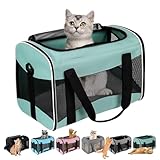
- [PRODUCT DIMENSIONS] Pet travel carrier size : 17x11x11 inches, recommended up to 15 lb pets, it is suitable for large, medium cats and small dogs. Please don't choose your airline cat carrying case based on weight, please refer to your pet's length and height when choosing a pet carrier size.
- [AIRLINE APPROVED] This cat carrier is designed with airline approved, it can fit comfortably under most flight seats, we can take our pets wherever we want. Dog travel carrier offers two attachment loop handles that can be used as a dual harness or as a luggage strap for balanced carry and secure transport.
- [EXCELLENT MATERIAL] Collapsible cat carrier is made of polyester fabric, supported by a steel ring, washable, wear-resistant and durable. The three sides and the top of this pet carrier are nylon mesh, scratch-resistant and not easy to damage, it can not only check your pet in real time, but also ensure enough air circulation.
- [SAFE AND COMFORTABLE] Dog travel bag has metal zippers on the top and side entrances, durable and not easy to deform, it allows your pets to enter and exit easily. The cat carrying case is equipped with an anti-escape safety buckle, which can effectively prevent pets from accidentally falling. It is suitable for car rides and vet rides.
- [PORTABLE AND FOLDABLE] Pet travel carrier comes with a detachable and hand washable wool pet bed, it can provide a comfortable sleeping space for your traveling pet. The cat travel case comes with an adjustable shoulder strap and handle for easy portability. When not in use, you can fold it up for storage.
Choose the box and litter for the individual cat
- Use an open box if the cat is hesitant, large-bodied or likely to feel confined. A hood can help contain scatter, but it also reduces visibility and may trap odors.
- Select low entry sides for a very young kitten or a cat with painful joints. For an agile adult, provide enough length for the cat to turn around and dig without touching the walls.
- Start with the litter used in the foster or shelter environment. If you change it, mix the new product in gradually rather than replacing it overnight.
- Scoop frequently and wash the box with mild, unscented products. Strong fragrances can make a cat avoid the area.
How many boxes do I need?
Use Cornell’s explicit rule: provide as many boxes as you have cats, plus one. In a multi-cat home, distribute boxes and other key resources in separate locations so one animal cannot guard every route. Place at least one box on each level the cats use regularly.
Which carrier, bowls and scratching furniture should I buy?
Safety, cleanability and a design that fits the starter room matter more than appearance. Choose equipment the individual cat can use without squeezing, slipping or being cornered.
| Purchase | Option A | Option B | Decision points |
|---|---|---|---|
| Carrier | Hard-sided | Soft-sided | Hard carriers are usually easier to disinfect and resist escape; soft carriers can be lighter but must have rigid structure, strong seams and a secure door. Either must be ventilated and large enough for the cat to sit, turn and lie down. |
| Litter box | Open | Hooded | Open boxes provide visibility and easy entry. Hooded boxes contain some scatter and odor but can feel cramped and are harder to inspect quickly. |
| Scratching furniture | Vertical post or tree | Horizontal scratcher | Vertical equipment should let the cat stretch fully and remain stable. Horizontal surfaces suit cats that scratch floors or carpets. Replace worn scratching material before the frame becomes unstable. |
| Water bowl | Wide, shallow bowl | Fountain | Pick a tip-resistant design that is simple to clean. A fountain is optional; the cat must still have dependable fresh water if it is unplugged. |
Put a washable liner or towel in the carrier, but do not overfill it. Keep the carrier upright and latched during transport; never carry a loose cat to or from the vehicle.
What should I do when I bring the adopted cat home?
Go directly from pickup to the prepared room. Avoid opening the carrier in a hallway, parking area or room with an exterior door.
Also popular on Amazon

- High Quality Design:Sturdy steel cage structure and wooden support board maintain good spatial stability and shape. Breathable mesh windows on four sides,which can ensure good air circulation and views,make pets have a comfortable and safe travel.It can also be easy for you to check on your pets.There is a front pocket to store pet toys,treats,etc.
- Dimension and Weight:Made of durable tear-resistant fabric.Four easy entrances for pets. Dimensions: 17 inch x 11 inch x 11 inch (L*W*H), suitable for pets up to 16 lbs.Please don't choose your carrier based on weight only,consider your pet's length and height when choosing a carrier.
- Airline Approved & Safty:Can be placed under the seats of most airplanes(Four non-slip feet on the bottom to prevent movement), and comfortably on the seat next to you in a car or bus.It has a adjustable shoulder strap.Can also be fastened to the car seat with a safety belt or shoulder strap to keep your pet safe.
- Easy to Clean :You can clean the stains and dirt on the surface with a soft cloth.Soft mat inside the pet carrier is removable and washable.You can take it out and wash it easily to solve all stains.
- Easy to Collapsible & Lightweight:When not in use,fold it into a flat,space saving and easy to store.Only 2.2lbs,it's easier to carry around.It can also used as a toy of pet house,allowing pets to play in a safe space to relax and rest.
- Before leaving, confirm the carrier door is locked and the cat’s records, medication instructions and contact details are with you.
- At home, close the starter-room door and any nearby exterior doors.
- Set the carrier on the floor, open the door and step back. Let the cat leave voluntarily; do not tip, shake or pull it out.
- Sit quietly, speak softly and keep the first visits short. Avoid staring, reaching into the hiding place or passing the cat around.
- Offer the familiar food and litter, refresh water and observe from a distance. Note whether the cat urinates, defecates, eats and drinks.
- Maintain a predictable schedule for feeding, litter cleaning and calm visits. Predictability is more useful than constant attention.
Hiding for several days can be normal while a cat settles, according to RSPCA Australia. The cat should still have access to water, food and a clean box. Contact a veterinarian promptly if the cat cannot urinate, has breathing difficulty, repeated vomiting, severe lethargy or another urgent sign described in the adoption records.
How long should I keep an adopted cat in one room?
There is no universal number of days. Keep the starter room available until the cat is eating, drinking, using the litter box and moving around with enough confidence that a larger space will not simply create panic. Some cats are ready after a short period; others need longer.
Quick wins for a faster PC:
Fix the driver behind crashes, sound loss and screen glitchesFind Drivers →Repair Windows errors before they cause bigger problemsFix Now →Scan for outdated or missing drivers - takes under a minuteDriver Scan →Use behavior, not the calendar
- Not ready: the cat remains frozen, will not eat or drink, eliminates outside the box because it cannot find it, or bolts whenever the door opens.
- Possibly ready: the cat eats on schedule, uses the box, grooms, plays or explores while you are present, and returns to its hide to rest.
- Expand gradually: open one additional area at a time while keeping the starter room open as a retreat. Close unused rooms and secure exterior doors.
Do not carry a hiding cat into the rest of the house. Let it choose when to cross the threshold, and return access to a smaller area if it stops eating, toileting or settling.
How do I introduce my new cat to other pets?
Start with complete physical separation. American Humane recommends keeping a newcomer in one room with its carrier, litter, food, water and toys until it is accustomed to the surroundings, especially when another pet lives there.
Also popular on Amazon
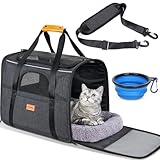
- 【 Spacious & Comfortable Cat Carrier 】The large cat carrier provides ample space for your feline friend to move, turn, and stretch during travel. Measuring 17.3 x 12.2 x 13.4 inches, it is wider and taller than most cat carriers, ensuring your pet feels comfortable and at ease while on the go.
- 【Balanced Mesh Design】Unlike other cat carrier hard, our cat carrier soft strikes the perfect balance with 40% mesh surface area. This ensures your pet can observe the surroundings and breathe easily while feeling safe and secure at the same time. The cat carrier large is suitable for pets in all kinds of situations.
- 【Built-in Dual-Sided Cushion】The detachable pad offers two distinct comforts: a cool side for summer and a super-soft, warm side for winter. You can easily flip it to match the season, providing the perfect temperature for your pet in any weather.
- 【Includes Foldable Bowl】Designed for on-the-go use, our foldable bowl carries 410g of food or 20oz of water. After use, simply collapse it and attach it directly to your pet's collar or leash, perfect for keeping your pet fueled and hydrated anywhere.
- 【Safe & Durable】Safety is our top priority, and the pet carrier for cat is equipped with a secure buckle to prevent your pet from escaping. The cat carrier soft is made of reinforced snow silk fabric and hard mesh material, ensuring durability and preventing any tearing during long-distance travel.
- Keep the resident cat or dog outside the starter room. Do not allow nose-to-nose greetings through a cracked door.
- Feed the animals on opposite sides of the closed door so each can associate the other’s scent with a routine reward. Move bowls closer only while both remain relaxed.
- Exchange bedding or use a clean cloth to transfer scent between animals. Stop if either animal becomes agitated.
- When calm behavior is consistent, permit brief visual contact through a secure gate, screen or partly opened door that cannot be forced.
- Progress to short, supervised face-to-face sessions. Keep a clear escape route and end the session before chasing, cornering, growling or swatting escalates.
- Increase time together slowly. Feed, sleep and leave the animals separated whenever no responsible adult is present.
Never force contact or punish hissing. A cat that can retreat is less likely to defend itself, and a dog should remain leashed during early meetings if its excitement cannot be reliably controlled.
Independent reader supportYour contribution helps us test, update, and keep practical guides available for everyone.How should I prepare children, visitors and daily routines?
Explain that the cat approaches people; people do not pursue the cat. Show children how to sit quietly, offer a hand for sniffing and stop petting when the cat moves away. No child should enter the starter room alone, pick up the cat, chase it or reach into its hiding place.
Delay parties and nonessential visitors until the cat is eating, toileting and exploring comfortably. Ask essential visitors to ignore the cat initially and keep exterior doors closed. Preserve regular feeding, cleaning and quiet-time periods even after the cat gains access to more rooms.
When should I arrange veterinary care and identification?
Choose a veterinarian before adoption or book an appointment within the first few days. Bring every shelter or foster record and ask the clinic to review:
Also popular on Amazon
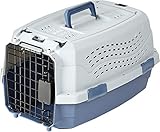
- Hard sided pet carrier with 2 doors for front and top entry; suitable for cat or extra-small dog breeds, such as chihuahuas and toy poodles (up to 11 pounds)
- Durable plastic construction with steel wire front door; screws keep the top and bottom sections securely connected
- Top door can swing open to the left or right for easy access and convenience
- Plenty of ventilation on sides, top, and back of the carrier
- Note: Be sure to measure the size of the pet when choosing carrier size
- Vaccination dates and which doses remain due
- Parasite testing and prevention
- Spay or neuter status
- Current food, body condition and any prescribed medication
- Signs that require same-day or emergency treatment
Confirm that the microchip number is registered to your current contact details, check local identification requirements and save the nearest emergency clinic’s phone number. A collar and identification tag may provide an additional visible safeguard if your veterinarian considers them appropriate for the individual cat.
What should I check the day before pickup?
- Door, window and screen security has been tested.
- Cords, chemicals, medicines, plants, strings and small objects are removed or locked away.
- The carrier is clean, latched and lined with washable bedding.
- Food, water, litter, scoop, bed, hiding box, scratching surface and toys are in place.
- The starter-room temperature is comfortable and the room is free of smoke and strong fragrances.
- Children, visitors and resident pets have a clear plan to stay out of the room.
- The adoption paperwork, feeding instructions, medication and emergency contacts are packed.
- A veterinary appointment or call is scheduled, and microchip-registration steps are understood.
Frequently Asked Questions
Should I leave food out overnight for a newly adopted cat?
Follow the feeding schedule supplied by the shelter or foster caregiver unless your veterinarian advises otherwise. Measure portions when possible, refresh water, and remove wet food after the period recommended for food safety rather than leaving it indefinitely.
Recommended Free Tools
What if my new cat will not come out of hiding?
Keep the room quiet, place food and water near—but not inside—the hiding place, and sit nearby without reaching in. If the cat is not eating, drinking or urinating, call a veterinarian rather than trying to force an interaction.
Can I let my new cat roam the house while I am away?
Wait until the cat reliably finds its litter box, shows relaxed exploration and cannot access escape hazards. Until then, leave it in the secured starter room with water, food, litter and safe enrichment.
Do I need a collar if my cat has a microchip?
A microchip helps identify a lost cat only when it is scanned and the registration details are current. Ask your veterinarian about a properly fitted breakaway collar and visible tag as a complementary form of identification.





Leave a Reply