Quick wins for a faster PC:
Repair Windows errors before they cause bigger problemsFix Now →Scan for outdated or missing drivers - takes under a minuteDriver Scan →The most useful ways to lower the risk of a dog attack on a walk are to keep your own dog under control, give unfamiliar dogs space, and respond calmly if one approaches. A leash helps you control your dog; it cannot guarantee protection from another dog. No dog’s behavior or appearance can guarantee that it will not bite.
Any dog can bite in some circumstances, including a dog that seems friendly or healthy. Watch for signs of discomfort, but do not treat any one signal—or the absence of a signal—as a certain prediction. If an unfamiliar dog comes near, avoid approaching or testing it: stay calm, give it space, and slowly move away when you can.
As an Amazon Associate I earn from qualifying purchases.
Why any dog can bite
A dog may bite when it is frightened, nervous, startled, in pain, unwell, guarding food, a toy or puppies, or reacting defensively or territorially. A dog may also feel threatened or uncomfortable in a particular situation. A dog that seems friendly or healthy can still be uneasy when approached, crowded, or surprised. Breed alone does not determine whether a dog will bite.
Outdated Drivers Are Slowing You Down
One free scan finds every outdated or missing driver and matches the right update for your exact hardware.Free scan · exact hardware matchPC Slower Than It Used to Be?
A free scan shows the junk files, broken settings and background clutter dragging Windows down - then fixes them in one click.Free scan · Windows 10 & 11The CDC notes that nearly one in five people bitten by a dog requires medical attention. This is a broad CDC estimate, not a way to predict the risk from a particular dog, breed, or walk. It is a reminder to take bites seriously and to avoid unnecessary close encounters—not a reason to assume every dog is dangerous.
#1 Best Overall

- Engineered for Ultimate Strength: Constructed from 1/2 inch diameter rock climbing rope, this heavy duty dog leash is distinctively durable and strong. It is designed to withstand the strongest pulls from large and energetic dogs, giving you peace of mind that your pup won't break free during walks
- Comfortable Padded Handle: Say goodbye to rope burn. Our soft, cushioned foam handle provides an amazing grip and protects your hands from sudden tugs. Enjoy longer walks and extended training sessions with total comfort, even if your dog is a puller
- Maximum Nighttime Visibility: Highly reflective threads are woven through the entire length of the rope (not just painted on), keeping you and your fur baby visible to passing cars and cyclists during early morning jogs or late-night strolls. Perfect for urban streets and low-light environments
- Tangle-Free 360° Swivel: Featuring a heavy-duty metal clasp that rotates 360 degrees, this ensures the rope never gets twisted or tangled, no matter how much your dog moves around. The zinc alloy hook is rust-proof and easy to clip onto any dog collar or harness in seconds
- Versatile for Any Activity: Park walks, trail hikes, or yard training. Offers ideal balance of freedom and control. Comes in 4ft, 5ft, 6ft lengths and 12 colors. 3/8" diameter suits small to medium dogs – lightweight and non-bulky. For medium and large dogs, choose 1/2" diameter
Dog body language can help you notice possible discomfort, but it is not a guarantee of what the dog will do next. A dog may communicate unease in different ways, and signals depend on the situation. The practical response is not to diagnose the dog or prove that it is safe. Give it room and avoid actions that could make it feel more crowded or threatened.
Use a leash to control your own dog
Keep your dog leashed in public where required, and follow local leash rules, which vary by location. The leash’s role is to help you maintain control of your dog—not to stop an unfamiliar dog from approaching. The AVMA and CDC include public leash use in responsible dog ownership guidance. A leash is a sensible control measure, but it is not bite-proof protection.
Choose walking equipment you can handle safely. The available guidance does not establish a preferred leash material, design, length, or brand, so there is no evidence-based product comparison to make here. Follow local requirements and use equipment that lets you control your dog. Buying a particular style or brand cannot ensure that another dog will stay away.
Control also means not allowing your dog to rush up to an unfamiliar dog or person. Even if your dog is sociable, another dog may be frightened, guarding something, in pain, or simply trying to move away. Do not force a greeting because the dogs are both leashed or because one appears friendly. If your dog is already leashed and another dog comes near, focus on staying calm and creating space rather than forcing an interaction.
AVMA guidance also recommends training and gradual socialization as part of responsible dog care. If your own dog shows excessive fear or aggression, AVMA suggests consulting a veterinarian; a qualified trainer or behavior professional may also be relevant for help with your dog’s behavior. Do not assume that a walk is the right moment to test or correct a dog’s reaction to an unfamiliar animal.
Rank #2

- Removable Zipper Pouch: Easily store and access your smartphone, keys, poop bags, dog treats in the removable zipper pouch. It’s a good add-on for the leash for training, walking, jogging, hiking training and running
- Double shock absorbers: Feature 2 shock-absorbers to help provide a bit of “give” in the leash. This can help reduce the amount of tugging both you and your dog will experience as you cruise down the road
- Durable clip - Enjoy a 2” heavy duty clip for added safety and handy D-ring to attach your favorite dog training clicker or dog poop bag holder.
- 2 Extra handles for extra control: Easily guide your pup on your runs through the park with the built in waist handle. Then switch to the amazing traffic handle when you need tighter control of your pet.
- Hand free waist wearing: Enjoy a waist dog running leash belt that lets you freely use your phone or read a newspaper without feeling restrained by your Dog's movements
Recognize signs a dog may be uncomfortable
Body language is contextual: a cue can signal discomfort, but no single sign predicts with certainty that a dog will bite. Pay attention to the dog’s overall behavior and give it room if it appears uneasy. These signs are reasons to avoid contact, not invitations to move closer and see what happens.
| What you may notice | What it can signal | What to do |
|---|---|---|
| Turning away or trying to move out of reach | The dog may be trying to avoid contact or get space. | Do not follow, reach toward it, or try to pet it. Increase distance. |
| A stiff body, growling, or tense staring | The dog may be uncomfortable or signaling a threat. | Stay calm, avoid direct eye contact, and do not approach. |
| Yawning, ears held back, a raised paw, a tucked tail, or other tense behavior | These can be signs of worry; their meaning depends on the situation. | Treat them as a reason to give the dog space, not as an invitation to test its reaction. |
The AVMA identifies turning away, stiffening, growling, or trying to move away as signs of discomfort. Its broader guidance also describes possible signs of worry, including yawning, ears back, a raised paw, a tucked tail, and tense staring. These signs do not all mean the same thing in every situation, and dogs differ in how they communicate.
Do not wait for a growl or a stiff posture before giving a dog space. A dog trying to move away is already indicating that it does not want to be approached. Conversely, the absence of an obvious warning does not prove an approach is safe. Do not reach out, make direct eye contact, or attempt to pet an unfamiliar dog to find out how it will react.
If the dog is with an owner, the owner is the best source of information about that particular dog. Ask permission before petting, and respect the owner’s answer and the dog’s behavior. Permission is not a reason to ignore signs of discomfort: if the dog turns away, stiffens, growls, or tries to move out of reach, stop and give it space.
What to do if an unfamiliar dog approaches
CDC guidance focuses on staying calm, avoiding direct eye contact, and slowly backing away rather than running or making sudden movements. The goal is to avoid escalating the encounter while you make space. These actions cannot guarantee that a dog will retreat, but they are safer than rushing toward it, trying to pet it, or provoking a response.
Rank #3
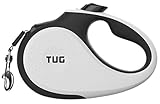
- Small Retractable Dog Leash is Suitable for Dogs Under 35 lbs; Medium For Dogs Under 55 lbs; Large For Dogs Under 110 lbs; Retractable Leashes Not Suitable For Chewing
- 16 ft Tape Retractable Dog Leash With Easy-Adjust Retraction; 360 Degree Tangle-Free Inlet
- Quick Lock And Unlock Feature - Easy Roll-On and Roll-Off With Your Thumb
- Super Comfortable Grip For Those Long Walks! Ergonomic Anti-Slip Handle
- Heavy Duty Internal Coil For Consistent Retraction and Recoil
- Stay still and calm. Do not run, scream, or make sudden movements around a threatening dog. Running or shouting can intensify an already tense encounter.
- Avoid direct eye contact. Turn the side of your body toward the dog instead of facing it head-on. Do not stare at it to assess whether it is friendly.
- Give it space. Do not approach, reach out, or try to pet the dog. When there is room to move, slowly back away. Move calmly rather than making a sudden dash.
- If you need to speak, use a firm, deep voice. The CDC suggests saying “no” or “go home.” Keep your behavior controlled; do not scream or try to provoke the dog.
If the dog is near its owner, do not assume that the owner’s presence means an introduction is appropriate. The owner can tell you about that dog, and you should ask before petting. If the dog appears uncomfortable or is trying to move away, let it go and increase the distance.
Free tools Windows power users keep installed
One-click scans. No signup required.
If you are walking your own dog, remember that the leash helps you control your dog, not the approaching one. Do not force the dogs to meet or allow your dog to rush forward. Keep the focus on calm behavior and making room. Local leash rules may require a leash in public, but no leash choice can guarantee that another dog will not approach.
If a dog knocks you down
If a dog knocks you down, curl into a ball and use your hands to cover your ears and neck. Protect your head and face as well. Stay as still and quiet as you can. Do not try to run away, scream, or make sudden movements. CDC and AVMA advice both emphasize protecting yourself if you are knocked down; this is a protective response, not a guarantee that you will avoid injury.
After a bite: clean the wound and get advice
Take a dog bite seriously, even if the wound first appears small. Wash the wound with soap and water. Seek immediate medical care for a deep wound or serious bleeding, and contact a healthcare professional about infection and rabies risk—particularly if the dog’s vaccination status is unknown. A healthcare professional can advise you based on the wound and your circumstances.
Report the bite to local animal control or police, as the CDC advises. Reporting helps the appropriate local authority address the incident. The CDC’s rabies guidance, updated July 1, 2025, provides further context; medical advice about your own exposure should come from a healthcare professional.
Rank #4

- Upgrade: The product has been modified to use nylon thread directly sewing, very strong.All handles was sewn onto the leash instead of the cord ties.Package includes: frosted zipper bag,two handles dog leash.
- MAXIMUM TOUGHNESS AND DURABILITY: Nearly 2X thicker and stronger than standard dog leashes. 3mm thick and 1” wide with tightly webbed nylon for enhanced rugged construction.
- DUAL HANDLES FOR TOTAL CONTROL: Soft Neoprene and padded handle, comfortable than ever ;Equipped with an extra traffic handle for amazing control. Use the standard handle for those casual dog walks or quickly grab the built in traffic handle to guide your pup through crowded areas with ease.
- 360° Rotating Clasp: Swivel clasp prevents the leash from twisting and dog getting tangled. Heavy-duty metal clasp makes our training leashes last longer than most ones. Premium components for maximum strength
- BE SAFE AND VISIBLE AT NIGHT: Luminous reflective threading keeps you both safe and visible on your late-evening walks. Enjoy a large 2” heavy duty clip for added safety and thick D-ring to attach your favorite dog training clicker or dog poop bag holder.Packaging details:Frosted zipper bag,Dog leash with D ring
Common prevention mistakes to avoid
- Assuming appearance tells you whether a dog is safe. A dog may look healthy or friendly and still bite if it is frightened, startled, guarding something, in pain, or otherwise uncomfortable.
- Relying on breed as a risk test. Breed alone does not determine whether a dog will bite. Consider the situation and the dog’s behavior, and give unfamiliar dogs space.
- Testing a warning sign. Do not move closer, reach out, stare, or try to pet a dog that turns away, stiffens, growls, or tries to move out of reach.
- Running or making sudden movements. If a threatening dog comes near, stay calm and still, avoid direct eye contact, and slowly back away when there is room.
- Expecting a leash to protect you from another dog. A leash helps maintain control of your own dog. It does not keep an unfamiliar dog from approaching.
What AVMA says about recognizing discomfort
In its 2026 dog bite prevention statement, AVMA president Dr. Michael Q. Bailey emphasized that “any dog can bite, and kids can be particularly vulnerable.” The statement also says: “A dog that turns away, stiffens its body, growls or tries to move out of reach is signaling discomfort; recognizing and respecting these signals are critical steps in preventing bites.” The point is to respond to discomfort by giving the dog space, not to treat a warning as a certain forecast of a bite.
Frequently Asked Questions
Does a leash prevent another dog from attacking?
No. A leash helps you maintain control of your own dog, and public leash use is part of CDC and AVMA responsible ownership guidance. It does not stop an unfamiliar dog from approaching. Follow local leash rules and focus on calm behavior and creating space if another dog comes near.
What are warning signs that a dog may be uncomfortable?
Possible signs include turning away, trying to move out of reach, stiffening, growling, tense staring, yawning, ears held back, a raised paw, or a tucked tail. Their meaning depends on context, and no single cue predicts a bite with certainty. Give the dog space rather than testing its reaction.
What should I do if an unfamiliar dog approaches me?
Stay still and calm, avoid direct eye contact, and turn the side of your body toward the dog. Do not run, scream, make sudden movements, approach, or reach out to pet it. Slowly back away once there is room. If you need to speak, CDC suggests a firm, deep “no” or “go home.”
Should I pet an unfamiliar dog that looks friendly?
Do not approach an unfamiliar dog just because it looks friendly or healthy. If it is with an owner, ask the owner before petting, and respect signs that the dog wants distance, such as turning away, stiffening, growling, or trying to move out of reach.
Best Value
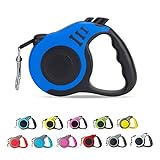
- Lievuiken retractable dog leash can extend to 10 feet which suitable for small dogs. The rope is durable and not easy to break. Comfortable grip design in line with the comfortable grip design, long time holding hands won't be tired. The 10ft durable nylon cord allows safe exploration while maintaining control.
- The product adopts high quality plastic shell and environmental protection, nylon rope, metal lock, bending smooth, no noise, not easy to jam.
- The brake button is more user-friendly. Big button to brake, small button to stop braking for quick adjustments. Convenient for telescopic adjustment, storage and traction.
- It's reliable. Ergonomic handle ensures fatigue-free walks. You don't need to worry that the dog's leash will hurt your hand when the dog runs wildly, but it doesn't mean that your dog can stay too far away to avoid winding the leash.
- It’s widely applicable for dogs under 22lb weight, ideal for puppies and small dogs(chihuahuas, pugs, kittens). Well-controlling of pets is available while walking, training, jogging in the open air.
What should I do if a dog knocks me down?
Curl into a ball and use your hands to cover your ears and neck. Protect your head and face, and stay as still and quiet as you can. Do not run, scream, or make sudden movements.
What should I do after a dog bite?
Wash the wound with soap and water. Seek immediate medical care for a deep wound or serious bleeding, and contact a healthcare professional about infection and rabies risk, particularly if the dog’s vaccination status is unknown. Report the bite to local animal control or police.
Is one type of walking leash best for preventing dog attacks?
The AVMA and CDC guidance supports using a leash in public to control your own dog, but it does not establish a preferred leash material, design, length, or brand. Follow local leash rules and choose equipment you can handle safely. No leash is a guarantee against another dog approaching.
Recommended Free Tools
The Bottom Line
Keep your own dog under control, give unfamiliar dogs space, and do not mistake appearance or a single body-language cue for certainty. If a dog approaches, stay calm, avoid direct eye contact, turn partly sideways, and slowly back away when there is room. A leash helps control your dog; it cannot prevent another dog from approaching. After a bite, wash the wound, seek appropriate medical advice, and report it to local animal control or police.
Quick Recap
Product prices and availability are accurate as of the date/time indicated and are subject to change. Any price and availability information displayed on Amazon at the time of purchase will apply.




