
Some links on this page are affiliate links: if you buy through them we may earn a commission, at no extra cost to you.
Prevent water-bowl guarding by removing the competition: give every dog and cat dependable access to more than one water station, place stations in separate areas, and block any pet from watching or controlling all routes to water. A closed door, baby gate, exercise pen, or cat-only route can be safer than trying to make animals “share.” Observe quietly, separate pets at the first sign of tension, and involve a veterinarian or qualified behavior professional if there is lunging, snapping, biting, or no safe way to keep them apart.
Water guarding is less common than food guarding, but it can happen. The plan below explains how to arrange bowls, what warning signs mean, how to respond without provoking a bite, and when a medical or behavior assessment is needed.
As an Amazon Associate I earn from qualifying purchases.
Crashes, No Sound, or Screen Glitches?
Random freezes, missing sound and display glitches usually trace back to one bad driver. Find and replace yours safely.Free scan · under a minutePC Slower Than It Used to Be?
A free scan shows the junk files, broken settings and background clutter dragging Windows down - then fixes them in one click.Free scan · Windows 10 & 11Why would a dog guard a water bowl from a cat?
A dog may treat water as a valuable resource and try to control access to it. The behavior can include standing over the bowl, staring at the cat, blocking the approach, stiffening, growling, chasing the cat away, snapping, or biting. The ASPCA notes that dogs can react aggressively when another animal approaches a food bowl and that guarding water bowls is less common but possible. Preventive Vet includes water among the resources some dogs protect.
Guarding is not necessarily a sign that a dog is “dominant,” spiteful, or trying to punish the cat. It is a safety and access problem: one animal believes another’s approach threatens a valued resource. Crowded rooms, a single bowl, competition at mealtimes, a history of having food or water taken away, pain, illness, or general anxiety can all make conflict more likely. The precise cause cannot be diagnosed from a description alone.
Popular on Amazon

- Stainless Steel Pet Bowl: Made for daily food or water use with a simple, practical design
- Silicone Nonslip Bottom: Helps reduce sliding and noise on smooth feeding surfaces
- Wide, Stable Shape: Designed to sit steadily during everyday meals
- Easy to Clean: Smooth stainless steel surface rinses clean and is dishwasher safe
- Stackable Design: Bowls can be stacked for compact storage when not in use
Cats may also guard, avoid, or abandon a station when another pet makes it feel unsafe. A cat that stops drinking, waits until the dog leaves, or takes a long route around the room still lacks reliable access even if no growling occurs.
Should dogs and cats share a water bowl?
Calm pets can sometimes drink from the same bowl, but sharing one bowl is a poor setup when any animal blocks, stares at, chases, or frightens another. A shared bowl creates a single point of competition and gives the guarding pet an opportunity to control hydration. Separate stations are safer and let you identify which animal is drinking.
AAFP/ISFM cat-environment guidelines recommend multiple, separate locations for food and water bowls and say each cat should have its own feeding station. The same environmental principle helps in mixed-dog-and-cat homes: resources should be distributed rather than concentrated in one contested place.
There is no universal bowl count or required bowl height. As a concrete example, VCA Canada describes using four bowls of fresh, clean water for a home with two dogs and two cats, placing them in various areas. Treat that as an example of redundancy, not a rule that fits every floor plan.
How many water bowls do multiple pets need?
Start with at least one station in each pet’s safe zone, then add stations until no animal can watch or block every route to water. A household with two dogs and two cats might use four or more stations, depending on room layout, mobility, and whether a cat needs a dog-free location.
A practical way to choose the number
- Count the pets and safe zones. Give each cat and dog a dependable place to drink without passing the guarding animal.
- Add redundancy. Put an extra station on another route or in another room so one blocked bowl does not eliminate access.
- Check sight lines. If a dog can see and reach every bowl from one hallway or doorway, the bowls are functionally one resource.
- Reassess after observation. Add or move a station if one pet waits, retreats, takes a circuitous route, or is repeatedly displaced.
East Bay SPCA recommends several bowls in different locations so that dogs can reach a bowl even while another dog is drinking. In a dog-and-cat home, the same arrangement prevents a dog from monopolizing the only floor-level source.
Recommended Free Tools
Also popular on Amazon
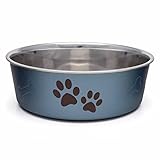
- STAINLESS STEEL & DURABLE - This Bella Bowl (27 oz, 6.75" x 2") features a stainless steel design with a poly-resin exterior great for dog food mat, which makes them dish washer safe and easy to keep clean and hygienic. Perfect cat food bowl or dog water bowl for home & travel.
- REMOVEABLE RUBBER BASE - This feature prevents and ensures no spill water bowl for dogs. It’s perfect for puppy food and makes an excellent addition to your dog feeding station. Watch the bowl stand steady on your pet food mat, making it a great complement to your dog mat and other dog stuff.
- PATENTED AWARD-WINNING DESIGN – Bella Bowls are renowned for being the bestselling bowls in the pet industry. The Bella Bowl Stainless Steel Bowls come in a variety of sizes, making this versatile dog food bowl perfect for all pets—from puppy bowls and small bowls to dog bowls large breed and everything in between! These bowls are also ideal for use as a cat water bowl, with smaller sizes being highly recommended for cat bowls for indoor cats.
- REAL STEEL STYLISH & COLORFUL DOG FEEDER – Available in a wide range of vibrant colors, this dog bowl seamlessly complements any pet supplies collection or dog accessories and makes a fantastic addition to your home’s décor. The Bella Bowls come in beautiful hues like blueberry and artichoke, making them a perfect fit for your dog bowl mat or cat food mat.
- VETERINARIAN RECOMMENDED – This stainless steel dog bowl and stainless steel cat bowls have all the benefits of stainless steel making them hygienic and clean. Bella bowls are truly a must-have for any cat feeding station and essential addition to your dog supplies.
How should I arrange water stations so a dog cannot block the cat?
Use physical separation first. Separate rooms are the strongest option; baby gates, exercise pens, and furniture placement can help when doors are impractical. Whenever possible, keep the dog’s and cat’s stations out of direct sight so staring and body-blocking cannot begin across the room.
Give each pet a safe zone
Map the home from each animal’s point of view. A cat’s safe zone might be a quiet room, a high perch reached by a stable route, or a gated area with a cat-sized opening. A dog’s station may be in a room the cat does not need to cross. The route matters as much as the bowl: a cat should not have to pass a sleeping or guarding dog to reach water.
Use cat-only or elevated access carefully
A dog-inaccessible room, a secure baby gate with a cat passage, or a safely reachable elevated surface can protect a cat’s station. Elevation is useful only when the cat can climb and descend confidently and the bowl cannot be knocked over. Keep water away from litter boxes and from noisy, high-traffic locations, which can discourage drinking.
Prevent crowding at doors and corners
Do not put a station in a narrow hallway, beside a doorway, or in a corner where one pet can trap another. Leave an unobstructed escape route. If the dog tends to patrol a particular corridor, relocate the cat’s bowl behind a door or gate rather than relying on the cat to squeeze past.
Quick wins for a faster PC:
Clear out junk files and repair common Windows errorsFree Scan →Fix the driver behind crashes, sound loss and screen glitchesFind Drivers →Maintain hygiene and availability
Refresh every bowl with clean water and check that a pet has not tipped, emptied, or contaminated it. Multiple stations protect access, but they do not replace routine cleaning. Use sturdy bowls that are easy to wash; multiple stainless-steel pet water bowls are a practical, brand-neutral option.
What does water-bowl guarding look like?
Early signs are often quiet. Watch from a distance and note what happens before, during, and after the cat approaches.
Also popular on Amazon
- Stainless Steel Pet Bowl: Made for daily food or water use with a simple, practical design
- Silicone Nonslip Bottom: Helps reduce sliding and noise on smooth feeding surfaces
- Wide, Stable Shape: Designed to sit steadily during everyday meals
- Easy to Clean: Smooth stainless steel surface rinses clean and is dishwasher safe
- Stackable Design: Bowls can be stacked for compact storage when not in use
| Observed behavior | What it can mean | Immediate response |
|---|---|---|
| Staring, freezing, hovering, or placing the body over the bowl | The dog is monitoring or controlling access, even without a growl. | Guide the cat away with a barrier and redesign the station so approaches are separated. |
| Head lowered, ears pinned, lip lift, growl, or stiff posture | The dog is warning that proximity feels threatening. | Increase distance immediately; do not touch the dog or bowl. |
| Blocking, chasing, or repeatedly herding the cat away | The cat’s access is being actively restricted. | Use separate rooms, a gate, or a cat-only route and add another station. |
| Lunge, snap, bite, or a dog that cannot be moved safely | There is a meaningful injury risk. | Stop do-it-yourself behavior work and contact a veterinarian and qualified aggression professional. |
| Cat waits, hides, avoids the room, or drinks much less | The cat may feel unsafe even if the dog is silent. | Provide a private station and arrange veterinary advice if reduced drinking persists. |
Record which animal approaches first, where each pet stands, whether the dog watches the cat, and whether the cat can leave. A short written log can reveal patterns such as guarding after meals, when the household is noisy, or only in one room.
What should I do when guarding starts?
Prioritize distance and a clear exit. Do not test the dog, reach toward the bowl, grab the collar, yell, or punish. Those actions can increase fear and can put your hands near a bite.
What’s actually slowing this PC down?
Pick the symptom - the matching free tool is one click away.
- Interrupt access without confrontation. Put a door, baby gate, pen panel, or another solid barrier between the animals. If a barrier is not immediately available, call the unguarded pet away from a safe distance rather than stepping between them.
- Give the guarding animal space. Let the dog finish drinking and move away before approaching the bowl. Do not force the bowl away or physically drag the dog.
- Provide water elsewhere. Once separated, make sure both animals have water in their own areas. Do not leave one pet without access as a punishment.
- Remove other competition. Feed dogs and cats separately; give treats, chews, and high-value toys behind closed doors; and pick up leftovers before animals reunite.
- Change the layout. Add stations, break sight lines, and create a cat-only route before allowing normal household movement again.
The ASPCA advises using barriers or separate rooms, never forcing an item away, and seeking professional help when a dog may bite. A guarded bowl is not an appropriate situation for a child to manage.
Can training stop a dog from guarding water?
Management is the first-line protection because it prevents rehearsal of the behavior. Training may be part of a broader plan, but the exact exercises, distance, rewards, and pace should be selected after a professional evaluates the dog’s triggers and bite risk.
What is reasonable for mild avoidance?
If the dog merely leaves when the cat approaches and there is no stiffening, growling, chasing, snapping, or inability to separate, a veterinarian or qualified trainer may help you teach calm movement away from the bowl and reinforce disengagement at a safe distance. Keep the cat out of the exercise area so the dog is not pressured to share while learning.
What should never be used?
- Do not punish growling. A growl is a warning; suppressing it can remove an early signal without resolving the underlying concern.
- Do not “prove” that you can take the bowl, repeatedly reach into it, or force the cat closer.
- Do not use the cat as a training prop or expect the cat to defend its own access.
- Do not allow pets to “work it out.” A chase or bite can make future encounters more dangerous.
For growling, stiffening, lunging, snapping, biting, repeated blocking, or any history of injury, arrange an assessment rather than attempting a home desensitization program. VIN recommends support from a qualified trainer, veterinarian, or board-certified veterinary behaviorist; a Certified Applied Animal Behaviorist with aggression experience may also be appropriate.
Also popular on Amazon
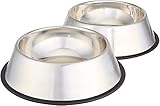
- Set of 2 stainless-steel food bowls for puppies, dogs, cats, or kittens
- Max fill (to the rim) 38 oz / 1.15 L each bowl, recommended fill up to 28 oz/ 0.8 L, perfect for dry kibble, wet food, treats, or water.
- Rust resistant; offers a healthy alternative to plastic; doesn’t hold odors
- No-slip design; rubber base protects floors and prevents bowls from sliding while your pet eats
- Dishwasher-safe for easy cleaning
When is water guarding an emergency?
Seek urgent veterinary care for a bite wound, significant bleeding, difficulty breathing, collapse, or a pet that cannot keep water down. Keep the animals separated while arranging care.
Arrange a prompt veterinary examination when aggression appears suddenly, when drinking increases or decreases noticeably, or when the dog or cat shows pain, lameness, dental discomfort, confusion, or other illness signs. Medical problems can change tolerance and behavior, and behavior-management advice is not a diagnosis.
If people cannot safely place a barrier between the pets, confine them in separate rooms and call a veterinary professional or emergency service for guidance. Never put your hands between fighting animals.
Which setup is best for my household?
The right arrangement depends on the animals’ behavior, the home’s architecture, and whether hydration must be available at all times. The following comparison helps identify the safest starting point.
Do these 3 things before closing this tab:
1Clear out junk files and repair common Windows errors2Fix the driver behind crashes, sound loss and screen glitches3Repair Windows errors before they cause bigger problems| Choice | Best fit | Advantages | Limitations |
|---|---|---|---|
| Separate rooms with closed doors | Growling, lunging, biting, or a dog that controls a doorway | Strongest physical separation and easiest supervision | Requires enough rooms and a plan for letting pets out separately |
| Baby gates or exercise pens | Homes where doors are impractical and pets can remain calm near a barrier | Preserves visibility and airflow while restricting access | Some dogs can jump, push, or stare through a gate; visual contact may need to be blocked |
| Cat-only room, passage, or elevated station | A dog monopolizes floor bowls or the cat avoids the dog | Protects feline choice and a reliable escape route | Must be stable, reachable, and kept away from litter-box contamination or noisy traffic |
| Several floor-level stations | Calm pets with no blocking or chasing | Simple, inexpensive redundancy for different schedules | Not sufficient if one dog patrols or can watch every bowl |
| Scheduled, supervised access | Temporary management during meals, visitors, or behavior work | Makes interactions easier to monitor | People must follow the schedule; it cannot replace permanent access to water |
How do I manage meals, treats, and other resources?
Water conflict often occurs in a wider pattern of resource competition. Feed dogs and cats in separate rooms or behind barriers, and do not let one animal approach while another is eating. Give chews, treats, and prized toys privately, then remove leftovers before pets share space again.
Keep feeding and drinking routes predictable. If the dog guards after returning from a walk, after receiving a chew, or during a busy household period, schedule separation before that trigger rather than waiting for a confrontation. Everyone in the home should use the same doors, gates, and release cues.
Also popular on Amazon

- Premium & Safe Stainless Steel: Tifanso cat bowls are made of high-quality stainless steel, sturdy and resistance to cracks and dents compared to plastic or ceramic cat bowl. The cat food bowl effectively avoids problems such as "feline acne", allowing you to be at ease about cat's dietary health. The stainless steel cat food bowls won’t stain or retain smell, even after serving wet food or colorful treats, and cleans easily with a quick rinse for ensuring that every meal is fresh and hygienic.
- Whisker-Friendly Shallow Cat Bowl & Posture Support: Our cat food bowls feature a scientifically shallow and wide design that allow cat's whiskers not to touch the bowl wall when eating, effectively preventing and alleviating "whisker fatigue", thereby enhancing the happiness of eating. The kitten bowls can be used with a elevated stand, helping cats maintain a natural and relaxed posture of their head and neck while eating, reducing pressure on their spine and joints and promoting digestion.
- Multifunctional Stainless Steel Cat Bowls: The 6 pcs cat water bowl meet your cat daily needs, perfectly separating wet and dry food to maintain freshness or provide multiple water stations. The cat food tray establishes a scientific feeding system for cats that require special dietary management, ensuring that cats can enjoy fresh and hygienic food and water. The cat food dish is suitable for kittens, puppy, rabbits, small animals with short noses, and especially great for multi-pet households.
- Easy to Clean & Stackable Design: Engineered with smooth interior that resists food and grease buildup, the kitten food bowl cleans easily with just a quick rinse. The whisker fatigue cat bowl is dishwasher safe for deep cleaning and ensure the pet bowls can be used for a long time. The cat dishes feature a stackable design to save storage space, making it an ideal choice for travel - whether going to the vet or on a trip, the cat plates provide a familiar feeding experience for cats anywhere.
- No-Mess Feeding & Spill-Proof: With its 5.6-inch wide opening and 1.57-inch low walls, this cat bowls for indoor cats create an optimized feeding space for the kitten that effectively discourages cats from pawing at their food. Combined with a sturdy metal material, these cat dishes for food and water are not easily pushed or knocked over by the cat, preventing food from spilling out - keeping your floors clean and reducing daily cleanup.
Children should not refill a guarded bowl, retrieve a toy, or attempt to move a dog. Adults should handle the barriers and keep visitors from crowding the station.
How can I tell whether the plan is working?
Success means reliable, relaxed access, not forced proximity. Over several days, look for the cat drinking normally, choosing routes without hesitation, and resting near—but not being pressured by—the dog. The dog should be able to drink without monitoring the cat or needing to be physically moved.
- Keep a simple log of drinking access, blocking, staring, vocal warnings, and any chase.
- Check every station at different times, including after meals and when the home is noisy.
- Move or add a bowl at the first recurring pattern rather than waiting for a bite.
- Maintain separation if either pet remains tense; do not remove barriers solely because there has been a quiet day.
No authoritative source establishes a guaranteed training timeline or a bowl height that works for every pet. Continue the arrangement that keeps access safe, and have a professional reassess if warning signs persist.
What should I do today?
- Put one clean water station in each pet’s safe area and add at least one backup station.
- Move stations away from narrow passages, litter boxes, noisy appliances, and direct sight lines.
- Use a closed door, gate, pen, or cat-only route whenever one pet watches or blocks another.
- Separate meals, chews, treats, and toys.
- Observe from a distance and record early warning signs.
- For a snap, bite, lunge, repeated blocking, sudden behavior change, or unsafe separation, contact a veterinarian and an aggression-experienced behavior professional.
Frequently Asked Questions
Can a cat become dehydrated by avoiding a shared bowl?
Yes. A cat may drink less or wait until the dog leaves if the station feels unsafe. Watch for reduced drinking, lethargy, dry or tacky gums, vomiting, or changes in urination and contact a veterinarian promptly if intake is clearly reduced or illness signs appear.
Should I put the dog’s water bowl in a crate?
A crate can be part of a temporary separation plan if the dog is already comfortable there and can drink without stress. Never use a crate as punishment or leave a dog confined without adequate ventilation, monitoring, and a safe release plan.
Do water fountains prevent resource guarding?
A fountain may change the water-delivery format, but it does not remove competition if pets can still crowd or block the same location. Use separate, physically protected stations; choose equipment that each pet can approach without another animal controlling the route.
Free tools Windows power users keep installed
One-click scans. No signup required.
Can resource guarding spread from water to food or toys?
It can occur around several valued resources, although water guarding itself is less common than food guarding. Separate meals and high-value items, and tell your veterinarian about any guarding in other contexts so the behavior plan addresses the full pattern.





Leave a Reply