
Some links on this page are affiliate links: if you buy through them we may earn a commission, at no extra cost to you.
Protect your dog’s paws with a physical barrier when possible, limit exposure, and clean every paw after each winter outing. Well-fitting boots provide the most complete protection from salted pavement, ice, and frozen ground; a thin layer of veterinarian-approved paw balm or petroleum jelly is a useful alternative for dogs that refuse boots, but it wears off and cannot make a long, bitterly cold walk safe. Trim excess fur between the toes without shaving the winter coat, watch your dog’s behavior rather than relying on a universal temperature number, and stop immediately if your dog lifts a paw, shivers, refuses to walk, or seems anxious. Rinse residue with lukewarm water, dry thoroughly, and seek urgent veterinary help for frostbite or suspected chemical ingestion.
Why do ice, salt, and cold damage a dog’s paws?
Winter hazards affect paws in several different ways. Ice and frozen, uneven surfaces can abrade or cut the pads. Salt and de-icers draw moisture from skin, worsen cracking, and irritate exposed tissue. Snow can pack into painful balls between the toes, changing a dog’s gait and causing persistent licking. A dog that licks salt or chemical residue can injure its mouth and digestive tract.
As an Amazon Associate I earn from qualifying purchases.
Do these 3 things before closing this tab:
1Repair Windows errors before they cause bigger problems2Fix the driver behind crashes, sound loss and screen glitches3Clear out junk files and repair common Windows errorsCornell University’s veterinary guidance identifies cracked or cut pads and uncomfortable snowballs as common problems. The ASPCA warns that rock salt (sodium chloride) can irritate paws and, when swallowed, produce dangerously high blood sodium. Calcium, potassium, and magnesium chlorides can also cause gastrointestinal irritation, bloody vomiting or diarrhea, and electrolyte disturbances. These risks apply to residues on sidewalks, driveways, boots, fur, and household floors.
Antifreeze is a separate and especially serious hazard. Ethylene glycol can be fatal after a small ingestion. Clean any spill immediately and contact an emergency veterinarian if ingestion is possible.
Popular on Amazon

- 1.【Sizes】:Size 3: 1.5" x 1.3" (L*W);Size 5: 1.9" x 1.5" (L*W);Size 7: 2.3" x 1.9" (L*W). Please measure your dog's feet before ordering.Then choose the right size to buy.The size in the page is the length and width of the inside of the shoe.When the parameters come out,please match the size and choose a size measurement that is larger than you.So your cute dog will wear it more comfortably.
- 2.This dog shoe uses a hard non-slip sole to provide stability and adhesion on tiles and sand, and protect the paws from sharp rocks, broken glass, burrs, ice, snow, salt and many other elements that may be harmful to dog paws.
- 3.This winter dog boot, with super soft fleece inside, provides extra comfort, keeps paws warm in cold weather, and keeps the cute dog clean when running outside.
- 4.The dog booties are extended by two adjustable straps and have reflective straps to ensure tight fit and safety during night walking. Elastic fastening strap design is easy to wear, take off and not easy to fall.
- 5.Note: This dog shoe is not waterproof, it is more suitable for indoor shoes and walking in sunny days. Please pay attention to your dog to avoid swallowing the beads on the shoes after wearing.
Which dogs need extra protection in winter?
There is no single cold threshold that is safe for every dog. Tolerance depends on age, body size, nutritional status, health, coat thickness, acclimation, wind, moisture, and the surface underfoot. Cornell notes that every dog is susceptible to cold, so exposure time should be adjusted to the individual dog’s behavior.
- Small dogs and puppies: They lose body heat quickly and may have less paw-to-ground clearance.
- Short- or thin-coated dogs: They have less insulation over the body and may need a coat as well as paw protection.
- Older, underweight, or medically fragile dogs: Arthritis, endocrine disease, poor circulation, and other conditions can reduce cold tolerance.
- Dogs new to cold climates: A dog arriving from a warm region or facing a sudden cold snap may not yet be acclimated.
Consider the route as well as the forecast. A brief outing on clean, dry snow is different from a long walk on heavily salted pavement in wind and freezing rain.
Quick wins for a faster PC:
Clear out junk files and repair common Windows errorsFree Scan →Fix the driver behind crashes, sound loss and screen glitchesFind Drivers →What should I do before a winter walk?
Choose the least hazardous route
Use paths with less visible salt and de-icer when practical. Avoid puddles or slush that may contain concentrated chemicals, and shorten the outing during severe cold, strong wind, or wet conditions. Keep your dog on a route where you can turn back quickly if discomfort appears.
Fit and introduce boots
Well-fitting dog boots create the most complete physical barrier against salt, snow, ice, and frozen ground. The boot should stay on without twisting, chafing, or restricting normal movement. Introduce boots indoors: let your dog sniff them, touch each boot to a paw, then fasten one briefly while offering treats. Add boots one at a time, build up walking time over several short sessions, and practice before the first essential winter walk. A dog that still walks abnormally, chews at the boots, or shows distress needs a different size or another protection method.
Apply a thin barrier when boots are not accepted
Massage a thin layer of veterinarian-approved paw balm or plain petroleum jelly into the pads before going outside. It can reduce contact with salt and help limit drying and cracking, but it is not insulation and does not make prolonged exposure safe. Balm can wear off, collect grit, and transfer to surfaces that a dog may lick.
Also popular on Amazon
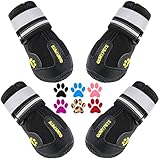
- Please be sure to measure the width of your dog's paws carefully, it is key to choosing the correct size for your dog, weight can only be used as an additional reference; Size 1: 1.8''x2.3''(W*L) for 11-23 lbs; size 2: 1.9''x2.4''(W*L) for 18-27 lbs; size 3: 2.0''x2.5''(W*L) for 23-33 lb; size 4: 2.2''x2.6''(W*L) for 31-40 lbs; size 5: 2.4''x2.8''(W*L) for 40-55 lbs; size 6: 2.6''x3.0''(W*L) for 52-65 lbs; size 7: 2.8''x3.2"(W*L) for 63-75 lbs; size 8: 3.0''x3.3"(W*L) for 74-88 lbs
- SECURE and ADJUSTABLE: Easy to put on / off. These dog shoes expands with a wide split seam opening and two adjustable and reflective straps to ensure a tight fit, also make your dog safe at night
- RUGGED: Tough slip-proof sole of dog boots provides stability and traction, protection from rough terrain
- QUALITY: The dog boots have a rugged sole and high quality fabrics that are then sewn together to ensure they are ready for your adventure
- FASHIONABLE: QUMY dog boots are with cute pet paw embroidery, paws side is the outside, soft and hand washable
Manage the fur around the feet
Trim excess hair between the toes and around the foot to reduce the places where snowballs form. Do not shave the winter coat down to the skin; leaving protective coat length helps preserve insulation. If you are unsure how much to trim, ask a groomer or veterinarian to demonstrate.
Recommended Free Tools
Add body insulation for cold-sensitive dogs
A properly fitted coat or sweater can help small, short-coated, older, or otherwise cold-sensitive dogs. It should allow free movement, remain dry, and not interfere with a harness, elimination, or the dog’s ability to signal discomfort. Body clothing does not replace paw protection or supervision.
Are dog boots or paw balm better for winter?
Boots are generally better for salted sidewalks, frequent snow and ice, and longer exposure because they cover the pads and reduce direct contact. Balm is useful for dogs that cannot tolerate boots or for short outings, but it provides a less durable barrier and still requires careful cleaning.
| Option | Best use | Strengths | Limitations |
|---|---|---|---|
| Well-fitting dog boots | Salted sidewalks, frequent snow or ice, or dogs needing a physical barrier | Protect pads from salt, snow, ice, and cold ground; reduce residue contact | Fit and acceptance determine success; require gradual training |
| Paw balm or petroleum jelly | Boot-resistant dogs, brief outings, or an added barrier | Helps limit salt contact and dryness; easy to apply | Wears off, can collect debris, and cannot substitute for shorter exposure and washing |
| No barrier plus post-walk cleaning | Brief exposure on clean snow or low-chemical routes | Simple and avoids boot or balm issues | Provides no protection during the walk; depends on diligent inspection and cleaning |
Some dogs do best with both boots and a small amount of balm on particularly dry pads, but use only products your veterinarian approves and monitor for slipping or irritation.
How can I tell during the walk that my dog is too cold?
End the outing as soon as your dog shows discomfort. Cornell lists shivering, whining or barking, a tucked tail, hunched posture, lifting paws, reluctance to walk, and sudden anxiety as warning signs. Picking up the feet or refusing to continue is not stubbornness to train through; it may indicate cold, painful salt, snowballs, or an injury.
Also popular on Amazon
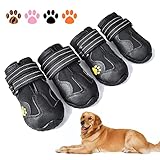
- 【Size】Size 6:(2.9''x2.5'')(L*W) for 52-70 lbs for 52-70lbs.Great for Medium Samoyed;Husky;Labrador;Airedale Terrier;Medium and large Chow Chow etc.Please refer to the picture size chart,You can choose the right size for your dog for the most comfortable fit.
- 【High-quality materials:】 High quality fabrics,wear resistant,to bear or endure dirty, Have cute pet paw embroidery, soft and hand washable, fashionable yet durable.Durable soles,tough anti-slip sole provides stability and traction,Helps dogs with mobility and stability on tile and the sand .
- 【Comfortable:】Soft and breathable to paws,so allows the boots to be used indoors or outdoors, hot and cold in wet and dry conditions.Protection from sharp thorns and hot pavement.Effectively protect dog claws from heat, stones, glass, etc. It protect the weak paw from snow, ice, salt during winter.
- 【Safe and Adjustable:】Easy to put on / off ,the dog shoes are fastened firmly by 2 straps, which are long and adjustable , capable to prevent slipping off and supply a customized tightness for secure closure and have reflective straps,reflective lines enhance visibility all the night ,also make your love dog safe .Please try to tighten the straps after wearing,which can effectively prevent the shoes from falling off the dog's claws.
- Our size is based on the inner diameter of the shoe and is measured by hand,Please allow a little size error.You are welcomed to contact us for any questions about the products and services at any time.
- Turn around when a paw is repeatedly lifted or the gait changes.
- Carry a small dog if necessary rather than forcing it to walk on a painful surface.
- Move indoors, remove wet clothing, and warm the dog gradually.
- Do not wait for visible frostbite before ending exposure.
Because no universal “too cold” temperature has been established, combine the weather, surface conditions, the dog’s risk factors, and observable behavior when deciding how long to stay outside.
What should I do after every winter walk?
Use the same routine after every outing, even when the walk seemed uneventful. De-icer residue can remain between toes or on the lower legs and be swallowed later during grooming.
- Remove boots and inspect: Check each pad, the webbing, and between the toes for ice, grit, abrasions, or pressure marks from the boot.
- Rinse or wipe: Use lukewarm water on paws, lower legs, and the belly to remove salt, ice, and chemical residue. A clean, damp cloth is adequate for a very short walk, but rinse visibly contaminated fur.
- Remove snowballs gently: Soften stuck snow with lukewarm water rather than pulling hair or breaking ice against the skin.
- Dry completely: Towel-dry the pads and the spaces between toes. Damp skin is more prone to irritation and chilling.
- Inspect for injury: Look for cracks, redness, bleeding, blisters, swelling, limping, or persistent licking.
- Treat only with veterinary direction: If pads are dry or cracked, use a veterinarian-approved treatment exactly as directed. Avoid applying unapproved human creams, pain relievers, or essential oils.
Wash blankets, coats, and boot liners regularly so that dried salt and de-icer do not return to clean paws.
How do I remove salt from my dog’s paws safely?
Bring the dog inside, prevent licking, and rinse every paw with lukewarm—not hot—water. Work the water between the toes and over the lower legs, then towel-dry thoroughly. For a dog that will not stand in a bowl, wipe each paw repeatedly with a saturated cloth and follow with a clean damp cloth until no gritty residue remains.
Crashes, No Sound, or Screen Glitches?
Random freezes, missing sound and display glitches usually trace back to one bad driver. Find and replace yours safely.Free scan · under a minutePC Slower Than It Used to Be?
A free scan shows the junk files, broken settings and background clutter dragging Windows down - then fixes them in one click.Free scan · Windows 10 & 11Do not use solvents, alcohol, very hot water, or vigorous scrubbing. Check the belly and feathering on the legs because salt spray can collect there too. If the dog has swallowed residue and develops vomiting, diarrhea, excessive thirst, weakness, tremors, or unusual behavior, call a veterinarian or animal poison service immediately.
Also popular on Amazon
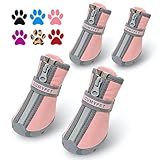
- Please mainly refer to the width, weight can only be used as an additional reference; Size 1: 1.29"x0.98"(L*W) for 1-6 lbs; size 2: 1.59"x1.18"(L*W) for 6-13 lbs; size 3: 1.70"x1.31"(L*W) for 12-18 lbs; size 4: 1.89"x1.51"(L*W) for 17-23 lbs; size 5: 2.25"x1.78"(L*W) for 21-29 lbs
- Convenient and Secure: Zip and self-adhesive strap design for manual adjustment, easy to put on / off. These small dog shoes expand with adjustable and reflective straps to ensure a tight fit, also make your puppy safe at night, and easy to find it when it lost
- Water-resistant and Warm: High-quality water-resistant fabric which keep pup's paws dry and warm. No more wiping muddy or sandy paws after the rain or snow. Note these shoes can't be applied in deep water or be immersed in water for a long time as water will penetrate into the shoes through sewing needle holes
- Comfortable and Skid-resistant: High-quality rubber soles give the dog's paws pampering care, soft and comfortable. The slip-proof sole provides stability and traction, protection from rough terrain and hot pavement. Help older dogs to stand up on hardwood floors easier
- Fashionable and Cute: Cute shoes specially designed for small dogs, not only durable but also very fashionable. It can make the dog more outstanding. And it is safe to take the dog to do outdoor activities such as hiking and running
Which ice-melt products are safest around dogs?
No chemical de-icer is risk-free. Common ingredients include sodium chloride (rock salt), calcium chloride, potassium chloride, and magnesium chloride. Rock salt is harsh on paws and dangerous in sufficient quantities when swallowed; the other chlorides can also irritate the gastrointestinal tract and alter electrolytes.
Products marketed as “pet friendly” often contain urea or magnesium chloride, but the ASPCA notes that there are no specific requirements for a de-icer to carry a “pet safe” label. Treat the label as marketing information, not proof of harmlessness. Follow the same precautions for every chemical product.
Reduce exposure at home
- Use the least hazardous practical product and apply only the amount needed for traction.
- Keep bags, scoops, and piles inaccessible; dogs may lick residue from packaging or floors.
- Keep the dog indoors while applying and spreading ice melt.
- Store products in sealed containers away from food and water.
- Clean paws after every walk, including when the route includes a treated driveway or building entrance.
Consider nonchemical traction
ASPCA lists sand, clay cat litter, and heated mats or steps as alternatives for traction or ice control. These options avoid some chemical exposure but still require supervision: loose material can be swallowed, mats can become hot, and any surface can collect salt brought in from public areas.
What are the signs of frostbite, and what should I do?
Frostbite can affect foot pads and other exposed tissue. The RSPCA describes pale or blue-white skin, pain, blisters, and blackened tissue as warning signs. Affected areas may initially feel cold or numb and then become swollen or painful as they warm.
- Move the dog to a warm, dry place and remove wet items.
- Do not rub, massage, or scrub the area.
- Do not apply direct heat, hot water, heating pads, or a hair dryer; rapid warming can worsen tissue damage.
- Call a veterinarian immediately for instructions and transport.
Suspected hypothermia—marked weakness, confusion, collapse, shallow breathing, or uncontrolled shivering—is also an emergency. Wrap the dog in dry blankets for transport while avoiding direct heat.
Also popular on Amazon
- Please be sure to measure the width of your dog's paws carefully, it is key to choosing the correct size for your dog, weight can only be used as an additional reference; Size 1: 1.8''x2.3''(W*L) for 11-23 lbs; size 2: 1.9''x2.4''(W*L) for 18-27 lbs; size 3: 2.0''x2.5''(W*L) for 23-33 lb; size 4: 2.2''x2.6''(W*L) for 31-40 lbs; size 5: 2.4''x2.8''(W*L) for 40-55 lbs; size 6: 2.6''x3.0''(W*L) for 52-65 lbs; size 7: 2.8''x3.2"(W*L) for 63-75 lbs; size 8: 3.0''x3.3"(W*L) for 74-88 lbs
- SECURE and ADJUSTABLE: Easy to put on / off. These dog shoes expands with a wide split seam opening and two adjustable and reflective straps to ensure a tight fit, also make your dog safe at night
- RUGGED: Tough slip-proof sole of dog boots provides stability and traction, protection from rough terrain
- QUALITY: The dog boots have a rugged sole and high quality fabrics that are then sewn together to ensure they are ready for your adventure
- FASHIONABLE: QUMY dog boots are with cute pet paw embroidery, paws side is the outside, soft and hand washable
What if my dog licks or eats salt, de-icer, or antifreeze?
Remove access, save the product container or photograph its ingredients, and call a veterinarian or poison-control service promptly. Do not induce vomiting unless a veterinary professional specifically tells you to do so. The amount that causes illness varies with the chemical, concentration, and dog’s size, so waiting for symptoms is unsafe.
Rock salt can cause dangerous sodium elevation. Calcium, potassium, and magnesium chlorides may produce vomiting, diarrhea, mouth irritation, or electrolyte abnormalities. Ethylene glycol antifreeze can be deadly and requires emergency treatment even when the dog initially appears normal.
Free tools Windows power users keep installed
One-click scans. No signup required.
How can I make winter paw care routine and stress-free?
Keep a washable mat, lukewarm water, towels, a flashlight, and the dog’s approved balm near the entry door. Practice boot removal and paw handling on mild days, rewarding calm behavior before there is an injury. Check boot straps and seams regularly, replace wet liners, and keep nails at a length that does not force the toes into an abnormal position.
Plan shorter, more frequent outings rather than one long walk during severe weather. Enrichment indoors—sniffing games, food puzzles, training, and gentle play—can make up for reduced outdoor exercise. A dog that repeatedly develops cracks, sores, or reluctance to walk should be examined for allergies, infection, orthopedic pain, or another condition that winter may be aggravating.
Frequently Asked Questions
Can I use human lotion on my dog’s cracked paw pads?
Ask your veterinarian before applying any human product. Dogs lick their feet, and ingredients that are acceptable for people may irritate the mouth, be unsafe when swallowed, or delay diagnosis of an infection or deeper injury.
Should my dog wear boots inside the house after a snowy walk?
Usually no. Remove outdoor boots indoors so you can inspect the feet, dry the skin, and prevent trapped moisture or grit from causing rubbing. Indoor socks or boots are appropriate only when a veterinarian recommends them for a specific wound or mobility problem.
The Tool Desk
Outbyte PC Repair FREERepair Windows errors before they cause bigger problemsFix Now →Outbyte Driver Updater FREEScan for outdated or missing drivers - takes under a minuteDriver Scan →How long should a dog wait before going back outside after paw irritation?
Wait until the paws are clean, dry, and comfortable and your dog walks normally. Persistent redness, bleeding, limping, swelling, or licking warrants veterinary advice rather than a fixed waiting period.
Can snow itself burn or poison a dog’s paws?
Clean snow is mainly a cold and moisture hazard, but snow beside roads and sidewalks can contain salt, de-icer, oil, or antifreeze. Treat discolored, gritty, or slushy snow as contaminated and rinse paws after contact.





Leave a Reply