To reduce loose cat hair, brush or comb your cat regularly—daily brushing is Cornell’s advice for minimizing hairballs, particularly during seasonal shedding. To manage human cat allergy, treat grooming as only one part of the plan: keep the cat out of the allergic person’s bedroom, use a portable HEPA air cleaner there, vacuum carpets with HEPA or microfilter filtration while that person is away, damp-dust hard surfaces, and wash hands and clothing after close contact.
Those goals are related but not identical. Brushing collects coat hair and may reduce swallowed hair; allergy symptoms are caused by proteins in dander, saliva, and urine. Hair can carry those proteins, but a cat’s coat length, breed marketing, or visible shedding does not determine whether the cat is allergenic.
As an Amazon Associate I earn from qualifying purchases.
What is the difference between cat shedding and cat allergy?
Shedding is the normal release of old or loose coat hair. Hair may collect on floors, furniture, clothing, and the cat’s own tongue during grooming. Regular brushing or combing gathers much of that loose coat before it is swallowed or distributed around the home.
Human cat allergy is an immune reaction to proteins associated with a cat’s dander, saliva, and urine. The hair itself is not the allergen, although hair can carry allergen after contact with skin flakes or saliva. The American Academy of Allergy, Asthma & Immunology (AAAAI) explains that coat length and the amount a cat sheds do not determine whether the animal triggers allergy symptoms. See AAAAI’s pet-allergy guidance for the distinction.
#1 Best Overall
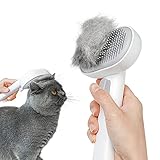
- 【Professional Cat Hair Brush】Perfect gift for pet owners, vets, and pet groomers. Using this cat brush for long haired cats on a regular basis can gently and effectively remove loose hair, tangles, knots, dander and trapped dirt. Suitable for short, medium or long, thick, thin or curly haired dogs/cats/rabbits, making your pets shiny and healthy.
- 【Skin-friendly Massage Needles】The mental pins on the cat brush with release button have round rubber tips on the ends. As a cat deshedding brush, it's perfect for shedding and massaging your pets without scratching your pet's skin, even the sensitive skin. After use, you can hang it with the silicone loop strap to protect the bent needle.
- 【Upgraded High Quality Material】The our long hair cat grooming brush made of durable 304 stainless steel and fine ABS material. Our wire bristles is 1.2 times as thick as bristles of other deshedding brush for cats. More sturdy and not easy to deform, can be used for a long time. 150° bent needles designed to penetrate deep into the coat are really easier to groom the undercoat well.
- 【One-click Cleaning Button】After brushing your pet, simply click the button. The shutter will pop out, separating the brushed hair from the metal needle, then wipe the hair off. The button of cat shedding brush on the handle saves time and energy when grooming and cleaning.
- 【SUPPORT · 365 Days】If the pet hair brush have any problems during use, we will provide you with replacement or 100% money back. And we have a professional customer service team and pet experts to provide you with the pre-sales and after-sales service. aumuca is always at your side.
Allergens are difficult to contain because they can circulate in air, settle into carpets and upholstered furniture for months, and travel on clothing, according to the National Institute of Environmental Health Sciences (NIEHS). That is why a grooming routine can improve hair management without making a home allergen-free.
How do I reduce cat shedding?
Brush or comb on a consistent schedule
Use a brush or comb appropriate for your cat’s coat and groom gently. Cornell’s feline-health guidance recommends daily brushing and combing to minimize hairballs and their complications, with extra attention during seasonal shedding periods. Daily is a clinical recommendation for hairball prevention, not a promise that every cat will shed less visibly.
- Choose a calm time. Work when your cat is relaxed, rather than restraining an agitated animal. Start with short sessions and stop if the cat shows distress.
- Inspect before grooming. Look for mats, crusts, bald spots, wounds, fleas, or areas that seem painful. Do not pull forcefully through a mat or brush over damaged skin.
- Work in the direction of coat growth. Use slow, light strokes and check the tool frequently. Remove collected hair so it does not fall back onto the cat or surrounding surfaces.
- Reward cooperation. A calm voice and a brief, positive session help the cat accept future grooming. Increase duration gradually instead of turning one session into a struggle.
- Dispose of collected hair and clean the area. Place loose fur in a closed bin and wash or wipe the grooming tool as appropriate for its material.
The cited veterinary advice supports regular brushing and combing generally; it does not establish that one brush design, de-shedding device, or commercial product is universally best. Select a tool that reaches the coat safely and that you can use without scraping or irritating the skin.
Free tools Windows power users keep installed
One-click scans. No signup required.
Have a non-allergic person do the grooming when possible
If someone in the home reacts to cats, ask a non-allergic household member to brush the cat outdoors when weather and local conditions permit. This follows AAAAI’s exposure-reduction advice and keeps a large burst of loose fur and dander out of the living area. If outdoor grooming is not practical, use a well-ventilated, easy-to-clean room and keep the allergic person away during and immediately after the session.
Understand what brushing can and cannot change
Collecting loose hair can reduce the amount of coat swallowed during self-grooming and may help with hairballs. It does not remove the allergen proteins produced in saliva, dander, or urine. Grooming should therefore be presented as hair and hairball management, not as an allergy treatment.
Rank #2

- Cat brushes for long haired cats and short haired cats
- Soft Tip Bristles:Cat comb with soft tip bristles, helping to break up tangles and mats effectively,Your pet will enjoy the gentle massaging
- Soft Gel Handle:Super soft handle with anti-skid curved silicone gel, keeps your hand comfortable while grooming
- Self-Cleaning Button:Simply push the release button, and all the fur will come off the bristles, no more digging in between bristles to get the hair out
- Premium Material:The cat grooming brush is made of resistant and durable material, free of toxins and chemicals, healthy and easy to use
How can I manage cat allergies at home?
Use several exposure controls together. No single cleaning step guarantees symptom-free living with a cat, and the most useful measures depend on the home, the severity of symptoms, and whether asthma is present.
Make the allergic person’s bedroom a cat-free zone
Keep the cat out of the bedroom used by the allergic person at all times, including when symptoms are quiet. Closing the door limits the room’s allergen reservoir and gives the person a lower-exposure place to sleep. Keep bedding and upholstered bedroom furniture away from the cat as well.
Place a portable HEPA air cleaner in that bedroom and operate it according to the manufacturer’s instructions. NIEHS and AAAAI both identify a HEPA cleaner as a useful part of exposure control; the guidance does not establish one purifier model, room-size rating, or operating schedule as best for every household.
Vacuum carpets and upholstery safely
Carpets and upholstered items can hold settled allergen even when no fur is visible. Vacuum regularly with a machine that uses HEPA filtration or a double/microfilter bag. Have the allergic person leave the area while vacuuming and for enough time afterward for disturbed dust to settle and ventilation to exchange the air.
Follow the vacuum manufacturer’s instructions for filter replacement and bag or canister emptying. Emptying a dusty canister indoors can briefly increase exposure, so a non-allergic person should perform that task outside or in a well-ventilated location when feasible. Vacuuming removes some settled material; it does not sterilize a carpet or remove every allergen particle.
Rank #3

- 【Easy Desheding】: Swihauk self cleaning dog brush for long haired dogs with release bottom helps effortlessly reduce shedding. A must have dog brush for short haired dogs, cat brush for indoor cats, cat brush for shedding, slicker brush for dogs.
- 【Safe Design】: Soft and protective plastic round head bristles creating a comfortable feeling while deshedding without hurting your pet. Ideal puppy brush for small dogs, dog brush for shedding and grooming.
- 【Sturdy & Durable】: Premium stainless steel metal and compact design make our product sturdy and durable for long term use.
- 【Ergonomic Design】: Press bottom for easy cleaning, high-quality & lightweight TPR handle make your grooming effortlessly.
- 【Effective to Remove Loose Fur】: Swihauk pet grooming brush is effective to remove loose fur, suitable for dogs, cat with long and short hair, perfect for your lovely pet like puppies, golden retriever, rabbit, kitten, bunny, yokie and more.
Damp-dust smooth surfaces
Use a damp cloth or mop on hard floors, shelves, window ledges, and other smooth surfaces. Dry dusting can send settled particles back into the air. Wipe high-contact areas and places where the cat rests, then launder or dispose of the cleaning cloth as appropriate.
Do these 3 things before closing this tab:
1Clear out junk files and repair common Windows errors2Scan for outdated or missing drivers - takes under a minute3Repair Windows errors before they cause bigger problemsIf symptoms remain difficult to control, consider whether extensive carpeting or heavily upholstered furniture is acting as a long-term reservoir. NIEHS reports that pet allergens can remain in carpets and furniture for months. Replacing every surface is not automatically necessary; discuss larger changes with an allergy professional and make them in proportion to the problem.
Reduce transfer on hands and clothing
Wash hands after petting, grooming, feeding, or cleaning the litter area, and avoid touching your eyes or face before washing. Change clothes after prolonged close contact if symptoms are triggered by contact or if the cat has been on the clothing. Wash bedding, throws, and other washable fabrics regularly enough to prevent a buildup of hair and settled dust.
These steps address different routes: airborne particles, settled reservoirs, and transfer from fur or contaminated surfaces. Combining them is more realistic than expecting brushing, vacuuming, or an air cleaner alone to solve the problem.
Does brushing help cat allergies?
Brushing helps collect loose coat hair and can support hairball prevention, but it is not a treatment for human cat allergy. The allergenic proteins remain associated with dander, saliva, and urine, and they can persist in the home after visible fur has been removed.
What’s actually slowing this PC down?
Pick the symptom - the matching free tool is one click away.
Rank #4

- WORLD’S #1 CAT HAIR BRUSH: Our cat grooming brush / cat shedding brush is the world's best patented pet grooming brush for cats, small dogs, and rabbits. It is the perfect cat deshedding brush, short hair cat brush, & cat brush for long haired cats.
- EASY AND FAST CLEANUP: SleekEZ Deshedding Grooming Tool is great for removing hair and fur from carpets, pet bedding, cat trees, and more! Our cat comb for shedding is also an amazing pet hair remover and cat fur remover / cat hair remover brush.
- ALL HAIR & FUR TYPES: It is the perfect cat comb for long haired cats and cat brush for short haired cats. SleekEZ works as a deshedding brush for cats, cat deshedding tool, undercoat brush for cats, cat fur brush, cat deshedder, & small dog brush.
- PAINLESS AND ENJOYABLE: SleekEZ serves as a versatile kitten brush, puppy brush for small dogs, & bunny brush / rabbit brush. It's the best pet hair brush on the market and is an absolute essential for cat shedding control!
- GREAT GIFT: SleekEZ makes the industry's leading cat combs for indoor cats & shedding brush cat hair. It is a must have for any cat grooming kit, cat essentials for indoor cats, & cat supplies. Also an amazing cat dander remover & cat undercoat brush
For that reason, an allergic person should not brush the cat as an allergy-control strategy. Have someone else groom the cat, preferably outdoors, and pair grooming with bedroom exclusion, HEPA filtration, vacuuming, damp-dusting, and hand and clothing hygiene. If symptoms continue, an allergist can determine whether the cat is a trigger and create an individualized plan.
Is there a hypoallergenic cat?
AAAAI states that there are no truly hypoallergenic cat breeds. A hairless or low-shedding cat can still produce the proteins that trigger allergy, and a cat that leaves little visible fur can still spread allergen through saliva, dander, urine, and contact with fabrics.
Do not choose a breed or individual cat solely on the assumption that reduced shedding means reduced allergy. People can react differently to individual animals, but spending time with a cat is not a guarantee that long-term household exposure will be tolerable. An allergy evaluation is safer than relying on coat appearance or breed descriptions.
Independent reader supportYour contribution helps us test, update, and keep practical guides available for everyone.When is shedding a sign of a health problem?
Normal seasonal shedding should not create bald patches, inflamed skin, persistent itching, or a sudden deterioration in coat quality. Arrange a veterinary assessment for a coat that becomes sparse or patchy, bald areas, skin lesions, repeated scratching, excessive licking, or a marked change in grooming behavior.
Recommended Free Tools
Excessive licking or scratching
Excessive licking can result from fleas, allergies, pain, neurologic disease, or stress. Cornell’s page Cats that Lick Too Much puts the basic owner check this way: “The owner can check for fleas, lice and fur mats, but beyond that, a veterinarian should intervene.” Read the full guidance at Cornell’s Cats that Lick Too Much.
Best Value

- REMOVES LOOSE FUR & UNDERCOAT: The 5-inch EquiGroomer deshedding brush gently pulls loose hair and undercoat from cats and dogs without cutting healthy fur.
- PERFECT SIZE FOR CATS & SMALL DOGS: The compact 5-inch blade fits smaller pets and tight spots - face, legs and paws - for easy, precise grooming.
- WORKS ON SHORT & LONG HAIR: Rounded stainless-steel teeth glide through any coat, reducing shedding while keeping your pet calm and comfortable.
- LESS SHEDDING, LESS MESS: Regular use dramatically cuts loose hair on furniture, floors and clothes and leaves a softer, shinier coat.
- COMFORT-GRIP HANDLE: A lightweight, ergonomic handle gives you full control for quick, stress-free grooming sessions.
Check gently for visible fleas, flea dirt, lice, and mats without scraping irritated skin. If the cat keeps licking, develops wounds, or loses hair, do not assume the problem is ordinary shedding. A veterinarian can distinguish parasites, allergy, pain, infection, behavioral causes, and other disorders.
Flea allergy
Flea allergy can cause substantial irritation from only a few bites. Treatment may require addressing both the cat and the home environment. Ask a veterinarian to select an appropriate flea medication and explain environmental treatment. Do not self-prescribe a flea product, combine treatments, or use a product intended for another species without veterinary direction. Cornell’s overview is available at Flea Allergy.
Possible food allergy
Food allergy signs overlap with other skin conditions, so changing food casually can delay the correct diagnosis. Cornell describes a novel-diet elimination process lasting at least eight to ten weeks, followed by careful ingredient reintroduction to identify a trigger. This protocol should be planned with a veterinarian; do not substitute an unbalanced homemade diet or add supplements without professional advice. See Cornell’s Food Allergies for the clinical approach.
Crashes, No Sound, or Screen Glitches?
Random freezes, missing sound and display glitches usually trace back to one bad driver. Find and replace yours safely.Free scan · under a minutePC Slower Than It Used to Be?
A free scan shows the junk files, broken settings and background clutter dragging Windows down - then fixes them in one click.Free scan · Windows 10 & 11Skin disease and recurring problems
Skin disorders often need long-term management rather than a one-time fix. William Miller Jr., VMD, professor emeritus of medicine at Cornell, notes that “Allergies are forever.” In context, that means treatment can alleviate signs while the intensity of the condition varies; it is not a promise that every cat will have lifelong severe symptoms. Cornell discusses this in The Challenge of Skin Disorders.
Hairballs that may be more than routine
Brushing can reduce swallowed hair, but repeated or difficult hairballs need veterinary attention. Contact a veterinarian promptly for repeated unproductive retching, repeated vomiting, lethargy, refusal to eat, or a cat that seems distressed. Do not give laxatives unless a veterinarian specifically directs you to do so. Cornell’s guidance on warning signs and hairball complications is at The Danger of Hairballs.
Which home measure addresses which problem?
Use the following as a decision guide rather than a ranking. The available clinical guidance supports these roles, but it does not provide a head-to-head efficacy comparison showing that one brand, brush, purifier, or cleaning schedule is best for every household.
| Primary goal | Practical measure | What it can address | Important limit |
|---|---|---|---|
| Loose fur and hairballs | Regular brushing or combing, with daily grooming recommended by Cornell | Collects loose coat before it is swallowed or spread | Does not remove the proteins that cause human cat allergy |
| Lower airborne exposure | Portable HEPA air cleaner in the allergic person’s bedroom; keep the cat out | Supports cleaner bedroom air and limits access to a key sleeping space | Does not eliminate allergen elsewhere in the home |
| Reduce settled dust and carpet reservoirs | Vacuum carpets with HEPA or microfilter filtration while the allergic person is away; damp-dust smooth surfaces | Removes some settled hair, dander, and dust | Allergen can persist in carpets and furniture for months |
| Limit transfer after contact | Wash hands and change or launder clothing after close contact | Reduces movement of allergen to the face, bedding, and other rooms | It cannot prevent every airborne or surface exposure |
| Find the cause of abnormal coat loss | Veterinary examination for itching, lesions, bald patches, or excessive grooming | Separates parasites, allergy, pain, stress, and other disease | Home inspection alone cannot diagnose the cause |
| Diagnose human symptoms | Assessment and testing by an allergy professional | Clarifies triggers and supports a personalized symptom plan | Exposure controls do not guarantee symptom relief |
A practical routine for a cat-allergic household
Every grooming session
- Have a non-allergic person groom the cat, outdoors when feasible.
- Check for mats, fleas, bald areas, wounds, or painful responses before brushing.
- Brush or comb gently and dispose of collected hair in a closed bin.
- Wash hands and clean the grooming surface afterward.
When cleaning living areas
- Keep the allergic person away while vacuuming and while disturbed dust settles.
- Use HEPA or double/microfilter vacuum filtration on carpets and upholstery.
- Damp-dust hard surfaces instead of dry dusting.
- Wash removable fabrics that collect hair and keep the cat out of the allergic person’s bedroom.
When symptoms or coat changes appear
- Record when itching, sneezing, wheezing, licking, vomiting, or hair loss occurs.
- Check for obvious fleas and mats without applying unapproved medication.
- Call a veterinarian for persistent scratching, lesions, bald patches, excessive grooming, or worsening coat condition.
- Seek urgent veterinary advice for repeated retching or vomiting, lethargy, or refusal to eat.
When should a person see an allergist?
Arrange an allergy evaluation when symptoms persist despite reasonable exposure controls, when the trigger is uncertain, or whenever asthma symptoms occur. An allergist can assess whether the cat is responsible, distinguish pet allergy from other causes, and tailor treatment to the individual. Home measures lower exposure; they are not a guarantee of symptom-free living with a cat.
For the cat, use veterinary care when shedding is sudden, patchy, itchy, painful, or accompanied by skin lesions or systemic signs. Treating the underlying feline problem and managing household exposure are separate tasks, and both may be needed for a healthy home.
Quick Recap
Product prices and availability are accurate as of the date/time indicated and are subject to change. Any price and availability information displayed on Amazon at the time of purchase will apply.




