
Quick wins for a faster PC:
Fix the driver behind crashes, sound loss and screen glitchesFind Drivers →Clear out junk files and repair common Windows errorsFree Scan →Some links on this page are affiliate links: if you buy through them we may earn a commission, at no extra cost to you.
To register or update a pet’s microchip, you need the chip’s identification number and the registry that holds its record. A veterinarian, shelter, rescue centre or animal-control facility can scan your pet. In the United States, enter the number in the American Animal Hospital Association (AAHA) Universal Pet Microchip Lookup Tool; in the United Kingdom, use the approved database listed in government guidance. Then register the chip or change the existing contact and keeper details directly with that database.
Implantation alone does not connect a finder with you. The chip normally transmits only a unique nine-, 10- or 15-digit number, not your name, telephone number, address or live location. Keeping the registry record accurate, confirming that the chip still scans and maintaining visible collar tags gives a lost pet several ways to get home.
As an Amazon Associate I earn from qualifying purchases.
What does pet-microchip registration actually do?
Registration links the chip’s identification number to your pet’s record and current contact details in a database. When a shelter, veterinary practice or animal-control officer scans the chip, the scanner displays the number. The database can then direct an authorised user to the record and the contact route you supplied.
A microchip is not a GPS tracker. It has no battery, does not show a location on a map and cannot send an alert when an animal moves. The AVMA states that a pet microchip cannot track an animal and does not replace a collar with up-to-date identification and rabies tags.
Popular on Amazon

- 【Support Multipe Microchip Formats】Universal microchip scanner supports EMID / ISO11784 / ISO11785 / FDX-B(15 digit microchips). Please note, the microchip reader CAN NOT read Avid chips, and the 9-digit ID can not be recognized. Only the 15-digit international standard protocol can be recognized. Please check the format of the microchip before purchasing.
- 【Easy To Operate & Fast Scan】Our pet microchip scanner is easy to operate, one button to read. Our microchip scanner adopt advanced RFID technology, responsive and fast scanning, it can better improve the efficiency of work. Please note, if no label is scanned, the device will automatically turn off after 180 seconds, or you can press and hold the button for 3 seconds to turn off the device.
- 【 Large Data Storage】Our pet microchip scanner can save 128 animal chips. It can be transferred to a computer or mobile phone via a USB cable connection. Our pet chip scanner also features a data-erase function, refer to the user manual for instructions.
- 【Rechargeable Battery】Our pet chip scanner supports USB charging, eliminating the need for frequent battery replacements, it can last for more than one year after being fully charged.
- 【Easy To Carry】Our scanners are lightweight and compact, making them easy to carry and ideal for both indoor and outdoor use. The package includes one scanner, a USB cable, and a user manual.
How do I register my pet’s microchip?
Use this sequence whether the chip was implanted recently or you have inherited a pet with an unregistered number.
1. Obtain and verify the identification number
Look for the number on the implantation certificate, adoption paperwork or veterinary record. If you do not have it, ask a veterinarian, shelter, rescue centre or animal-control facility to scan the pet. A scanner may show a nine-, 10- or 15-digit number, depending on the chip.
What’s actually slowing this PC down?
Pick the symptom - the matching free tool is one click away.
- Copy every digit exactly, including any leading zero.
- Ask the person scanning to read the number back to you and record the date and facility.
- Keep a photograph or digital copy of the number with your pet’s medical records.
The number is the key used by a lookup service. It is not the owner information itself.
2. Identify the database that holds the number
In the United States, enter the number in the AAHA Universal Pet Microchip Lookup Tool. The lookup tool identifies participating registries and supplies their contact details; it does not reveal the owner’s personal information.
In the United Kingdom, use the approved database that holds the record. Government guidance lists the approved databases. A chip can be readable while still being absent from a database, so a successful scan does not prove registration.
3. Create or access your registry account
Open the registry identified by the lookup and follow its registration or account process. Supply the pet’s name, species and other requested identifying details, along with your current telephone number, email address and physical address. Use contact methods that you expect to keep monitoring.
Review spelling and digit sequences before submitting. Registration is complete only when the number is connected to your current record in the registry; implantation by itself does not make a scanner result lead back to you.
4. Save confirmation and account credentials
Keep the registry confirmation email, account number, change-of-keeper code or other proof with your pet’s records. Note the registry’s name and customer-service route. If a future move or ownership change requires a form, having the original confirmation makes the request easier to verify.
How do I update a microchip after moving or changing my phone number?
Update the record with the registry that currently holds it. Do not assume that telling your veterinarian, local authority or the company that implanted the chip changes the database entry; those organisations may not control the registry record.
Also popular on Amazon

- ❤ Supports Multiple Protocols – Compatible with ISO 11784/11785, FDX-B microchips for seamless reading with one-button operation. Does NOT support FDX-A or AVID chips. The 9-digit ID CANNOT be recognized. Only the 15-digit international standard protocol can be recognized.
- ❤ Efficient Data Management – Built-in storage holds up to 128 tags, eliminating redundant scanning and improving efficiency. The USB transfer feature allows seamless data upload to computers or mobile devices for backup, analysis, and sharing, making it ideal for pet owners, farms, and research institutions.
- ❤ Portable & Durable Design – Lightweight and easy to carry, suitable for both indoor and outdoor use. The robust casing provides strong impact resistance, ensuring stable performance in farms, field research, and rescue operations, even in harsh conditions.
- ❤ Built-in Rechargeable Battery – Eliminates the need for frequent battery replacements, with USB charging for convenience. Includes an auto-shutdown function after 180 seconds of inactivity or manual shutdown with a 3-second press.
- ❤ Support turn on/off the pet reader prompt sound. The pet reader is equipped with a speaker, when you scan successfully, the pet reader will "di" to indicate that the scan is successful. If your pet is afraid of the sound of the card reader, please check the instructions in the package and follow the instructions to turn off the sound.
- Find the registry name from your confirmation documents or run the chip number through the appropriate lookup service again.
- Sign in to the registry account or use its contact route for record changes.
- Choose the option labelled for updating account or contact details.
- Replace old telephone numbers, email addresses and postal addresses with the details you currently monitor.
- Provide any verification information requested, then retain the confirmation of the change.
Make the update whenever you move, change your telephone number or email address, or otherwise become difficult to reach. UK Government guidance explicitly places responsibility on the keeper to keep microchip information current, including after moving house.
Free tools Windows power users keep installed
One-click scans. No signup required.
Some registries charge for an update. Scottish Government guidance published in 2025 gives a typical range of £5 to £20 for updating details; the exact fee depends on the registry and transaction.
How do I change a microchip into my name after rehoming a pet?
An ownership change is normally controlled more tightly than an address edit. Ask the previous keeper or the registry for the change-of-keeper form, transfer code or consent process. The registry may require confirmation from both parties to prevent an unauthorised transfer.
If the previous keeper is available
- Ask which registry holds the record and request the transfer instructions.
- Have the previous keeper complete the required consent, release or change-of-keeper step.
- Submit your own name and contact details exactly as the registry requests.
- Wait for confirmation that your record is active before relying on the chip to reach you.
If the previous keeper cannot be reached
Contact the registry and explain the circumstances. Ask what evidence or alternative process it accepts; do not attempt to overwrite someone else’s record by opening a second entry for the same number. Registry controls exist to reduce fraudulent or mistaken transfers.
Some services expose separate workflows for “change of keeper,” “register pet microchip” and “update account details.” Select the process that matches your situation so an address change is not mistaken for a legal or keeper transfer.
How can I find which database has my pet’s chip?
United States
Use the AAHA Universal Pet Microchip Lookup Tool with the complete number. The result may identify one registry or more than one participating registry and provides contact information for those organisations. Because the United States has no single centralised database, you may need to contact each registry identified by the lookup.
The lookup service is a directory, not a public owner search. It does not display your name, address, telephone number or email address to anyone entering the number.
United Kingdom
Use the approved database associated with the number and the list maintained in UK government guidance. If you are unsure which database was used, ask the implanting veterinary practice, rescue organisation or seller for paperwork, then verify the number by scanning it.
If the number returns no result
- Ask a professional to rescan the pet and compare the displayed digits with your paperwork.
- Check for transposed or omitted digits when entering the number.
- Run the corrected number through the relevant national lookup service.
- If a registry is identified, contact it directly and ask whether the record is inactive, incomplete or awaiting a transfer.
A blank lookup result does not mean the chip is defective. It can mean that the chip has not been registered, the number was entered incorrectly or the relevant database is not participating in that lookup network.
The Tool Desk
Outbyte PC Repair FREEClear out junk files and repair common Windows errorsFree Scan →Outbyte Driver Updater FREEScan for outdated or missing drivers - takes under a minuteDriver Scan →Also popular on Amazon

- Stores lost pets chip numbers
- Alerts the user that a pet is missing
- Rechargeable by plugging into a pc
- Reads most microchips in pets, dogs, cats
What legal deadlines apply in the UK?
Requirements vary across the United Kingdom, so use the rule for the country in which the pet is kept. The following summary reflects current government guidance described in the available sources.
| Location or situation | Requirement or timing | Consequence or qualification |
|---|---|---|
| England, dogs | Dogs must be microchipped and registered by eight weeks of age. | The keeper must keep the record current. |
| England, cats | Cats must be microchipped and registered by 20 weeks of age. | Cat rules differ in Scotland, Wales and Northern Ireland. |
| Scotland, dogs | Keep the dog’s details current after moving, changing contact details or taking ownership. | Scottish Government guidance (2025) says incorrect details can lead to a fine of up to £500. |
| Other UK nations | Check the current rules and approved-database list for that nation. | Do not assume an English deadline or database requirement applies everywhere. |
UK Government guidance says the keeper is responsible for keeping the information up to date. In applicable cases, failure to comply can result in fines of up to £500. If you have recently moved or acquired a pet, update the record promptly rather than waiting for a renewal notice.
What should I do before travelling to Great Britain with a microchipped pet?
The chip must be readable for travel preparation and checks. Confirm that the number on the travel documents matches the number obtained by scanning the pet.
Non-ISO chips can create an additional practical problem: the traveller may need to carry a compatible reader. If officials cannot read the chip, the animal may need to be rechipped and parts of the travel preparation repeated. Ask the veterinarian handling the travel paperwork to verify compatibility and readability before departure.
What if my pet’s chip is registered to an old address or another person?
Old address or disconnected phone
Use the registry’s update-account process and replace every obsolete contact route, not just the postal address. A finder may try the telephone number first, so leaving one inactive number can prevent a reunion even when the email address is correct.
Another person’s name
Use the controlled change-of-keeper process. The registry may request the previous keeper’s consent, a transfer code or other verification. Opening a new record without transferring the existing one can leave the original contact attached to the number.
Several people in the household
Where the registry permits additional contacts, include a person who can answer calls and access messages when you are travelling or unavailable. Keep all listed information consistent with the details you can verify.
How often should I check a pet’s microchip record?
Ask for a scan at least annually, and request another check if the pet has had a procedure or if a professional suspects the chip has migrated or cannot locate it. Compare the scanned number with your registry confirmation and medical records.
At the same time, inspect the collar and visible identification tags. The AVMA says a microchip does not replace a collar with up-to-date tags. A person who finds a roaming dog or cat may be able to read a tag immediately, without access to a scanner or database.
Also popular on Amazon
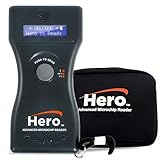
- UNIVERSAL MICROCHIP COMPATIBILITY: Reads all ISO microchips plus 9-, 10-, and 15-digit chips from any brand. Ideal for scanning horses, livestock, pets, and other animals in clinics, shelters, barns, or field settings.
- BLUETOOTH CONNECTIVITY FOR FAST, ACCURATE DATA TRANSFER: Easily sends scanned chip numbers to Bluetooth-enabled devices within a 25-foot range for quick syncing to computers, tablets, or shelter management software. Reduces manual data entry errors and speeds up check-in and intake processes—perfect for busy clinics or multi-pet facilities.
- BACKLIT LCD SCREEN WITH 15-MINUTE DISPLAY HOLD: Features a bright blue backlit LCD screen with bold white text displaying the full chip number on one line for easy reading—day or night. The 15-minute display hold gives ample time to record the scan without rushing, ideal for high-volume or field settings.
- RECHARGEABLE BATTERY WITH AUTO POWER-SAVE MODE: Includes a rechargeable 9V battery and charging unit for long-lasting performance. The auto shut-off function conserves power between uses—great for mobile vets, rescue teams, or animal control officers who need dependable scanning during long sessions.
- LIGHTWEIGHT, DURABLE DESIGN WITH PROTECTIVE CASE: This 7-inch handheld microchip scanner is compact, ergonomic, and easy to carry. Includes a protective carrying case to guard the reader during storage and transport. Built for dependable use in clinics, shelters, barns, or field settings.
- Confirm the chip number at the annual veterinary visit.
- Check that your telephone number and email address still work.
- Update the registry after every move, number change or keeper change.
- Replace damaged or unreadable collar tags.
- Store the registry’s name and support contact with your emergency pet information.
How should I compare microchip registries or registration services?
No database is universal. Compare a service against the legal and practical needs of your location before submitting personal information or paying an update fee.
| Comparison point | Questions to ask |
|---|---|
| Geographic and legal coverage | Is the database recognised where the pet lives, and is it on the applicable approved list? |
| Lookup-network participation | Will the number appear in the lookup network used by shelters, veterinary practices or authorities in your region? |
| Keeper-transfer controls | Does the service provide a clear change-of-keeper form, code or consent route? |
| Update fees | Is there a charge for changing an address, telephone number or keeper, and is it a one-time or recurring fee? |
| Customer support | Can you reach the registry promptly by the channels you can use? |
| Privacy practices | What information is collected, who can see it and how are owner details protected from public searches? |
Choose the database that is appropriate for your jurisdiction and chip network, not simply the one with the most familiar name. If the AAHA lookup returns several registries, follow each registry’s instructions and keep the resulting confirmations.
Why does accurate microchip information matter?
Accurate registration materially improves the chance that a lost pet can be reunited with its keeper. AAHA cites a study by Lord and colleagues in the Journal of the American Veterinary Medical Association (2009): cats without microchips were reunited with their owners 1.8% of the time, compared with 38.5% for microchipped cats.
Do these 3 things before closing this tab:
1Fix the driver behind crashes, sound loss and screen glitches2Repair Windows errors before they cause bigger problems3Scan for outdated or missing drivers - takes under a minuteThat advantage depends on usable contact information. AAHA identifies incorrect or missing owner details as a leading reason that chipped animals are not returned. A registered number connected to an old telephone or abandoned email address can function much like an unregistered number when a shelter tries to make contact.
What are the most common registration mistakes?
- Assuming implantation equals registration: The chip number still has to be connected to a current registry record.
- Treating the chip as a tracker: A scanner can identify the number, but it cannot provide live location data.
- Updating only the veterinarian: The registry that holds the record must receive the change.
- Creating a second record instead of transferring ownership: Use the registry’s controlled keeper-change process.
- Ignoring visible identification: Keep collar tags current because a finder may not have a scanner.
- Using the wrong national rule: Legal deadlines and approved databases depend on the country or UK nation involved.
- Travelling without checking chip compatibility: A non-ISO chip may require a compatible reader and can complicate border checks if unreadable.
What should I do today?
- Have the pet scanned if you do not already have the identification number.
- Record the number and verify each digit.
- Use the lookup service or approved-database list for your jurisdiction.
- Register the chip or update the existing record with your current contact details.
- Complete a controlled keeper transfer if the pet has changed hands.
- Save confirmation, arrange at least annual scans and keep collar tags readable.
Frequently Asked Questions
Can the microchip itself display my telephone number to someone who scans my pet?
No. The scanner normally returns only the chip’s identification number. The authorised person must use the relevant registry to reach the contact details attached to that number.
What should I do if an AAHA lookup lists more than one registry?
Contact each registry identified by the lookup and ask whether it holds an active record for the number. The United States has no single central database, so more than one registry may need to be checked.
Do I need to replace the chip when I change address?
An address change is normally handled by updating the existing registry record, not by implanting another chip. Ask the registry for its account-update procedure and keep the confirmation.
Outdated Drivers Are Slowing You Down
One free scan finds every outdated or missing driver and matches the right update for your exact hardware.Free scan · exact hardware matchWindows Errors? Fix Them Before They Spread
Repair common Windows errors and clear accumulated junk for a smoother, more stable PC - no reinstall needed.Free scan · no reinstallCan a finder contact me without a scanner?
Yes, if the pet is wearing a collar with current identification tags. Visible tags are a separate route to your contact details and remain important even when the microchip record is correct.
What happens if a non-ISO chip cannot be read during Great Britain travel checks?
Travel preparation may require a compatible reader, and an unreadable chip can require rechipping and repeating parts of the preparation. Have the chip checked for readability before travelling.





Leave a Reply