Rinse cat-urine-soiled clothing with cool water, follow the care label, and choose a treatment your fabric can tolerate. For washable items, University of Georgia Cooperative Extension guidance supports a cool-water rinse followed by a cool-water soak with heavy-duty liquid detergent. Ohio State University’s Indoor Pet Initiative gives a cat-specific alternative: run the garment through a machine cycle with one cup of white vinegar and no detergent, then wash it again with regular detergent. Do not use either method automatically on every textile; test a hidden area first and keep the label’s restrictions in control.
If odor remains, rewash only with an enzyme-based laundry product whose label explicitly permits the garment. Check the clothing before applying heat. Delicate, valuable, dyed, finished, or dry-clean-only pieces are safer with a professional textile cleaner, because urine and cleaning agents can affect dyes and finishes.
As an Amazon Associate I earn from qualifying purchases.
What to do first
Cat urine is easiest to address before the garment goes through a dryer. Start by separating the item from clean laundry and reading its care label. The label determines whether the piece can be machine-washed, hand-washed, soaked, or sent to a dry cleaner. It also limits which temperatures and products are appropriate.
Do these 3 things before closing this tab:
1Clear out junk files and repair common Windows errors2Scan for outdated or missing drivers - takes under a minute3Repair Windows errors before they cause bigger problems- Identify the textile instructions. Note whether the item is washable, requires hand washing, or is marked dry-clean-only.
- Protect the fabric. Before using detergent, vinegar, or an enzyme product, test it on an inconspicuous area such as an inside seam or hem. The University of Georgia Cooperative Extension and the Smithsonian Museum Conservation Institute both emphasize pretesting cleaning agents.
- Keep the item separate. Do not put urine-affected clothing in a load of otherwise clean clothes until it has been treated.
- Use only one cleaning process at a time. Do not mix products. Follow the product label and rinse as directed.
If the garment is dry-clean-only, especially valuable, or visibly fragile, stop after checking the label and contact a professional cleaner rather than experimenting at home.
#1 Best Overall

- Powerful Bio Enzymatic Cleaner: ACTIVE Laundry Odor Removers Boost your normal laundry detergent to effectively target Stains & Odors, not mask them like washing soda or in-wash scent boosters. It uses Lab-proven Biological Cleaning to remove laundry odor & strong smell
- Heavy Duty Stain Remover for clothes: Our Enzyme Laundry Additive Powder is formulated for Stain Removal of dirty clothes, perfect for Funk, Grease, Armpit Sweat stain, Blood stain, Oil and more!
- Gentle on All Fabrics: Our Fragrance Free Laundry Boost Plant-based Formula uses zero harsh chemicals. Natural enhancer for whites & colors. Even safe for pesky activewear fabrics
- Value 64 Load Package: ACTIVE Enzyme Cleaner Concentrated 32-oz size is good for 64 Loads compared to other products with 1 lb or less
- Compatible with all Washers & Detergents: Add ACTIVE Laundry Booster Powder to your usual detergent & cleaners! HE, Front & Top load Washer Approved. Also use as laundry soak pretreat powder in order to treat set-in stain
Before selecting a method, look at more than the stain itself. Check whether the item has a special finish, contrasting trim, applied decoration, or a dye that might bleed. A hidden-area test should use the same product, dilution, and contact method you intend to use on the visible area. Let the test area dry enough to reveal a color or finish change before proceeding. If the test is unsatisfactory, do not use that product on the garment.
Can you wash cat urine out of clothes?
Often, yes, when the garment is washable and the care label allows a suitable wash. A cool-water rinse removes some of the urine before detergent treatment. For general urine on apparel, University of Georgia Cooperative Extension recommends rinsing and then soaking the item in cool water with a heavy-duty liquid detergent. That is general apparel guidance, not a claim that every cat-urine stain or every fabric responds identically.
Ohio State University’s Indoor Pet Initiative gives a separate, cat-specific laundry sequence: first machine-wash with one cup of white vinegar and no detergent; after that cycle, run a regular wash with detergent. Ohio State does not establish that this sequence is appropriate for every fabric, so the care label and hidden-area test remain decisive.
These are two source-backed options, not steps that must be combined. Choose the one compatible with the garment, and do not add other cleaners to either process.
Washability does not guarantee that one cycle will remove every trace. Cat urine can leave a visible mark, a lingering odor, or both, and those outcomes do not always disappear at the same time. Treat the result you can observe: if the mark is gone but the odor remains, use only a permitted odor treatment; if the fabric has changed color or texture, stop and seek professional advice rather than escalating the chemistry.
Method 1: Cool-water rinse and detergent soak
Use this approach for a washable item when its label permits soaking and detergent use. It follows the University of Georgia Cooperative Extension’s general urine-on-apparel sequence.
- Rinse with cool water. Hold or place the affected area under cool running water. Work from the less-affected side when practical so the rinse carries contamination away from the fabric rather than spreading it across a larger area.
- Prepare a cool-water soak. Fill a suitable basin or container with cool water. Add a heavy-duty liquid laundry detergent according to that product’s label.
- Soak the garment. Submerge the affected clothing only if the care label permits soaking. Keep the detergent concentration and soaking time within the detergent’s instructions; the extension guidance supports the detergent soak but does not establish one universal duration for every textile.
- Rinse as directed. Remove the detergent solution according to the garment and product instructions. A thorough rinse matters if the label calls for it.
- Wash according to the label. Run the garment through the permitted wash cycle with the detergent recommended for that clothing. Do not override a hand-wash or temperature restriction.
- Inspect before drying. Check both the original area and the rest of the item for remaining stain or odor while it is still wet. If either remains, use a permitted repeat treatment rather than heat-drying immediately.
This method is useful when you want a conventional detergent treatment and the garment’s instructions permit a soak. It should not be treated as proof that all cat urine can be removed in one wash.
The Tool Desk
Outbyte Driver Updater FREEFix the driver behind crashes, sound loss and screen glitchesFind Drivers →Outbyte PC Repair FREEClear out junk files and repair common Windows errorsFree Scan →Keep the detergent’s own directions in view while preparing the soak. Do not make the solution stronger simply because the odor is unpleasant, and do not add vinegar, bleach, ammonia, or another cleaner to the basin. The extension guidance supports a heavy-duty liquid detergent soak, but it does not provide one concentration or one soaking period that is safe for every fabric. The product label and garment label fill that gap.
After the soak, move the clothing to the permitted wash promptly rather than leaving it unattended in a solution that could affect the dye or finish. Rinse according to both sets of instructions, and keep the item separate from other laundry until you have checked it.
Method 2: Ohio State’s vinegar-then-detergent laundry sequence
Ohio State University’s Indoor Pet Initiative describes this cat-specific sequence for laundry:
Rank #2

- LAUNDRY BIO-ENZYMATIC FORMULA: Helps break down and destroy tough pet stains and odors, such as urine, feces, vomit, blood, grass and drool.
- GENTLE ON FABRICS: Perfect for use on clothing, pet beds and more—not for use on specialty fabrics, including washable silk, khaki, fluorescents, wool, suede and leathers.
- SAFE FOR PETS AND HOME: Formulated without phosphates, parabens, sulfates and bleach, this product is safe for use around pets and home, when used as directed.
- ODORCAPTURE 360 TECHNOLOGY: An odor neutralizing system from Nature’s Miracle, the brand you trust because it works!
- WORKS IN ALL MACHINES INCLUDING HE: Use in addition to your laundry detergent to help loosen and remove tough pet stains and odors.
- Run a machine cycle with one cup of white vinegar and no detergent. Use the machine and water setting allowed by the garment’s care label. The vinegar is used in this first cycle, not mixed with detergent in the same step.
- Run a regular detergent wash afterward. Add detergent and wash the garment normally within its label restrictions.
- Check the result before heat. Confirm that the odor and visible stain are gone before putting the item in a tumble dryer or using another heat source.
Ohio State’s instruction is specifically a laundry sequence; it does not establish that vinegar is safe for every dye, finish, fiber, or non-washable item. Test a hidden area first and stop if the label prohibits the process. Never combine vinegar with other cleaning products.
Free tools Windows power users keep installed
One-click scans. No signup required.
Vinegar advice can look contradictory because it is context-dependent. Ohio State includes white vinegar in the cat-specific laundry sequence above, while Cornell’s discussion of household cat-soiling cleanup advises avoiding products that smell of ammonia or vinegar in that household-surface context. Do not transfer either source’s advice beyond its setting. For clothing, use the garment label, the product directions, and a spot test to decide whether the Ohio State sequence is appropriate.
The one-cup instruction applies to the first machine cycle described by Ohio State. It is not an instruction to pour vinegar into a detergent compartment during the regular wash, to add it to an enzyme product, or to repeat it indefinitely. Complete the vinegar-only cycle, then assess the garment and decide whether the label permits the regular detergent wash. If the first cycle reveals color change or finish damage, stop rather than proceeding automatically.
This sequence is also not a substitute for professional cleaning. A machine-washable label is necessary but not sufficient when the clothing is valuable, fragile, or already damaged. The Smithsonian Museum Conservation Institute warns that both urine and removal agents can affect dyes and finishes, which is why a small-area test remains important even when a machine cycle is technically allowed.
What removes cat urine odor when washing did not work?
If a permitted wash leaves a pet odor, the Humane Society of the United States recommends rewashing with an enzymatic cleaner. An enzyme-based laundry detergent or pet-odor laundry additive can therefore be considered for a washable garment whose label allows it.
Crashes, No Sound, or Screen Glitches?
Random freezes, missing sound and display glitches usually trace back to one bad driver. Find and replace yours safely.Free scan · under a minutePC Slower Than It Used to Be?
A free scan shows the junk files, broken settings and background clutter dragging Windows down - then fixes them in one click.Free scan · Windows 10 & 11- Read the label before use. The product must explicitly permit use in laundry and on the relevant garment or textile.
- Use the stated amount and cycle. Do not assume that a spray, concentrate, or household surface cleaner belongs in a washing machine. Follow the product’s laundry directions exactly.
- Do not combine products. Finish or rinse the current treatment as directed before starting another one.
- Recheck while the item is still unheated. If odor remains after the enzyme-based wash, repeat only a treatment that the garment and product labels allow.
Enzymatic treatment is an option for persistent odor, not a guarantee and not a reason to ignore fabric restrictions. Ohio State discusses enzymatic cleaners in cat-urine cleanup generally, but its specific clothing sequence is the vinegar-only cycle followed by a detergent wash.
“Enzyme cleaner” is not a universal category of product use. Some products are made for hard household surfaces, some are spot treatments, and some are formulated for laundry. Only the last category, or a product whose instructions expressly permit machine or hand laundry use, belongs in this process. A label that says a product is safe for floors, upholstery, or litter-box areas does not by itself authorize use on clothing.
For an odor-only problem, do not keep adding stronger-smelling products. The goal is a compatible wash, not to cover the odor with fragrance. If the product directions call for a particular rinse or wash cycle, follow those instructions and then inspect the garment before any heat. If odor remains after an allowed enzyme treatment, a professional cleaner may be able to assess whether the textile or finish has retained the odor.
When should you avoid home washing?
Choose professional advice when home treatment could damage the item. The Smithsonian Museum Conservation Institute notes that cat urine and removal agents can affect dyes or finishes and recommends testing a small area. A professional textile cleaner is the safer route for:
Quick wins for a faster PC:
Repair Windows errors before they cause bigger problemsFix Now →Fix the driver behind crashes, sound loss and screen glitchesFind Drivers →- Dry-clean-only garments.
- Expensive, sentimental, antique, or otherwise irreplaceable clothing.
- Items with a finish, dye, trim, or construction that the care label does not clearly address.
- Pieces that have already shown color change, finish damage, or distortion after contact with urine or a cleaner.
Tell the cleaner that the item was exposed to cat urine and identify every product already used. That information helps the professional choose a compatible process and avoid repeating an incompatible treatment.
Rank #3

- Concentrated Powder Detergent: ACTIVE Pet Detergent is a Powerful, High Efficiency Compatible Odor Destroyer & Stain Eliminating Detergent. Every Scoop has a Natural Cleaning Power to Handle any Mess, Stain, or Smell left behind by your pet.
- Suitable for all Pet Laundry: Including Pet Bed, Clothing, Leash, Harness, Blankets, Towels, Furniture Covers & More! ACTIVE is an All-in-One Laundry Detergent Compatible With All Fabric Types, Even Use on your own Clothing and Bedding that smells like your pet!
- Bio Based Enzyme Cleaner: ACTIVE Enzyme Laundry Detergent is Formulated to Target Pesky Stains and Odors, Including Pet Urine, Cat & Dog Pee, Vomit, Slobber, Dirt, Grime, Oils and Protein Stains. ACTIVE Enzymes even get rid of Wet Dog Odor, and others stubborn scents
- Natural & Fragrance Free: ACTIVE Pet Detergent is a Natural Laundry Stain Remover, Free of Harsh Chemicals and Gentle for Pets and Sensitive Skin. ACTIVE Actually Removes Odors rather than using scents to cover them up like some alternatives
- Best Value 64 Loads: Compare ACTIVE Dog Laundry Detergent to liquids that take up more space with less uses. Our Value Pack Comes in a Bulk 2 Lb bag so you can Keep Your Pet Laundry Taken Care Of!
Do not try to make a dry-clean-only garment “washable” by removing a tag or choosing a gentle cycle. The label is the manufacturer’s care limit, and a professional can evaluate the textile, lining, trim, and finish together. For a valuable piece, photograph the affected area and note the products and cycles used; those details give the cleaner a clearer history without requiring another home experiment.
Why ammonia is a bad choice
Do not use ammonia on cat-urine-affected clothing. The Smithsonian’s stain-removal guidance states: “Cat Urine Do not use ammonia.” The ASPCA explains the behavioral reason: urine contains ammonia, and an ammonia-based cleaner can attract a cat back to the same spot. Avoid ammonia-based laundry or spot-cleaning products rather than trying to neutralize the odor with them.
Ammonia is also a reminder not to improvise with combinations of household cleaners. University of Georgia Cooperative Extension cautions users about commercial products and combinations of cleaning supplies. Use one labeled treatment at a time, rinse as directed, and never mix cleaners in a basin, bottle, or washing machine.
Recommended Free Tools
Check ingredient and warning information on a product before using it. A product marketed for pet odor is not automatically ammonia-free or suitable for clothing. If you cannot determine whether a cleaner is intended for the garment, do not apply it; use the care label and a professional cleaner as your next guides.
Drying: the checkpoint people skip
Do not apply tumble-dryer heat until you have inspected the garment. Look at the original wet area under good light and smell the item after the wash has finished. If a visible mark or odor remains, repeat an appropriate care-label-safe treatment first. The available apparel guidance does not establish one universal dryer temperature rule, so the clothing label—not a blanket setting—controls how the item may be dried.
If the garment is clean but still smells, avoid assuming that drying will solve it. Treat the odor while the item is still unheated, using an enzyme laundry product only when its label permits the intended textile use, or consult a professional cleaner for a fragile piece.
Inspect seams, cuffs, waistbands, and any lining that contacted the urine, not just the most obvious spot. A garment can look clean in one area while retaining odor elsewhere. Conversely, a faint smell while the fabric is very wet may not represent the final result, so allow the permitted wash and rinse to finish before deciding whether another treatment is needed. Make the decision before heat, when you still have the option to repeat a compatible wash.
Choosing between the two washable-garment methods
| Situation | More relevant guidance | Important limit |
|---|---|---|
| Washable clothing where a cool soak is permitted | University of Georgia: cool-water rinse, then cool-water soak with heavy-duty liquid detergent, followed by a label-compliant wash. | UGA guidance covers urine on apparel generally, not cat urine alone. |
| Washable clothing where the label and spot test permit vinegar | Ohio State: one machine cycle with one cup of white vinegar and no detergent, followed by a regular detergent wash. | Ohio State does not establish suitability for every fabric, dye, or finish. |
| Odor remains after an allowed wash | Humane Society of the United States: rewash with an enzymatic cleaner. | Use only a product whose label permits laundry and the specific garment; a surface spray is not automatically a washing-machine product. |
| Dry-clean-only, delicate, valuable, or visibly damaged item | Seek a professional textile cleaner. | Urine and removal agents can affect dyes and finishes. |
Do not run both source sequences at once or add vinegar to a detergent soak. Select one method that the garment can tolerate, complete it, inspect the result, and then decide whether a labeled enzyme treatment or professional cleaning is warranted.
The table is a decision aid, not a ranking. UGA’s method is general apparel guidance; Ohio State’s is cat-specific but still limited by the garment label; and the Humane Society recommendation concerns persistent odor after an allowed wash. If the care label conflicts with a proposed step, the label wins. If a spot test shows damage, stop even when the label appears to allow washing.
Troubleshooting common outcomes
The stain and odor are gone after rinsing and washing
Follow the label’s drying instructions. There is no reason to add an enzyme product or another cleaner when the garment is already clean and odor-free.
Rank #4
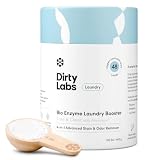
- GENTLE: Our formula is consciously formulated with 100% bio and mineral-based ingredients. We left out all the harsh chemicals, fillers, toxins, and pollutants commonly found in other boosters to create a hyperefficient, nontoxic, biodegradable formula. We only use the good stuff so your body and the environment are left as clean as your detergent.
- EFFECTIVE: Our advanced 4-in-1 formula is the first laundry product in the US to feature a groundbreaking bioenzyme that breaks down tough-to-remove “biological” stains and odors caused by sweat, body grime, and blood. (Think ring around the collar, yellow pit stains, weird grey or yellow stains on your favorite white sheets, and other stains.)
- ENVIRONMENTALLY FRIENDLY: At Dirty Labs - Less is More. By creating hyper-concentrated formulas, we greatly reduce our package sizes (and thus, our carbon footprint). Our packaging is made of recyclable cardboard. Our scoop is made from responsibly sourced schima superba wood. Our materials are responsibly sourced and extracted directly from nature. We examine every aspect of our product life cycles in order to achieve the safest, most sustainable solutions.
- DIRECTIONS: Follow your washer and garment care label instructions. For best results, use with Dirty Labs Bio Laundry Detergents. For standard and HE machines. Septic Safe. 1) Use laundry detergent as you normally would. 2) Add Bio Laundry Booster to wash drum before adding clothes.
- SPECS: 480 g = 48 loads. Free & Clear (Scent Free). Compatible with traditional and HE washers. Optimized for cold water. No synthetic ingredients. Biodegradable formula. Hypoallergenic and safe for sensitive skin. Safe for babies and pets. Cruelty-free. Vegan. No sulfates. No dyes. No parabens and preservatives. No optical brighteners. No chlorine bleach. No 1,4-dioxane. No fragrance. No CA Prop. 65 chemicals. Packaging and formula are BPA-free.
The visible mark is gone but an odor remains
Keep the garment away from heat and consider a second wash with an enzyme-based laundry product only if its directions permit that textile. Do not substitute an unlabeled household spray or mix it with the previous treatment.
What’s actually slowing this PC down?
Pick the symptom - the matching free tool is one click away.
The odor remains after an enzyme wash
Stop adding products indiscriminately. Recheck the garment label, review the enzyme product’s directions, and contact a professional cleaner if the item is delicate, valuable, or showing any dye or finish change.
The color or finish changed
Do not repeat the same cleaner. Rinse only as the product and garment instructions direct, document what was used, and seek professional textile advice. The Smithsonian warns that both cat urine and removal agents can affect dyes and finishes.
The garment is marked dry-clean-only
Do not soak it or place it in a home wash cycle. Tell a professional cleaner about the urine exposure and any product that touched the item.
The garment still smells after it has dried
Do not mask the odor with perfume or add ammonia. Check whether the product used was actually labeled for laundry and whether the clothing label permits another wash. If not, stop and consult a textile cleaner, particularly if the item has a special finish or sentimental value.
The item was washed with other clothing
Separate the affected garment from the rest and inspect the other pieces. Do not automatically treat every item with vinegar, enzyme cleaner, or another product. Read each care label, spot-test any proposed treatment, and use one compatible process at a time.
Independent reader supportYour contribution helps us test, update, and keep practical guides available for everyone.A practical checklist
- Read the care label before wetting the garment.
- Separate the item from clean laundry.
- Test the intended cleaner on a hidden area.
- For a washable item, rinse with cool water.
- Choose either the UGA detergent-soak sequence or Ohio State’s vinegar-then-detergent sequence when the label permits it.
- For remaining odor, use an enzyme-based laundry product only when its label allows the garment and washing-machine use.
- Never use ammonia and never mix cleaning products.
- Inspect for stain and odor before applying heat.
- Use a professional textile cleaner for dry-clean-only, delicate, valuable, or damaged clothing.
Keep a simple record if you need more than one attempt: note the product, amount, cycle, and result. If the item must go to a professional, this prevents accidental repetition of a product that already affected the dye or finish. A record is especially useful when several garments were involved or when another household member may handle the next wash.
Key questions answered
How do I get cat pee smell out of clothes?
Wash the item according to its care label, using either a cool-water detergent treatment or Ohio State’s vinegar-only cycle followed by a detergent wash when the fabric permits it. If odor persists, consider a labeled enzyme laundry product and inspect before drying.
Can I wash cat urine out of clothes?
Washable garments can often be treated, but the label, hidden-area test, and product directions control what is safe. Dry-clean-only and fragile pieces belong with a professional cleaner.
What should I never use?
Do not use ammonia on cat-urine-affected clothing, and do not mix cleaning products. Ammonia-based cleaners can encourage repeat soiling because cats may be attracted to the ammonia-like odor.
Best Value

- POWERFUL ENZYME LAUNDRY BOOSTER – Enhance your favorite detergent with our enzyme laundry booster powder. The advanced 3-enzyme + oxygen formula helps remove stubborn stains, sweat, body oils, and odor-causing residue for a deeper clean.
- ELIMINATES ODORS AT THE SOURCE – This laundry enzyme booster helps break down odor-causing buildup trapped deep in fabric fibers instead of masking smells. Ideal for towels, activewear, gym clothes, bedding, socks, and everyday laundry.
- ADVANCED ENZYME LAUNDRY DETERGENT FORMULA – Powered by Protease, Lipase, Mannase, and oxygen cleaning agents to help remove sweat, body oils, blood, food stains, and everyday messes while helping brighten fabrics.
- WORKS WITH ANY LAUNDRY DETERGENT – Simply add this laundry booster powder with your regular detergent to boost cleaning performance. Safe for HE, front-load, and top-load washing machines and effective in warm or cold water.
- FRAGRANCE FREE HE SAFE 64 SCOOPS – Our enzyme laundry booster is made without added fragrances and delivers powerful cleaning for colors and whites. Includes a 2 lb bag with up to 64 scoops.
Should I use vinegar and detergent together?
No. Ohio State’s cat-specific sequence uses one cup of white vinegar in a machine cycle with no detergent, followed by a separate regular detergent wash. Do not pour both into the same step, and do not use the vinegar sequence when the care label or spot test indicates that it is unsuitable.
Can I put an enzymatic pet spray in the washing machine?
Only if that product’s label expressly permits laundry or washing-machine use on the garment. A spray designed for household surfaces is not automatically suitable for clothing. Follow its stated amount, cycle, and rinsing directions and do not combine it with another cleaner.
How long should I soak the clothing?
The University of Georgia guidance supports a cool-water soak with heavy-duty liquid detergent but does not set one universal duration for every textile. Use the garment label and detergent directions rather than choosing a longer soak by guesswork.
What if the item is expensive or sentimental?
Use a professional textile cleaner instead of testing multiple home treatments. Tell the cleaner about the cat urine and every product or cycle already used, because urine and cleaning agents can affect dyes and finishes.
Frequently Asked Questions
How do I get cat pee smell out of clothes?
Use a care-label-safe wash. Start with a cool-water rinse and detergent treatment, or use Ohio State’s separate vinegar-only cycle followed by a detergent wash when the fabric permits it. If odor remains, consider an enzyme-based laundry product labeled for that garment and inspect before drying.
Can I wash cat urine out of clothes?
Often, yes, if the item is washable and the treatment passes a hidden-area test. Dry-clean-only, delicate, valuable, or already damaged pieces should go to a professional textile cleaner.
Can I use vinegar and detergent at the same time?
No. Ohio State’s sequence places one cup of white vinegar in a cycle with no detergent, followed by a separate regular detergent wash. Do not combine cleaning products.
Is an enzymatic pet cleaner safe for laundry?
Only when its label explicitly permits laundry or washing-machine use on the specific garment. A product made for floors or upholstery is not automatically suitable for clothing.
Why should ammonia be avoided?
The Smithsonian Museum Conservation Institute says not to use ammonia on cat urine. The ASPCA notes that urine contains ammonia and ammonia-based cleaners can attract a cat back to the same spot.
The Bottom Line
Read the care label, test a hidden area, and keep treatments separate. For compatible washable clothes, use a cool-water rinse and detergent soak or Ohio State’s vinegar-only cycle followed by detergent. If odor persists, use only a labeled enzyme laundry product, never ammonia, and check the garment before heat. Send delicate, valuable, dry-clean-only, or damaged textiles to a professional cleaner.
Quick Recap
Product prices and availability are accurate as of the date/time indicated and are subject to change. Any price and availability information displayed on Amazon at the time of purchase will apply.




