
Some links on this page are affiliate links: if you buy through them we may earn a commission, at no extra cost to you.
The safest first greeting is permission-based, hygienic, quiet and brief. Ask the breeder or owner whether visitors are allowed, remove outdoor shoes, wash your hands, approach the mother slowly from the side, and let each puppy choose whether to come closer. Touch only puppies that remain relaxed; support the chest and hindquarters if lifting is permitted, and return the puppy promptly to its mother and littermates. Never crowd, restrain, wake, chase or force contact with a mother dog or puppy. Children need continuous adult supervision.
Before you visit: permission, timing and health
A litter is not a public attraction. Contact the breeder or owner before arriving and ask whether visitors are currently welcome. The answer can change if the mother is recovering from birth, a puppy is unwell, the litter is under veterinary restriction or the household has tightened disease-control measures.
As an Amazon Associate I earn from qualifying purchases.
Do these 3 things before closing this tab:
1Repair Windows errors before they cause bigger problems2Scan for outdated or missing drivers - takes under a minute3Clear out junk files and repair common Windows errors- Ask whether the mother or any puppy has illness, diarrhea, coughing, unusual lethargy or a veterinary restriction.
- Confirm where visitors should leave shoes, wash hands and sit.
- Tell the owner if you are sick or have recently visited places heavily used by dogs of unknown health status.
- Ask how many people may enter and whether children are included in the visit.
Newborn puppies should have especially limited visitors. The Royal Kennel Club advises keeping visitors to a minimum and washing hands before touching puppies. The mother’s recovery, the litter’s health and the owner’s infection-control plan take priority over a visitor’s schedule.
Prepare cleanly and calmly
Remove outdoor shoes before entering the puppy area and wash your hands thoroughly before touching a puppy. Follow any additional instructions from the breeder or owner about clothing, hand sanitizer, coats or where to stand. Do not visit when you are ill. Hygiene reduces avoidable contamination, but it does not make every setting safe: vaccination status, parasites, local disease patterns and veterinary advice still matter.
Popular on Amazon

- Extra-Small 24-inch exercise play pen (single door) for dogs up to 16 inches tall or for other small pets
- 8 connected panels with thumb clips for connecting the ends together; 2 locking slide-bolt door latches; 8 ground anchors for secure placement outdoors; made of durable iron wire with a rustproof finish
- Can be easily configured into multiple stand-alone shapes (round, square, rectangle) for playtime or be used to block off a room
- Sets up in seconds; simply unfold, shape, and connect (no tools needed); folds flat for easy transport and storage
- Note: Do not leave pets unattended outdoors
Keep your arrival quiet. Turn off a loud phone, avoid strong fragrances and leave bulky bags or equipment outside the nest area. A camera or several excited visitors can add stimulation; one calm visitor is easier for a young litter to process.
Approach the mother before the puppies
Move slowly and calmly from the side. Let the mother see you and, if she wishes, sniff you. The American Veterinary Medical Association advises asking the owner’s permission, approaching slowly and calmly, and not looming over an unfamiliar dog. Do not stare directly, lean over her, reach across her body or put your hands into the nest immediately.
Pause at a distance where she can remain settled. Her body language determines whether the visit continues. A loose posture, normal breathing and the ability to choose distance suggest that she is coping. Stiffness, retreating, repeatedly blocking access, growling or an inability to settle mean you should give her more space and ask the owner whether to end the visit.
Do not interpret a mother’s tolerance as an invitation to touch the litter. She must be able to move away, reposition herself and protect her rest without being cornered. The owner should control gates, doors and access to the nest.
Let each puppy choose contact
Instead of reaching into a pile of sleeping puppies, sit or kneel beside the pen or nest. Keep your hands low and still. A curious, awake puppy may approach to sniff. Stroke gently with one hand and stop if the puppy turns away, hides or becomes tense.
Also popular on Amazon
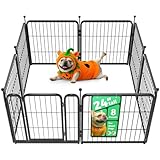
- A win-win solution: The FXW Dog Playpen is designed to bring a win-win solution to you and your lovely dog. Different from a narrow enclosure cage or kennel, the FXW dog pen provides a spacious semi-open activity area specifically for your dog. Your dog will have fun in its safe and sturdy kingdom. Meanwhile, you can take a real break and be truly relaxed without worrying about your beloved pet. Fun, Relaxation and Well-being is the orientation of the FXW team.
- Unlock your freedom, savor the moment: The stakes are designed with rounded ball tops to protect the dog's claws from injury. The rods are easily inserted into the ground for greater stability and rigidity, which won't collapse when the dog leans against them. Also, the automatic gravity-actioned locking mechanism will ensure you can open and close the door smoothly and reduces the chance of dogs unlocking by themselves. All of this is designed for absolute safety, so you can really relax.
- Super easy to assemble: It won’t take you more than 5 minutes to assemble these portable dog fences as well as pack them away due to the rod-connected design. Meanwhile, panels can be added or removed freely to give you a fully flexible area and arrange the dog pen in any shape you need.
- Multi-scenario use: The FXW dog playpen features a powder coating that will help protect against rust and extend its life, which makes it ideal for RV camping, traveling, or for use in the yard. When used indoors, we recommend placing it on a dog pad or carpet to prevent the rods from scratching the floor, or please try our new floor protectors or dog pee pad for the same purpose.
If the owner says lifting is appropriate, use both hands: one supports the chest and the other supports the hindquarters. Keep the hold close to your body and very short. Never lift by the legs, scruff, tail or loose skin. Do not pass a puppy from person to person, hold it for photographs, or block its route back to the mother and littermates.
A puppy that walks away has answered the question. Let it withdraw without coaxing, grabbing or following. Voluntary approach and voluntary retreat are safer than being picked up or passed around.
Keep the first greeting brief and low-stimulation
One calm visitor at a time is generally easier for a young litter than a party. Sit quietly, use a soft voice and make slow movements. Stop while the puppies are still relaxed rather than waiting for them to become overwhelmed. Return any handled puppy to its mother and littermates before moving on.
There is no universal safe number of visitors or handling time for every litter. Age, temperament, maternal behavior, health, housing and veterinary advice all change the answer. A short, positive interaction is preferable to a longer session that produces fear or fatigue.
Recognize stress and end the interaction
End contact immediately if a puppy:
- hides or repeatedly tries to escape;
- trembles, freezes or cries persistently;
- becomes frantic, struggles continuously or cannot settle;
- remains distressed after you reduce noise, movement and handling.
Allow the puppy to withdraw. Do not restrain it, punish it, lure it out for a photograph or insist that it “gets used to” you. If the mother becomes tense or cannot settle, stop approaching the nest and follow the owner’s direction. A calm retreat is a successful safety response, not a failed greeting.
Free tools Windows power users keep installed
One-click scans. No signup required.
Also popular on Amazon

- 【Durable 600D Oxford Fabric】The bottom pad was made of 600D thick oxford, which is durable and with high strength.
- 【Safe & Foldable Pet Playpen】Exercise dog pen has 8 connected panels (each panel 24H and 24W Inches) easy to set up puppy pet folding playpen and take it down,folds flat for easy storage and transport. No need tools for installing.
- 【Happy Floor Time】 Stressing out when your pet knocks over the food bowl or little piggies relieve themselves everywhere? The floor mat saves your day—Oxford fabric with a water-resistant coating is easy to wipe clean while protecting your piggy’s sensitive feet or your floor.
- 【Great for Small Animals】8 panels exercise pen works great as a dog fence or as an exercise area for non-climbing small to medium animals including rabbits, ducks, turtles & guinea pigs and some other small animals.
- 【Perfect for Indoor & Outdoor Use】The rust-preventive and water-proof,protects the dog playpen from the elements & included ground stakes fix to ground not to move,allow to configure into multiple shapes, great for indoor or outdoor use.
Children need continuous adult supervision
The American Animal Hospital Association says children should never be left unsupervised with puppies. An adult must stay within reach for the entire visit; supervision is not handing a child a puppy and watching from across the room.
Before entering, explain a few rules in language the child can follow:
- Use a quiet voice and gentle, open hands.
- Wait for a puppy to approach; do not grab, hug, chase, corner or wake one.
- Do not pick up a puppy unless the supervising adult and owner both permit it.
- Use toys for play rather than fingers, clothing or ears.
- Never enter the litter’s retreat area or block the mother’s escape route.
Very young children may not be able to follow these rules reliably. An adult-only first greeting, followed by a later child visit when the owner agrees, may be the safer choice.
Choose a setup that protects retreat and control
The physical arrangement changes how easily a puppy or mother can opt out. An indoor exercise pen can provide a defined boundary, washable surfaces and a protected retreat when it is appropriately sized and used with supervision. The American Veterinary Society of Animal Behavior supports pens or crates as safe, secure places for puppies; a pen is a management aid, not a substitute for an attentive adult.
What’s actually slowing this PC down?
Pick the symptom - the matching free tool is one click away.
| Greeting setup | Advantages | Risks and safeguards |
|---|---|---|
| Open-room greeting | Allows the mother and puppies to choose distance and move away. | Visitors may crowd the nest or follow a retreating puppy. Keep numbers low, establish a no-entry area and let the owner manage movement. |
| Indoor exercise pen | Creates a clear boundary and can include a washable retreat space. | A pen must not become a trap. Leave enough room for the mother to reposition and for puppies to withdraw; never reach over or climb into it without permission. |
| Several visitors at once | Convenient for a family or group. | Noise, hands and cameras increase stimulation. Stagger visits or limit the first greeting to one calm person. |
| Adult-only visit | Provides the most predictable movement and supervision. | It does not remove hygiene or disease precautions. Follow the owner’s visitor rules. |
| Child visit | Can support gentle, age-appropriate socialization. | Requires continuous adult supervision, quiet voices, gentle hands and an immediate end to contact if either mother or puppy shows stress. |
Age changes what a greeting should look like
Newborn and neonatal puppies
Newborns sleep and feed for much of the day and depend heavily on their mother for warmth, nutrition and protection. Keep visits especially short and avoid waking puppies solely for handling. Ask the owner whether any contact is appropriate at all, and return a puppy immediately if the mother needs it or the puppy becomes unsettled.
Also popular on Amazon
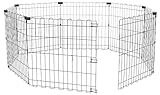
- Extra-Small 24-inch exercise play pen (no door) for dogs up to 16 inches tall or for other small pets
- 8 connected panels with thumb clips for connecting the ends together; 8 ground anchors for secure placement outdoors; made of durable iron wire with a rustproof finish
- Can be easily configured into multiple stand-alone shapes (round, square, rectangle) for playtime or be used to block off a room
- Sets up in seconds; simply unfold, shape, and connect (no tools needed); folds flat for easy transport and storage
- Note: Do not leave pets unattended outdoors
Early socialization period
Cornell University College of Veterinary Medicine identifies approximately 5 to 14 weeks as an early critical socialization period in which puppies learn from their mother and littermates. That does not mean every puppy should meet every visitor. Socialization works best when exposure is gradual, positive, optional and matched to the puppy’s ability to recover.
Older, exploratory puppies
More mobile puppies may approach visitors, investigate clothing and play. Keep the same boundaries: allow approach, prevent chasing and rough handling, provide a retreat and end the session before fatigue or frantic behavior appears.
Agriculture Victoria’s 2014 code gives examples of structured handling—five minutes of human handling per puppy daily from seven days, and 30 minutes of human handling per litter daily at four to eight weeks, alongside interactive play and age-appropriate socialization. These are jurisdiction-specific welfare-code examples, not a universal prescription for every litter. The breeder and veterinarian should adapt any handling plan to the puppies’ health, development and environment.
Recommended Free Tools
Vaccination, disease and location risk
Incompletely vaccinated puppies should not be taken to dog parks or other heavily trafficked places used by dogs of unknown health status. A private indoor visit with healthy, appropriately vaccinated people and animals can be planned with veterinary advice, but “indoors” alone does not eliminate risk.
Ask the owner which vaccinations the mother and puppies have received, whether parasite treatment is current and what local veterinarian has advised. Do not bring unwashed equipment, outdoor footwear or visiting animals into the litter area. Visitors who work with dogs, have recently attended shows or kennels, or have contact with sick animals should disclose that exposure and follow the household’s precautions.
Also popular on Amazon

- 🐶【 ANTI-RUST METAL PET PLAYPEN】: The epoxy coating finish protects the pet playpen from rust, corrosion, fading and making it perfect for all weather conditions. The dog fence’s durable design extends the life of the fence, ensuring long-term use with minimal maintenance and doesn't take up much time to clean.
- 🐶【 STURDY AND CUSTOMIZABLE SHAPES】:The dog playpen is constructed from high-strength solid wire and securely fastened to the ground when outdoor. Our 8-Panel pet pen design allows for multiple shape configurations, including square, rectangle and octagon, to suit your space and pet's needs.
- 🐶【CONVENIENCE ENTRY FOR PETS】: The puppy pet playpen comes in sizes of 24in, 30in, and 36in with a doorless design.The larger sizes of 42in and 48in feature step door makes it easy for your pet to walk through and fence doors will not injure them,and equipped with 2 secure latches, this playpen ensures double security, preventing even the most energetic pets from escaping.
- 🐶【EASY TO ASSEMBLE AND STORE】: This dog playpen does not require any tool assembly and can be set up right away in just a few minutes. Simply position the fence upright and secure it with the included metal buckles. When not in use, the dog pen folds flat for convenient storage and transport.
- 🐶【VERSATILE USAGE】: Perfect for various kind of pets such as puppies, rabbits, guinea pigs, ducks, turtle and other small animals, this indoor and outdoor playpen offers a safe play area indoors or outdoors. Pet playpen provides ample space for your pets to exercise, explore, and relax while giving you peace of mind.
Respect the litter’s time with its mother
The Australian Veterinary Association’s 2024 policy says puppies should remain with their mother and littermates until at least eight weeks. A visit should never encourage early separation, repeated removal from the nest or a schedule that disrupts nursing and rest.
At the other end of the interaction, the mother needs uninterrupted periods away from visitors. The owner should be able to close the room or pen, end a visit and give her quiet time without argument. A puppy’s social development is built through safe experiences with its mother, littermates, people and environment—not through maximum handling by strangers.
Quick wins for a faster PC:
Scan for outdated or missing drivers - takes under a minuteDriver Scan →Clear out junk files and repair common Windows errorsFree Scan →A practical greeting protocol
- Ask first. Confirm that visitors are allowed, check for illness or veterinary restrictions and ask about the household’s rules.
- Arrive clean. Do not visit when sick. Remove outdoor shoes and wash your hands before touching puppies.
- Enter quietly. Keep the group small, silence devices and avoid sudden movements.
- Meet the mother from the side. Let her see and sniff you; do not loom, stare, reach over her or put hands into the nest.
- Check her response. Continue only while she is loose, settled and able to choose distance. Give space or leave if she stiffens, retreats, blocks access, growls or cannot settle.
- Position yourself beside the boundary. Sit or kneel near the pen or nest and let an awake, curious puppy approach.
- Touch gently. Use one hand. If lifting is allowed, support the chest and hindquarters and keep the hold very short.
- Protect choice. Let every puppy retreat. Never grab, wake, chase, restrain or pass puppies around.
- Stop early. End the greeting while everyone is relaxed and return any handled puppy to its mother and littermates.
- Clean up and leave. Follow the owner’s instructions before exiting, and do not extend the visit because a child or visitor wants “one more turn.”
Common mistakes and safer alternatives
| Mistake | Safer alternative |
|---|---|
| Walking straight over the mother and nest | Approach from the side, pause and let her sniff. |
| Reaching into a sleeping pile | Wait for an awake puppy to approach voluntarily. |
| Passing one puppy around a group | Allow one calm person to stroke briefly, then return the puppy. |
| Holding a puppy that struggles | Support it back to the floor or litter and stop contact. |
| Letting children “play” unsupervised | Keep an adult within reach and use quiet, gentle, toy-based interaction. |
| Taking puppies to dog-heavy public places | Keep incompletely vaccinated puppies away from those locations and ask a veterinarian about safer socialization options. |
| Ignoring a mother’s warning signs | Give her space, close access and end the visit if she cannot settle. |
When to postpone or seek veterinary guidance
Postpone a visit if you or another visitor is ill, if the mother or a puppy appears unwell, or if the owner reports a veterinary restriction. Ask the veterinarian for tailored advice when the litter has health complications, the mother is unusually protective or distressed, vaccination status is incomplete, or local infectious-disease risk is high.
A puppy that remains unusually fearful, lethargic or distressed after visitors have left should be reported to the owner. The owner can decide whether veterinary assessment is needed; visitors should not diagnose or treat a puppy themselves.
Quick Recap
Quick checklist for visitors
- Permission confirmed and timing approved.
- No visitor is sick or recently exposed to high-risk dog environments without disclosure.
- Outdoor shoes removed and hands washed.
- One calm visitor or a small, controlled group.
- Mother approached from the side, without looming or reaching over her.
- Each puppy allowed to approach and retreat.
- Any lift approved, brief and supported under the chest and hindquarters.
- No waking, chasing, hugging, restraint or passing puppies around.
- Children supervised continuously, with quiet voices and gentle hands.
- Visit ends at the first clear sign of stress.





Leave a Reply