If you find a cat outdoors, pause before picking it up or taking it home. A cat outside may be a lost pet, an owned cat allowed outdoors, or a cared-for community cat. First check from a distance for injury, illness, distress, or immediate danger. If the cat seems healthy and safe, try to identify its owner without removing it unnecessarily. If it is hurt, in danger, or unsafe to approach, contact a local veterinarian, animal shelter, rescue, or animal-control service for advice.
Start by assessing the cat from a distance
Outdoor location alone does not establish that a cat is abandoned. A healthy cat may live nearby, have an owner who lets it roam, or be cared for by someone in the neighborhood. Delaware’s Office of Animal Welfare makes this point in its Lost & Found Registry guidance, accessed October 13, 2026: a healthy cat that is neither injured nor in immediate danger may not need intervention. That is local guidance, not a universal legal rule, but the practical first step applies broadly: observe before acting.
As an Amazon Associate I earn from qualifying purchases.
Stay far enough away that the cat does not feel cornered. Note its location, behavior, and visible condition. Look for traffic, extreme weather, entanglement, or other immediate hazards. You can take a photo from a safe distance if doing so does not frighten the cat; it may help you share a found-cat notice later.
What’s actually slowing this PC down?
Pick the symptom - the matching free tool is one click away.
- Healthy and not in immediate danger: give the cat space and begin a careful owner search.
- Visibly injured, very ill, or in danger: contact a veterinarian, rescue, shelter, or local animal authority promptly.
- Frightened or unsocialized: do not try to catch or handle it yourself; ask an experienced local organization for help.
- Kittens alone: assess whether they are warm and safe before intervening; their mother may be nearby.
These paths differ because an unnecessary capture can separate a cat from its owner or caretaker, while delay can put an injured or endangered animal at greater risk.
#1 Best Overall

- Hard sided pet carrier with 2 doors for front and top entry; suitable for cat or medium size dog weighing 12 - 20 pounds
- Durable plastic construction with steel wire doors; screws keep the top and bottom sections securely connected
- Spring load latches ensure easy one-handed door opening and closing; top door swings open to the left or right and includes a top carry handle
- Plenty of air ventilation on the sides, top, and back of the carrier
- Note: Be sure to measure the size of the pet when choosing carrier size
Try to describe what you can actually observe rather than diagnosing the cat. For example, note whether it is limping, bleeding, struggling to breathe, unable to move normally, or simply keeping its distance. Tell the local professional where the cat is and what you saw. A clear location and description help them advise you on whether to wait, approach, or request assistance. If the cat moves away, do not follow it into a road, private property, or another hazardous area.
Use the cat’s condition and behavior to choose your next step
| What you observe | What to do | What to avoid |
|---|---|---|
| The cat appears healthy and is in a safe place | Observe without crowding it; look for identification only if it is calm and approachable; ask nearby people and report the found cat locally. | Assuming it is abandoned, taking it away, or starting a routine feeding schedule. |
| The cat is sick, injured, or in immediate danger | Call a veterinarian, shelter, rescue, or local animal authority for guidance. Move it only if safe to contain and transport. | Handling an aggressive or frightened cat, or transporting it without a safe way to contain it. |
| The cat is frightened, unsocialized, or difficult to approach | Keep your distance and ask a rescue or animal-control service about assistance and humane trapping. | Chasing, cornering, grabbing, or setting a trap without appropriate experience or guidance. |
| Kittens are alone but appear warm and safe | Watch from a distance for the mother and contact a local rescue or veterinarian if you are unsure what you are seeing. | Removing them immediately just because the mother is not visible. |
| Kittens are cold, wet, sick, injured, or endangered | Contact a veterinarian or rescue promptly for situation-specific help. | Waiting for a mother to return when the kittens are in distress or exposed to danger. |
Appearance is only a clue. A friendly cat is not necessarily lost, and a shy cat is not necessarily feral. Likewise, no single sign proves that a cat has an owner or belongs to a community colony.
Use the combination of condition, safety, and socialization to decide what to do next. A healthy, approachable cat in a safe place usually calls for observation and an owner search, not automatic shelter transport. A cat that is sick or injured needs timely professional advice. A cat that cannot be approached safely calls for trained help even if it seems to need care. If you are uncertain which category fits, describe the situation to a local shelter, rescue, veterinarian, or animal-control service before attempting to move the cat.
Do these 3 things before closing this tab:
1Clear out junk files and repair common Windows errors2Scan for outdated or missing drivers - takes under a minute3Repair Windows errors before they cause bigger problemsApproach only if it is calm and safe
If the cat is relaxed and you can get close without blocking its escape, look for a collar or identification tag. Move slowly, avoid sudden reaching, and stop if the cat tenses, retreats, growls, hisses, or tries to escape. Do not lift or restrain a cat simply to inspect it. An unfamiliar cat may lash out when a person attempts to put it in a carrier, even if it seemed friendly at first.
An ear tip—the tip of one ear removed in a straight line—can indicate that a community cat has been sterilized. Nearby food bowls, shelters, or a person who regularly checks on the cat may also point to a caretaker. These signs can help direct your questions, but none confirms that the cat is safe to handle or that it has no individual owner.
Humane World for Animals’ guidance, accessed October 13, 2026, advises caution with unfamiliar cats and discusses bite-resistant gloves and humane traps. Those are not a substitute for experience: gloves do not make an unsafe capture safe, and trapping can injure or further frighten an animal if done incorrectly. If the cat is not clearly comfortable with your presence, leave capture to a rescue or animal-control professional. Humane World recommends borrowing a humane trap for an unsocialized cat; ask a local organization how to use one safely rather than treating it as casual equipment.
Rank #2
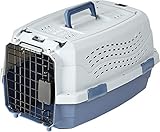
- Hard sided pet carrier with 2 doors for front and top entry; suitable for cat or extra-small dog breeds, such as chihuahuas and toy poodles (up to 11 pounds)
- Durable plastic construction with steel wire front door; screws keep the top and bottom sections securely connected
- Top door can swing open to the left or right for easy access and convenience
- Plenty of ventilation on sides, top, and back of the carrier
- Note: Be sure to measure the size of the pet when choosing carrier size
Do not try to corner the cat against a wall, reach under a car, or block its route in an attempt to make it easier to catch. Keep children and pets at a distance. If the cat approaches you, that still does not prove it will tolerate being picked up or confined. A frightened animal may react differently once it feels trapped. Prioritize distance and professional advice over proving whether the cat is friendly.
Crashes, No Sound, or Screen Glitches?
Random freezes, missing sound and display glitches usually trace back to one bad driver. Find and replace yours safely.Free scan · under a minutePC Slower Than It Used to Be?
A free scan shows the junk files, broken settings and background clutter dragging Windows down - then fixes them in one click.Free scan · Windows 10 & 11Look for the owner before treating the cat as stray
When the cat is approachable and not in urgent need of medical care, focus on reunification. Cats Protection, Humane World for Animals, Delaware’s Office of Animal Welfare, and the RSPCA all include owner-search steps in their found-cat guidance. Use several routes because an owner may not see any one notice.
- Check for identification. Look for a collar and tag only if the cat is calm enough for you to do so safely. If a tag has contact details, call or message the owner rather than assuming the cat needs a new home.
- Ask people nearby. Speak with neighbors, mail carriers, and others who regularly pass through the area. Ask whether they recognize the cat or know someone who feeds or shelters cats there.
- Look for a caretaker. Nearby bowls, outdoor shelters, or a regular feeding area may indicate that someone is already looking after the cat. Ask before removing it from the area.
- File a found-cat report. Contact local shelters and the relevant municipal or animal-control service. Share where and when you found the cat, a clear photo, and a way to contact you. Delaware’s Office of Animal Welfare includes Petco Love Lost as one photo-based lost-and-found resource; availability and appropriate services vary by location.
- Check lost notices and local channels. Compare your photo and location with notices from local shelters and community lost-and-found groups. Keep enough detail in reserve to verify a claimant’s connection to the cat.
- Arrange a microchip scan if safe. A veterinary clinic or shelter can scan an approachable cat that can be safely transported. Ask first whether the facility can scan the cat and how they recommend transporting it. Some rescues may be able to lend a scanner.
A useful found notice is specific enough to help an owner recognize the situation: include the general location and date found, a clear photo, and a safe way to contact you. Avoid publishing every identifying detail if you want to confirm that a claimant can describe the cat accurately. Check for matching lost-cat notices as well as posting your own, and update or remove notices when the cat is reunited or a local organization takes over.
A friendly cat may tolerate a breakaway collar with a brief note asking the owner or caretaker to contact you. Use this only if the cat is comfortable being approached and the collar can be placed without a struggle; do not use a collar as a reason to catch a frightened cat. It is an optional way to invite contact, not a replacement for a found report or chip scan.
Petco Love Lost is identified in Delaware’s local guidance as a free lost-and-found service, but the best reporting channels depend on your area. Contact the local shelter or municipal service to ask where reports should be filed. If an organization maintains a found-pet registry, provide the information it requests and keep your contact details current so an owner can reach you.
Get medical help for illness, injury, or immediate danger
If the cat is bleeding, unable to move normally, struggling to breathe, unconscious, or otherwise in serious distress, contact a local veterinarian, rescue, shelter, or animal authority immediately. The right agency and emergency contact depend on where you are. Singapore’s Animal and Veterinary Service, in guidance updated September 17, 2026, directs people in its jurisdiction to report serious injuries, unconscious animals, and public-safety situations promptly. That is an example of local procedure, not a number or process that applies everywhere.
Rank #3

- Hard sided pet carrier with 1 door for front entry; suitable for a cat, dog, or other small pet
- Durable molded plastic construction; locking door mechanism for secure closure
- Top handle for easy carrying
- Metal wire door and side panels provide ventilation
- Product Dimensions: 23.6 x 15.7 x 13 inches (LxWxH)
For a sick or injured cat, call the clinic before setting out when possible. Explain what you can see, where the cat is, and whether it can be approached. Follow the clinic’s or responder’s directions rather than improvising a capture. Cats Protection recommends a carrier or cardboard box for transport; a secure carrier is useful when the cat can be placed inside safely. If you do not have one, ask a rescue or clinic about borrowing equipment or using an appropriate box. Do not attempt transport if you cannot contain the cat without putting yourself or the animal at risk.
If you can transport the cat safely, keep it contained during the trip and tell the clinic that it was found outdoors. A carrier is a practical transport tool, not permission to force a frightened cat into confinement. If the cat cannot be approached, tell the clinic or animal authority that clearly and ask what trained assistance is available. A rescue may be able to help with safe containment or direct you to the appropriate responder.
If a cat is in a roadway or another dangerous place, tell the local animal authority or emergency veterinary service exactly where it is and what the hazard is. Do not put yourself in traffic or another dangerous position trying to reach it. For a frightened or aggressive animal, professional guidance is safer than direct handling. Emergency systems and responsibilities vary by location, so use the relevant local contact rather than relying on a number or process from another country.
Recommended Free Tools
Handle kittens as a separate situation
A mother cat may leave her kittens temporarily to find food, so a litter with no adult in sight is not automatically orphaned. If the kittens are warm, dry, appear well, and are in a safe place, watch discreetly from a distance so the mother is not deterred from returning. Avoid hovering over the nest or moving the kittens just to get a closer look.
Contact a veterinarian or rescue promptly if kittens are cold, wet, sick, injured, in immediate danger, or exposed to conditions they cannot safely withstand. Delaware’s Office of Animal Welfare and the RSPCA both advise considering the mother’s possible return, while recognizing that unwell or endangered kittens need help. The RSPCA gives observation guidance that varies with age and circumstances; those time windows should not be treated as a universal countdown. If you cannot tell whether the kittens are safe, describe their condition and location to a local rescue or veterinary professional and ask for advice.
Do not decide that kittens are abandoned solely because the mother is not visible during one brief check. Keep your distance and watch for signs that the mother returns, but do not let observation delay help if the kittens are cold, wet, injured, ill, or in danger. Their age and condition matter, and a local professional can help you assess what is appropriate for the particular situation. Avoid moving apparently safe kittens unless a professional advises it or their location presents a real hazard.
Rank #4
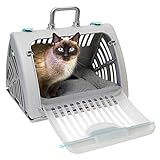
- DESIGNED SPECIFICALLY FOR CATS – PATENTED SIDE-OPENING DOOR - Original SportPet patented wide side-opening door allows cats to walk in naturally reducing fear, stress, and resistance. Ideal for anxious cats, vet visits, grooming, and everyday transport. Veterinarian recommended design for easier handling.
- HARD-SIDED CAT CARRIER WITH COMFORT BED INCLUDED - Includes 1 light gray hard-shell carrier with gray door plus an extra-comfy removable pet bed. Sturdy construction provides a safe, enclosed space cats prefer, while the soft bed adds comfort for travel or waiting rooms.
- TRAVEL-READY & VET VISIT ESSENTIAL - Perfect cat carrier for car travel, road trips, moving, and trips to the veterinarian. Smooth-closing secure door keeps pets safely contained while allowing fast, stress-free loading and unloading.
- EASY TO CLEAN & FOLD-FLAT STORAGE - Wide door opening makes cleaning quick after accidents. Carrier folds down flat for compact storage in closets, cabinets, or vehicles. Machine-washable & dryer-safe bed for hassle-free maintenance.
- IDEAL SIZE FOR LARGE CATS & SMALL PETS - Carrier dimensions: 18.5” L x 15.25” W x 14.25” H. Bed dimensions: 18” L x 13.75” W. Supports pets up to 25 lbs. Works great for large cats, small dogs, and small animals like rabbits, ferrets, and guinea pigs.
Be cautious about feeding or taking the cat indoors
Do not make routine feeding your first response. Cats Protection’s stray-cat advice, accessed October 13, 2026, warns that an unfamiliar cat may have a medical condition or special diet, and feeding can keep an owned cat away from home. If the cat seems particularly underweight, or a small amount of food is needed to lure it into a carrier for veterinary care, Cats Protection describes those as limited exceptions. If feeding is necessary, use cat food or suitable plain cooked food rather than assuming ordinary human food is appropriate. Do not give the cat milk. If it appears ill, prioritize veterinary advice.
Quick wins for a faster PC:
Clear out junk files and repair common Windows errorsFree Scan →Scan for outdated or missing drivers - takes under a minuteDriver Scan →Feeding is not a reliable way to determine whether a cat belongs to someone. A cat may come for food while still having an owner or caretaker, and repeated feeding can change where it spends time. If you think the cat is underweight or needs food to be safely transported for care, ask a veterinarian or rescue for advice where possible. Do not use food to lure a frightened cat into a situation you cannot manage safely.
If a cat needs temporary shelter and can be brought indoors safely, keep it in a separate room away from resident pets while you contact a local shelter, rescue, or veterinarian about next steps. Separation reduces direct contact while the cat’s health and status are unknown. Do not allow an unfamiliar cat to mingle with household animals or roam through the home.
When safe temporary housing is not available, say so when you call local services and ask which organization can take responsibility. Cats Protection recommends contacting an animal-welfare organization if you cannot care for a found cat. The available options and procedures differ by area. If you are considering a carrier, a rescue or clinic may be able to lend one; a suitable cardboard box is another transport option cited by Cats Protection. Gear does not make it appropriate to capture a cat that cannot be handled safely.
Independent reader supportYour contribution helps us test, update, and keep practical guides available for everyone.Do not assume that finding the cat makes it yours
Before keeping or adopting the cat, make a reasonable effort to find its owner and follow the found-animal process where you live. A microchip scan, found report, and local notices can help connect a lost pet with its family. If no owner is identified, ask your local shelter, rescue, or animal-control service what further steps apply before you decide to adopt.
Free tools Windows power users keep installed
One-click scans. No signup required.
There is no single holding period or ownership rule that can safely be applied across countries and municipalities. Delaware, the UK, and Singapore have different animal-welfare systems, and local responsibilities can also differ within a country. Contact the relevant local authority rather than relying on another place’s procedure or assuming that taking the cat home transfers ownership.
Best Value

- Multi-Scenario Safe Travel: Measuring 22.8" L x 14.6" W x 13.4" H, this premium hard shell cat carrier is fully airline approved. It serves perfectly as a cat carrier, dog carrier, cat crate and small dog crate, comfortably holding small pets up to 22 lbs. Suitable for air travel, car rides, vet visits, house moving and daily outdoor outings.
- Full Surround Ventilation: This hard cat carrier is designed with four-sided hollow ventilation to achieve smooth 360° air circulation. The breathable cat carrier hard shell maintains a fresh and cool interior environment, effectively alleviating pets’ travel anxiety and stress during long trips
- Impact Resistant & Durable: Made of high-strength impact-resistant plastic material, this pet carrier features an integral sturdy frame that resists cracking and deformation. It can withstand frequent carrying and bumpy transit, supporting long-term daily and travel use.
- Dual Door & Comfort Handle: Comes with top and front dual-door design, making it convenient to load and unload pets. Equipped with a built-in foldable ergonomic handle for effortless carrying. This portable pet carrier can be stacked neatly to save storage space when not in use.
- Reinforced Secure Lock & Integrated Food Bowl: Adopts reinforced hardware buckles and thickened connection structure to ensure tight closure and prevent accidental separation. This airline approved cat carrier and dog carrier is equipped with an integrated food bowl, great for long-distance travel and outdoor feeding on the go.
Quick checklist before you act
- Observe first: is the cat injured, ill, distressed, or in immediate danger?
- If it seems healthy and safe, avoid removing it just because it is outdoors.
- Approach only if the cat is calm; do not corner, grab, or personally trap an unsocialized cat.
- If safe, check identification and ask nearby people whether they know the cat or its caretaker.
- Report the found cat locally and arrange a microchip scan only if it can be safely transported.
- Call a veterinarian, rescue, shelter, or animal authority for medical emergencies or unsafe situations.
- For kittens, consider whether the mother may return, but seek prompt help if they are unwell, exposed, or endangered.
- Do not start routine feeding, mix the cat with your pets, or assume you can keep it without following local procedures.
Frequently Asked Questions
Should I bring a stray cat to a shelter?
Not automatically. If the cat appears healthy and is safe where it is, first check for identification if it is calm, ask nearby people, and file a found-cat report with local shelters or animal services. If it is injured, ill, or in immediate danger, call a veterinarian, rescue, shelter, or animal authority promptly. Transport it only if you can safely contain it; ask the local organization what to do if you cannot approach it.
Should I feed a cat I found outside?
Avoid making routine feeding your first step. Cats Protection warns that a found cat may have a medical condition or special diet, and feeding could keep an owned cat away from home. Its guidance allows limited exceptions, such as an apparently underweight cat or a small amount to lure one into a carrier for veterinary care. Do not give milk, and seek veterinary advice if the cat appears ill.
How can I tell whether an outdoor cat is stray or belongs to someone?
You usually cannot tell from friendliness, shyness, or appearance alone. A collar or tag, nearby bowls or shelters, an ear tip, or a regular caretaker can offer clues, but none proves ownership status by itself. Ask neighbors and local caretakers, check lost notices, file a found report, and arrange a microchip scan if the cat can be safely transported.
What should I do if the cat is frightened or will not let me approach?
Do not chase, corner, grab, or try to put it in a carrier. Keep your distance and contact a local rescue or animal-control service for guidance. Humane traps are for use with appropriate experience or rescue assistance, not a casual do-it-yourself capture. If the cat is injured or in immediate danger, tell the local authority or veterinary service where it is and that it cannot be approached safely.
What should I do if I find kittens with no mother nearby?
If they are warm, dry, appear well, and are in a safe place, observe from a distance because their mother may have stepped away to find food. Do not remove them just because she is temporarily out of sight. Contact a veterinarian or rescue promptly if they are cold, wet, sick, injured, or endangered. Advice about how long to observe depends on age and circumstances, so do not treat one timing rule as universal.
Can I keep or adopt a cat I found?
Do not assume that finding the cat makes it yours. Make a reasonable effort to locate an owner, arrange a microchip scan if it can be done safely, file a found report, and ask your local shelter or animal-control service what process applies. Holding periods and ownership procedures vary by location; there is no universal rule.
The Bottom Line
First decide whether the cat is safe, injured, or unsafe to approach. Give a healthy cat space while you check for an owner; call local professionals for illness, danger, or a cat you cannot handle safely. For kittens, allow a mother a chance to return only when they are warm and safe. Avoid routine feeding and do not assume the cat is yours until you have followed local found-animal procedures.
Quick Recap
Product prices and availability are accurate as of the date/time indicated and are subject to change. Any price and availability information displayed on Amazon at the time of purchase will apply.




