
Crashes, No Sound, or Screen Glitches?
Random freezes, missing sound and display glitches usually trace back to one bad driver. Find and replace yours safely.Free scan · under a minutePC Slower Than It Used to Be?
A free scan shows the junk files, broken settings and background clutter dragging Windows down - then fixes them in one click.Free scan · Windows 10 & 11Some links on this page are affiliate links: if you buy through them we may earn a commission, at no extra cost to you.
Start searching physically and calling for help immediately. In the first 30 minutes, search every hiding or trapped place in and around your home, then work outward while neighbors, shelters, animal-control officers, veterinary hospitals and rescue groups join the search. Use one recent photo and one consistent description on flyers, social posts and lost-pet databases. Search again at dusk and after dark, when a frightened dog may move in quieter conditions. Keep checking shelters in person and online every day, and continue beyond the first day if necessary; the first 24 hours launch the recovery effort rather than define its limit.
What should I do in the first 30 minutes?
Confirm exactly when and where the dog was last seen, then conduct a slow, close search before assuming the dog has traveled far. Frightened dogs can hide silently, squeeze into spaces that seem too small, or become trapped behind a gate or inside a structure.
As an Amazon Associate I earn from qualifying purchases.
Reconstruct the last sighting
- Ask each household member when they last saw the dog, which door or gate was open, and the direction the dog may have taken.
- Mark the last confirmed location and time on paper or a phone note. Distinguish a confirmed sighting from an assumption.
- Ask whether anyone moved a vehicle, opened a shed, received a delivery or left a gate unlatched around that time.
Search the house, yard and immediate perimeter
Use a leash, a recent photo, high-value treats and a familiar blanket or bedding. Call the dog’s name in a calm, steady voice. The American Humane Society advises avoiding shouting because it can scare an anxious pet farther away.
- Check under beds, porches, decks, vehicles and furniture.
- Inspect dense landscaping, crawl spaces, basements, garages, sheds and fenced yards.
- Open and look behind every door, gate and enclosure where a dog could have entered and become trapped.
- Ask nearby residents whether you may inspect adjoining yards, garages and outbuildings.
Walk slowly, pause to listen and look at ground level. A frightened dog may not bark or come when called. Do not spend the entire first period driving distant roads while an injured or frightened dog is still hiding close to home.
Popular on Amazon
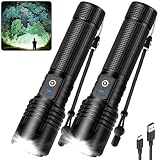
- Note: Kmivo LED Flashlight built in rechargeable Βattery that is not detachable and cannot be replaced by the user.
- 2026 New High-Performance Flashlight – The Kmivo rechargeable LED flashlight features an advanced optical chip that delivers uniform, glare-free illumination. It’s your reliable companion for wilderness exploration, camping, hiking, or home use.
- 5 Light Modes - The super bright flashlight has 5 lighting modes: High-Medium-Low-Strobe-SOS to meet your lighting needs in different scenarios.
- Adjustable - The Kmivo flashlight for home is adjustable for distance and range of illumination, by adjusting the head you can illuminate the target to 3280 feet and the range to 2284 square feet.
- IPX7 Waterproof - Kmivo outdoor flashlight has a perfect sealed design and good waterproof performance. It can be used normally in heavy rain, snow and other harsh weather conditions.
How do I organize neighbors and professional help?
Once the close search is underway, delegate calls and neighborhood checks so several lines of help start at once. Give every person the same last-seen location, time, direction, photo and phone numbers.
Ask neighbors to check enclosed spaces
Request specific checks rather than a general request to “keep an eye out.” Ask neighbors to inspect garages, sheds, yards, under porches, behind gates and other places a dog could be locked in. Tell them not to chase the dog and to report the exact location, time and direction of any sighting.
Call organizations that may receive the dog
Contact local animal shelters, animal-control agencies, veterinary hospitals, emergency veterinary hospitals and rescue groups. Ask how to file a lost-dog report, whether they publish found-animal listings, what identification they require and how often listings are refreshed. Record each organization’s hours, report number and next follow-up time.
Update identification records
Notify the dog’s microchip registry immediately and confirm the phone number, email and address on the account. Verify that the collar, license and ID-tag details are current. A chip only helps when a shelter or clinic can scan it and the registry can reach you, so do not assume an old registration will work.
What should a lost-dog flyer say?
A flyer should let someone recognize the dog and contact you in seconds. The ASPCA recommends a consistent design because repeated exposure helps people remember the message; use the same wording and photo on every poster and online post.
| Element | What to include | Why it matters |
|---|---|---|
| Headline | “LOST DOG” in large, high-contrast type | People can identify the purpose while passing by. |
| Photo | A recent, clear image showing the dog’s face and body | Visual recognition is more reliable than a breed label alone. |
| Description | Breed or type, sex, color, size or weight, coat pattern and distinctive markings | Specific details separate your dog from similar animals. |
| Last seen | Exact street or landmark, date and time, plus direction of travel if known | It tells people where a sighting is relevant. |
| Contact | Two reachable phone numbers, with a request to text or call about sightings | A second number helps if one line is missed or unavailable. |
| Safety note | For a fearful dog, “Do not chase; call or text with location” | It reduces the chance that a pursuit drives the dog farther away. |
Keep the layout simple and readable from a distance. Albuquerque Animal Welfare recommends large, brightly colored posters with simple wording and a photo. NYC Health advises signs within a 3-mile radius and large enough to read from 10 feet; that is municipal guidance for its jurisdiction, not a universal recovery rule. Follow local rules about posting on public property and remove signs when the search ends.
Free tools Windows power users keep installed
One-click scans. No signup required.
Also popular on Amazon

- 【FIRE-STARTING LENS FOR CAMPING PREP】 More than a standard camping flashlight, the detachable ignition lens concentrates the beam to help ignite dry tinder when conditions allow. It adds practical backup utility for shoppers building a survival flashlight kit for overnight camping, campsite preparation and outdoor emergencies. Use only in safe, permitted areas
- 【2000LM SPOTLIGHT-TO-FLOODLIGHT ZOOM】 This tactical flashlight delivers 2000LM with an adjustable beam that shifts from broad nearby coverage to a focused spotlight flashlight for campsite checks, trail viewing, property inspection, night walks and outdoor work
- 【5 MODES FOR EMERGENCIES & ROADSIDE USE】 Select Low, Medium, High, Strobe or SOS with simple one-button control. Designed for buyers comparing flashlights for emergencies, it also works as a practical car flashlight for power outages, roadside signaling, vehicle checks, nighttime breakdowns and unexpected low-light situations
- 【USB-C CHARGING FOR HOME BACKUP】 Among rechargeable flashlights, this model provides up to 36 hours of runtime on Low, with a power-level display for checking remaining power at a glance. USB-C charging makes preparation convenient for flashlights for home, first-apartment supplies, college dorm emergency kits, travel bags and outage readiness
- 【IPX6 ALUMINUM BUILD FOR OUTDOOR TASKS】 This durable LED flashlight features a matte-black aluminum body and textured grip for secure handheld use. For buyers comparing a waterproof flashlight, its IPX6 rating helps handle rain and splashes but is not designed for submersion—ideal for hiking, dog walking, campsite use, outdoor work and nighttime property checks
Where should I post the notice?
Cover places where people walk, drive, shop and routinely notice animals, while respecting permission and local signage rules.
Physical locations
- Dog parks, pet-supply stores, groomers and veterinary offices.
- Grocery and convenience stores, gas stations, laundromats and cafés that allow community notices.
- Entrances and noticeboards near the last-seen area, not only at your own home.
Use weather-resistant paper or a protective sleeve, and replace damaged posters. Place signs where the headline and photo face approaching pedestrians or drivers; do not obstruct traffic signs or sightlines.
Online channels
Post to neighborhood Facebook groups, Nextdoor, local lost-and-found pages and available lost-pet databases. Include the same photo, location, time, description and contact numbers used on the flyer. State exactly how to report a sighting, and edit the post whenever a fact changes. Pin or repost the current version rather than allowing conflicting versions to circulate.
Services such as Petco Love Lost, PawBoost, 24PetConnect and Petfinder may have useful regional coverage. Check whether each service accepts reports in your area, how listings are shared and how to remove or update a listing before relying on it.
How should I search between two and six hours?
Run a structured grid around the last-seen point while your calls and posts continue. Start with the direction of travel suggested by witnesses, terrain and familiar routes, then expand in short, documented increments.
- Divide the area. Assign streets or blocks to specific people so no section is searched twice while another is missed.
- Give each searcher the same kit. Provide a leash, treats, phone, flashlight if conditions are dim, the current photo and the exact sighting-report instructions.
- Check likely shelter and food locations. Look near porches, wooded edges, dumpsters, water sources, playgrounds, trails and places where the dog previously walked.
- Pause and listen. Stop vehicles, call softly and listen for movement. Repeated loud calling can make an anxious dog avoid the search.
- Log results. Record streets covered, time searched, witnesses spoken with and any tracks or sightings. Share the log so later teams know where to concentrate.
What if someone sees the dog?
Ask the witness for the exact location, time, direction, photo or video if safely available, and identifying details such as collar color or markings. A sighting that lacks a precise location should be treated as unconfirmed until another detail supports it.
Also popular on Amazon

- ULTRA-BRIGHT AND ADJUSTABLE – The GearLight S1050 LED flashlight delivers powerful brightness to light up large areas with ease. Its rotatable zoom lets you switch between a wide floodlight and a focused spotlight, making it perfect for camping, hiking, and emergencies.
- HEAVY-DUTY AND WEATHER-RESISTANT – Built with rugged, military-grade aluminum, this flashlight is designed to handle rough conditions. It’s water-resistant and impact-resistant, ensuring reliable performance in rain, snow, or emergencies.
- COMPACT AND EASY TO CARRY – Lightweight and portable, the S1050 fits easily into pockets, bags, or toolboxes. Its durable design makes it an ideal companion for outdoor adventures, dog walking, or everyday tasks.
- VERSATILE LIGHT MODES – Equipped with 3 useful modes—High, Medium, and Low—this flashlight adapts to your needs. The adjustable beam provides flexibility, whether you need wide coverage or a focused spotlight.
- READY FOR ANY SITUATION – Each package includes (2) S1050 LED flashlights, (2) AAA battery holders, (2) battery tubes, (2) hand straps, and (1) user manual. Perfect for gifting or keeping as a reliable backup light for home, car, or outdoor use.
Do not have a crowd run toward the dog. A fearful animal may bolt across a road or leave a familiar area. One calm person can sit or stand sideways at a distance, avoid direct eye contact, place food nearby and call you or animal control. If the dog appears threatening, injured or trapped, keep people back and contact animal-control or emergency services rather than attempting physical restraint.
How do I find my dog at night?
Search again at dusk and during the night with a bright flashlight, using a quiet, low-pressure approach. American Humane Society and Albuquerque Animal Welfare both recommend a flashlight for nighttime searching; the beam can reveal eye shine, movement or a dog hiding under vegetation and vehicles.
Recommended Free Tools
- Recheck the last-seen area and enclosed hiding places before widening the route.
- Use a calm voice and familiar bedding or treats instead of shouting or chasing.
- Search with a partner, wear reflective clothing and stay out of traffic lanes and unsafe private property.
- Tell nearby residents when you will return so they can watch gates, garages and porches.
Quiet conditions may make a frightened dog more willing to move, but darkness also increases risks to people and animals. Stop a route when visibility, traffic or terrain becomes unsafe and resume with daylight support.
How do I work with shelters, clinics and animal control?
Make contact early and repeat it. Descriptions and online photos can be incomplete, and a dog may be listed under an unexpected breed or color.
Ask what each organization needs
- The dog’s name, sex, approximate size, color, markings, collar details and microchip number if known.
- A recent photo and the exact last-seen location, date and time.
- Your preferred contact method and a backup number.
- The report or case number, listing expiration date and instructions for updating the record.
Check online and in person
Check shelter websites daily and visit shelters in person whenever possible. NYC Health warns that owners may not recognize a pet from online pictures and descriptions. Ask staff to scan every plausible match and to check intake areas, isolation rooms and animals not yet photographed or posted.
Keep a simple contact log with the organization, person spoken to, date, answer and next follow-up. Shelter hours, reporting rules and database coverage vary by jurisdiction, so do not assume a report filed in one system reaches every nearby facility.
The Tool Desk
Outbyte PC Repair FREEClear out junk files and repair common Windows errorsFree Scan →Outbyte Driver Updater FREEScan for outdated or missing drivers - takes under a minuteDriver Scan →Also popular on Amazon
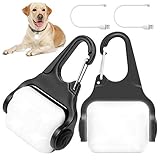
- 【3 Lighting Modes for Dog Leash Lights】2 brightness modes, which can be used when the dog is walking and playing at night; One red emergency Warning Flashing mode, which can be used for climbing, running, camping, Or where there are more people and cars
- 【USB-C Rechargeable & Lightweight】When fully charged, the battery life of this led dog collar light can last up to 20 hours. It can last for 5-8 hours in high brightness, 13-15 hours in medium brightness, and 18-20 hours in flashing mode.There is no potential applied to a dog's neck by the 0.03 lb dog light
- 【IP65 Waterproofing & Shatter-Proof】Under the protection of the IP65 Waterproofing, no matter rain, snow or sand dust, the dog light can not be affected in any way.Shatter-proof plastic is more durable than ordinary materials
- 【Bright Enough & 360°Rotation Angle】3W LED power supply and 360°rotation angle is necessary for dog safety. The dog collar lights for nighttime hung on their collars, creating enough vision for you, not only for you to see where you are stepping, but also for others to pay more attention to them,avoiding your dog being hit, stolen and lost
- 【What Will You Get?】2 Packs USB-C cable,2 Packs dog lights for night walking
What information must stay consistent?
Accuracy matters more than volume. Use one master note containing the dog’s name, physical description, last confirmed location and time, contact numbers, microchip details and the wording for a sighting report.
- Update every poster, social post and database entry when a detail changes.
- Label sightings as confirmed, unconfirmed or disproved instead of presenting rumors as facts.
- Do not publish sensitive information that could help someone falsely claim the dog; ask callers to describe a distinctive detail or provide a photo.
- Keep your phone charged, allow unknown callers and check voicemail and message requests frequently.
The ASPCA’s central principle is broad, coordinated reach: get the word out to as many people in as many places as possible. Consistency prevents that reach from producing contradictory directions.
What should I do if someone claims to have my dog?
Request a current photo, exact location, time and identifying details before arranging a meeting. Do not send money or disclose private information simply because a caller knows the dog’s name.
Meet only in a safe, public place when the dog is already secured, or involve animal control or law enforcement if the caller’s behavior is threatening or the ownership is disputed. Bring vaccination, license, adoption or veterinary records that establish ownership, and keep the dog’s microchip information available for verification.
How long should I keep searching?
Continue for weeks or months if necessary. The first day is the period for rapid escalation, not a deadline after which recovery is unlikely.
Maintain a repeatable schedule
- Recheck shelters and online listings every day at first, then maintain a schedule that you can sustain.
- Refresh neighborhood posts when there is a genuine new fact, sighting or search area; avoid creating multiple conflicting posts.
- Revisit the last-seen area at different times of day and after weather or activity changes.
- Ask veterinary clinics, groomers, delivery workers, park users and sanitation staff to watch for the dog.
Expand without losing focus
Use confirmed sightings to determine where to widen the search. Keep the original posters and core neighborhood contacts active while adding adjacent communities, regional shelters and rescue networks. The NACA–PetHub Return-to-Home Joint National Survey (2022–23), summarized in a 2023 PetHub flyer hosted by Albuquerque Animal Welfare, describes a staged return-to-home approach that combines physical searching, local and regional shelters, social media, neighborhood apps, identification, posters and microchips.
Also popular on Amazon

- 【SUPER BRIGHT & LONG BEAM】Banral high lumens rechargeable flashlight is equipped with Upgraded Long Beam LED Chip, the light will be more concentrated and farther than normal LED flashlight. Ideal for dog walks, hunting, caving, patrol rides, camping, hiking, search and rescue, outdoor adventures and emergencies.
- 【MAGNETIC FLASHLIGHT WITH SIDELIGHT】The tail of the high lumens LED flashlight is built-in strong magnetic base, can be adsorbed on metal surfaces at will, freeing your hands. COB sidelights provide you with large-area lighting at night. TIPS: Double-click the power button to enter the COB side light mode.
- 【TACTICAL FLASHLIGHT & POWER BANK】Super bright led tactical flashlight shell is made of aircraft-grade aluminum alloy with excellent hardness, wear resistance, drop resistance water-resistant and an anti-slip finish. Rechargeable flashlight can be used as an emergency power bank to charge your phone and other devices.
- 【TYPE-C FAST CHARGING & LONG LASTING USE】Built-in TYPE-C charging port (included cable), fully charged in just 4 HOURS with any USB port. Powerful flash light is equipped with 5000ɱAɦ ba-tt-ery. After our test, last for up to 12 HOURS at low mode. It has 4 blue power indicator (100% -75% -50% -25%), you can know the power status at any time.
- 【8 LIGHT MODES & ZOOMABLE FOCUS】This rechargeable magnetic flashlights has 8 light modes: High/Low/Strobe/SOS/COB High /COB Low/COB Red Light/COB Red Light SOS. Push/pull the light head to adjust the focus, camping flashlight can Change between large-area floodlight or long beam spotlight. TIPS: Handheld flashlight can be directly turn off at any mode via long press the power button 3s.
No comparable first-24-hour recovery percentage is established by the cited authorities, so a specific success rate would be misleading. What can be acted on is the sequence: search close, recruit help, report broadly, verify sightings and keep following leads.
What supplies make the search safer and more effective?
Gather practical equipment without treating any item as a guarantee of recovery.
Quick wins for a faster PC:
Repair Windows errors before they cause bigger problemsFix Now →Fix the driver behind crashes, sound loss and screen glitchesFind Drivers →- Leash or slip lead, high-value treats and familiar bedding.
- Bright flashlight with spare batteries or a charged rechargeable model for dark searches.
- Phone charger, paper and weather-resistant pens for logs and signs.
- Current collar, license and ID tags, plus the microchip registry information.
- Printed flyers or poster paper and protective sleeves where weather requires them.
- Reflective clothing, water and basic first-aid supplies for people searching after dark.
Keep a current photo on every searcher’s phone. A clear image is more useful than relying on a breed name, especially for mixed-breed dogs or animals whose coat looks different in poor light.
What mistakes can make a lost-dog search harder?
- Waiting to see whether the dog returns. Albuquerque Animal Welfare says to act fast rather than lose days hoping for a return.
- Searching only from a vehicle. A close, on-foot inspection can find a silent or trapped dog that drivers miss.
- Shouting or chasing. An anxious dog may run farther; use a calm voice and give it space.
- Posting inconsistent details. Different locations, phone numbers or photos make witnesses unsure which notice is current.
- Relying only on online listings. In-person shelter checks matter because photos and descriptions can fail to identify your dog.
- Ignoring local rules. Signage permissions, shelter hours and database coverage differ by jurisdiction.
- Approaching an unsafe dog. Keep people back and call trained animal-control or emergency personnel when needed.
What is the first-24-hour checklist?
- Confirm the last time, place and direction, then search the home, yard and immediate perimeter.
- Check hiding and trapped locations, including garages, sheds, basements, vehicles and dense landscaping.
- Ask neighbors to inspect enclosed spaces and provide the same photo and facts.
- Call shelters, animal control, veterinary hospitals, emergency clinics and rescue groups.
- Update the microchip registry, license, collar and ID-tag information.
- Create one readable flyer with a recent photo, precise description, last-seen details and two phone numbers.
- Post permitted signs and the identical message to neighborhood groups, apps and lost-pet databases.
- Search in a documented grid, log sightings and avoid chasing a fearful dog.
- Repeat the search at dusk and night with a flashlight and safe partners.
- Check shelters online and in person daily, verify sightings and continue beyond 24 hours.
Frequently Asked Questions
Should I leave food or clothing outside for a lost dog?
A familiar blanket or bedding and high-value treats can provide recognizable scent or motivation during a controlled search. Place them where they will not create a traffic hazard or attract wildlife, and monitor the location rather than assuming the dog will return there.
Should I offer a reward on a lost-dog flyer?
A reward is optional and is not required by the guidance cited here. If you offer one, state only what you can honor, avoid publishing sensitive ownership details, and never send money to a caller before the dog’s identity and location are verified.
How can I tell whether a sighting is credible?
A useful report includes an exact location, time, direction, photo or video when safely obtained, and details such as collar color or markings. Compare those facts with your master description and label the report confirmed, unconfirmed or disproved in your log.
What’s actually slowing this PC down?
Pick the symptom - the matching free tool is one click away.
What if my dog is microchipped but the registry cannot reach me?
Update the registry’s phone, email and address immediately and ask the registry to confirm the change. Also update the license, collar and ID tag, because a chip helps only when a shelter or clinic scans it and the associated contact record is current.





Leave a Reply