Do these 3 things before closing this tab:
1Scan for outdated or missing drivers - takes under a minute2Repair Windows errors before they cause bigger problems3Fix the driver behind crashes, sound loss and screen glitchesTo keep snakes out without sealing an aviary, cover every opening they could use with securely fastened mesh, including vents, door edges, roof transitions, corners, and service penetrations. Choose the mesh opening with the smallest locally relevant snake in mind, and make sure its material and finish are safe for the birds. Keep ventilation openings open behind the mesh; do not replace them with solid panels. There is no universal mesh size or airflow figure that guarantees both snake exclusion and adequate ventilation for every aviary.
How a snake barrier can preserve ventilation
Snake-proofing and ventilation are not competing goals if the barrier is planned as a continuous mesh layer rather than as a solid seal. Mesh can close an access route while leaving the opening available for air movement. The important distinction is between covering a vent with mesh and blocking it with a panel, stored material, or an obstructed screen.
As an Amazon Associate I earn from qualifying purchases.
That does not mean every mesh will pass enough air for every enclosure. The guidance available does not quantify the airflow reduction caused by finer mesh, nor does it establish a mesh opening that suits every snake, bird species, and aviary design. If ventilation is designed around a specific airflow rate or the birds have particular temperature or humidity needs, a qualified aviary professional should assess the retrofit on site.
The practical goal is a continuous barrier around the enclosure’s accessible openings, with the existing ventilation paths still functioning and the chosen materials suitable for the birds and local weather. Treat exclusion and ventilation as two requirements to check separately: the mesh must close the route, and the opening behind it must remain usable for air movement.
#1 Best Overall

- Premium Quality Materials: Crafted from high-quality annealed steel wire and pure zinc, this mesh hardware cloth is lightweight, flexible, and built to last. It is securely packed and shipped in a durable cardboard box to ensure it arrives in perfect condition
- Superior Finish for Long-Lasting Protection: Hot-dipped galvanized, our wire mesh fence offers exceptional corrosion and rust resistance. Even after years of use, your hardware mesh will retain its appearance, providing long-term durability and protection against the elements
- Enhanced Welding Strength: With an increased weld area for added strength, our welded joints are designed to be firm, sturdy, and resistant to breakage. This ensures that the wire mesh roll is easy to unfold and remains secure for years of use
- Smooth, Flat Mesh Surface: Manufactured with state-of-the-art equipment, the wire cloth is crafted with precision to ensure a flat, even surface. This results in a clean, attractive finish for any project, providing both functional and decorative value
- Versatile & Easy to Customize: The hardware cloth fencing can be easily cut to fit a wide range of projects. Perfect for chicken coop covers, animal enclosures, garden fences, raised garden beds, tree guards, wall decorations, and more. Customize it to meet your specific needs for both indoor and outdoor applications
Find the routes a snake could use
Before selecting mesh, inspect the whole enclosure from ground level to roof. A barrier that covers only the large wall panels can still fail at a door gap, a corner, or a service opening. Think of the enclosure as one connected boundary: each seam and transition needs to meet the next without leaving an accessible gap.
- Wall-to-roof transitions: Check the full perimeter where wall mesh meets roof mesh or framing, especially corners and changes in roof height.
- Doors and access panels: Examine the edge where the door closes against its frame, the hinge side, and the threshold. Confirm the mesh remains continuous when the door is shut.
- Ventilation openings: Identify every vent and airflow opening that needs to remain in service. Plan a mesh cover that does not leave an unprotected edge around the opening.
- Service penetrations: Look around pipes, cables, feeders, and any other object passing through the enclosure boundary. Close the space around the penetration rather than assuming the surrounding wall mesh is sufficient.
- Existing damage: Note torn mesh, loose fasteners, corrosion, and framing that is no longer sound enough to hold an attachment.
Make an opening-by-opening plan rather than ordering mesh based only on the enclosure’s square footage. For each opening, note where the new barrier will attach, where it will join adjacent mesh or framing, and whether it is also part of the ventilation path. This helps expose small junctions that can be overlooked when attention is focused on the broad panels.
Local snake species matter. If you cannot tell which snakes are likely to reach the aviary, ask local wildlife authorities or an experienced enclosure builder. For venomous snakes or uncertain identification, do not rely on a general mesh example as a guarantee of safety.
Free tools Windows power users keep installed
One-click scans. No signup required.
Choose mesh by local snake size, birds, and conditions
The mesh opening is central to exclusion: if a snake can pass through it, stronger framing or more fasteners will not make that section an effective barrier. Start with the smallest locally relevant snake, then consider whether the mesh strength, material, finish, and attachment method are compatible with the birds and the enclosure.
| Published example | What it applies to | How to use it |
|---|---|---|
| 1/4-inch hardware cloth | The Government of Ontario gives this as a general hardware-cloth fence example for reptile and amphibian exclusion. Publication year is not stated in the material reviewed. | Use it as a context-specific reference, not as a universal aviary specification. Confirm it excludes the smallest relevant local snake. |
| 1/8-inch mesh | The Government of Ontario says this may be more effective for excluding small snakes. Publication year is not stated in the material reviewed. | Consider the smaller opening where small snakes are a concern, while separately checking whether the mesh and the enclosure’s ventilation needs are suitable. |
| No larger than 1 × 0.5 inches (2.54 × 1.27 cm) | The Global Federation of Animal Sanctuaries’ bird-of-prey sanctuary standards recommend this for snake control in outdoor enclosures when needed. The publication year is not established in the material reviewed. | This is a recommendation for that standard’s context, not a substitute for assessing local snake size or an all-bird aviary design. |
These examples address different contexts and are not interchangeable guarantees. The Queensland Department of the Environment, Tourism, Science and Innovation advises bird owners to use mesh small enough to stop snakes entering, but does not specify one universal opening. In practice, match the opening to local risk rather than selecting a familiar measurement without checking what it can exclude.
Opening size is only one part of the decision. Mesh must also withstand the birds and likely exposure, attach securely to the frame, and have a finish safe for birds that may contact or chew it. A tighter mesh should not be assumed to preserve a particular air-exchange rate: no cited guidance supplies an airflow test or calculation for finer mesh added to an aviary.
Rank #2

- Galvanized After Welding: Hot-dip galvanized after welding coats every welded joint, so the heavy duty mesh resists rust and breakage far longer than pre-galvanized wire in rain, soil, and sun.Thicker wire builds a sturdier fence that resists bending and animal push-through
- Product Size & Coverage: The roll is 48 inch wide by 100 foot long, and 1/4 inch×1/4 inch mesh opening, enough to cover a small run, a few beds, or one coop, cut to length for any project. Measure your project need first so you order the right length and avoid mid-job gaps
- Easy to Cut & DIY: Smooth welded edges reduce scratches while cutting and installing. And works well with fence posts, zip ties, and landscape staples for quick, tool-light setup. Installing it is a breeze, making it a convenient choice for DIY enthusiasts
- Multipurpose Garden & Coop Mesh: This hardware cloth is designed to build garden fences, poultry netting, and backyard animal barriers that keep rabbits, snakes, and gophers away from your plants and coops.Ideal for gardens, raised beds, chicken coops, and farms during spring planting and summer fencing
- Made for Home Gardeners & Chicken Keepers: Perfect for DIY homeowners, poultry raisers, and landscapers. Whether you're preventing small animals from accessing your garden or reinforcing fences for added security, this metal mesh is a reliable solution that will give you peace of mind
When comparing options, keep the questions distinct. First ask whether the opening is small enough for the relevant snakes. Then consider the mesh’s strength and gauge for the birds and likely predators, its corrosion resistance in local weather, the safety of its finish if birds chew it, and whether it can be attached securely to the existing frame. Finally, consider how it fits each ventilation opening. A mesh that appears suitable on one criterion should not be treated as having passed the others automatically.
Quick wins for a faster PC:
Fix the driver behind crashes, sound loss and screen glitchesFind Drivers →Repair Windows errors before they cause bigger problemsFix Now →Scan for outdated or missing drivers - takes under a minuteDriver Scan →The figures above are useful starting points for a conversation with a local wildlife authority or enclosure builder, not a shopping shortcut. Ontario’s 1/4-inch and 1/8-inch examples concern exclusion fencing; the Global Federation of Animal Sanctuaries figure is part of bird-of-prey sanctuary guidance for outdoor enclosures when snake control is needed. The Queensland guidance addresses aviary and poultry-pen hygiene and exclusion but sets no measurement. Keep those scopes attached to the figures when deciding what to use.
Select a bird-safe, weather-suitable material
Outdoor mesh has to function in the local climate and in close contact with the animals. The Global Federation of Animal Sanctuaries identifies stainless steel as a corrosion- and weather-resistant aviary option. That makes it a material to consider where weather exposure is important, but it does not remove the need to check the wire, finish, gauge, and installation against the birds and enclosure.
Finish deserves special attention when birds chew metal. GOV.UK cautions that newly galvanized mesh can pose a heavy-metal poisoning risk, particularly for parrots that chew metal. Do not assume that a coating is safe simply because the mesh is sold for outdoor use. Confirm suitability for the particular bird species and avoid sharp projections or edges that could injure birds.
- Check corrosion resistance for the aviary’s weather exposure.
- Confirm that the mesh and finish are appropriate for the housed species, especially birds that chew metal.
- Choose a mesh and attachment approach that the frame can securely support.
- Inspect cut ends and junctions so no sharp edge or projection is exposed inside the enclosure.
Material choice is therefore a comparison, not a simple ranking. Stainless steel is specifically identified as weather- and corrosion-resistant, while Ontario’s example identifies hardware cloth as an exclusion material and gives fastening guidance for it. Neither description alone answers whether a particular product’s opening, gauge, finish, and fasteners are right for a specific bird and site. Check the actual product and its suitability rather than relying only on a generic material name.
Plan for the attachment system at the same time as the mesh. Screws and metal stripping are one fastening approach Ontario describes for hardware cloth. Whatever system is chosen must hold the mesh taut against sound framing and maintain secure contact along edges and joins. Fasteners do not compensate for mesh that is too widely spaced for the local snake risk or for a frame that cannot hold them.
Rank #3

- Premium Heavy-Duty Construction: Crafted from high-quality low-carbon steel wire with hot-dip galvanized coating applied after welding for maximum durability. Our 1/4" 23-gauge hardware cloth (12" x 35ft roll) offers exceptional strength while remaining flexible enough for easy installation. Resists breaking, bending, and warping for long-lasting performance
- Superior Weather & Corrosion Resistance: Features waterproof, rust-proof construction that withstands harsh environments including rain, snow, and saline conditions. The smooth galvanized surface prevents corrosion while maintaining an attractive appearance year after year. Ideal for both indoor and outdoor applications
- Ultimate Garden Protection System: Effectively safeguards vegetables, flower roots, bulbs and rhizomes from burrowing pests; Creates protective barriers for garden beds, fruit trees and orchards; Can be shaped into individual plant baskets or used to line raised garden beds; Doubles as effective rodent protection for your harvest
- Versatile Animal Enclosure Solution: Perfect for creating secure chicken coops and poultry runs, rabbit hutches and pet enclosures, snake and rodent-proof fencing, wildlife rehabilitation cages, gutter guards and eave protection
- Easy-to-Use & Multi-Functional: Simple to cut and customize for any project; Works as soil screens, balcony barriers, and craft materials; Maintains structural integrity without fading or deforming; Attractive enough for decorative applications while being fully functional; Suitable for both professional and DIY use in gardens, farms, and homes
Install a continuous barrier while keeping vents open
- Mark the full boundary. Trace where mesh must meet the frame, including wall seams, corners, roof transitions, doors, ventilation openings, and service penetrations. Decide how each junction will close before cutting or fastening material.
- Fit mesh across openings, not solidly over them. Keep vents and other necessary air paths open behind the barrier. Do not add a solid cover or allow the new mesh, its supports, or nearby objects to obstruct the opening.
- Attach the mesh taut to sound framing. The Government of Ontario advises pulling hardware cloth taut and fastening it with screws and metal stripping. Apply the same continuous-attachment principle to seams and edges; use fastening hardware compatible with the frame and selected mesh.
- Close junctions as carefully as the main panels. Secure meeting edges at corners and roof-to-wall transitions, and fit around penetrations so a gap does not remain beside the mesh. Verify that door edges meet the barrier when closed.
- Check the completed enclosure from both sides. Follow the perimeter by sight and touch, looking for unfastened edges, tears, loose sections, sharp ends, and openings around hardware or services. Confirm each ventilation opening still has an unobstructed path for air.
- Assess ventilation where design requirements apply. GOV.UK says ventilation should be appropriate to the species and should not harm temperature or humidity. Victoria’s rehabilitator guidance calls for fresh air while avoiding drafts, odors, and condensation. If the aviary relies on designed or species-specific ventilation, have airflow assessed for the actual enclosure and mesh retrofit rather than assuming a particular mesh opening is adequate.
The sequence matters: map the boundary first, choose the mesh and attachment approach second, then fit and inspect the whole route. Starting with a convenient roll of mesh and covering only the most visible section can leave transitions or penetrations untreated. Likewise, completing the barrier without revisiting vents can leave the enclosure secure at the expense of necessary airflow.
At each vent, verify two separate things: the mesh closes the edges of the opening, and the vent itself remains open and unobstructed. The sources do not give an airflow formula for a particular mesh opening, so visual continuity is not proof of species-appropriate ventilation. Where temperature, humidity, or airflow requirements are specific, the assessment needs to account for the actual aviary and retrofit.
For a large retrofit, deteriorated framing, or an enclosure with specialized ventilation, involve a qualified aviary professional. A secure attachment is only as dependable as the structure holding it.
Crashes, No Sound, or Screen Glitches?
Random freezes, missing sound and display glitches usually trace back to one bad driver. Find and replace yours safely.Free scan · under a minutePC Slower Than It Used to Be?
A free scan shows the junk files, broken settings and background clutter dragging Windows down - then fixes them in one click.Free scan · Windows 10 & 11Reduce the food and shelter that attract rodents
Mesh is the physical barrier; housekeeping reduces a separate source of pressure around the aviary. Queensland’s environment department advises keeping aviaries clean and hygienic and discouraging rats and mice. Keep feed and the surrounding area clean, and address conditions that attract rodents rather than treating mesh as the only part of snake prevention.
This maintenance does not replace closing access gaps. It complements the barrier by reducing rodent attractants around the enclosure, while the mesh and its attachments handle the physical entry routes. Do not treat rodent control as a reason to accept an unprotected opening: housekeeping and exclusion address different parts of the problem.
Inspect and repair the barrier regularly
Outdoor barriers can change with use and weather. GOV.UK says housing should be inspected often for damage and potential escape points, with damaged housing repaired or replaced immediately. Apply that practice to the mesh barrier: a gap that develops after installation is still an entry route.
Rank #4
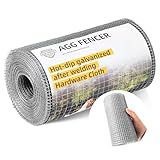
- Product details: The length of this hardware cloth is 8 inches/ 20.32cm, the width is 25ft/ 7.62m, and the hole size is 1/4 x 1/4inch. It is very suitable for repairing damaged chicken coops, gaps under houses and other small-sized damaged holes
- Check for tears, bent or pulled mesh, corrosion, and loose or missing fasteners.
- Recheck door edges, roof transitions, corners, vents, and service openings after repairs or changes to the enclosure.
- Repair or replace damaged sections promptly, restoring a continuous attachment rather than covering only the visible hole.
- After maintenance, confirm that vents remain open and the airflow paths have not been obstructed.
Inspection should follow the full barrier, not just the section that was most recently repaired. A tear may be obvious, while a fastener pulling away from framing or a seam opening at a corner can be easier to miss. Look again at junctions where materials meet and where mesh is interrupted by doors, services, or ventilation openings. If housing is damaged, GOV.UK’s advice is to repair or replace it immediately.
Common mistakes to avoid
- Choosing a mesh size by rule of thumb: The published measurements have different scopes; none is established as right for every snake and aviary.
- Sealing a vent with a solid panel: That closes the air path instead of screening it. Keep required openings functioning behind mesh.
- Securing the broad panels but ignoring edges: A loose seam, threshold, corner, or penetration can undermine an otherwise well-covered enclosure.
- Assuming finer mesh guarantees adequate ventilation: The cited guidance does not quantify airflow through different mesh openings. Get a site-specific assessment where ventilation is designed or species-specific.
- Ignoring bird contact with the material: Check finishes for the housed species, particularly parrots that chew metal, and remove sharp projections.
- Leaving damage for a later repair: A tear or loose attachment can reopen access. Inspect often and repair or replace damaged housing promptly.
- Treating a mesh label as a complete specification: Opening size does not settle questions about gauge, corrosion, finish, attachment, or airflow. Evaluate each against the aviary’s conditions.
- Assuming all published measurements mean the same thing: The Ontario fencing examples and the bird-of-prey sanctuary recommendation come from different contexts. Use them with their stated scope.
When to seek local or professional advice
Consult local wildlife authorities or a qualified aviary professional when the smallest likely snake is unclear, venomous snakes are a concern, the enclosure has specialized ventilation, or the frame and mesh materials are difficult to assess. Local species, weather, bird behavior, and applicable rules vary. The examples above are decision aids, not a certification that a particular retrofit is snake-proof or that it preserves required airflow.
Local advice is particularly useful when the available mesh examples do not clearly fit the snakes in your area, or when a bird’s housing requirements make ventilation a critical design question. Ask for an assessment of the actual enclosure, including its vents, attachment points, bird species, and likely snake access routes. Do not infer a guaranteed result from a single mesh measurement.
Frequently Asked Questions
What mesh size should I use to keep snakes out of an outdoor aviary?
There is no universal size in the cited guidance. The Government of Ontario gives 1/4-inch hardware cloth as an exclusion-fence example and says 1/8-inch mesh may be more effective for small snakes. The Global Federation of Animal Sanctuaries recommends mesh no larger than 1 × 0.5 inches for snake control in outdoor bird-of-prey enclosures when needed. These examples have different scopes; choose based on the smallest locally relevant snake and seek local advice if uncertain.
Can I cover an aviary vent with mesh and still ventilate it?
Mesh can screen an opening without closing it with a solid panel, but the cited guidance does not quantify airflow through different mesh sizes. Keep necessary vents open and unobstructed. If ventilation is designed around the birds’ species, temperature, or humidity needs, have the actual retrofit assessed.
Recommended Free Tools
Is stainless steel mesh suitable for an outdoor aviary?
The Global Federation of Animal Sanctuaries identifies stainless steel as a corrosion- and weather-resistant aviary option. Still check the mesh opening, gauge, finish, frame attachment, and suitability for the birds. Material choice alone does not establish that the barrier is appropriate for every enclosure.
Best Value
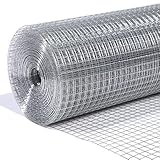
- ⭐【FEATURES 1】Quarter inch hardware cloth is made of black annealed steel wire material, solid welding and effective protection. Carton packaging and shipping.
- ⭐【FEATURES 2】The hardware cloth roll is manufactured by environmentally friendly methods by global uniform standards. It can work underground for many years, you don’t need to replace it every year.
- ⭐【APPLICATIONS】The Welded mesh is 1/4 inch square openings, 48 inch by 100 foot, suitable for gopher guard, snake fence, chicken coop cover, critter netting, welded cage wire, wire fence, garden mesh, rabbit wire fence, rodent wire, rodent mesh,chicken wire mesh, etc.
- ⭐【FAMOUS】1 Please pay attention to the length and mesh, Otherwise it will waste your time and money. 2 We are a well-known global brand of metal wire mesh, LAN JIA WIRE MESH providing high-quality products to more than 5 million+ individuals and businesses worldwide.
- ⭐【Customer Service】We provide quality products, and also provide 7x24 hours service, enjoy your ideal product now.
Is galvanized mesh safe for parrots?
GOV.UK cautions that newly galvanized mesh can pose a heavy-metal poisoning risk, particularly for parrots that chew metal. Confirm the finish is suitable for the bird species and avoid sharp edges or projections.
What matters besides mesh opening size?
Compare strength and gauge, corrosion resistance, finish safety if birds chew the mesh, compatibility with the frame and fasteners, and the needs of ventilation openings. A small opening does not by itself guarantee secure installation or adequate airflow.
How should mesh be attached to an aviary?
The Government of Ontario advises pulling hardware cloth taut and fastening it with screws and metal stripping. Apply the continuous-attachment principle at seams, corners, door edges, roof transitions, and service openings, using an approach suitable for the mesh and sound framing.
How often should I inspect the snake barrier?
GOV.UK advises inspecting housing often for damage and potential escape points, and repairing or replacing damaged housing immediately. Check the entire mesh boundary for tears, corrosion, loose fasteners, and gaps, including around vents and doors.
The Bottom Line
Use continuous, securely fastened mesh to close every snake access route while keeping ventilation openings open behind it. Choose the opening for the smallest locally relevant snake, check material and finish safety for the birds, and do not assume finer mesh preserves adequate airflow. Keep the aviary clean, discourage rodents, and repair damage promptly; seek local or professional advice when snake risk or ventilation needs are uncertain.
Quick Recap
Product prices and availability are accurate as of the date/time indicated and are subject to change. Any price and availability information displayed on Amazon at the time of purchase will apply.




