
Do these 3 things before closing this tab:
1Fix the driver behind crashes, sound loss and screen glitches2Repair Windows errors before they cause bigger problems3Scan for outdated or missing drivers - takes under a minuteSome links on this page are affiliate links: if you buy through them we may earn a commission, at no extra cost to you.
You can socialize a friendly dog without letting the dog greet every person or rehearse jumping. Socialization means safe, positive exposure to people, animals, places, sounds and handling while your dog can still relax. Teach one predictable alternative—four paws on the floor, a sit or a station on a mat—ask people before allowing contact, and reward the alternative before excitement turns into a leap.
Start with familiar helpers in a quiet setting. Manage access with a leash, baby gate or separate room, add only one difficulty at a time, and calmly remove attention when paws leave the floor. The goal is not a dog that says hello to everyone; it is a dog that can notice people, stay composed and choose whether to approach.
As an Amazon Associate I earn from qualifying purchases.
What’s actually slowing this PC down?
Pick the symptom - the matching free tool is one click away.
What does socializing a friendly dog actually mean?
Socialization is the process of giving a dog safe, controlled exposure to people, animals, environments, sounds and handling so those experiences become ordinary rather than alarming. A socialized dog is not required to interact with every passerby. Neutral observation, calmly walking past, or checking in with you are all successful social experiences.
Consent is part of the skill. Ask a person before allowing a greeting, and keep the leash as loose as safety allows. If your dog looks worried or overexcited, increase distance instead of insisting on contact. American Humane advises watching for tucked tails, flattened ears, excessive panting, intense staring and stiffness; those signs mean your dog needs more space and an easier version of the exercise.
Popular on Amazon

- FREEZE DRIED RAW BEEF LIVER DOG TREATS – BITE SIZED FOR TRAINING, 2.1 OZ BAG: High protein dog treats made with beef liver. Perfect as high value dog training treats, puppy training treats, and everyday rewards
- IRRESISTIBLE AROMA AND FLAVOR DOGS LOVE: Freeze dried raw dog treats preserve the natural scent, and taste dogs crave, helping keep dogs engaged and making every reward more exciting
- SINGLE INGREDIENT DOG TREATS: Made with 100% beef liver and no fillers, preservatives, artificial flavors or colors – delivering clean, meat-first nutrition in every bite
- USA MADE WITH U.S. AND GLOBALLY SOURCED INGREDIENTS: Made with high-quality animal protein from trusted suppliers. Freeze dried dog treats you can trust from a brand committed to minimally processed raw nutrition
- SHELF STABLE AND EASY TO STORE: Freeze-dried dog treats are easy to take on the go, store in your pantry, and use anytime without refrigeration—perfect for at home or on the move
Friendly dogs can still become nuisance greeters when jumping, pulling or barking repeatedly results in attention. The solution is not to suppress friendliness. It is to make calm behavior the reliable way to gain access to people and to prevent the dog from practicing the behavior you do not want.
Which greeting behavior should my dog learn instead of jumping?
Choose one rule that every household member and visitor can follow. The three practical options below are all valid; the best choice depends on your dog’s arousal level, the setting and how much distance you need at the door.
The Tool Desk
Outbyte PC Repair FREERepair Windows errors before they cause bigger problemsFix Now →Outbyte Driver Updater FREEFix the driver behind crashes, sound loss and screen glitchesFind Drivers →| Replacement behavior | Why it works | Best starting situation | Teaching note |
|---|---|---|---|
| Four paws on the floor | It is easy to capture while the dog is moving and gives highly excited dogs a simple target. | Approaches in a room, hallway or outdoor area where the dog can remain in motion. | Mark the instant all paws are down and feed low near the floor. |
| Sit | A sit is incompatible with jumping and is easy for visitors to recognize. | Calmer approaches after the dog can already reach a person without launching upward. | Ask for the sit only after the approach is controlled; do not repeat the cue while the dog is bouncing. |
| Mat or station | It creates the most distance from the entry and gives arrivals a clear place to wait. | Doorbells, knocks and visitors who make the dog especially excited. | It requires extra practice, so build the station behavior before using it during busy arrivals. |
There is no universally best greeting behavior. Four paws down is often the easiest first target for a very enthusiastic dog; a sit is highly recognizable once approach skills exist; and a mat is useful when you need a physical buffer at the door.
How do I teach calm greetings step by step?
Training works best when management and reinforcement begin before the dog jumps. The sequence below follows a simple contingency: calm behavior makes the person available, while jumping makes attention pause.
- Set the rule and prevent rehearsal. Decide whether your dog will stand with four paws down, sit or go to a mat. Put on a leash, close a baby gate or arrange a separate room before the greeting starts. Prevention matters because every successful jump can strengthen the habit.
- Reward early. Have high-value treats ready in your hand or a treat pouch. Mark the chosen behavior as soon as it appears and deliver the food before the dog has a chance to jump. Feeding low on the floor helps keep the dog’s weight and paws down.
- Begin with familiar helpers. Ask a family member or calm friend to work in a quiet room. Reward a check-in with you, a calm approach and the selected greeting behavior. Keep the first repetitions easy enough that the dog can succeed without being physically restrained.
- Change one variable at a time. When the dog is succeeding, make only one element harder: increase excitement, move to a new location, lengthen the greeting or add a distraction. If the dog starts jumping, the change was too large; return to the last successful version.
- Make jumping unrewarding. If paws leave the floor, the person should turn away, step back or move behind the barrier. Do not talk, touch, push, grab or knee the dog. Those actions still provide attention and can raise arousal or create fear.
- Re-engage immediately when calm returns. The instant the dog has four paws down or resumes the station, the person can turn back and the dog can receive a treat. This makes the consequence clear without punishment.
- Generalize the rule. Practice with different people, in different locations and with doorbells or knocks. Everyone who greets the dog must use the same contingency; one person allowing jumping can keep the old habit alive.
VCA Animal Hospitals summarizes the principle this way: “It is always best to systematically teach your dog how to do the desired behavior than to try to thwart the undesired one.”
How should I handle visitors at the door?
Arrivals combine a trigger, movement and social access, so prepare before opening the door. Keep a leash, treats and a barrier by the entry. If a mat is your chosen greeting, cue it before the knock or bell rather than after the dog is already rushing.
Also popular on Amazon

- ALL NATURAL: Single ingredient dog treat with no preservatives or artificial flavors. These beef dog treats are not only healthy dog treats but also grain free dog treats.
- NUTRITIONAL: Our high-protein, low-calorie beef lung dog treats make them lean treats & a great alternative to beef liver dog treats & lamb lung dog treats.
- RESPONSIBLY SOURCED: From locally grass fed free range cattle born and raised in the USA - no questionable sourcing means they make high value dog training treats.
- PREVENTS PLAQUE & TARTAR BUILDUP: Our natural dog chews clean your puppies teeth, making them functional dog treats for large dogs and puppies alike.
- MISSION: To make treating your K9 healthier
Before the visitor enters
- Clip on the leash or place the dog behind a baby gate or in a separate room.
- Tell the visitor the rule: wait for four paws down, a sit or a release from the mat, and ignore jumping.
- Open the door only when the dog is below the level of excitement at which learning stops.
As the visitor approaches
Have the visitor drop treats on the floor as the dog approaches instead of presenting a hand over the dog’s head. Low food delivery supports paws-down behavior and gives the dog a job that does not involve climbing onto a person. Reward check-ins with you as well as the formal greeting behavior.
If excitement spikes
Guide the dog back behind the barrier with an enrichment item and let the visitor settle. Try again later at a greater distance or with less movement. A short pause is more productive than repeatedly exposing the dog to a level of excitement that produces jumping.
How can my dog socialize in public without greeting everyone?
Public socialization can be observation rather than interaction. Walk where you can create space, reward your dog for looking at a person and then checking back with you, and continue moving if the person has not consented to a greeting. A loose leash is a useful indicator that the dog can process the environment; a tight leash and forward lunging mean you should increase distance.
Use a simple consent routine: ask the person, explain the greeting rule, and allow contact only if your dog remains composed. The person should stand still, avoid exciting gestures and follow your cue to pause. If your dog becomes tense, pants excessively, stares intensely or tries to withdraw, end the interaction and give the dog room.
Outdated Drivers Are Slowing You Down
One free scan finds every outdated or missing driver and matches the right update for your exact hardware.Free scan · exact hardware matchPC Slower Than It Used to Be?
A free scan shows the junk files, broken settings and background clutter dragging Windows down - then fixes them in one click.Free scan · Windows 10 & 11A friendly dog does not need to say hello to every stranger. Skipping a greeting protects the dog’s ability to relax and prevents strangers from becoming a reward for pulling or jumping.
How do I introduce my dog to another dog safely?
Use a neutral location and two handlers rather than bringing unfamiliar dogs directly into a home or narrow doorway. The objective is a series of brief, voluntary interactions with frequent opportunities to move apart.
Also popular on Amazon

- Lots of flavor, not fillers: Just three simple, all-natural ingredients mean low calories and high nutritional value, making a tasty but healthy treat that your pup will actually love
- Ready for training, wherever you are: The best training is consistent training. Our small treats are lightweight and perfectly sized for quick rewards so they are ready to go whenever there is a training opportunity
- Mess free treats: No oily, greasy, crumbly messes here, Pupford treats keep your hands and pouches clean. You can even keep some in your pocket for walks, classes, or mini adventures without worrying about them getting grimy or stale
- Motivate even the pickiest of pups: A wide range of flavors makes it easy to find the perfect fit for your pup’s tastes
- Pupford Promise: We strive to always provide simple, high-quality, healthy pup essentials. If you or your pup aren't happy with a purchase, let us know so we can help find the right fit!
- Start with the handlers walking the dogs in a curve, far enough apart that both can notice each other without staring or pulling.
- When body language remains loose, allow a brief sniff.
- Call the dogs apart, reward each dog and provide space.
- Repeat short greetings only while posture remains relaxed. End the session before either dog becomes overwhelmed.
Increase distance and stop the interaction if you see stiffness, prolonged staring, raised hackles, teeth-baring, a stiff-legged gait or deep growls. These warning postures are not moments to force a friendly outcome. Separate calmly and seek professional guidance if safe management is difficult.
What body language tells me my dog needs a break?
Watch the whole dog, not just a wagging tail. A dog can wag while tense or conflicted. American Humane identifies tucked tails, flattened ears, excessive panting, intense staring and stiffness as signs that distance may be needed. During dog introductions, Winnipeg Humane Society also lists raised hackles, teeth-baring, deep growls, a stiff-legged gait and prolonged staring as warning postures.
- Relaxed: the dog can take food, move fluidly and look away from the person or dog.
- Overexcited: the dog cannot keep paws down, repeatedly surges forward or ignores familiar cues. Increase distance and lower the challenge.
- Fearful or defensive: the dog withdraws, stiffens, stares or shows the warning signs above. Stop the greeting and create space.
Do not wait for a growl before intervening. Early distance is safer and keeps socialization within the dog’s ability to learn.
When should puppy socialization begin?
The American Veterinary Society of Animal Behavior says the first three months of life are the primary and most important period for puppy socialization. Safe exposure should continue beyond puppyhood to help maintain an outgoing, sociable dog. Each exposure should be positive and controlled; it should not produce excessive fear, withdrawal or avoidance.
AVSAB states that puppy classes can begin as early as 7–8 weeks when the puppy has received at least one vaccine set at least seven days before class and has had a first deworming. Your veterinarian can help interpret those requirements for local disease risks and your puppy’s health. A class should teach calm interaction and handler skills, not pressure puppies into unrestricted greetings.
What if my dog is already an adult?
Adult dogs can learn the same replacement greetings. Start at a level where the dog can remain relaxed, use familiar helpers and build gradually. A history of jumping does not establish a universal training timeline, so measure progress by the dog’s ability to recover and choose the calm behavior rather than by a promised number of repetitions.
Also popular on Amazon
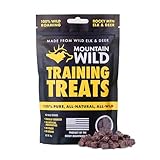
- Wild-Sourced Protein: Our treats are made from all-wild roaming elk and deer protein, sustainably harvested from the Rocky Mountains, offering your dog a unique and premium nutritional experience Wild-Sourced Protein: Our treats are made from all-wild roaming elk and deer protein, sustainably harvested from the Rocky Mountains, offering your dog a unique and premium nutritional experience
- Ideal for Training: With a wild protein source that dogs instinctively crave, these training treats are recognized as an extremely high-value reward, boosting your dog’s attention, focus and motivation
- Pure & Natural: Embrace the wilderness with dog training treats that are all-natural and all-wild, meeting your dog's ancestral dietary needs and cravings for a healthy and active lifestyle
- Eco-Conscious Choice: With every purchase, you support the full utilization of precious wildlife resources along with wildlife conservation and anti-poaching efforts to help maintain strong wildlife populations
- Clean Recipe: Free from nasty fillers, artificial preservatives, and grains, our treats ensure your dog enjoys the healthiest reward. Perfect for dogs of all sizes and puppies too
What should I do in common jumping situations?
Someone reaches for my dog without asking
Step between the person and your dog, keep the leash short enough for safety without jerking, and say that your dog is training. Move away and reward your dog for following you. You are not required to allow contact.
My dog jumps only on children
Use a gate or leash so the dog cannot rehearse the behavior, and have children remain still while an adult delivers treats on the floor. Do not ask a child to push the dog away or hold the leash. Practice with one calm child at a time and stop if either the child or dog becomes distressed.
The dog jumps when I return home
Prepare treats before entering, keep greetings quiet and reward four paws down or a mat station. If jumping starts, turn away or step behind a barrier without speaking. Reconnect as soon as the dog settles.
My dog jumps after a successful greeting
End access before arousal climbs. Call the dog away for treats and space, then offer another brief greeting only if the dog can return calmly. Short repetitions prevent the dog from practicing the final, frantic part of the interaction.
Recommended Free Tools
A visitor ignores the rule
Keep the dog behind the barrier and provide an enrichment item. Consistency is more important than completing that particular greeting; invite the person to participate only when they can follow the plan.
Independent reader supportYour contribution helps us test, update, and keep practical guides available for everyone.Which equipment supports this training?
Equipment manages access; reinforcement teaches the behavior. Keep the setup simple and ready before a trigger appears.
Also popular on Amazon

- BIG MOTIVATION IN EACH MINI BITE. Each of these 3 calorie treats are packed with flavor from pork liver, real bacon, and added botanicals that will keep dogs focused and eager to learn!
- TRAIN. ENRICH. TREAT. These low calorie training rewards are great for training sessions, enrichment activities such as puzzle toys and snuffle mats, and every day treating occasions.
- GREAT FOR DOGS OF ALL SIZES. These bite-sized treats are the perfect size for training and every day treating for dogs of all sizes. Each 20 oz bag includes approximately 500 treats.
- REWARD THE EVERYDAY Pet Botanics healthy training rewards are perfect for training and treating every day in every way. These soft & chewy treats have no artificial flavors, colors or preservatives.
- PROUD MEMBER THE CLOUD STAR FAMILY. With Cloud Star products, you can spend less time worrying about what to feed your pet and spend more time Living Life with Your Dog by Your Side.
- Leash: provides controlled movement during arrivals and public practice without dragging the dog toward people.
- Baby gate or separate room: creates distance while visitors enter or while the dog decompresses.
- High-value treats and a treat pouch: allow immediate payment for check-ins, calm approaches, sits and disengagements.
- Clicker or verbal marker: identifies the exact moment the chosen behavior occurs if you use one consistently.
- Mat and enrichment toy: support a station behavior and give the dog an appropriate activity during a pause.
These tools should not be used to pin, punish or force the dog into contact. Their purpose is to prevent rehearsal and make calm choices possible.
When should I contact a professional?
Arrange help from a qualified reward-based trainer or veterinary behavior professional if the dog shows aggression, persistent fear, unsafe arousal or behavior that the household cannot manage safely around visitors. The Humane Society of Utah specifically advises professional help for aggression, and AVSAB recommends veterinary guidance for fearful puppies.
Quick wins for a faster PC:
Repair Windows errors before they cause bigger problemsFix Now →Scan for outdated or missing drivers - takes under a minuteDriver Scan →Bring a written description of triggers, distances, body-language changes and what happened immediately before and after each incident. A professional can adjust management, identify medical or emotional contributors and build a systematic plan. Do not rely on punishment, physical corrections or forced greetings while waiting for an appointment.
How do I know the training is working?
Look for functional changes: your dog notices a person and can look back to you, takes food, keeps four paws down for longer, recovers quickly after excitement and can disengage when called. Success may first appear only with familiar helpers or at a distance. Expand locations, people and distractions one variable at a time, and return to an easier setup whenever the dog stops coping.
There is no evidence-based universal number of repetitions or guaranteed cure time for jumping. Individual temperament, learning history, health and the consistency of every greeter affect the pace. Keep sessions short enough that the dog can finish calm, and record which situations are improving so you can choose the next manageable challenge.
Frequently Asked Questions
Can a friendly dog be socialized without meeting other dogs?
Yes. Calmly observing dogs from a safe distance, walking near them without contact and checking in with you are meaningful social experiences. Direct greetings are optional and should happen only when both dogs and handlers can remain relaxed.
Should strangers give my dog treats during walks?
Only if you have invited the interaction and the dog can stay composed. Ask the person to drop food on the floor rather than lure the dog upward, and end the exchange if your dog starts pulling, jumping or avoiding the person.
Is it safe to use a leash correction to stop jumping?
A leash is useful for preventing access, but jerking or punishing can increase arousal or fear. Quietly create distance, wait for the replacement behavior and reinforce it instead.
Why does my dog jump again after weeks of improvement?
A new location, person, duration or level of excitement can exceed the dog’s current skill. Return to the last successful setup, change only one variable and rebuild gradually rather than assuming the training has failed.





Leave a Reply