
Recommended Free Tools
Some links on this page are affiliate links: if you buy through them we may earn a commission, at no extra cost to you.
Move the fragile object first, then give your cat a safer way to run, climb, scratch, chase and forage. Knocking items from shelves during a burst of activity is usually normal investigation, play and predatory behavior—not revenge or deliberate misbehavior. The reliable approach is to cat-proof the launch area, provide a stable vertical route, schedule short chase-and-catch games, add food puzzles, and reward the alternatives. Avoid yelling or physical punishment: it can create fear and often suppresses the behavior only while you are present.
This plan protects your home immediately while addressing the energy and hunting needs that make objects so tempting. If the behavior starts suddenly, escalates sharply, causes injury, or appears with pain, appetite or litter-box changes, arrange a veterinary assessment.
As an Amazon Associate I earn from qualifying purchases.
Why do cats knock things over when they get the zoomies?
Zoomies are short periods of intense running, pouncing and play. A cat may bat a pen, push a vase, or sweep a small object from a shelf because moving it provides investigation, tactile feedback and a miniature version of prey play. Cornell Feline Health Center and VCA Animal Hospitals describe this kind of object interaction as commonly normal behavior, especially when a cat has unused energy or too few outlets for climbing, scratching, chasing and foraging.
The action can also be self-reinforcing: the object moves, makes a sound and gives the cat an immediate response. That does not mean the cat is plotting to annoy you. Treat the behavior as information about the environment and the cat’s activity needs, while checking for medical changes if the pattern is new or extreme.
Popular on Amazon

- 2 Perches, 2 Caves: This cat tree boasts two luxurious top perches and two spacious cat caves, providing multiple comfy spots for cats to unwind and observe from—perfect for multi-cat households
- Multi-Level Cat Playground: Designed with multiple levels, this cat tower makes it easy for cats to climb and explore the vertical space, satisfying their natural instincts and activity needs
- Easy to Assemble: Thanks to the universal screws and simple structure, it takes only the included Allen hex key and one person to set up this cat condo
- 2 Pompoms, Double the Fun: 2 hanging pompoms with bells encourage your little hunters to stretch, bat, and swat for endless entertainment
- Sturdy and Secure: Supported by a strong structure and secured with an anti-tip kit, this cat tree is strong and safe for up to 5 cats (max. 11 lb each) to climb and play with peace of mind
What the behavior does not mean
- It is not reliable evidence of spite, revenge or a moral failing.
- Yelling may interrupt a single incident, but it does not teach a safer behavior and may make the cat wary of you.
- A cat tree or toy is not a guarantee that every object will remain untouched; management and reinforcement still matter.
What should I do first to prevent damage?
Start with environmental management. Prevention is the fastest way to stop a falling object from injuring a cat or breaking on the floor, and it gives training a chance to work without repeated rehearsals of the unwanted behavior.
- Clear the launch zone. Remove breakables, unstable décor, medications, small ingestible items and anything with a dangling cord from shelves, tables and the routes the cat uses for takeoff. Anchor or relocate heavy objects so they cannot fall onto the cat during play.
- Block unsafe access. Close a door, use a secure barrier, or rearrange furniture when a shelf cannot be made safe. Do not rely on a lightweight item that a running cat can knock down.
- Create a safe unsupervised area. When you cannot watch the cat, use a cat-proof room containing bedding, a litter box, water and safe toys. VCA recommends this kind of management for preventing access to hazards.
- Check cords and gaps. Conceal or remove electrical cords and inspect behind furniture for spaces where a toy—or the cat—could become trapped.
Keep the safe area predictable rather than using it as a punishment room. The goal is to prevent an accident while the cat is unsupervised, not to frighten or isolate the animal after an incident.
Windows Errors? Fix Them Before They Spread
Repair common Windows errors and clear accumulated junk for a smoother, more stable PC - no reinstall needed.Free scan · no reinstallOutdated Drivers Are Slowing You Down
One free scan finds every outdated or missing driver and matches the right update for your exact hardware.Free scan · exact hardware matchHow do I build a legal climbing and scratching route?
Give the cat a stable route that is more rewarding than the fragile shelf. AAFP guidance considers vertical space highly desirable and recommends cat trees, perches, shelves and sturdy scratching materials.
Place the structure near the problem, but not in it
Put a sturdy cat tree or scratching tower near the route the cat already chooses, leaving enough distance from breakables that a leap or tail sweep cannot reach them. Add a perch where the cat can pause and observe. If the cat prefers looking out a window, orient a secure perch toward that view while keeping blinds cords inaccessible.
Choose stability over height alone
A tall structure is useful only if it does not wobble. Look for a broad base, solid joints and platforms that do not tilt when the cat jumps. Match the post orientation and material to the cat’s existing scratching style: some cats stretch upward on a vertical post, while others prefer a horizontal surface.
Make the route pay off
Place a small food reward on the perch or deliver it immediately after the cat steps onto the structure. You can also start a toy chase that ends on the platform. Reward calm climbing, scratching and resting there before the cat heads toward a breakable object.
Do these 3 things before closing this tab:
1Scan for outdated or missing drivers - takes under a minute2Clear out junk files and repair common Windows errors3Fix the driver behind crashes, sound loss and screen glitchesAlso popular on Amazon

- ENLARGED HAMMOCK - This cat tree is Equipped with a sturdy and spacious square hammock, this large cat tree tower offers a comfortable resting spot for your adult cat. The hammock design allows large cats to lie down, providing a relaxing space for napping and rejuvenation
- SPACIOUS AND COMFORTABLE CAT CONDO - This cat tower provides a spacious cat condo that allows cats to rest, hide, or play comfortably inside. The cat cave is a safe, private space that meets cats' needs
- SISAL ROPE SCRATCHING POST - The cat tower with 4 scratching posts and a scratching board is meticulously lined with durable natural sisal. The rough texture of sisal provides an ideal surface for your feline friends to scratch
- ENLARGED REMOVABLE TOP PERCH - Up to 70 inches tall cat tree includes the enlarged top platform is detachable for easy cleaning and maintenance. Offers a spacious resting and observation area for cats
- DUAL CLIMBING PATHS FOR VARIED ACTIVITY PLEASURES - This cat climbing tower features two upward climbing routes, integrating activity and rest to meet cats' various needs and enhance enjoyment
| Outlet | What it provides | Selection and safety checks |
|---|---|---|
| Cat tree or vertical scratching tower | Height, climbing, scratching and a resting perch | Wide stable base, secure joints, suitable post material and enough escape or perch levels |
| Interactive wand or rod toy | Short prey-like chase, pounce and capture sessions | Use under supervision; inspect for detachable pieces and loose strings; put it away after play |
| Food puzzle or treat-dispensing toy | Foraging and paw-batting work that slows access to food | Difficulty the cat can solve, easy cleaning and treats counted within the daily calorie plan |
| Safe self-play toys | Independent batting, rolling and exploration | No small detachable parts, accessible cords or heavy pieces that can fall |
How should I schedule play to reduce zoomie collisions?
Use short, regular sessions that imitate hunting: orient, chase, pounce, catch, then eat. AAFP/ISFM guidance recommends allowing the cat to catch the toy, while VCA links under-stimulation and unused energy with rambunctious play.
Run a prey-like wand session
- Choose a wand or rod toy without loose strings or detachable parts.
- Move it away from the cat in quick starts and pauses, as ground prey or a flying target would move. Let the cat stalk, chase and pounce rather than waving the toy directly in the face.
- Allow a real capture at the end. Repeatedly preventing success can make the game frustrating.
- Finish with a small food reward or the cat’s meal. This creates a predictable hunt-catch-eat sequence.
- Store the wand securely after the session so the cat cannot chew or swallow its parts.
Several brief caregiver-initiated sessions are generally easier to sustain than one exhausting session. Adjust timing to the cat’s pattern; if the household sees shelf attacks at night, schedule an interactive session before the usual high-energy period and follow it with food.
Rotate toys to preserve interest
Cats can habituate quickly. Keep only a few safe toys available and rotate the selection so familiar items regain novelty. Inspect every toy when it comes back into use, and discard one with frayed material, a loose eye, exposed wire or another swallowable piece.
Offer self-play without creating new hazards
Rolling toys, sturdy balls and other safe items can support activity between supervised sessions. Keep them away from stairs, appliance gaps and shelves containing breakables. Cornell University College of Veterinary Medicine notes that toys can encourage exercise and cognitive enrichment; safety inspection remains the owner’s responsibility.
How do food puzzles and distributed meals help?
Food puzzles turn part of the cat’s normal feeding into controlled foraging. Put a portion of the daily allowance into a puzzle feeder or toy that releases food when batted, rolled or pawed. Merck Veterinary Manual recommends small portions and food toys to meet hunting and feeding needs, and AAHA also recommends food puzzles and short play sessions.
Set the difficulty for success
Begin with an easy puzzle that releases food quickly. Once the cat reliably uses it, introduce a little more work, but do not make the first attempt so difficult that the cat abandons it and returns to the shelves. Wash the item as directed by its material and inspect openings for trapped food.
Also popular on Amazon
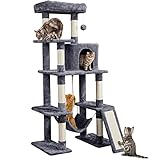
- Room for Every Cat, Every Mood: Five platforms, a 21″×15″ foam-edged perch, a cozy condo (up to 22 lb), and a hammock (up to 18 lb)—for three to four medium or two large cats. Every kitty finds their own sunbathing spot, hideaway, or lookout on this cat tree
- Instinctive Scratching & Play: Respect their nature and your home's safety. This cat-approved cat tree tower has seven sisal scratching posts and a scratching board for daily claw-sharpening. A purposeful zone where wild feline instincts meet home protection
- Stays Grounded Through Every Zoomie: A wide 30.5″×19″ base and an anti-toppling kit with a reinforced washer keep this cat tower firmly planted—even when your cats launch full-speed from the top perch. Trusted stability for large cats and multi-cat households
- More Time Bonding, Less Time Cleaning: Odor-free plush, FSC-certified, CARB P2 board, and natural sisal mean safe snuggles for your cats from day one. With a machine-washable hammock and easy-vacuum surfaces, this easy-to-clean cat tree stays fresh without the fuss
- Effortless Start, Endless Happiness: Illustrated manual, labeled parts, and every tool included—one person can handle it solo. Spend less time setting up this large cat tree and more time watching your cats turn every level into their personal kingdom
Count every reward
Reduce the meal portion if treats are added so rewards remain inside the cat’s calculated daily calorie plan. Food should not become an unlimited distraction, particularly for a cat already gaining weight.
Use puzzles strategically
Offer a puzzle before a predictable zoomie period or while you are occupied. For a cat that eats too quickly, distributing food through several small portions can lengthen the activity without increasing the total daily amount.
What should I do when the cat heads for a fragile object?
Block access quietly, substitute a legal activity, and reinforce it immediately. Merck behavior guidance favors prevention, response substitution and positive reinforcement; punishment can create fear.
- Interrupt without pursuit. Stand between the cat and the object, close the door, or place a safe barrier in the route. Avoid chasing, shouting or grabbing unless there is an immediate danger.
- Offer a clear alternative. Move a wand toy along the floor, toss a safe rolling toy toward the cat tree, or guide the cat to a perch or food puzzle.
- Mark the choice with a reward. Deliver a small food reward or continue the game as soon as the cat engages with the alternative.
- Reset the environment. Once the cat is occupied, remove or secure the tempting object so the same sequence is less likely to repeat.
Reinforce quiet behaviors too. If the cat settles on the perch, scratches the post or watches from a safe platform, reward that choice before the next burst of activity. This teaches what to do, rather than merely trying to suppress what not to do.
How can I make nighttime shelf attacks safer?
Prepare before bedtime instead of reacting after a crash. Remove breakables from the cat’s route, close the problem room, and provide a safe area with bedding, litter, water and approved toys if supervision is not possible.
Schedule a short chase-and-catch session in the evening, let the cat capture the toy, and follow with a small meal or food puzzle. Keep the room’s vertical route available, but ensure every platform is stable and separated from lamps, glass and other heavy objects. A cat that still launches at shelves may need stricter access management while you identify which outlet is most motivating.
Free tools Windows power users keep installed
One-click scans. No signup required.
Also popular on Amazon

- Thoughtful Structure Design: Structure of the cat tree is designed according to the climbing habits of cats. Two jumping platforms not only increase the active space but also help kitties and older cats to climb up and down
- Stability is the Primary Consideration for A Cat Tower: Sturdy cat climbing frame base, sisal wrapped scratch posts and Anti-toppling devices ensures the security of active kittens and cats playing on the activity centre
- Spacious and Removable Top Perch: The well-padded top platform is suitable for kittens. They can lie on the soft place as a bed to sleep, observe and nap
- Comfortable Basket for Cats: Cats naturally like the feeling of being wrapped, which makes them feel safe, therefore a comfortable and strong basket are always necessary
- Interactive Cat Toys Included: The extra cat teaser stick increases the interactive fun of cat and its owner. The toy ball with bell do not make too much noise. It can meet the cats' play needs while not disturbing the owner
Which setup is safest for a cat that knocks objects down?
Choose equipment by stability, supervision needs and fit with the cat’s preferred play style—not by height or novelty alone.
- For climbers: prioritize a broad, non-wobbling base, several secure levels and a perch placed away from fragile décor.
- For vertical scratchers: select a post tall enough for a full stretch with material that does not shed strands the cat can swallow.
- For chasers: use a wand that supports ground and airborne movement, but supervise every session and store it afterward.
- For paw-oriented foragers: use a cleanable puzzle with openings that release food without requiring force that could frustrate the cat.
- For households with multiple cats: provide enough resting and escape levels that one cat cannot block another’s route.
Any item can become a hazard if it tips, splinters or exposes small parts. Check fasteners, cords, seams and edges regularly, especially after an energetic session.
Why should I avoid yelling or physical punishment?
Punishment may stop the cat only while the person is present and can make the cat fearful of hands, movement or the room. It does not show the cat where climbing, scratching or play is allowed. Merck’s stated goal is to reinforce desirable behavior and prevent or ignore undesirable behavior, which is why environmental control and reward-based redirection are safer foundations.
If you feel frustrated, secure the cat in the prepared safe area, remove the hazard and take a short break. Return to the plan when you can redirect calmly. Never throw an object, spray the cat at close range, or use a physical correction.
What’s actually slowing this PC down?
Pick the symptom - the matching free tool is one click away.
When is knocking things over a reason to call a veterinarian?
Arrange an examination when the behavior is a marked change or appears alongside other signs. AAFP behavior guidelines state that diagnosis requires a behavioral history, physical examination and appropriate diagnostic findings; a veterinary behaviorist may be needed when a working diagnosis cannot be made.
- The activity begins suddenly or escalates sharply without an obvious change in routine.
- The cat appears painful, disoriented, unusually restless or unable to settle.
- There are appetite, thirst, vomiting, weight, grooming or litter-box changes.
- The cat injures itself, repeatedly targets dangerous objects, or shows behavior that looks compulsive rather than like ordinary play.
- Environmental changes and enrichment do not reduce the episodes, or you cannot keep the cat safe when alone.
Bring a description of when the episodes occur, what happens immediately beforehand, the cat’s feeding and play schedule, and any video you can safely record from a distance. That history helps the veterinarian distinguish normal high-energy play from pain, illness, anxiety or a compulsive pattern.
Also popular on Amazon

- [Climbing Made Easy] This cat tree boasts a multi-level design with a climbing step on the side, so even elderly cats and cats with mobility issues can climb up and down with ease
- [All-in-One Playground] This cat tree with 1 padded cat perche, 1 cozy caves, 1 fluffy basket, 1 pompoms, and 1 hammock, cats of different characters can all find their fave spot on this multi-level cat villa covered with plush all over—perfect for multi-cat households
- [Protection of Furniture] Cats are active and lively, so the cat furniture house has posts made from natural and durable sisal ropes to let them sharpen their claws. And also, these are substitutes to protect your sofa/bed from their claws
- [Sturdy and Secure] Supported by a strong structure and secured with an anti-tip kit, this cat tower is strong and safe for up to 5 cats to climb and play with peace of mind
- [Easy to Assemble] With a simple structure, step-by-step instructions, and labeled parts, assembling this cat condo is as easy as building blocks
Can catnip help with zoomies?
Catnip is optional enrichment, not a treatment for knocking objects over. Merck Veterinary Manual reports that approximately 50%–75% of cats respond to catnip, so a cat may ignore it completely. If you offer it, use a small amount with a safe toy or scratcher, supervise the first exposures, and stop if the cat becomes overstimulated or agitated.
How do I know whether the plan is working?
Track practical outcomes rather than expecting every zoomie to disappear. Note how often the cat reaches the problem shelf, which outlet attracts the most use, whether objects remain secure, and whether the cat can settle after play and food. If one alternative is ignored, change its location, movement pattern or reward while keeping the environment protected.
Progress means safer choices become easier and damage opportunities become fewer. Continue management even after improvement; removing the barrier too soon can restore the original route before the new habit is established.
Frequently Asked Questions
Can a cat tree replace interactive play?
No. A cat tree supplies height, scratching and resting opportunities, but it does not reproduce the chase-and-catch sequence of a moving toy. Keep both a stable vertical route and short supervised play sessions in the routine.
Should I leave a wand toy out while my cat is alone?
Usually not. Loose strings, detachable pieces and cords can be swallowed or tangled when no one is watching. Reserve wand toys for supervised sessions and leave only inspected, self-play items in the safe area.
What if my cat ignores every food puzzle?
Start with a simple design that releases food with one easy paw movement and use part of a familiar meal rather than an unfamiliar treat. If the cat still shows no interest, rely on other foraging options and discuss appetite or behavior changes with a veterinarian if they are new.
Quick wins for a faster PC:
Repair Windows errors before they cause bigger problemsFix Now →Scan for outdated or missing drivers - takes under a minuteDriver Scan →Is knocking objects down ever an emergency?
The falling object itself can create an emergency if it is heavy, sharp, electrical or poisonous, or if the cat is injured. Secure the area immediately and seek urgent veterinary care for trauma, breathing trouble, suspected poisoning or ingestion of a foreign object.





Leave a Reply