
Some links on this page are affiliate links: if you buy through them we may earn a commission, at no extra cost to you.
To stop nighttime alert barking, first identify what wakes your dog, then remove the trigger and teach a quiet alternative. A pre-bed toilet trip, predictable routine, comfortable sleep area, blocked windows, and sound masking often reduce noise quickly. Training must reinforce calm behavior rather than barking. Because new or suddenly worse barking can signal pain, sensory decline, anxiety, or another illness, arrange a veterinary examination when the change is unexplained or accompanied by other symptoms.
Why does a dog bark at night?
Night is unusually quiet, so a distant car, animal, person, heating system, or plumbing sound can stand out more sharply than it does during the day. Barking may be an appropriate alarm response, but it can also reflect territorial habit, attention-seeking, loneliness, toileting needs, fear, frustration, compulsive behavior, or physical discomfort.
As an Amazon Associate I earn from qualifying purchases.
The sound alone does not reveal the cause. Watch what happens immediately before and during an episode: where the dog looks, whether the body is stiff or crouched, whether pacing occurs, whether the dog is alone, and what ends the barking. ASPCA guidance emphasizes identifying both the cause and the dog’s motivation before choosing a treatment.
Alarm barking
The dog hears or sees something and alerts the household. Scanning, orienting toward a door or window, and brief bursts tied to a recurring sound are common clues. Nighttime quiet can make even normal neighborhood activity seem more important.
Popular on Amazon

- ❤Notice: This sound machine needs to be plugged in for use.
- ❤20 Non-Looping Sleep Sounds: White noise ,Brown noise, pink noise, blue noise, fan,brook, rain, ocean,bird and Bonfire,suitable for for Baby and Kids and Adults.
- ❤Precise Volume & Timer Settings:With 32 Levels of Volume ,it is perfect for baby sleeping .And you can set 1 hour,2 hours,3 hours,4 hours and continuous play,control the comfort level for your own environment.
- ❤Unique Design: Solid-state design with 3.01inch*3.01inch *1.77inch,it is portable for home, office or travel,can give you a perfect sleep.
- ❤Function & Safety:Memory function automatically restores your previous volume, sound and time,it is powered by AC or USB.The machine is approved by FCC, CE and RoHS,don't need to worry about accidents.
Territorial barking
This is linked to the home, yard, car, windows, or a perceived property boundary. A dog that repeatedly watches the street from a window can rehearse the behavior until every passing person or animal becomes a reason to bark.
Attention-seeking barking
If barking has reliably produced talking, eye contact, petting, food, play, or access to a person or room, the dog may repeat it. Scolding can maintain the pattern because it is still attention.
What’s actually slowing this PC down?
Pick the symptom - the matching free tool is one click away.
Loneliness or separation-related distress
Barking is more concerning when it occurs mainly after the dog is separated from family and is accompanied by pacing, panting, drooling, destruction, escape attempts, or elimination. This is an anxiety problem, not a simple obedience failure, and usually needs a gradual independence plan.
Toileting needs
Puppies, older dogs, dogs with urinary or gastrointestinal disease, and dogs that drank late in the evening may genuinely need to go outside. A calm toilet opportunity belongs in the bedtime routine; ignoring a real physical need can create distress and accidents.
Pain, sensory change, cognitive change, or other illness
Sudden barking, a sharp increase in frequency, nighttime confusion, unusual sensitivity to sound, altered gait, reluctance to lie down, increased thirst, or other behavior changes warrant veterinary attention. A dog that cannot hear or see normally may startle more easily, while discomfort can make settling difficult.
Compulsive or frustration barking
Repetitive barking with pacing, fence running, spinning, confinement distress, or blocked access can become self-reinforcing. These cases need a structured behavior plan rather than a louder correction.
Outdated Drivers Are Slowing You Down
One free scan finds every outdated or missing driver and matches the right update for your exact hardware.Free scan · exact hardware matchPC Slower Than It Used to Be?
A free scan shows the junk files, broken settings and background clutter dragging Windows down - then fixes them in one click.Free scan · Windows 10 & 11How can I determine what triggers the barking?
Keep a short log for several nights before changing everything at once. A pattern often appears when the exact time, location, trigger, body language, and consequence are recorded.
Also popular on Amazon

- EFFECTIVELY CANCELS NOISE: Our signature sound has helped millions experience better sleep for generations—including our furry family members. White noise effectively cancels out noises that may disturb or distract your pet.
- 6 SOOTHING SOUNDS: Choose from 6 sound options, including Dohm High, Dohm Low, Gentle Surf, Stream, and two soundtracks specifically designed to reduce dog anxiety—The Time Is Ours and Calm.
- INTEGRATED BARK SENSOR: Built-in bark sensor detects loud sounds and automatically plays your selected music to help calm your pet.
- MANAGE PET ANXIETY: Soothe your dog while you’re away—white noise is great for calming dogs during fireworks, thunderstorms, crate training, traveling, and being home alone.
- VOLUME CONTROL & TIMER: Play continuously or set the sleep timer to 45 minutes, 90 minutes, or 8 hours.
- Write down the time and duration. Note whether barking begins soon after bedtime, at a predictable early-morning hour, or only after a particular outdoor event.
- Record the preceding sight or sound. Include traffic, wildlife, neighbors, delivery activity, household appliances, storms, or a person leaving the room.
- Describe body language. A forward, stiff posture and window-watching suggest alert or territorial behavior; crouching, tail tucking, trembling, lip licking, or escape attempts suggest fear; pacing and panting may indicate distress or discomfort.
- Note whether the dog was alone. Compare episodes when the dog sleeps near family with episodes behind a closed door or in a separate room.
- Record what stopped it. Did the trigger disappear, did someone speak, did the dog go outside, or did access to a person end the episode? That consequence may be reinforcing the behavior.
Do not deliberately expose the dog to a frightening trigger just to collect information. Observe safely from a distance, use a camera if appropriate, and stop if the dog becomes distressed.
What should I do before bedtime?
Management prevents the dog from rehearsing barking while training catches up. Dogs Trust notes that regular bedtimes help dogs settle and feel calm.
Build a predictable wind-down routine
Use the same general sequence each night: calm activity, final toilet trip, water access appropriate to the dog’s veterinary needs, and lights-out in the designated sleeping area. Avoid exciting wrestling, chase games, or intense training immediately before bed.
Provide a quiet, comfortable sleeping place
Choose the quietest practical room and place the bed away from doors, street-facing windows, and household traffic. The bed should support the dog’s body and allow a full stretch. Temperature, drafts, slippery flooring, and joint comfort matter, especially for senior dogs.
Block visual triggers
Close curtains, lower blinds, or apply removable opaque window film where outside movement provokes barking. Restricting access to a lookout point is management, not punishment: it prevents repeated rehearsal of the territorial response.
Mask unpredictable outdoor sounds
A radio, fan, or white-noise machine can make isolated noises less salient. Keep the volume moderate and introduce the sound while the dog is relaxed. Sound masking will not solve pain, separation distress, or a dog that needs to toilet, but it can reduce sound-triggered alerting.
Offer quiet enrichment
When safe for the individual dog, a long-lasting chew or another veterinarian-approved enrichment item can occupy the dog during the settling period. Avoid anything that creates guarding, choking risk, or arousal in that dog.
Free tools Windows power users keep installed
One-click scans. No signup required.
Also popular on Amazon

- 🔹【 Mini Yet Powerful & 40-hour battery life 】This is the most powerful sound machine in its size with 30 soothing sounds, 32 volume levels, rechargeable, auto-off timer, memory function and flexible clip. This mini sound machine is easy to fit in your purse, bag or suitcase, making it easier for your baby and you to sleep undisturbed wherever you are. Sleep sounds for babies on the go.
- 🔹【 Loud Speaker, Effctively Masks Noise】The small white noise machine has the highest volume level on the market in the same size sound machine and it has 32 levels of volume, which can loud enough helps block disruptive environmental noises, help you improve sleep, focus on, office privacy, and meditation, perfer for home, office or travel.
- 🔹【Sleeping Better with 30 Soothing Sounds 】This portable sound machine baby with white noise, brown noise, pink noise, baby hushing sound, lullabies, fan, rain, thunder rain, wave, bird, fire, meditation and so on. It is not only a sleep soother machine for baby and kids, but also an ideal white noise machine for adults which can cover background noises for sleeping, working and relaxing.
- 🔹【 Rechargeable Portable Baby Sleep Aid 】The travel white noise machine with its small size but can be used for up to 40 hours, and it can easily fit in your backpack so that you can soother your baby anywhere. It not only has soft lullabies, but also has the sound of the mother's heart, creating a peaceful sleeping environment for the baby. A best baby sound machine for moms.
- 🔹【 4 Timer and Memory Function 】Continuously play, 30, 60, or 90 minutes, helpful for sleeping well all night or taking a nap. In addition, the memory function will automatically remember the previous setting, no need to reset for next use.
How do I teach a dog to be quiet at night?
Teach the skill during the day, when the dog is calm enough to learn, then transfer it to bedtime. The goal is not total silence; it is a brief alert followed by disengagement and settling.
Capture a pause
When the dog barks at a mild, controllable trigger, wait for the first moment of silence. Mark that pause with a calm word such as “quiet,” then deliver a high-value treat near the dog’s nose or on a mat. Do not shout the cue over continuous barking.
Increase the quiet interval gradually
At first, reward a pause of only a second or two. Over many repetitions, wait slightly longer before rewarding. If barking returns, the interval increased too quickly; make the next repetition easier.
Teach an alternate behavior
A mat, sit, down, or orienting to the handler gives the dog a job that cannot be performed while rushing to the window. Practice the behavior away from triggers, reward it generously, and then use low-intensity sounds or sights while the dog remains able to respond.
Reinforce settling, not just silence
Quietly place treats on the mat when the dog lies down, relaxes its muscles, or looks away from the trigger. Calmly delivered reinforcement helps make the whole settling sequence valuable.
How do desensitization and counter-conditioning help with nighttime sounds?
For fear- or noise-triggered barking, expose the dog to the sound or sight at an intensity low enough that it can remain calm, pair it with excellent rewards, and increase exposure slowly. This combines desensitization with counter-conditioning.
- Choose a controllable version of the trigger, such as a very quiet recording or a distant view through a partially covered window.
- Present it briefly while the dog can still eat, respond to its name, and perform the mat behavior.
- Pair the trigger with food or another valued reward, then end the exposure before the dog escalates.
- Repeat on separate sessions and increase only one difficulty at a time: volume, distance, duration, or visual access.
- If the dog barks, freezes, flees, or stops taking food, reduce the intensity immediately. Continuing at that level can sensitize rather than help.
A qualified behavior professional can design the progression when the trigger is unavoidable, the dog has a bite history, or fear is severe.
Also popular on Amazon
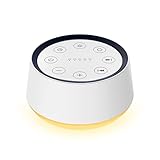
- ❤[Plug In White Noise Machine] This sound machine needs to be plugged in for use.
- ❤[30 Natural and Soothing Sounds] Our white noise machine provides 30 soothing sounds, including 3 Brown noise, 2 White noise(White noise, Pink noise), 2 fan noises( Loud and Soft Fan), 8 lullabies and 15 natural sounds( Rain, Sea waves, Brook, Bird, Train, etc.). This sound machine suitable for relieve stress, relax your mind and create a relaxing sleep environment.
- ❤[12 Night Light Colors] Sound machine with 12 kinds of light color, to suit your personal preferences at any time. You can choose the suitable nightlight to decorate the environment and create the perfect atmosphere for sleep and rest.
- ❤[10 Adjustable Levels Night Light] An adjustable soft lighting creates a comfortable sleeping atmosphere for baby kids and adults. Change your surroundings to create the perfect atmosphere for baby sleep, it is the best choice for night feedings.
- ❤[5 Timer Settings & Memory Function] This sound healing machine can be played continuously or 1,2,3, 4 hours auto-off timer, it is good for taking naps, relaxation, meditation, concentration while studying and working. The white noise machine is powered by AC. Our white noise machine can remember the last sound and volume level you selected when restarted, no need to reset to your previous settings.
Which nighttime intervention fits the problem?
| Likely function | First management step | Training focus | When to seek help |
|---|---|---|---|
| Outdoor sound or sight | Mask sound; block windows; move the bed away from triggers | Quiet cue, mat behavior, gradual exposure below threshold | Fear, escalating reactions, or inability to stay calm |
| Territorial habit | Prevent window or fence watching | Reward disengagement and calm observation | Charging, snapping, or aggression toward people or animals |
| Attention seeking | Stop giving attention immediately after demand barking | Reward quiet requests and settling | Barking becomes extreme or family cannot respond consistently |
| Loneliness or separation distress | Use a safe sleep area near enough to prevent panic; avoid forced isolation | Gradual, humane independence training | Panting, drooling, destruction, escape attempts, or elimination from distress |
| Toileting | Provide a calm final toilet trip | Maintain an age- and health-appropriate schedule | New urgency, accidents, straining, increased thirst, or repeated overnight needs |
| Pain, sensory, cognitive, or other medical issue | Arrange a veterinary examination | Follow the medical and behavior plan prescribed | Promptly for sudden onset, pain, confusion, or rapid worsening |
| Compulsive or frustration behavior | Reduce rehearsal and provide safe enrichment | Structured behavior modification | Repetitive episodes, self-injury, pacing, or confinement distress |
What should I do when barking starts after lights-out?
Respond according to the likely need, not according to frustration. Pause and listen for a genuine toilet or medical problem. If the dog is calm and simply demanding attention, avoid turning the episode into a conversation or play session.
Quick wins for a faster PC:
Repair Windows errors before they cause bigger problemsFix Now →Scan for outdated or missing drivers - takes under a minuteDriver Scan →- Check for immediate safety, pain, entanglement, heat, or a toileting need.
- If a toilet trip is necessary, keep it quiet, brief, and boring: leash on, outside, toilet, then straight back to bed.
- If an outside trigger is responsible, close the visual access, start sound masking, and guide the dog to its mat when it can respond.
- Reward the first calm pause or settled posture. Keep your voice low and movements unhurried.
- Return to the planned routine rather than adding food, play, roaming privileges, or prolonged attention.
Consistency matters. When barking sometimes earns a reward and sometimes does not, the behavior can become more persistent. A temporary increase in barking after rewards are removed is possible; it is a reason to review the plan and obtain help, not to escalate punishment.
Why should I avoid yelling or punishment?
Yelling can add arousal, sound like another person joining the alarm, and accidentally reward a dog that wants attention. Punishing fear-related barking can increase fear and make the trigger more dangerous. The same concern applies to methods that deliberately cause pain or startle.
UC Davis School of Veterinary Medicine states that bark collars are controversial and can cause stress. They should never be used on an anxious or fearful dog. A collar also does not identify whether the dog is in pain, needs to toilet, or is experiencing separation distress; suppressing the sound can leave the underlying problem untreated.
Never force a dog to remain alone in a crate while it is barking excessively, pacing, panting, drooling, trying to escape, or eliminating from distress. Move to a larger safe area and arrange gradual acclimation with professional guidance.
Recommended Free Tools
When does nighttime barking require a veterinarian?
Book a veterinary appointment when barking is new, suddenly worse, unexplained, or paired with physical or behavioral changes. The examination can address pain, urinary or gastrointestinal disease, hearing or vision loss, cognitive change, medication effects, and other conditions that alter sleep.
- Reluctance to lie down, limping, stiffness, vocalizing when touched, or repeated repositioning
- Sudden sound sensitivity, staring, disorientation, getting stuck, or altered sleep-wake patterns
- Increased thirst or urination, straining, diarrhea, vomiting, or nighttime accidents
- Heavy panting, drooling, trembling, escape attempts, destruction, or inability to settle when alone
- Growling, lunging, snapping, or any risk to people or animals
Seek urgent care for severe pain, breathing difficulty, collapse, repeated vomiting, suspected poisoning, or a dog that may injure itself trying to escape.
Also popular on Amazon

- 20 SOUNDS HELP YOUR PET SLEEP BETTER AND REDUCES ANXIETY. 20 built-in, made for pet sounds create a soothing and familiar sound environment for your pet; Perfect for helping pets deal with separation anxiety, new homes, thunderstorms or neighborhood noise.
- DOCTOR DEVELOPED SOUNDS. Sound tracks are doctor composed and chosen with pets in mind leading to greater effectiveness.
- USE AT HOME OR WHILE TRAVELING. Keep plugged in with included USB charging cable or use cord-free with built-in rechargeable battery; 4 - 5 hour run time on one charge; great for helping your pet relax and sleep at home or when traveling to new locations; plays your chosen sound continuously for all night/day use.
- ADD NEW SOUNDS FOR GREATER VARIETY. Add new sounds to your pet sound library by simply changing the micro SD card; use your own sounds or download new sounds from Sound Oasis; or have Sound Oasis create a custom sound card for your pet.
- COMPLETE PET THERAPY SOLUTION. Includes sound machine, 20 built-in sounds, USB charging cable, Help Your Pet Relax & Sleep Booklet, no cost use of Sound Oasis pet therapy APP. Let our 25 years of sleep expertise help your pet achieve a happier and healthier life with better sleep and relaxation; high quality sounds and construction.
When should I hire a qualified behavior professional?
Ask your veterinarian for a referral to a certified applied animal behaviorist, veterinary behaviorist, or qualified trainer who uses humane, reward-based methods when fear, aggression, compulsive behavior, or substantial separation distress is involved. Professional support is also sensible when the household cannot identify a trigger, neighbors are at risk of being disturbed, or several weeks of consistent management produce no meaningful improvement.
Bring the barking log and any safely recorded video to the appointment. Those details help distinguish a sound-triggered alert from anxiety, pain, or a learned attention pattern and make the plan more specific.
What is a realistic goal for nighttime barking?
Dogs naturally communicate vocally, so the realistic objective is fewer unnecessary episodes, shorter alerts, and a reliable return to rest. A dog may still bark once at an unusual sound. Success means the household can meet legitimate needs, prevent predictable triggers, and help the dog settle without fear or coercion.
Frequently Asked Questions
Is it okay to let my dog sleep in my bedroom?
Yes, if the arrangement is safe and does not worsen guarding, allergies, or sleep disruption. Sleeping nearby can reduce distress for some dogs, while others settle better in a separate quiet area; choose the location in which the dog remains relaxed and can rest undisturbed.
How long does it take for nighttime barking training to work?
There is no reliable universal timetable. A simple sound-management change may help immediately, while fear, separation distress, medical problems, and long-rehearsed habits require a slower plan and sometimes veterinary treatment. Track frequency and intensity rather than expecting a guaranteed stop date.
What can I do if neighbors complain about my dog barking at night?
Tell them you are addressing the problem, then prioritize management that prevents rehearsal while you arrange veterinary or behavior help. A written log, camera record, and appointment confirmation can show that you are responding responsibly; do not use harsher devices simply to silence the dog.
Do these 3 things before closing this tab:
1Repair Windows errors before they cause bigger problems2Fix the driver behind crashes, sound loss and screen glitches3Clear out junk files and repair common Windows errorsDo puppies and senior dogs need different nighttime plans?
Yes. Puppies usually need age-appropriate toilet opportunities and gradual sleep training, while seniors may need easier access to the outdoors, joint support, night lighting, or assessment for pain, sensory loss, or cognitive change. A sudden change in an older dog deserves particular medical attention.





Leave a Reply