
Recommended Free Tools
Some links on this page are affiliate links: if you buy through them we may earn a commission, at no extra cost to you.
Store corn and pig feed clean, dry, cool and protected from rain, leaks and condensation. Dry high-moisture corn promptly, cool it to air temperature before filling a bin, keep dry-storage corn below about 14% moisture, aerate bulk grain and check its temperature at least every two weeks. Ground feed spoils faster than intact kernels in hot, humid weather, so keep only a short working supply. If feed heats, cakes, smells fermented or shows mold, separate it from sound feed, stop feeding it and arrange representative laboratory sampling.
Why do corn and pig feed ferment or grow mold in storage?
Fungi need available moisture, warmth and time. Grain that is too wet respires, generating heat and water vapor; warm pockets then develop, and moisture migrates toward cooler surfaces where condensation can occur. Mississippi State University Extension guidance identifies greater fungal risk when relative humidity is above 62%, air temperature is above 80°F (about 27°C), and grain moisture is roughly 14–15% or higher. These conditions interact: a moisture level that is manageable in cool weather can become hazardous when the bin is warm and poorly ventilated.
As an Amazon Associate I earn from qualifying purchases.
Free tools Windows power users keep installed
One-click scans. No signup required.
Fermentation is not the same as ordinary dry-grain spoilage. Dry storage depends on low moisture, cooling, sanitation and airflow. Intentional ensiling depends on controlled oxygen exclusion and a validated silage process. Sealing wet corn casually does not create safe silage; it can trap heat, support undesirable fermentation and increase spoilage risk.
What makes ground feed more vulnerable?
Grinding breaks kernels into particles with much more exposed surface area. That increases contact with humid air and distributes any wet or contaminated material through the ration. Complete swine diets and ground ingredients therefore have a shorter safe holding window than intact, dry kernels, particularly in summer.
Popular on Amazon

- Direct readout for 40 different grain scales
- Test high moisture grain up to 40%
- Illuminated multilingual display - English, Spanish, French, German, Italian, Portuguese, Swedish
- Includes Protective carrying case with shoulder strap
- Single-point or Precision multi-point calibration to match local elevator
What moisture level keeps stored corn safe?
For ordinary dry storage, use below 14% moisture as a practical ceiling for reducing mold risk. Around 13% or lower is a conservative long-term target when storage will be extended or conditions are warm. The exact target depends on temperature, kernel damage, storage duration and whether the corn is whole, ground or intentionally ensiled; no single percentage is safe for every system.
| Material or situation | Moisture guidance | Why it matters |
|---|---|---|
| Dry shelled corn for routine storage | Below 14% is a practical mold-risk ceiling; about 13% can provide additional margin for long storage. | Mississippi State guidance says grain below 14% is unlikely to support toxin-producing fungi. Conditions still must be cool, clean and dry. |
| Corn at 16–30% moisture after harvest | Dry to below 15% within 24 hours. | Mississippi State warns that high-moisture corn rapidly respires, heats and can develop aflatoxin. |
| Cool storage for insect-risk reduction | Below 14.5% moisture and below 18°C (64.4°F). | Canadian Grain Commission guidance pairs the moisture limit with cooling and continued aeration through the grain bulk. |
| Ground feed or complete swine diet in heat and high humidity | No more than 10–14 days of storage. | Mississippi State gives this holding limit for hot, humid conditions because ground material deteriorates faster. |
A moisture percentage is meaningful only when the sample represents the lot. Surface grain can be drier than a wet pocket at the center or bottom, so take portions from several points and combine them according to the meter or laboratory’s sampling instructions. A grain moisture meter is the direct way to verify the target; a handful judged by feel is not.
What’s actually slowing this PC down?
Pick the symptom - the matching free tool is one click away.
How should I prepare a bin, shed or feed room?
Sanitation and water exclusion prevent problems before grain or feed enters the structure. Insects and fungi use old grain, dockage and dust as food, while leaks and floor moisture raise water activity around otherwise dry feed.
- Empty old material completely. Remove residues from the floor, walls, augers, boot pits, aeration ducts, grates, cracks and corners. Canadian Grain Commission guidance specifically identifies debris, dockage and leftover grain as insect food.
- Clean dust before loading. Brush or vacuum ledges and equipment; do not simply cover old residues with new grain.
- Repair water entry. Fix roof and wall leaks, damaged concrete, failed seals and holes around augers or doors. Check for places where rain can blow in.
- Inspect aeration equipment. Clean fan intakes, ducts and floor grates so air can pass through the full grain depth. A blocked duct can leave a warm core even when the fan is running.
- Prepare bagged-feed storage. Use clean bags and place them on pallets or another water-impermeable layer above the floor. FAO/Codex good-practice guidance calls for clean storage and protection from floor moisture; UK feed-storage guidance likewise says regular cleaning is vital to animal health.
- Keep different lots identifiable. Mark harvest date, moisture reading, treatment and intended use so older or marginal material is not accidentally blended into a fresh lot.
How do I dry high-moisture corn without creating a hot spot?
Move high-moisture corn to drying or effective aeration immediately after harvest. Mississippi State Extension advises drying corn at 16–30% moisture to below 15% within 24 hours. In hot conditions, do not leave it in a non-aerated truck, combine or bin for more than four to six hours.
Emergency sequence for wet corn
- Measure first. Collect representative samples and determine moisture before deciding whether the lot can be held temporarily.
- Unload into a functioning drying or aeration system. A full, still container is not a drying plan. Keep air moving while waiting for the dryer or transfer.
- Dry below 15% within 24 hours. Follow the dryer manufacturer’s operating limits for the crop and avoid scorching kernels.
- Verify the result after drying. Re-sample several locations; do not assume the first discharge or the surface represents the whole lot.
- Cool before final binning. Grain should approach outside-air temperature before it is left in storage. Hot grain loaded into a cool bin can drive convection and condensation.
If wet corn has already sat beyond the four-to-six-hour hot-weather window, treat it as higher risk. Look for heating, clumping, sour or fermented odor and discoloration, and obtain a qualified evaluation rather than relying on a visual check.
Also popular on Amazon

- 𝟐𝟐 𝐆𝐑𝐀𝐈𝐍𝐒 𝐒𝐔𝐏𝐏𝐎𝐑𝐓 – The grain moisture meter is specifically designed to measure the moisture content of 22 different grains, including wheat, maize, japonica rice, and soybean. This device ensures high accuracy with its advanced multi-point calibration system, which guarantees reliable results.
- 𝐋𝐎𝐖 𝐏𝐎𝐖𝐄𝐑 𝐂𝐎𝐍𝐒𝐔𝐌𝐏𝐓𝐈𝐎𝐍 – Our seed moisture tester is engineered for long-lasting use, operating on a 9V battery that lasts up to one year. It features an automatic shutdown function to conserve battery life, making it an economical choice for continuous use. Whether testing flaxseed, almonds, or cashews, this tester ensures that users can efficiently manage their resources while obtaining precise moisture readings with minimal power consumption.
- 𝐀𝐔𝐓𝐎𝐌𝐀𝐓𝐈𝐂 𝐓𝐄𝐌𝐏𝐄𝐑𝐀𝐓𝐔𝐑𝐄 𝐂𝐎𝐌𝐏𝐄𝐍𝐒𝐀𝐓𝐈𝐎𝐍 – This moisture meter for seeds comes equipped with automatic temperature compensation, ensuring that readings remain accurate regardless of environmental changes. This feature makes it especially useful in varying weather conditions, providing reliable moisture data for seeds like jute seed, raspberry seed, and red bean.
- 𝐋𝐀𝐑𝐆𝐄 𝐑𝐀𝐍𝐆𝐄 𝐄𝐑𝐑𝐎𝐑 𝐂𝐎𝐑𝐑𝐄𝐂𝐓𝐈𝐎𝐍 – The automatic moisture analyzer is built with large range error correction to deliver highly accurate moisture readings across a broad spectrum of grains and seeds. This feature ensures that even extreme moisture content variations are correctly measured, reducing the possibility of errors.
- 𝐋𝐂𝐃 𝐃𝐈𝐒𝐏𝐋𝐀𝐘 – The MT-22 moisture tester is designed with an easy-to-read LCD display, providing a quick and clear view of the moisture content of grains and seeds such as sorghum, millet, and rapeseed. This straightforward interface allows for fast results, making it ideal for users who need to make rapid decisions. Whether for field or lab use, this moisture tester offers simplicity and efficiency, streamlining moisture measurement processes.
How do I cool and aerate bulk corn?
Do not leave warm grain still in a bin. Aeration removes heat, limits moisture migration and helps prevent a warm center from becoming a mold pocket. The Canadian Grain Commission recommends checking bin temperature every two weeks and aerating or turning grain until the cooling front has moved through the entire bulk.
- Level the grain surface. A level surface gives air a more uniform path and reduces deep pockets that the fan cannot reach.
- Start with suitable outside air. Use conditions that will cool rather than warm the grain, and avoid pushing damp air into a wet lot.
- Run the fan long enough for the front to travel through the bulk. A cool top layer does not prove that the bottom and center are cool.
- Check temperature at multiple points. Record readings at least every two weeks during storage and more often when weather changes, grain was warm at loading or any reading rises.
- Re-aerate as seasons change. Temperature differences between day and night can move moisture inside a bin. Cooling in stages is safer than one brief fan run.
For insect-risk reduction, Canadian guidance recommends bringing grain below 18°C while keeping moisture below 14.5%. Continue aeration until the temperature front has passed through the bulk, not merely until air exits the top.
What if I do not have a fan?
A fan is not mandatory for a small amount of genuinely dry, cool grain, but it is the most reliable way to remove heat from bulk storage. Without aeration, keep the lot smaller and inspect it more frequently; do not place warm or borderline-moist corn into a deep, sealed pile and assume it will cool on its own.
How long can pig feed sit before it spoils?
In hot, humid weather, hold no more than 10–14 days of ground feed or complete swine diet, following Mississippi State Extension’s guidance. Shorter turnover is prudent when feed is warm, the room is humid, bags are damaged or the product contains visibly dusty or wet ingredients.
Use a first-in, first-out routine
- Date every delivery and use the oldest sound lot first.
- Keep only the quantity needed for the working period in the feed room; store reserve feed in a cleaner, cooler location.
- Empty bins and feeders before refilling. Topping up leaves old fines and damp residues underneath new feed.
- Clean and dry the unit before loading it again.
- Keep bags closed until use and protect them from rain, condensation, rodents and floor splash.
Whole dry corn can remain stable much longer than ground feed when moisture, temperature and sanitation are controlled. That does not make indefinite storage safe: damaged kernels, insects, temperature cycling and a leaking bin can shorten the interval sharply.
Also popular on Amazon
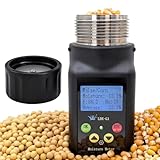
- AGRICULTURAL GRAIN CHECKS: This portable corn moisture tester and grain moisture meter supports on-farm reference checks for farmers, grain handlers, and grain or feed processors
- 25 CROP PROFILES: Select the matching profile for corn, wheat, soybeans, paddy rice, barley, oats, sorghum, and other supported crops before each measurement
- CONSISTENT SAMPLE PREPARATION: Use a representative sample, fill the clean and dry chamber evenly, and tighten the cap securely without overtightening for more consistent readings
- AUTOMATIC TEMPERATURE COMPENSATION: Built-in ATC adjusts the displayed result for sample temperature; for better consistency, let the meter and sample reach similar temperatures before testing
- USER-ADJUSTABLE CORRECTION: When a trusted reference method shows a consistent difference, use the correction setting to adjust the displayed value; the setting remains saved after power-off
Which equipment helps prevent fermentation and mold?
Choose equipment by the failure it prevents: measuring moisture, removing heat, detecting hot spots, excluding water or limiting new fungal growth. No device or additive reverses toxins that formed before treatment.
| Tool or method | Primary task | What to verify before buying or using |
|---|---|---|
| Grain moisture meter | Measures whether corn is near the storage target. | Use representative samples and follow the instrument’s commodity and temperature instructions; a single surface reading is inadequate. |
| Grain-bin temperature sensors or probes | Finds warming and confirms that cooling reached the bulk. | Place or probe at several locations and keep a dated log; Canadian guidance calls for checks at least every two weeks. |
| Grain aeration fan and ducts | Moves a cooling front through bulk grain and reduces moisture migration. | Match airflow to bin depth and commodity, keep ducts and grates clear, and run until the front has passed through. |
| Dryer | Rapidly lowers high-moisture corn after harvest. | For corn at 16–30% moisture, the Mississippi State target is below 15% within 24 hours. |
| Labeled mold inhibitor | Can help prevent additional fungal growth under approved conditions. | Check the product label, permitted species and crop, application rate and local regulations. It does not remove existing mycotoxin. |
| Accredited feed or grain laboratory | Tests suspect material for mycotoxins or other quality problems. | Submit a representative composite sample; contamination can be uneven within a load. |
What should I do if corn or feed is hot, moldy or fermented?
Treat any change in temperature, odor or texture as a stop signal, not as a reason to mix the material into a larger batch.
- Stop feeding the suspect lot. Isolate it from sound feed and mark it clearly so it cannot be used accidentally.
- Check for heat and spread. Probe several locations and inspect adjacent bins, augers, bags and feeders for migration of damp material.
- Do not rely on appearance alone. Visible mold does not prove that toxins are present, and clean-looking grain can still contain them.
- Take a representative sample. Draw portions from multiple locations or increments and submit a composite to a qualified feed or grain laboratory. Uneven contamination makes a single scoop unreliable.
- Decide on feeding, treatment or disposal with professional advice. Follow laboratory findings, species-specific veterinary or nutrition advice and applicable feed regulations.
Fungal inhibitors can stop or slow future growth, but Mississippi State guidance states that they do not affect mycotoxins already produced. Applying an inhibitor is therefore not a way to make moldy feed safe.
Independent reader supportYour contribution helps us test, update, and keep practical guides available for everyone.Can I prevent fermentation by sealing wet corn?
Only an intentional, validated ensiling system should be treated as fermentation storage. Dry-corn storage and ensiling use different controls. Dry storage requires moisture reduction, cooling, sanitation and airflow; ensiling requires controlled oxygen exclusion, appropriate moisture and a process designed for stable lactic fermentation.
The reviewed extension and food-safety guidance does not establish one universal “fermentation-proof” moisture number for every ensiled corn system. If the goal is dry storage, dry the corn and keep it below the dry-storage target rather than sealing it while wet.
Also popular on Amazon

- Professional Grain Moisture Meter: Quickly measure moisture (%), weight (g), density (g/L), and temperature (℃) of 20+ grains. Featuring a 3~35% moisture range, ±0.5% accuracy, and ≤0.2% repeatability, results are precise in just 10 seconds;
- Easy Calibration for Accurate Weighing: Use the 200g weight to quickly verify before each weighing. The simple calibration process guarantees precise, dependable results every time;
- Enhanced Temperature Compensation: This grain tester utilizes advanced variable frequency capacitive technology with automatic thermistor compensation for precise measurements during grain procurement and storage;
- Dual Power Options: Our Grain Moisture Meter can be powered by either 4 AA batteries or via USB plug, providing flexibility for short or long-term use whether you are on the go or need extended measurement sessions;
- Package Contents: 1 Grain Moisture Meter, 1 Portable Aluminum Case, 1 x 200g Calibration Weight, 4 AA Batteries, 1 Power Adapter, 1 Small Brush, 1 Chute Bucket, 1 Sampler;
How should I monitor stored corn and feed through the season?
A written log catches gradual changes that a single inspection misses. Record the following at loading and during storage:
- Lot identity, harvest or delivery date and storage location.
- Moisture readings, including where each sample came from.
- Grain or feed temperature at each monitoring point.
- Fan operation, aeration dates and outside weather conditions.
- Any caking, condensation, insects, leaks, unusual odor or color change.
- Actions taken, such as drying, cooling, segregation, laboratory submission or disposal.
Inspect after major rain, sudden temperature changes, power interruptions and any period when a fan or dryer was unavailable. A rising temperature trend is more informative than one normal reading because heating often starts in a small pocket.
What storage setup fits the material I have?
| Your material and conditions | Priority controls | Holding approach |
|---|---|---|
| Whole corn, verified below 14%, cool and clean | Level bin, functioning aeration, temperature log and leak prevention. | Can be held longer than ground feed, with inspection continuing through storage. |
| Whole corn above 15% after harvest | Immediate drying and temporary airflow; avoid a non-aerated container. | Dry below 15% within 24 hours; hot-weather delay beyond four to six hours raises risk. |
| Ground corn or complete swine diet in summer | Small inventory, FIFO, dry pallets or bins and frequent odor and temperature checks. | Limit storage to 10–14 days in heat and high humidity. |
| Any lot with heating, caking, mold or fermented odor | Segregation, representative sampling and professional disposition. | Do not feed or dilute it while awaiting evaluation. |
What are the most common storage mistakes?
- Loading hot grain and switching off the fan. Heat and moisture then migrate inside the bin.
- Using a surface handful as the moisture test. Averages can hide wet centers and bottoms.
- Leaving wet corn in a truck or combine. In hot conditions, four to six hours without aeration can be enough to start deterioration.
- Filling over old residues. Dust, fines and insects in cracks seed the new lot.
- Refilling a feeder without cleaning it. Old damp fines remain underneath and contaminate fresh feed.
- Keeping a month’s supply of ground feed in humid weather. The recommended hot-weather window is 10–14 days, not an open-ended shelf life.
- Assuming an inhibitor detoxifies moldy feed. Inhibitors address future fungal growth, not toxins already present.
- Mixing suspect feed into sound feed. Uneven contamination makes dilution unpredictable and can spread the problem.
Frequently Asked Questions
Can I store corn in a sealed plastic tote without aeration?
Only if the corn is genuinely dry, cool and protected from temperature swings, and the quantity is small enough to inspect frequently. A sealed tote cannot remove heat or moisture from a warm or borderline-moist lot; condensation can form when the surrounding temperature changes.
The Tool Desk
Outbyte Driver Updater FREEFix the driver behind crashes, sound loss and screen glitchesFind Drivers →Outbyte PC Repair FREERepair Windows errors before they cause bigger problemsFix Now →Should I mix a moldy batch with clean feed to lower the concentration?
No. Contamination is often uneven, so mixing can distribute a high-toxin pocket through the entire ration without making the result predictable. Keep the lot segregated and obtain a representative laboratory assessment before deciding its disposition.
How do I collect a sample for a mycotoxin laboratory?
Take many small portions from different locations or time points and combine them into one composite sample, using the laboratory’s instructions and clean equipment. A single scoop from the surface may miss a concentrated pocket and give false reassurance.
Is a cool bin enough if the corn moisture is above 14%?
No. Cooling slows biological activity but does not replace drying when moisture is too high for the intended storage period. Measure representative samples and dry high-moisture corn promptly; then cool it before final binning.
What should I do with feed that smells sour but has no visible mold?
Stop feeding it and isolate the lot. A fermented or sour odor can signal heating or undesirable fermentation even when mold is not visible, so check temperatures at several points and seek qualified sampling and advice.





Leave a Reply