
What’s actually slowing this PC down?
Pick the symptom - the matching free tool is one click away.
Some links on this page are affiliate links: if you buy through them we may earn a commission, at no extra cost to you.
Teach children that a dog is a living being with boundaries, not a toy. The practical rule is simple: an adult supervises every interaction, the child asks before touching, the dog is allowed to approach and leave, and any sign of discomfort means “stop and give space.” Children must never hit, kick, pinch, ride, chase, corner, tease, intentionally scare or roughhouse with a dog. Dogs also need protected time while eating, sleeping, hiding, feeling ill, resting in a bed or crate, or caring for puppies. When an adult cannot give full attention, separate the child and dog with a secure door or baby or pet gate. These habits protect children from bites and protect dogs from fear, pain and avoidable cruelty.
Why does teaching kindness to dogs matter?
Children and dogs often share homes, classrooms and public spaces, but they do not communicate in the same way. A child may see a wagging tail or an invitation to play; a dog may be anxious, painful, tired or trying to create distance. Teaching children to notice the whole dog, respect a refusal and call an adult prevents situations from escalating.
As an Amazon Associate I earn from qualifying purchases.
The Centers for Disease Control and Prevention says on its 2026 page that nearly one in five people bitten by a dog requires medical attention. Children are more likely than adults to be bitten, and their injuries tend to be more severe. Prevention therefore depends on adult management as much as on a child’s behavior.
There is no single age at which every child can safely supervise a dog. Development, impulse control, the dog’s temperament and the setting all matter. Children younger than five should be supervised around animals, and younger or less predictable children should have an adult within arm’s reach during contact.
Popular on Amazon

- New communication tool about you and your puppy.
- Pet Dog Training Clickers for Puppy, Cat, Potty, Bird, Horse, Pet, Trainer Training Tools, Behavior Aids
- Just press to mark desired behavior, then reward for faster learning.
- The spring wrist length : 16cm/6.3inches and can strength to 25cm/9.84inches.
- Package include : Black + Blue,each color 1 pcs.
What are the non-negotiable rules for children and dogs?
Post these rules where children can see them and practice them when everyone is calm. They apply to a family dog, a visiting dog and an unfamiliar dog in public.
- Ask before touching. Ask the owner first, then wait for the dog to approach rather than reaching toward it.
- Use a gentle, open hand. Stroke briefly on the shoulder or chest; do not grab fur, ears, tail, legs or collar.
- Respect “no.” If the dog turns away, moves off or shows stress, stop and create distance.
- Leave protected activities alone. Never disturb a dog that is eating, sleeping, hiding, sick, frightened, resting in a bed or crate, or caring for puppies.
- No cruelty or frightening games. Hitting, kicking, pinching, riding, chasing, cornering, teasing, intentionally scaring and rough play are not acceptable.
- Never put hands near food or a dog’s mouth. An adult can supervise treat tossing or other activities that keep fingers away from teeth.
- Call an adult when unsure. Children should not try to discipline, restrain or physically correct a dog.
These rules are management tools, not a promise that a dog will always tolerate contact. The adult remains responsible for arranging the environment so the child does not have to make a high-stakes judgment alone.
PC Slower Than It Used to Be?
A free scan shows the junk files, broken settings and background clutter dragging Windows down - then fixes them in one click.Free scan · Windows 10 & 11Crashes, No Sound, or Screen Glitches?
Random freezes, missing sound and display glitches usually trace back to one bad driver. Find and replace yours safely.Free scan · under a minuteHow should an adult model gentle handling?
Children copy what they see. Demonstrate one slow stroke on the dog’s shoulder or chest, then pause and watch what the dog does. If the dog stays loose and chooses to remain nearby, the adult can invite another brief stroke. If the dog moves away or looks worried, say, “That means the dog wants a break,” and end the interaction.
- Invite the child to stand beside you, not over the dog.
- Show an open hand moving slowly toward the shoulder or chest.
- Stroke for a moment, then remove your hand.
- Observe the entire body before deciding whether another touch is appropriate.
- End the contact immediately when the dog moves away, turns the head, licks its lips, yawns, crouches, tucks the tail, flattens the ears, freezes or otherwise appears uncomfortable.
Never force a child to hug, kiss, ride, chase, corner or pose with a dog for a photograph. A child who is excited, tired, angry or unable to follow the routine should observe from behind a barrier instead of touching.
What is the safest way for a child to greet a dog?
Teach a short permission routine and rehearse it before a child meets a dog. The child should ask the owner, remain calm, let the dog come closer and sniff, then touch briefly only if the dog appears comfortable.
Use this script: “Ask first. Stand still. Let the dog come to you. Let the dog sniff. Touch gently for a moment. Stop if the dog moves away.”
- Ask the owner. A “yes” is not a command for the dog to accept contact; it only permits a cautious greeting.
- Stand still and quiet. Keep arms low, avoid squealing and do not run toward the dog.
- Let the dog choose. Do not reach through or over a fence, lean into a vehicle or follow a dog that retreats.
- Allow sniffing. Keep hands still while the dog gathers information.
- Touch a safe area briefly. If the dog remains relaxed, use a gentle stroke on the shoulder or chest.
- Stop and step back. The child should pause before the dog has to move away and stop completely at the first stress signal.
Children should never approach a loose dog, a dog behind a fence, a dog in a parked car or a dog that is sleeping, eating, hiding, sick, frightened or caring for puppies. When the owner is absent, the answer is no touching.
Also popular on Amazon

- ▼Come in 4 pack button clickers with wrist strap in 4 different colors:Black, Green, Orange, Yellow, each color 1 PCS
- ▼Can be used to train the dog basic obedience, small trick, and correct the bad behavior; Scientific method of training your pet safely and easily.
- ▼Stop barking and dog obdeience. Train your dog quiqly just by simply pressing the clicker and command.
- ▼Well constructed and durable, metal clicker will not rust or break.
- ▼Big button for easy clicking and loud sound. Easy to use in any position.
How can kids tell when a dog wants space?
Teach children to look at the whole body and the situation, not one feature such as a wagging tail. A wag can occur with excitement, conflict or fear and is not universal proof that a dog welcomes contact. The child’s job is not to diagnose aggression; it is to notice concern, stop and call an adult.
| What the child may notice | What to teach the child to do |
|---|---|
| Lip licking or repeated yawning | Stop touching, turn slightly away and call an adult. |
| Looking away, turning the head or trying to move away | Give the dog a clear path and do not follow. |
| Crouching, tucked tail or flattened or held-back ears | Increase distance and let the dog hide or rest undisturbed. |
| Showing the whites of the eyes, freezing or holding the body stiff | Become still and quiet; an adult should separate child and dog. |
| Growling or barking | Do not punish or approach. Move away with an adult and seek professional help if the pattern recurs. |
| Loose body and voluntary approach | Ask permission and keep any touch brief; continue to watch for a change. |
A growl is information that the dog is uncomfortable, not an opportunity for a child to prove bravery. Adults should thank the dog for communicating, create space and investigate what triggered the discomfort rather than scolding the warning.
Which situations require observation, touch, distance or separation?
Use the dog’s familiarity, current state, environment, the child’s developmental ability and the adult’s attention to choose the safest response. The table below gives a practical decision guide.
Free tools Windows power users keep installed
One-click scans. No signup required.
| Situation | Child’s role | Adult action |
|---|---|---|
| Known family dog, relaxed body, adult actively watching | Ask, allow approach, stroke shoulder or chest briefly and pause. | Stay close enough to intervene and end contact at the first stress signal. |
| Known dog eating, sleeping, hiding, sick, frightened, in a crate or bed, or caring for puppies | Observe only from a distance; do not call, touch or take items. | Protect the area and use a door or gate if needed. |
| Unfamiliar dog with an owner present | Ask permission, stand still and let the dog choose; skip contact if uncertain. | Control the greeting and end it before the child becomes excited. |
| Loose or approaching unfamiliar dog | Stand like a statue, stay quiet, avoid direct eye contact and do not run. | Move the child away slowly when safe; do not reach for the dog. |
| Dog behind a fence or in a vehicle | Do not reach through, call, tease or touch. | Keep the child back and leave the dog undisturbed. |
| Adult cannot give full attention | No direct interaction. | Separate with a baby or pet gate, closed door or another secure arrangement. |
How do you stop a child from teasing or hurting a dog?
Stop the behavior immediately, move the child away without yelling at the dog and check whether anyone is injured. Then teach the replacement behavior the child can perform next time.
- Hitting, kicking or pinching: block contact, separate, name the action as harmful and practice gentle hands on a stuffed animal or by tossing a treat away from the dog’s face.
- Riding or climbing: remove the child from the dog and explain that a dog’s spine, joints and body are not playground equipment.
- Chasing, cornering or blocking escape: open a path, call the child away and identify the dog’s bed or quiet zone as off-limits.
- Pulling ears, tail or collar: stop the hand, explain that these body parts are sensitive and redirect to an adult-led game.
- Teasing with food or toys: end the game, put the item away and use a structured activity with clear turns.
- Intentionally scaring the dog: stop noises, costumes or sudden movements and explain that fear is not entertainment.
Do not make the dog “forgive” the child through another forced interaction. A calm separation, a review of the trigger and a safer plan are more useful. If the child repeatedly harms or deliberately frightens animals, involve the child’s pediatrician, school counselor or a qualified mental-health professional while maintaining strict separation from the dog.
Which games are safe and humane?
Adults can lead structured games such as fetch, tug-of-war and hide-and-seek, plus simple cues, trick training and clicker training. Adapt the activity to the individual dog, keep arousal manageable and stop before the dog becomes stressed or overexcited.
Fetch with clear turns
The adult controls the toy, uses a spacious area and ends the game before the dog is frantic. The child can help by standing still, waiting for the adult’s cue and tossing only when invited.
The Tool Desk
Outbyte PC Repair FREERepair Windows errors before they cause bigger problemsFix Now →Outbyte Driver Updater FREEScan for outdated or missing drivers - takes under a minuteDriver Scan →Also popular on Amazon
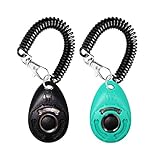
- EASY TO USE - Simple push button with distinct clicking sound.
- Comes with an elastic wrist band so you can leave it on your wrist or clip it to the leash or your pants.
- Not only train the dog but also the cat, bird, chicken, sheep a new behaviors like sit, fetch, roll over, lie down.
- For effective pet training ALWAYS reward with a treat after clicking.
- Can be used to train the dog basic obedience, small trick, and correct the bad behavior; Scientific method of training your pet safely and easily.
Tug with rules
Use a long toy so hands stay away from the dog’s mouth. The adult starts and ends the game, pauses if teeth touch skin or the dog becomes tense and stores the toy afterward.
Treat-tossing and training
A child can toss a treat onto the floor rather than placing fingers near the dog’s teeth. The adult gives the cue, confirms the dog is calm and stops if the dog begins jumping, grabbing or guarding.
Quiet observation games
Children can draw the dog’s relaxed and worried body positions, count calm breaths while the dog rests or practice identifying the route to the dog’s quiet area. These activities teach attention without requiring contact.
How should families create protected rest space?
Give the dog a bed, crate or quiet room that children must not enter. Make the boundary visible and consistent: no petting through the opening, waking the dog, taking bedding or toys, or calling the dog out.
RSPCA NSW recommends separating children and dogs with baby gates whenever an adult cannot give full attention. A gate is not a substitute for supervision during contact; it is a way to prevent contact when supervision is unavailable. Check that the barrier is secure, the dog has water and the child cannot reach through it.
Protect food and water bowls, chews and high-value toys. Feed the dog in a child-free area and teach children to call an adult if a toy or object falls near the dog rather than retrieving it themselves.
What should a child do if an unfamiliar dog runs up?
Practice the response as a drill so the child can remember it under stress: stand still and quiet, avoid direct eye contact, and back away slowly when there is a safe path. Never run, scream, chase or try to pet the dog.
Also popular on Amazon

- ONE MANUAL AUDIBLE CLICK SOUND: Produces one audible click when manually pressed. This clicker does NOT provide multiple selectable sounds, electronic volume controls, batteries, remote functions, or Electronic Stimulation.
- REVIEW PHYSICAL SIZE BEFORE ORDERING: Customer size preferences may vary. Review the current product images and listed dimensions before purchase rather than relying on general descriptions such as small or compact.
- AUDIBLE CUE ONLY – RESPONSE MAY VARY: The clicker provides a manual sound cue and does not automatically give instructions to the animal. Individual dogs and other animals may respond differently. Introduce the sound gradually and discontinue use if fear or discomfort occurs.
- 5-INCH USER-WORN VELCRO STRAP: Includes an approximately 5-inch adjustable Velcro strap designed to position the clicker on the user's finger or hand. Review the strap configuration before purchase. The strap is NOT intended to be worn by the pet.
- TEAL CLICKER ACCESSORY ONLY: Includes one Teal manual finger clicker and training instructions. Remote transmitter, receiver collar, batteries, and other training-system components are NOT included.
- Become a statue. Stand with arms close to the body and feet still.
- Stay quiet. Do not shriek, wave, stare into the dog’s eyes or make sudden gestures.
- Wait for an opening. When safe, turn slightly and back away slowly toward an adult, building or barrier.
- If knocked down, curl up. Tuck into a ball and cover the head, face and neck with the arms.
- Tell an adult. Report what happened, including any scratch, contact or bite, even if the skin looks unbroken.
An adult should seek medical advice for a bite or any wound, follow local reporting requirements and arrange veterinary or behavior assessment when a dog shows repeated threatening behavior.
What responsibilities stay with the adult?
Children can learn safe routines, but adults remain responsible for management. Adults should:
- actively supervise every child-dog interaction rather than relying on a child’s promise to be gentle;
- use doors, crates or gates whenever attention is divided;
- provide reward-based training, appropriate exercise, gradual socialization and routine veterinary care;
- keep dogs leashed and under control in public places;
- teach visitors the same rules before they interact with the dog; and
- arrange veterinary assessment and qualified behavior help for sudden fear, pain, guarding or aggression.
Sudden behavior changes can have a medical cause. Do not ask a child to manage a growling, snapping or painful dog, and do not use punishment that could increase fear. Until a professional evaluates the situation, use physical separation and prevent predictable triggers.
How can schools and classrooms teach humane behavior?
Use short demonstrations, pictures and role-play rather than bringing an unfamiliar dog into a crowded room. Children can practice asking permission, standing still, identifying stress signals and finding an adult. Keep the lesson focused on creating distance, not on labeling a dog “good” or “bad.”
Send the same rules home: no touching a resting or eating dog, no reaching through fences, no chasing and no unsupervised contact. A classroom poster can show the permission routine and the statue-and-curl response, while teachers explain that a wagging tail alone does not prove friendliness.
Should children wash their hands after handling a dog?
Yes. Children should wash their hands after handling a pet, its bedding, food or water dishes, especially before eating. Handwashing is a separate health habit from bite prevention and should be taught even when the dog is familiar and healthy.
Independent reader supportYour contribution helps us test, update, and keep practical guides available for everyone.Frequently asked questions
At what age can a child be left alone with a dog?
There is no universal age cutoff because safety depends on the child’s maturity, the dog’s behavior, the environment and the adult’s ability to respond. The safest policy is to maintain active supervision for young children and to separate child and dog whenever an adult cannot give full attention.
Also popular on Amazon

- Stronger Bark Control with 3X Ultrasonic Emitters: Unlike single-emitter devices, our upgraded dog bark deterrent features three synchronized ultrasonic heads—delivering 3X the coverage to quickly stop barking, biting, and jumping behaviors. Ideal for anti barking training, safer than bark collar, more effective than a dog whistle, offers a humane, high-performance dog training solution
- 6-in-1 Safe & Humane Training Modes:Our dog bark deterrent device features dual ultrasonic frequencies (fixed 25kHz and variable 20-30kHz), combining 4 ultrasonic modes plus an audible beep and LED flashlight for versatile training. Whether for daily training or stubborn, persistent barking, this anti bark device adapts to different dogs providing effective bark control without causing pain or distress. Perfect for training at home or to stop neighbors dog bark that disturbs your peace
- 23 FT Extended Range & Night Safety: Bark Control Anytime, Anywhere: Stop barking and bad behavior from up to 23 feet away with our powerful dog bark deterrent device — perfect for your yard, neighbor’s yard, outdoor walks, and off-leash areas. Whether you're relaxing at home or out for a stroll, enjoy safe, long-distance control to correct disruptions quickly. The built-in LED flashlight adds safety for evening walks, and low-light training
- Fast Charge & Long Battery Life – Always Ready for Training:With a Type-C fast charging port, our dog bark deterrent device reaches a full charge in just 2 hours and provides up to 30 days of regular use on a single charge, along with 180 days of standby time. Whether you're correcting anti barking behavior or training your dog in public places, you’ll always be prepared for any situation. Forget the hassle of frequent charging and enjoy reliable, long-term support
- Ultra-Compact Design for Everyday Convenience:50% smaller than standard dog bark deterrent devices, our anti barking device is ultra-compact and lightweight, fitting effortlessly into your pocket, bag, or hand. Whether you're on daily walks, outdoor adventures, or dealing with unexpected situations in public places, this portable design helps you stop barking and encourage good behavior anywhere, anytime. Say goodbye to constant noise and enjoy a happy experience with your dog
Is a wagging tail a sign that a dog wants to be petted?
Not by itself. Tail movement must be read with posture, ears, eyes, facial tension, movement and context; a dog that wags while freezing, turning away or showing the whites of its eyes may be uncomfortable. Teach children to pause and let the dog choose rather than treating a wag as permission.
Can my child hug our own dog?
Do not make hugging a default greeting, even with a family dog. Many dogs prefer a brief shoulder or chest stroke and the freedom to leave; if the dog moves away, stiffens, licks its lips or turns its head, the child should stop immediately.
Quick wins for a faster PC:
Repair Windows errors before they cause bigger problemsFix Now →Scan for outdated or missing drivers - takes under a minuteDriver Scan →Clear out junk files and repair common Windows errorsFree Scan →What should I do if my child is afraid of a dog?
Give the child distance and control instead of forcing contact. Let the child watch from behind a gate, practice the statue response and speak with a qualified reward-based trainer or a health professional if fear remains intense.
What if the dog growls at my child?
Calmly separate them and do not punish the growl. Prevent the triggering situation, arrange a veterinary check for pain or illness and obtain qualified behavior help before allowing further close interaction.
Frequently Asked Questions
At what age can a child be left alone with a dog?
There is no universal age cutoff because safety depends on the child’s maturity, the dog’s behavior, the environment and the adult’s ability to respond. The safest policy is to maintain active supervision for young children and to separate child and dog whenever an adult cannot give full attention.
Is a wagging tail a sign that a dog wants to be petted?
Not by itself. Tail movement must be read with posture, ears, eyes, facial tension, movement and context; a dog that wags while freezing, turning away or showing the whites of its eyes may be uncomfortable. Teach children to pause and let the dog choose rather than treating a wag as permission.
Do these 3 things before closing this tab:
1Clear out junk files and repair common Windows errors2Fix the driver behind crashes, sound loss and screen glitches3Repair Windows errors before they cause bigger problemsCan my child hug our own dog?
Do not make hugging a default greeting, even with a family dog. Many dogs prefer a brief shoulder or chest stroke and the freedom to leave; if the dog moves away, stiffens, licks its lips or turns its head, the child should stop immediately.
What should I do if my child is afraid of a dog?
Give the child distance and control instead of forcing contact. Let the child watch from behind a gate, practice the statue response and speak with a qualified reward-based trainer or a health professional if fear remains intense.
What if the dog growls at my child?
Calmly separate them and do not punish the growl. Prevent the triggering situation, arrange a veterinary check for pain or illness and obtain qualified behavior help before allowing further close interaction.





Leave a Reply