
Quick wins for a faster PC:
Repair Windows errors before they cause bigger problemsFix Now →Fix the driver behind crashes, sound loss and screen glitchesFind Drivers →Some links on this page are affiliate links: if you buy through them we may earn a commission, at no extra cost to you.
Yes. You can change a cat’s name at any age without confusing them permanently. Cats learn that a particular sound predicts attention, food, play, or another rewarding event; they do not need to understand the name as a human-style identity. Say one replacement name once in a calm, upbeat voice, mark the first orienting response, and reward it immediately. Begin in a quiet room, keep sessions brief and voluntary, and add distance and distractions only after the response is dependable. Keep the new name away from scolding, forced handling, medication, carrier trips, and other stressful events. With consistent use, many cats begin responding to the new sound over repeated short sessions, but no source establishes a universal success rate or a guaranteed timetable.
Can I change my cat’s name?
Yes. Cats Protection states that cats are never too old to learn a new name. A name change is usually a change in sound association, not a psychological identity crisis. This makes renaming especially practical after adoption, when a shelter or previous household used a name your family does not want to keep.
As an Amazon Associate I earn from qualifying purchases.
Your cat may already react to the old sound because it has predicted meals, play, affection, or simply a person turning toward them. You can build the same kind of prediction around a replacement sound. Keep the transition orderly: choose one form, have everyone pronounce it the same way, and reward the behavior you want.
A name change does not change a microchip number. Update the owner contact details with the microchip database and your veterinary practice, and add the preferred name wherever those records provide a name field. Accurate contact information matters if the cat is found, even when the household uses a different nickname at home.
Popular on Amazon

- New communication tool about you and your puppy.
- Pet Dog Training Clickers for Puppy, Cat, Potty, Bird, Horse, Pet, Trainer Training Tools, Behavior Aids
- Just press to mark desired behavior, then reward for faster learning.
- The spring wrist length : 16cm/6.3inches and can strength to 25cm/9.84inches.
- Package include : Black + Blue,each color 1 pcs.
What does a cat actually learn when it learns a name?
Domestic cats can discriminate their names from other words, according to research from the University of Tokyo cited by Zoetis Petcare. The practical interpretation is sound recognition: your cat learns that one particular sequence of sounds predicts something relevant. That is different from a human-like concept of a personal name.
Recognition and coming to you are separate behaviors. A cat may flick an ear, turn the head, look toward you, or orient the body without walking over. PetMD’s veterinary-reviewed guidance notes that these subtle responses count. Train the orienting response first; if you later want the cat to approach, teach a separate recall cue with its own reinforcement history.
Free tools Windows power users keep installed
One-click scans. No signup required.
How should I choose the replacement name?
Use one short, stable cue
Choose a name of one or two syllables when possible. Shorter cues are easier to say clearly and less likely to be swallowed in household conversation. The exact sound matters less than your consistency and the cat’s learning history.
Agree on pronunciation
Write down the chosen pronunciation and tell every household member to use it. Different people can have different accents, but avoid switching between several forms while the association is being built. Rapidly alternating a formal name, multiple nicknames, and baby-talk versions makes it harder to identify which sound predicts the reward.
Pause casual nicknames
Use the replacement name alone during early training. Once the response is reliable, you can introduce one deliberate nickname as a separate cue and reinforce it in the same way. If everyone continues using several informal names from day one, the cat may respond inconsistently simply because the sounds have different histories.
What should I use as a reward?
The best reinforcer is whatever this individual cat values at that moment. A tiny special treat often works, but some cats work harder for a lickable purée, a soft treat, a brief play session, petting, or an invitation to a favorite activity. Verbal praise by itself is less consistent for many cats, so test preferences rather than assuming praise is enough.
Recommended Free Tools
| Reinforcer | When it can help | Watch for |
|---|---|---|
| Tiny food treat | Fast delivery and strong motivation for food-oriented cats | Use very small portions and account for them in the daily diet |
| Lickable purée | Useful when the cat prefers licking to chewing | Deliver immediately; do not let the cat become frustrated waiting for a large portion |
| Soft treat | Easy to break into several training-sized pieces | Choose a cat-safe product and avoid crumbs that delay timing |
| Play | Good for cats that value a wand toy or chase game more than food | Keep the play burst brief so arousal does not become frantic |
| Petting or affection | Appropriate for cats that actively solicit touch | Stop if the cat stiffens, turns away, or shows other stress signals |
A clicker is optional, not essential. A soft spoken marker such as yes can identify the exact moment of the desired response. A clicker may make timing more precise, but it adds another sound to condition and another item to manage. Ordinary cat-safe rewards can work without one.
Also popular on Amazon

- Cat Training Clicker Kit - Includes a finger ring clicker and a retractable target stick with yellow ball, giving you two tools for guiding and interacting with your cat during training or play.
- Finger Ring Clicker for Clear Feedback - The included finger clicker produces a crisp, easy-to-press sound, helping guide your cat during training or interactive play without startling them.
- Eye-Catching Yellow Target Ball - The bright yellow ball at the tip of the target stick catches your cat’s attention and supports guided movement for interactive sessions.
- Retractable Stick for Convenient Use - The stainless steel target stick extends and retracts smoothly, allowing adjustable length for comfort, while keeping the target clicker compact and easy to store or carry.
- Versatile Training Accessory - Suitable for kittens and adult cats, this dual clicker kit can be used for a variety of interactive play or guided training sessions, and can also be used with other small pets.
How do I teach a cat a new name step by step?
1. Prepare a low-distraction session
Train when your cat is calm, awake, and interested rather than asleep, frightened, agitated, or intensely focused on a window, another animal, or food preparation. Start in a quiet room with few competing sounds. Have the reward portioned and within reach before you speak.
2. Say the name once
Sit near the cat and use a clear, pleasant tone. Say the new name one time. Do not chant it, stretch it into a repeated call, or fire it several times when the cat does not immediately react. A single presentation makes it easier to tell what the cat is responding to.
3. Mark the first orienting response
At the first ear movement, head turn, eye contact, or body orientation toward you, mark the instant with a quiet yes or a soft click. Follow the marker immediately with the chosen reward. At this stage, do not wait for the cat to stand up or cross the room; orientation is the behavior you are building.
4. Deliver the reward promptly
Timing matters. The shorter the gap between the response and the reward, the clearer the association. If you are using food, offer a tiny piece at once. If you are using play, begin a short, controlled play burst. If you are using touch, offer only the amount the cat has shown it wants.
5. Repeat a few easy trials
Allow the cat to settle, then present the name again. Run several successful repetitions and end while the cat is still engaged. A short, positive session is more useful than a long drill that ends with wandering, irritation, or stress. The American Animal Hospital Association recommends that feline training remain brief, positive, and voluntary.
6. Practice twice a day as a starting routine
Zoetis suggests practicing a couple of times per day for two to three weeks as a starting routine. Treat that as a practical schedule, not a promise that every cat will learn on that timetable. Some cats orient after a few sessions; others need more repetitions, a better reinforcer, or a quieter setup.
7. Add distance and rooms gradually
When your cat responds reliably beside you, take one small step away. Then practice from a nearby chair, doorway, or adjacent room. The Edmonton Humane Society recommends progressing through the house and only then trying slightly more distracting environments. If the response falls apart, return to the last easy distance and rebuild in smaller increments.
Outdated Drivers Are Slowing You Down
One free scan finds every outdated or missing driver and matches the right update for your exact hardware.Free scan · exact hardware matchWindows Errors? Fix Them Before They Spread
Repair common Windows errors and clear accumulated junk for a smoother, more stable PC - no reinstall needed.Free scan · no reinstallAlso popular on Amazon

- INSIDE THE PACKAGE: Created by a professional animal behaviorist, this complete cat clicker training kit includes everything you need to get started: an all-in-one integrated clicker tool with a 22 inch extendable target stick and a 43-page illustrated training manual with 15 guided lessons to help you confidently train your cat from day one.
- TARGET STICK WITH UPDATED DESIGN: The CAT SCHOOL all-in-one clicker features a new and improved design with a quieter clicker sound and a stronger, more durable construction—perfect for sound-sensitive cats and everyday training use. This versatile tool works as both a target stick and a detachable clicker, giving you flexible training options. Extend the target stick up to 22 inches to easily guide your cat between positions. The large, bright yellow ball tip is easy for cats to see, track, and touch—boosting confidence, accuracy, and calm focus during training.
- QUIET, DETACHABLE CAT-FRIENDLY CLICKER: Designed with your cat’s sensitive ears in mind, this quiet clicker delivers a sound your cat can comfortably learn from. Use it attached to the target stick or slide it off for handheld use. The clicker fits comfortably in your hand and includes a secure finger loop to wear on your finger once removed from the base. Fully mechanical, with no batteries needed.
- IMPROVES CAT BEHAVIOR: Clicker training is a positive, rewarding way to teach skills and encourage good behavior. Regular training sessions help increase activity, reduce boredom and stress, and may curb unwanted behaviors like scratching or biting—while strengthening the bond between you and your cat.
- OUR COMMITMENT TO YOUR SUCCESS: Your cat’s training success matters to us. Every kit is backed by our 1-year replacement guarantee: if any part breaks or stops working, contact us through Amazon and we’ll send a replacement. Your kit also includes access to an online video course, created by an animal behaviorist and trusted by thousands of successful students, so training stays fun and easy for you and your cat.
8. Introduce mild distractions one at a time
Add a low-level competing sound, a second room, or a modest increase in distance, but not all three at once. Reward orientation at the new difficulty. Progress only when the cat is succeeding comfortably; a sudden jump to a noisy room teaches the cat that the cue is difficult to follow.
9. Fade food without removing reinforcement
Once the response is dependable, reduce treats gradually instead of stopping abruptly. Reward some repetitions with food and others with praise, play, affection, or access to a valued activity. Intermittent reinforcement can maintain a learned behavior, but continue to reward often enough that responding remains worthwhile.
How can I prevent the new name from gaining a bad association?
Do not use the replacement name as the prelude to yelling, punishment, forced carrier entry, medication, nail trimming, or another event your cat predictably dislikes. PetMD specifically cautions against pairing a name with stress cues such as the vet, car, or carrier. If the name repeatedly predicts something unpleasant, the cat may avoid orienting to it.
When a cat is fearful, learning ability and the relationship with the person diminish, according to the Feline Veterinary Medical Association. If your cat becomes tense, freezes, hides, swishes the tail sharply, pins the ears, or stops taking a normally valued reward, end the session. Lower the difficulty and try later when the cat is relaxed.
Use environmental management to give the cat safe choices. Merck’s guidance emphasizes reinforcement and reducing uncertainty. Allow the cat to move away, keep sessions voluntary, and avoid cornering the animal to force a response. A cat that chooses to participate is more likely to keep learning.
Why does my cat ignore its name?
The room is too distracting
Return to a quiet room and choose a moment when the cat is calm. Say the name once, wait, and reward only an orienting response to that name. If you need to regain attention, use a separate neutral sound rather than repeating the name over and over; otherwise the name can become background noise.
The reward is not valuable enough
Test a different reinforcer. A cat that ignores dry treats may respond to a lickable purée, a soft treat, a toy, or a brief affection break. Keep portions small and sessions short so the reward stays desirable.
Also popular on Amazon
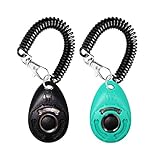
- EASY TO USE - Simple push button with distinct clicking sound.
- Comes with an elastic wrist band so you can leave it on your wrist or clip it to the leash or your pants.
- Not only train the dog but also the cat, bird, chicken, sheep a new behaviors like sit, fetch, roll over, lie down.
- For effective pet training ALWAYS reward with a treat after clicking.
- Can be used to train the dog basic obedience, small trick, and correct the bad behavior; Scientific method of training your pet safely and easily.
The response is subtle
Look for an ear pivot, eye movement, head turn, or slight body orientation. A cat does not have to walk toward you to demonstrate recognition. Mark and reward these small responses first, then teach approach separately if that is your goal.
The Tool Desk
Outbyte Driver Updater FREEFix the driver behind crashes, sound loss and screen glitchesFind Drivers →Outbyte PC Repair FREEClear out junk files and repair common Windows errorsFree Scan →The cat responds indoors but not elsewhere
Indoor success does not automatically generalize to a patio, hallway, yard, or busy room. Go back to an easier location, reduce the distance, and add only one new distraction at a time. Build a history of successful responses before expecting the same behavior in a novel setting.
The cat loses interest halfway through
End sooner, switch to a stronger reinforcer, or schedule training at a more suitable time. Finishing after a success protects the cue from becoming associated with boredom or pressure. Never keep calling after the cat has clearly disengaged.
Several people use different names
Hold a household agreement: one replacement name, one pronunciation, and no improvised nicknames until the response is dependable. Afterward, add at most one nickname deliberately and reinforce it as its own cue. If a visitor uses another name, do not punish the cat; simply resume consistent practice later.
How long does it take a cat to learn a new name?
There is no authoritative population-wide success rate or universal learning time. A couple of brief sessions per day over two to three weeks is a reasonable starting plan, but age, hearing, temperament, reinforcement value, prior name history, and household consistency all affect progress.
What’s actually slowing this PC down?
Pick the symptom - the matching free tool is one click away.
Measure progress by behavior rather than by a calendar. Early improvement may be a single ear movement in a quiet room. Later milestones include orienting from farther away, responding in several rooms, and maintaining the response when mild distractions are present. Do not advance to the next milestone until the current one is comfortable and repeatable.
Independent reader supportYour contribution helps us test, update, and keep practical guides available for everyone.Should I use a clicker or buy special treats?
You do not need special equipment to rename a cat. A spoken marker and ordinary cat-safe rewards are sufficient when your timing is good. A clicker can help identify the exact instant of an ear turn or head movement, particularly when the response is very quick, but the cat must first learn that the click predicts a reward.
Also popular on Amazon

- Instant Attention & Clear Sound: This dog clicker for training produces a sharp, consistent sound that’s perfect for clicker training dogs, puppies, cats, and even birds or horses. Works great as a dog clicker to stop barking and reinforce positive behaviors quickly.
- Lightweight, Durable & Easy to Carry: Made from sturdy, lightweight materials, this pet training clicker is built to last. Comes with a convenient wrist strap so your dog training tools are always within reach during walks, obedience classes, or home sessions.
- Simple One-Button Operation: Whether you’re a new dog trainer or a pro, the large button makes this puppy training clicker and cat training clicker easy to use—just press to mark desired behavior, then reward for faster learning.
- Versatile for Multiple Pets & Purposes: More than just a dog training clicker—this tool is perfect as a cat clicker trainer, training clicker for puppies, or even a clicker cat trainer. Works for potty training, obedience, tricks, and behavior correction.
- Positive Reinforcement Training Made Easy: Trusted by professionals, this dog training & behavior aids device supports humane, reward-based training. Ideal as puppy training tools, dog training aids, or dog training clickers to create a strong bond with your pet.
Lickable treats and soft chews are practical options when a cat prefers those textures, yet they are not requirements. The decision should be based on the individual cat’s reward value, your timing precision, the distraction level, session length, ease of fading food, and whether the tool is optional. Never let a product replace gradual training or make the session stressful.
When should I ask for veterinary or behavior help?
Consult a veterinarian if a cat that previously responded stops orienting to sounds, seems unable to hear, or shows a sudden behavior change. Hearing loss, pain, illness, or medication effects can alter responsiveness and motivation.
Seek qualified feline behavior help when fear, aggression, persistent hiding, or inability to take any reward prevents voluntary practice. A credentialed professional can adjust the environment, identify stress triggers, and design a positive-reinforcement plan. Avoid punishment-based methods; they can increase fear and damage the relationship you are trying to build.
How do I keep the whole household consistent?
- Post the chosen spelling and pronunciation where everyone can see it.
- Agree that the name is said once, followed by a pause for orientation.
- Keep a small container of approved rewards in the training area.
- Record which responses count, such as an ear turn or head movement, so family members reinforce the same behavior.
- Do not use the name during scolding, forced handling, or predictable unpleasant events.
- Stop each session after a success and note the next easy step rather than jumping ahead.
Consistency is more important than dramatic practice. A cat learns from the pattern that occurs every day: one stable sound, a safe context, a clear response, and a consequence the cat values.
Frequently Asked Questions
Can an older cat really learn a completely different name?
Yes. Age does not by itself prevent name learning. Older cats may need shorter sessions, a quieter environment, or a more valuable reinforcer, and a veterinary check is sensible if hearing or cognitive changes are suspected.
Should I keep saying the old name while introducing the new one?
Use the new name consistently during training rather than alternating both cues in the same trial. If the old name is needed briefly for safety, say it separately and avoid turning the transition into a rapid sequence of competing sounds.
Can two cats in the same home have names that sound alike?
They can, but similar sounds make it harder to tell which cat is being addressed. Choose clearly different first syllables and practice each cat individually before calling both in the same room.
Does a bilingual household need to pick only one language?
No, but each form should have a deliberate role. Establish one primary cue first; after it is reliable, you can condition a second-language version separately by rewarding the same orienting response.





Leave a Reply