
Some links on this page are affiliate links: if you buy through them we may earn a commission, at no extra cost to you.
The safest way to classify an outdoor kitten is to combine behavior, physical condition, age, and context—and to treat the result as provisional until you check for a mother and an owner. A clean, well-fed, approachable kitten may be owned or recently lost. A kitten that repeatedly avoids people in calm conditions may be feral, but fear, pain, illness, hunger, and the stress of capture can look the same.
First prevent immediate danger, then watch quietly for the mother if the kitten is healthy. Arrange veterinary or shelter help for a cold, weak, injured, ill, or endangered kitten, and check for identification before deciding whether it needs reunification, foster care, shelter intake, or community-cat support.
As an Amazon Associate I earn from qualifying purchases.
Outdated Drivers Are Slowing You Down
One free scan finds every outdated or missing driver and matches the right update for your exact hardware.Free scan · exact hardware matchPC Slower Than It Used to Be?
A free scan shows the junk files, broken settings and background clutter dragging Windows down - then fixes them in one click.Free scan · Windows 10 & 11What is the difference between a lost, stray, and feral kitten?
A lost kitten is an owned kitten that has gone missing. The RSPCA defines a lost cat as “an owned cat that’s gone missing.” A stray kitten may be lost or abandoned and can have varying degrees of contact with people. A feral kitten has not been socialized to people or the domestic environment; the term describes socialization history, not a single frightened reaction.
| Observation | More consistent with lost or owned | More consistent with stray | More consistent with feral or community cat | Why it is not conclusive |
|---|---|---|---|---|
| Approaches people, accepts touch, or stays near homes | Often | Often, especially if recently socialized | Less typical for a persistently unsocialized cat | A frightened lost kitten may hide. |
| Shiny coat, clear eyes, healthy weight, collar, or other care signs | Raises the likelihood of an owner | Possible if recently homeless | Less typical, although community cats can look healthy | No collar does not prove the kitten is unowned. |
| Cautious, underweight, disheveled, or disoriented | Possible after getting lost | Commoner | Possible | These clues overlap. |
| Hides, hisses, swats, or avoids contact repeatedly | Can reflect fear, pain, or capture stress | Can reflect limited socialization | More consistent when it persists during calm observations | Age and illness can mimic feral behavior. |
| Found near a colony or feeding station | Possible | Possible | Raises the likelihood of community-cat status | Location supports a conclusion but does not prove it. |
Friendly behavior raises the chance that a kitten has an owner, but it is not proof. Conversely, a lost kitten may be terrified and a stray kitten may be affectionate. Repeated observations in a quiet setting are more informative than the first reaction during a rescue.
Popular on Amazon

- Pet Carrier: 17.5” L x 11” W x 11” H, Recommended max load of 16 lbs cats small dogs. Please do not choose your carrier based on weight--please reference your pet's length and height in selecting a pet carrier size.
- Fits for under-seat dimensions of most airlines. Every airline has a specific set of rules and regulations, please contact with airline before flying with your cats small dogs.
- Mesh windows for ventilation, top and side entry with locking zippers for safety. Carrying handles, adjustable shoulder strap which can also be used as seatbelt, and back strap can fasten the pet carrier to your luggage.
- Pet carrier comes with a removable base insert, which creates a solid surface for your pet to stand on, along with a removable & hand washable cozy fleece pet bed, which offers a cozy sleeping space for your traveling cats small dogs.
- "Toys for pets, of textile materials". Mostly used as a Toy of Fabric Pet Home for pets playing and relaxing.
How can I tell whether the mother is still caring for the kitten?
For a warm, clean, alert kitten that is not in immediate danger, assume the mother may be nearby until you have observed otherwise. Mothers often hide while a person is present or leave to find food. ASPCA, Alley Cat Allies, and Best Friends all advise watching from a concealed or distant position rather than hovering over the litter.
Observe without preventing the mother’s return
- Move traffic, dogs, and other hazards away if you can do so without putting yourself at risk.
- Back away to a place where the mother cannot easily see you. Use a window, vehicle, or distant spot rather than standing over the nest.
- Watch quietly for several hours. If the kittens remain safe and weather is suitable, longer observation may be appropriate.
- Note whether a mother returns, nurses, grooms, carries, or responds to the kittens. Keep people and pets away while you watch.
Healthy kittens are generally warm, clean, quiet between feeds, and adequately fed. A kitten that is cold, wet, thin, weak, persistently crying, injured, or ill needs help rather than a prolonged wait. If the nest is in immediate danger, move the kittens only to a nearby safe place where the mother can still find them, then continue watching.
The Tool Desk
Outbyte PC Repair FREEClear out junk files and repair common Windows errorsFree Scan →Outbyte Driver Updater FREEScan for outdated or missing drivers - takes under a minuteDriver Scan →Guidance: ASPCA instructions for kittens found outside, Alley Cat Allies’ outdoor-kitten guidance, and Best Friends’ found-cat advice.
What signs mean the kitten needs immediate help?
Health and immediate danger matter more than deciding whether the kitten is lost, stray, or feral. Do not delay for a mother check when the kitten is in serious distress.
- Cold, wet, limp, unusually weak, or unable to stand
- Breathing difficulty, severe bleeding, obvious fracture, or major wound
- Repeated vomiting, severe diarrhea, seizures, or collapse
- Markedly thin body, sunken eyes, or signs of dehydration
- Persistent crying with no safe nest, especially in very young kittens
- Exposure to traffic, aggressive dogs, predators, extreme heat, flooding, or other immediate hazards
Call a veterinarian, animal shelter, or rescue before arriving when possible. Explain the kitten’s approximate age, symptoms, location, and whether it can be handled. A professional can tell you whether emergency treatment, neonatal care, or a trained trapper is needed.
What should I do immediately after finding a kitten?
Use this order: make the area safe, assess the kitten from a distance, intervene for danger, then investigate ownership and placement.
- Protect yourself and the kitten. Do not enter traffic, climb into unsafe spaces, or handle an aggressive animal bare-handed. Keep dogs and other pets away.
- Assess before touching. Look for warmth, alertness, breathing, wounds, body condition, cleanliness, and signs of a nursing mother.
- Provide warmth and quiet if handling is necessary. Place an approachable kitten in a towel-lined carrier or secure box. Avoid direct heating pads or hot water bottles that can burn a small body; ask a veterinary professional about safe warming.
- Get professional help for danger signs. Call a veterinarian, shelter, or rescue and follow its transport instructions.
- Separate from your pets. Keep the kitten in a closed, quiet room until a professional checks it. Do not share bowls, litter, bedding, or direct contact with resident animals.
- Record the find. Write down the date, time, exact location, weather, behavior, photographs, and every organization or professional you contact.
Food and water decisions depend on age and condition. Do not force-feed a cold, weak, or unresponsive kitten, and do not give cow’s milk. Ask a veterinary professional or neonatal rescue for age-appropriate feeding instructions.
Also popular on Amazon
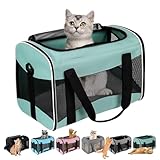
- [PRODUCT DIMENSIONS] Pet travel carrier size : 17x11x11 inches, recommended up to 15 lb pets, it is suitable for large, medium cats and small dogs. Please don't choose your airline cat carrying case based on weight, please refer to your pet's length and height when choosing a pet carrier size.
- [AIRLINE APPROVED] This cat carrier is designed with airline approved, it can fit comfortably under most flight seats, we can take our pets wherever we want. Dog travel carrier offers two attachment loop handles that can be used as a dual harness or as a luggage strap for balanced carry and secure transport.
- [EXCELLENT MATERIAL] Collapsible cat carrier is made of polyester fabric, supported by a steel ring, washable, wear-resistant and durable. The three sides and the top of this pet carrier are nylon mesh, scratch-resistant and not easy to damage, it can not only check your pet in real time, but also ensure enough air circulation.
- [SAFE AND COMFORTABLE] Dog travel bag has metal zippers on the top and side entrances, durable and not easy to deform, it allows your pets to enter and exit easily. The cat carrying case is equipped with an anti-escape safety buckle, which can effectively prevent pets from accidentally falling. It is suitable for car rides and vet rides.
- [PORTABLE AND FOLDABLE] Pet travel carrier comes with a detachable and hand washable wool pet bed, it can provide a comfortable sleeping space for your traveling pet. The cat travel case comes with an adjustable shoulder strap and handle for easy portability. When not in use, you can fold it up for storage.
How do I know whether the kitten belongs to someone?
Check identification and search locally before deciding that a kitten needs a new home. Friendly behavior alone cannot establish ownership, and the absence of a collar does not establish abandonment.
Identification checks
- Look for a collar, tag, tattoo, or other visible identification without risking a bite.
- Ask nearby residents, maintenance staff, delivery workers, and local businesses whether they recognize the kitten.
- Take the kitten to a veterinarian or shelter for a microchip scan. Call ahead if the kitten is frightened or difficult to transport.
- Contact municipal shelters, animal-control agencies, rescues, and local lost-pet groups. Intake and stray-hold rules vary by location.
Post a useful found notice
Use a clear photograph, the general location, the date found, and a safe contact method. Do not publish every identifying detail; ask a claimant to describe a distinguishing mark, collar, or behavior first. Keep copies of messages and compare any claim with a microchip record or other reliable proof.
For practical checklists, see the RSPCA guidance for found, stray, and feral cats and Cats Protection’s found-cat advice.
Recommended Free Tools
How can I tell if a frightened kitten is feral?
You cannot determine feral status from one hiss, swat, or attempt to hide. Capture, hunger, pain, unfamiliar surroundings, and the presence of strangers can make a socialized kitten look feral.
Reassess in a quiet setting
Once the kitten is safe, allow it to decompress in a dim, quiet enclosure. Use slow movements, a soft voice, food placed at a comfortable distance, and short, predictable visits. Observe whether it gradually watches, eats, plays, accepts touch, or seeks contact. Improvement over time suggests fear or limited experience may be contributing; persistent avoidance despite calm, repeated opportunities is more consistent with an unsocialized community cat.
Consider age
Young kittens can often learn to accept people, although the time and skill required vary. Older cats that have never lived comfortably with humans may be better candidates for a community-cat program than forced indoor placement. A local rescue or community-cat organization can assess the kitten and explain realistic socialization and placement options.
Get help when handling is unsafe
Do not chase, corner, or grab a kitten that cannot be safely handled. Ask a trained humane-trapping or TNR (trap-neuter-return) organization for equipment, capture technique, veterinary planning, and placement advice. Program practices, legal requirements, and available services differ by area.
Also popular on Amazon

- High Quality Design:Sturdy steel cage structure and wooden support board maintain good spatial stability and shape. Breathable mesh windows on four sides,which can ensure good air circulation and views,make pets have a comfortable and safe travel.It can also be easy for you to check on your pets.There is a front pocket to store pet toys,treats,etc.
- Dimension and Weight:Made of durable tear-resistant fabric.Four easy entrances for pets. Dimensions: 17 inch x 11 inch x 11 inch (L*W*H), suitable for pets up to 16 lbs.Please don't choose your carrier based on weight only,consider your pet's length and height when choosing a carrier.
- Airline Approved & Safty:Can be placed under the seats of most airplanes(Four non-slip feet on the bottom to prevent movement), and comfortably on the seat next to you in a car or bus.It has a adjustable shoulder strap.Can also be fastened to the car seat with a safety belt or shoulder strap to keep your pet safe.
- Easy to Clean :You can clean the stains and dirt on the surface with a soft cloth.Soft mat inside the pet carrier is removable and washable.You can take it out and wash it easily to solve all stains.
- Easy to Collapsible & Lightweight:When not in use,fold it into a flat,space saving and easy to store.Only 2.2lbs,it's easier to carry around.It can also used as a toy of pet house,allowing pets to play in a safe space to relax and rest.
Should I take a stray kitten home?
Take an approachable kitten home temporarily only when doing so is safe and you have a plan for veterinary care, isolation, and an ownership search. A healthy kitten with a possible mother should generally remain where it is while you observe from a distance, unless the location is dangerous.
| Situation | Most appropriate next step | Reason |
|---|---|---|
| Healthy, warm kitten; mother may be nearby; location is safe | Observe quietly and keep people and pets away | Removing it can separate it from needed maternal care. |
| Healthy kitten in immediate danger | Move it a short distance to a nearby safe spot, then watch for the mother | The mother can still locate it. |
| Cold, weak, injured, ill, or persistently crying kitten | Contact a veterinarian, shelter, or rescue promptly | Delay can worsen a medical emergency. |
| Approachable kitten with no obvious danger | Use a secure carrier or box, isolate it, scan for a microchip, and begin the owner search | Safe transport allows identification and care. |
| Kitten that cannot be safely handled | Call trained humane-trapping or community-cat help | Improvised capture can injure the kitten or the rescuer. |
Never release a kitten in an unfamiliar area, leave it at a closed shelter, or hand it to an unverified person. Confirm opening hours, intake policies, and local stray-hold requirements before transport.
Independent reader supportYour contribution helps us test, update, and keep practical guides available for everyone.Which outcome is right: reunification, foster care, shelter, or community-cat support?
Choose the least disruptive safe option that matches the kitten’s needs, while remaining open to new information from a mother, owner, microchip scan, or veterinary exam.
Reunification with an owner
This is the priority when a microchip, tag, credible lost report, or verified claimant identifies an owner. Keep records and use a safe handoff location if you are unsure about meeting a stranger.
Foster or socialization
A friendly or young kitten without an identified owner may need a foster home, veterinary examination, vaccination planning, parasite treatment, and gradual socialization. Ask a rescue about capacity before taking on long-term care.
Shelter or municipal intake
A shelter can scan for a chip, provide medical assessment, follow legal stray-hold procedures, and coordinate adoption or transfer. Call first: some facilities accept found kittens only by appointment, during specific hours, or through animal control.
Community-cat or TNR support
An older, persistently unsocialized cat may be safer outdoors with managed care than in an indoor adoption program. A community-cat group can advise on humane trapping, sterilization, vaccination, ear-tipping where customary, and return or relocation decisions. Do not relocate a cat on your own; returning it to its established territory is often safer than moving it to an unfamiliar place.
Also popular on Amazon
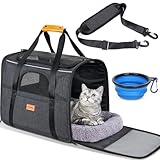
- 【 Spacious & Comfortable Cat Carrier 】The large cat carrier provides ample space for your feline friend to move, turn, and stretch during travel. Measuring 17.3 x 12.2 x 13.4 inches, it is wider and taller than most cat carriers, ensuring your pet feels comfortable and at ease while on the go.
- 【Balanced Mesh Design】Unlike other cat carrier hard, our cat carrier soft strikes the perfect balance with 40% mesh surface area. This ensures your pet can observe the surroundings and breathe easily while feeling safe and secure at the same time. The cat carrier large is suitable for pets in all kinds of situations.
- 【Built-in Dual-Sided Cushion】The detachable pad offers two distinct comforts: a cool side for summer and a super-soft, warm side for winter. You can easily flip it to match the season, providing the perfect temperature for your pet in any weather.
- 【Includes Foldable Bowl】Designed for on-the-go use, our foldable bowl carries 410g of food or 20oz of water. After use, simply collapse it and attach it directly to your pet's collar or leash, perfect for keeping your pet fueled and hydrated anywhere.
- 【Safe & Durable】Safety is our top priority, and the pet carrier for cat is equipped with a secure buckle to prevent your pet from escaping. The cat carrier soft is made of reinforced snow silk fabric and hard mesh material, ensuring durability and preventing any tearing during long-distance travel.
What mistakes should I avoid?
- Assuming “clean” means owned or “dirty” means abandoned. Appearance changes quickly after a kitten becomes lost.
- Calling a kitten feral after one defensive reaction. Reassess after quiet recovery and repeated observations.
- Taking a healthy kitten away immediately. The mother may be nearby and unable to return while people stand over the nest.
- Waiting for the mother when the kitten is cold, injured, or in danger. Health emergencies require prompt professional guidance.
- Trying to grab an unsocialized cat. Use trained humane-trapping help instead of nets, improvised restraints, or prolonged chasing.
- Introducing the find to household pets. Isolation protects both the kitten and resident animals while health status is unknown.
- Posting too much identifying information. Withhold a distinctive detail so you can screen claimants.
- Assuming a shelter or rescue can take the kitten immediately. Capacity, hours, and legal intake rules vary.
How should I transport the kitten safely?
For an approachable kitten, use a rigid, escape-proof carrier lined with a towel. Close doors and windows before moving it, support the carrier from underneath, and keep the trip quiet and temperature-controlled. Do not carry a frightened kitten loose in your arms or a vehicle.
What’s actually slowing this PC down?
Pick the symptom - the matching free tool is one click away.
A cat that cannot be handled safely may require a humane box trap and an experienced handler. Covering a trap with a towel can reduce visual stress, but follow the trapping organization’s instructions and never leave a trap unattended in extreme weather. Ask the receiving veterinarian, shelter, or rescue about appointment timing so the kitten is not left waiting outside.
What should I document for the next caregiver or owner?
Provide a concise record: where and when the kitten was found, photographs from the first observation, behavior around people, whether a mother was seen, food and water offered, injuries or symptoms, microchip-scan results, veterinary treatments, and all lost-pet notices. Include the names and phone numbers of organizations consulted and any instructions they gave. This history prevents duplicate treatments and helps a shelter, rescue, or verified owner make a safer decision.
Frequently Asked Questions
Can a feral kitten become a house cat?
Some young kittens can become comfortable with people through patient, structured socialization, while older unsocialized cats may remain distressed indoors. A rescue or community-cat specialist should assess age, behavior, health, and the least stressful placement before you commit.
How long should I wait for a mother cat to return?
For a healthy kitten in a safe location, watch from a hidden distance for several hours and longer when conditions remain safe. There is no single universal cutoff; weather, age, kitten condition, and local professional advice determine when waiting is reasonable.
Quick wins for a faster PC:
Scan for outdated or missing drivers - takes under a minuteDriver Scan →Clear out junk files and repair common Windows errorsFree Scan →What if the kitten has no microchip or collar?
Lack of identification does not prove abandonment. Continue neighbor and shelter outreach, post a carefully screened found notice, and follow your jurisdiction’s stray-hold and reporting rules.
Can I feed a kitten I found outside?
Food needs depend on age and medical condition. Keep a cold or weak kitten warm and obtain professional instructions before feeding; do not give cow’s milk or force-feed an unresponsive kitten.





Leave a Reply