
Some links on this page are affiliate links: if you buy through them we may earn a commission, at no extra cost to you.
An open-eyed fox cub that can walk, explore and otherwise looks healthy is often not abandoned. Its parents may be nearby but unwilling to approach while people, dogs or other pets are present, so the safest first response is to stay hidden, keep everyone away and observe rather than rescue it. A cub with its eyes still closed is different: it is very young, dependent on its mother and too young to be above ground, so contact a wildlife rehabilitator promptly. Any cub that is injured, entangled, severely weak, sick, distressed or in immediate danger needs professional help without waiting for a routine observation period.
How can I tell whether a fox cub is being cared for?
The clearest first check is the cub’s eyes and general condition. Open eyes, alert movement and exploratory behaviour usually fit a cub whose parents are still caring for it. Closed eyes indicate a dependent cub that needs prompt professional advice.
As an Amazon Associate I earn from qualifying purchases.
Quick wins for a faster PC:
Scan for outdated or missing drivers - takes under a minuteDriver Scan →Repair Windows errors before they cause bigger problemsFix Now →Fix the driver behind crashes, sound loss and screen glitchesFind Drivers →| What you see | What it usually means | What to do |
|---|---|---|
| Eyes open; cub is mobile, alert and curious | Parents are probably nearby, even if no adult fox appears while people are watching. | Stay concealed, keep people and pets away, and monitor discreetly. Watch for a few hours, ideally until dusk, then recheck at 24 and 48 hours if concern remains. |
| Eyes closed | The cub is very young and dependent on maternal milk and warmth. It should not normally be above ground. | Contact a wildlife rehabilitator promptly. Do not confine, transport or handle it unless immediate danger makes a minimal, safe move unavoidable. |
| Open eyes but obvious injury, entanglement, severe weakness, illness, distress or a dangerous position | The situation is urgent regardless of whether the mother may be nearby. | Seek professional wildlife help immediately. Do not wait for the 24- or 48-hour checks. |
| Cubs exposed after gardening, building work or another disturbance | The vixen may be keeping away until people leave and may later move the litter to another earth. | Stop the work, cover exposed cubs with a soft blanket or towel as advised, withdraw completely and contact a rehabilitator. |
This distinction comes from UK wildlife-welfare guidance. Local rescue arrangements differ by country and locality, so use a verified service in the area where the cub was found.
Which signs suggest that the mother is still caring for the cub?
A healthy-looking cub can be alone for part of the day without being orphaned. Fox parents may leave a litter while foraging, watch from cover or wait until people have gone before approaching.
Popular on Amazon
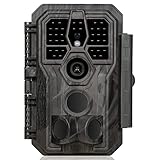
- 64MP Photos & 1296P HD Videos: Equipped with a high-quality optical lens and advanced image sensor, the E5S captures ultra-sharp 64MP photos and smooth 1296P HD videos.
- Low-Power, Eco-Friendly Wildlife Viewing: Simply retrieve the SD card to see what your camera has captured—each visit could bring a new surprise. Non-Cellular and Non-WiFi operation ensures minimal power use, fewer battery changes, and zero disturbances.
- Rugged & Weather-Resistant: Built to withstand harsh outdoor conditions with an IP66 waterproof rating. Features a 1/4"-20 mounting thread for secure placement on trees, posts, or fences. Ideal for use as a durable trail camera.
- Fast 0.1s Trigger Speed with 3 PIR Sensors: Never miss fast-moving deer wildlife. Three PIR sensors enable a lightning-fast 0.1s trigger speed motion activation, perfect for hunting purposes.
- Extended Power Options & Efficient Design: Powered by 8×AA batteries (not included). For continuous outdoor use, the E5S supports the GardePro SP350 Solar Panel (sold separately), ensuring reliable power even in remote areas.
Eyes open, movement coordinated and behaviour exploratory
As cubs develop, they begin leaving the den and investigating their surroundings. Walking, changing position, sniffing and reacting to sounds are consistent with normal development when the cub is otherwise bright and mobile. These signs do not prove that an adult is present at that exact moment, but they make immediate rescue less appropriate than quiet observation.
No adult appears while people are nearby
The absence of a vixen during a human watch is weak evidence of abandonment. The RSPCA notes that parents are probably nearby when an open-eyed cub is found and advises checking again rather than picking the cub up. A mother may remain hidden for hours or return only around dusk, when the area is quiet.
The den is quiet or the cub is temporarily out of it
An adult fox does not need to be visible at a den entrance for care to be continuing. After a disturbance, a vixen can carry cubs one at a time to a safer earth. Seeing a cub alone, or seeing no adult at an undisturbed den, is therefore not by itself a reason to excavate, block the entrance or remove the litter.
What do fox-cub development stages tell me?
Development gives useful context, but ages are approximate. The RSPCA’s webpage does not state a publication year for these milestones, so treat them as general guidance rather than a dated population statistic.
| Typical stage | Features described by the RSPCA | Welfare implication |
|---|---|---|
| Birth | Deaf and blind, with fluffy grey-black fur; about 100 g; dependent on maternal milk and warmth. | A cub at this stage cannot care for itself. If found above ground, seek professional advice promptly. |
| About two weeks | Eyes open, ears unfurl and the fur starts changing from dark to brown. | Open eyes do not mean independence. Judge the cub’s mobility and condition, and obtain advice if it is weak, exposed or otherwise in trouble. |
| About four weeks | A red coat begins to appear, the muzzle whitens, solid food becomes possible and cubs first leave the den. | A mobile cub outside the den can be behaving normally; observe from a distance instead of assuming it is abandoned. |
| Six to eight weeks | Fully weaned, with red fur and lengthened ears and nose. | Exploration away from the den is increasingly expected, but injury, danger or persistent distress still requires help. |
| Around six months | Generally fully grown and self-sufficient, leaving to find a territory. | Such a fox is no longer a dependent newborn, although an injured or sick young fox still needs a wildlife professional. |
How should I watch an apparently healthy, open-eyed cub?
Observation works only if the adults can approach without encountering people or pets. Set up a quiet watch, then leave the cub alone as much as possible.
Also popular on Amazon

- 𝐍𝐎𝐓𝐄: 𝐢𝐭 𝐢𝐬 𝐍𝐎𝐓 𝐜𝐨𝐦𝐩𝐚𝐭𝐢𝐛𝐥𝐞 𝐰𝐢𝐭𝐡 𝐡𝐨𝐦𝐞 𝐖𝐢𝐅𝐢, 𝐝𝐨𝐞𝐬 𝐍𝐎𝐓 𝐬𝐮𝐩𝐩𝐨𝐫𝐭 𝐜𝐞𝐥𝐥𝐮𝐥𝐚𝐫/𝟒𝐆/𝟓𝐆 𝐧𝐞𝐭𝐰𝐨𝐫𝐤𝐬, and 𝐝𝐨𝐞𝐬 𝐍𝐎𝐓 capable of real-time motion alerts or push notifications. The camera creates its own short-range Wi-Fi hotspot (𝐍𝐨𝐧-𝐂𝐞𝐥𝐥𝐮𝐥𝐚𝐫) for setup, and downloading files only. Wi-Fi range is up to 33–50 ft in open areas. The camera records automatically even when your phone is not connected. No subscription or monthly fees
- Upgraded Split Solar Panel Design: This trail camera features a Allows flexible placement design. Its angle can be manually adjusted to efficiently face the sun, regardless of seasonal changes or terrain. This greatly improves charging efficiency and minimizes sunlight blockage, making it suitable for all kinds of outdoor environments (32GB SD card included (pre-installed). No extra charge)
- Non-Stop Solar Power: Equipped with a high-capacity 6000mAh rechargeable power, this trail camera supports three charging modes: solar charging, Type-C charging, and rechargeable power. It allows for long-term continuous use. No more wasting money or climbing. It is the truly energy saving, and long-lasting solution for 24/7 backyard, farm, and deep-woods surveillance
- Easy & Smart App Control : This wifi trail camera pairs instantly via WiFi + Bluetooth with the user friendly “TrailCamGO” app, with a maximum connection range of 55FT (recommended within 10FT). Photos and videos can be send directly to your phone without removing the SD card. (As the wireless trail camera creates its own hotspot to connect with the phone, it does not support home Wi-Fi networks.)
- 4K & 64MP Ultra-Clear Imaging: With a high-resolution sensor and excellent low-light performance, this solar trail camera minimizes image and video blur or noise, enabling quick wildlife recognition and capturing every detail clearly.Ideal for birdwatching, spotting wildlife, and keeping an eye on your garden/home
- Remove pressure from the site. Keep children, dogs and other pets indoors or well away. Stop garden work, machinery and unnecessary foot traffic near the cub or den.
- Get out of sight. Move behind a building, hedge or other cover far enough away that the cub cannot see or smell you easily. Stay quiet and avoid repeated trips to the den.
- Watch for a few hours. Wildlife Aid Foundation advises watching until dusk because the vixen may return then. Do not interpret a human-free watch as successful if people remain visible to the cub.
- Recheck rather than intervene. If the cub still looks healthy but no adult has appeared, the RSPCA advises checking again at 24 hours and 48 hours. Make each visit brief and discreet.
- Escalate if the condition changes. Call a local wildlife rehabilitator sooner if the cub becomes weak, distressed, injured or exposed to a new danger. A healthy appearance must not be used to delay help when the location itself is hazardous.
A wildlife trail camera can provide additional information only if it is installed without repeated close approaches, bright lights or disturbance. It is optional, not a substitute for a rehabilitator’s assessment, and welfare takes priority over obtaining footage.
Windows Errors? Fix Them Before They Spread
Repair common Windows errors and clear accumulated junk for a smoother, more stable PC - no reinstall needed.Free scan · no reinstallCrashes, No Sound, or Screen Glitches?
Random freezes, missing sound and display glitches usually trace back to one bad driver. Find and replace yours safely.Free scan · under a minuteWhen is a fox cub an urgent rescue case?
Some findings override the normal wait-and-watch approach. Contact a wildlife professional immediately when any of the following is present.
- Closed eyes: the cub is dependent and too young to be above ground.
- Injury: visible wounds, bleeding, a broken limb or other obvious trauma.
- Entanglement: the cub is caught in fencing, netting, wire or another object.
- Severe weakness or sickness: it cannot move normally, is collapsed, or shows marked deterioration.
- Persistent distress: repeated distressed calling or behaviour that does not settle when people and pets have withdrawn.
- Immediate danger: a road, active work area, open drain, water hazard, aggressive animal or another place where remaining put is unsafe.
Do not wait for the mother to return when a cub is trapped, badly injured or in immediate danger. Tell the rehabilitator exactly what you can see, where the cub is, whether its eyes are open and whether the site can be made safe without touching it.
What should I do if gardening or building work disturbed a den?
Stop the work and leave the area. Human activity can cause the vixen to stay away temporarily; once the site is quiet, she may return and move the cubs to another den.
- Withdraw people and pets. Move away from the den and do not gather around to watch the entrance.
- Protect exposed cubs without picking them up. The RSPCA advises covering cubs exposed during garden work with a soft blanket or towel, then withdrawing. Do not carry them to another place or try to put them back into a hole.
- Contact a rehabilitator. Explain that the den was disturbed, how many cubs are visible, whether their eyes are open and whether any are injured or in danger.
- Leave the route clear. Do not block the den, fill it, excavate further or continue the project while waiting for advice. The mother may need access to retrieve or relocate the litter.
A quiet, undisturbed site gives the mother the best chance to resume care. Even if she is not visible, avoid assuming that the litter has been abandoned.
Also popular on Amazon
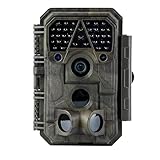
- Crystal-Clear 64MP Photos & 1296p HD Video – Stunning detail day or night, thanks to advanced image tech and a high-performance f/1.6 aperture lens.
- Lightning-Fast 0.1s Trigger Speed – Never miss a moment! Side sensors detect motion instantly, even for fast-moving wildlife, deer.
- Bright 100ft No-Glow Night Vision – Invisible 940nm LEDs and enhanced light capture deliver sharp nighttime footage without spooking animals.
- Smaller Files, Faster Playback – H.264 tech compresses videos (MP4/MOV) for quick downloads and seamless viewing on any device.
- 2.4" Color Display + User-Friendly Controls – Review footage on the spot with an intuitive menu and easy-access buttons.
Should I give a fox cub food or water?
The RSPCA allows supplementary food and water to be considered in the specific situation of an open-eyed cub that is being monitored and appears otherwise healthy, but professional advice remains preferable. Do not use food or water as a reason to handle, confine or transport the cub, and do not offer anything while delaying urgent help for a closed-eyed, injured or distressed animal.
If a rehabilitator recommends temporary food or water, follow that service’s instructions about what, where and how much to provide. Advice can depend on the cub’s age, condition, weather and local disease-control practice, none of which can be judged reliably from a brief look.
Is it safe to pick up a fox cub?
No. Wildlife Aid Foundation warns never to pick up a fox cub with bare hands because it may bite and because human scent may contribute to a mother abandoning it. The RSPCA also cautions that frightened or injured foxes can react aggressively.
For an apparently healthy cub, leave it where it is and contact a professional if concern persists. If immediate danger makes a move unavoidable, place it only in a nearby safe spot, handle it as little as possible and call a rehabilitator immediately for further instructions. Do not take it home, put it in a box for routine observation or drive it to a rescue centre without professional direction.
What’s actually slowing this PC down?
Pick the symptom - the matching free tool is one click away.
How long should I wait for the vixen to return?
For an open-eyed, mobile cub that looks well, watch discreetly for a few hours, with dusk a useful practical point at which to reassess. If there is still concern, use the RSPCA’s 24-hour and 48-hour rechecks rather than making repeated close visits.
Also popular on Amazon

- 【Ultra-clear Photos and Videos】36MP Still Images & 2.7K Videos. Thanks to premium optical lens and an advanced image sensor, and built-in 22Pcs 850nm low glow LEDs, this trail camera provides crystal clear images and amazing smooth 2.7K videos with sound in the daytime, low light or nighttime, combined with noise reduction speaker and 2.0” HD TFT Color Screen, which takes you into the world of wildlife.(This camera does not include an SD card.)
- 【Super Night Vision & Low Glow Infrared LEDs】The trail camera is equipped with powerful low glow infrared LEDs, features upgraded 850nm infrared technology, makes this game camera more stealth, which can show the night behavior of animals without disturbing them, encompasses adaptive illumination technology to avoid overexposure or over-dimmed, which can provide clear night images and videos in total darkness, delivers brilliant night vision up to 75ft.
- 【Fast 0.1s Trigger Time &130°Wide Angle】Once movements are detected, the lightning-fast trigger speed of less than 0.1s with 1 to 3 shots choice guarantees fast and accurate capture of each detected motion exposed to the field, never miss any animals that wander by this camera. 130° detection range to give you an expansive field view, indispensable for hunting, wildlife observation, farm monitoring, home backyard, plant growth observation, property security and surveillance.
- 【Easier Setup Than Ever】This hunting camera features a built-in 2.0-inch color screen and TV remote-style control buttons. No Wi-Fi or app is needed; the intuitive and easy-to-use interface allows for quick setup and instant playback, making it suitable for users of all ages. The included mounting strap and stand allow you to stabilize the camera in various scenes and at any angle. A comprehensive user guide helps you quickly get started using this hunting camera.
- 【IP66 Waterproof】KJK201 is designed to withstand extreme environments, thanks to the tightly integrated design of the camera body and high-quality rubber ring, ensuring that works normally from -22 °F to 158 °F, excellent quality can be used in deserts, rainforests, etc. The efficient PIR design works to reduce false triggers, boasting an impressive 17,000-image battery life! The smaller size makes them easier to conceal from theft/vandalism, and also much easier to carry out into the field.
Those intervals apply only while the cub remains healthy and safe. A change in condition, continued distress, a dangerous location or any uncertainty about a closed-eyed cub changes the decision to immediate referral.
Independent reader supportYour contribution helps us test, update, and keep practical guides available for everyone.What mistakes can make the situation worse?
- Standing beside the cub to watch: the mother may stay away while people are visible, so the observation itself can delay a return.
- Bringing dogs or children to investigate: noise, scent and chasing add stress and can create a new danger.
- Repeatedly checking the den: frequent visits prevent a discreet assessment and can interfere with the vixen’s approach or relocation.
- Digging into an earth: an unseen litter may be present, and disturbance can force the mother to move the cubs.
- Handling because the cub looks small: size alone does not establish abandonment; eye status, mobility, injury and safety matter more.
- Waiting despite an emergency sign: closed eyes, entanglement, serious weakness, injury or immediate danger require professional help without the normal observation delay.
- Using a generic national number without checking locality: wildlife services and emergency contacts differ by country and area. Confirm that the service covers the place where the cub was found.
How do I choose the next action?
Use the cub’s condition and the site, not the fact that an adult fox is absent during a human watch, to choose what happens next.
| Assessment | Next action |
|---|---|
| Open-eyed, alert, mobile, no obvious danger | Withdraw out of sight, keep pets away, observe for a few hours or until dusk, then recheck at 24 and 48 hours if still concerned. |
| Open-eyed but injured, entangled, very weak, distressed or in danger | Contact a wildlife rehabilitator immediately; do not wait for a routine return. |
| Eyes closed, whether or not an adult is visible | Seek prompt professional advice and avoid handling, confinement or transport unless immediate danger requires a minimal safe move. |
| Den exposed by work | Stop work, cover exposed cubs with a soft blanket or towel without picking them up, withdraw and call a rehabilitator. |
| Still apparently well after the 24- and 48-hour checks but no adult seen | Contact a local wildlife service for a case-specific assessment rather than escalating private intervention. |
What should I tell a wildlife rehabilitator?
Give the service practical facts: the exact locality, when the cub was found, whether its eyes are open, how it moves, any visible injury or entanglement, whether a den was disturbed and what hazards are nearby. Say how long people and pets have been kept away and whether the cub’s condition has changed.
Do not delay the call while trying to establish the cub’s age precisely. The milestones are approximate, and a rehabilitator can decide whether observation, a safe move or admission is appropriate.
What is the safest conclusion when I am unsure?
Assume neither abandonment nor safety from a single sighting. An open-eyed, healthy, mobile cub usually needs distance and time, while a closed-eyed, injured, distressed or endangered cub needs a wildlife professional. Leaving the area quiet is often the most helpful action a person can take while arranging advice.
Also popular on Amazon
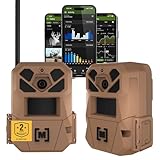
- HARVEST MORE BUCKS THIS SEASON - EDGE 3 delivers real-time deer activity, movement patterns, and location intelligence—so you know when and where mature bucks are moving instead of hunting on hope.
- AI BUCK DETECTION + INSTANT ALERTS - Moultrie AI identifies bucks and immediately delivers high-resolution photos or HD video—reducing false alerts and helping you act fast when it matters most.
- NATIONWIDE 4-CARRIER AUTO-CONNECT - Automatically connects to the strongest of four major U.S. networks. No SIM cards. No manual setup. Reliable photo and video delivery—even in remote hunting properties.
- 40MP PHOTOS + 1080p HD VIDEO - Capture crisp, detailed images and lifelike HD video. Low-glow infrared flash keeps nighttime shots clear without spooking deer.
- 0.5-SECOND TRIGGER + 100FT RANGE - Fast trigger speed and long detection range ensure moving deer are captured cleanly—no blur, no missed opportunities.
Frequently Asked Questions
Can a fox cub be alone even when its mother is caring for it?
Yes. A vixen may leave the litter for hours while foraging and can remain hidden until the site is quiet. A cub’s temporary solitude therefore has to be interpreted alongside its eye status, mobility and safety rather than treated as proof of orphaning.
What does it mean if the mother moves the cubs after I disturbed the den?
She may be carrying the cubs one at a time to a safer earth. Once people withdraw, keep the route and surrounding area quiet so she can complete that move; do not search for the new den or try to reunite cubs yourself.
Do these 3 things before closing this tab:
1Clear out junk files and repair common Windows errors2Scan for outdated or missing drivers - takes under a minute3Repair Windows errors before they cause bigger problemsCan I install a camera to see whether the vixen returns?
A trail camera is optional and should be positioned from out of sight so installation does not create repeated visits, noise or bright light. If the cub is in danger or has closed eyes, arrange professional help instead of relying on footage.
What if I cannot tell whether the eyes are open?
Do not force the eyelids apart or pick the cub up for a closer look. Observe from a safe distance and describe the uncertainty to a local wildlife rehabilitator, who can advise whether the cub needs immediate assistance.
Quick Recap
Product prices and availability are accurate as of the date/time indicated and are subject to change. Any price and availability information displayed on Amazon at the time of purchase will apply.





Leave a Reply