
Quick wins for a faster PC:
Repair Windows errors before they cause bigger problemsFix Now →Scan for outdated or missing drivers - takes under a minuteDriver Scan →Clear out junk files and repair common Windows errorsFree Scan →Some links on this page are affiliate links: if you buy through them we may earn a commission, at no extra cost to you.
Train a Philippine Forest Dog (Asong Gubat) with rewards, careful management and gradual exposure—not intimidation. Begin with a marker such as a click or a consistent word, immediately follow wanted behavior with a small reward, and increase only one challenge at a time. Socialize by helping the dog feel safe around people, dogs, places, handling and household experiences; never force an interaction when the dog is frightened.
The breed source describes an indigenous, small-to-medium athletic dog that may be reserved with strangers and strongly interested in tracking, jumping, climbing and its surroundings. Those are useful planning clues, not a personality verdict. Individual history, health and temperament determine the pace, so watch the dog’s body language and adjust the plan accordingly.
As an Amazon Associate I earn from qualifying purchases.
Do these 3 things before closing this tab:
1Fix the driver behind crashes, sound loss and screen glitches2Clear out junk files and repair common Windows errors3Scan for outdated or missing drivers - takes under a minuteWhat should you expect from a Philippine Forest Dog?
The Philippine Forest Dog site describes the Asong Gubat as an indigenous, primitive Philippine breed weighing about 12–18 kg, loyal to its family and cautious with unfamiliar people. It also reports hunting, tracking, jumping and environmental-awareness instincts, a history connected with Philippine forests and Aeta hunting partnerships, an international debut in 2023, and preservation work involving the Philippine Canine Club. These are reports from that breed source rather than controlled behavioral findings.
Use those reports to plan for recall, secure boundaries, scent outlets and patient introductions. Do not assume that every Asong Gubat is shy, predatory, athletic to the same degree or difficult to train. The MSD Veterinary Manual notes that behavioral variation within a breed can be as large as variation between breeds. The dog in front of you—its body language, learning history, health and environment—sets the training pace.
Popular on Amazon

- [Treat Distribution] Our food dispenser has differently sized spheres at both ends. As dogs push the toy, it moves within a fixed area, allowing dogs to continuously chase and play with it. During movement, food is dispensed from the food holes on both sides of the toy.
- [Adjustable Switch] Each of the two spheres with a food dispensing switch, making it suitable for various sizes and types of pet dry food or snack. The switch can be adjusted according to the different sizes of dog food. It also allows control over the amount of food dispensed, extending or shortening the time it takes for pets to obtain food. It is more conducive to a healthy dog diet.
- [Increase Pet Intelligence] This dog treat puzzle toy combines intellectual training with food rewards. When pets push this toy, it will not only be to get delicious food, but it will also stimulate their intelligence and hunting instinct. This design not only meets the needs of pets but also encourages them to learn and grow in the game.
- [Prolonged Play] The dog enrichment toy is designed to limit the amount of treats your dog gets while encouraging more extended playtime. This is intended for effective playtime for dogs and is NOT a chewed toy. It is also dog boredom buster toys and best dog gift to keep them busy when dogs are left home alone, relief anxiety.
- [Attract Dogs' Attention] With barbell shaped design and bright color, the dog puzzle toy ball can attract your dog's attention, stimulate their curiosity and drive them crazy to roll it. Size: 6.1*3.44*3.44in/15.5*8.7*8.7cm.
How does positive-reinforcement training work?
Positive reinforcement means making a behavior more likely by following it promptly with something the dog values, such as food, play or social praise. It does not mean allowing unwanted behavior. Prevent rehearsal of problems, then teach and reward a behavior you prefer.
Choose a marker and a reinforcer
- Choose a clicker or a brief word such as “yes.” Use the same marker every time.
- In a quiet room, say or click the marker and immediately give a tiny treat. Repeat several times until the dog turns toward you after the marker.
- Identify several reinforcers. Soft, pea-sized food is practical for repetitions; a short tug game, retrieving, sniffing or praise may be more valuable in other situations.
- Keep a portion of the dog’s daily food allowance available for training and ask your veterinarian how treats fit the dog’s calorie needs.
Keep the learning loop clear
Mark the instant the dog performs the behavior, then deliver the reward where you want the dog to remain. If you are teaching a loose-leash turn, for example, mark when the dog looks back at you and feed beside your leg. Delayed rewards make it harder for the dog to identify what earned them.
Raise difficulty one variable at a time
Increase only one of distance, duration, distraction or novelty. A “down” held for 20 seconds in a quiet room is a different exercise from a two-second down beside a busy road. If the dog fails repeatedly, make the next attempt easier rather than repeating the cue more loudly.
Use short sessions and arrange the home
Practice for a few minutes while the dog is interested, then finish with an easy success. The MSD Veterinary Manual recommends teaching what the dog should do and arranging the environment so unwanted behavior is less likely to occur. Gates, closed doors, covered rubbish bins, supervised access and pre-emptive exercise prevent rehearsal while skills develop.
Methods to avoid
The Animal and Veterinary Service and the American Veterinary Society of Animal Behavior (AVSAB) advise reward-based methods and warn about techniques that create pain, fear or distress. Do not use shock or electronic collars, prong collars, choke chains, leash jerks, hitting, scruff shaking, alpha rolls or forced restraint as training tools. AVSAB’s position is that only reward-based methods should be used for dog training, including behavior problems.
Which skills should you teach first?
Start with behaviors that improve communication and safety. Train in a quiet area, then practice in progressively more realistic settings while protecting the dog from situations it cannot yet handle.
The Tool Desk
Outbyte Driver Updater FREEFix the driver behind crashes, sound loss and screen glitchesFind Drivers →Outbyte PC Repair FREEClear out junk files and repair common Windows errorsFree Scan →Also popular on Amazon

- Four Challenges & Levels 1-3: Multiple games with a flip game and a linear track sliding game, all requiring dogs to learn steps and find treats. This puzzle is designed to be more fun and difficult, with more unique ways to play. It can enhance your dog's IQ and train their sense of smell
- Prolong the Feeding Time: The 14-hole food storage slow feeder has four ways to play, which is effective in slowing down the dog's eating speed. It is also beneficial to the dog's physical and mental health by increasing the time and difficulty of acquiring food, thus avoiding gastrointestinal issues caused by indigestion
- Safe Materials & Cleanable: Furry friends can safely play with this toy, which is made of food-safe and long-lasting materials. Additionally, it is easy to clean with warm water and soap after use
- Six Silicone Anti-Slip Pads: Six silicone anti-slip pads with high resistance ensure a firm grip and prevent the item from sliding to one side during feeding
- Warm Tips: When playing with the puzzle, please keep your dog with you to prevent any possible destruction of the toy. The toy has a tight design of built-in game components, so you don't need to worry about them being easily dislodged and swallowed by your dog
Attention and a hand target
- Say the dog’s name once. Mark the turn of the head toward you and reward.
- Present an open palm a few centimeters away. When the dog touches it with its nose, mark and reward.
- Add distance and mild distractions. The hand target can guide a dog away from a doorway, wildlife scent or a visitor without grabbing its collar.
Relaxing on a mat
- Place a mat near you and mark any glance, step or sniff toward it.
- When all four paws are on the mat, feed several treats calmly between the paws.
- Gradually reward longer periods of stillness, then add small distractions such as you standing up or opening a cupboard.
- Release the dog with a consistent word. A mat gives an active, environmentally alert dog a predictable place to settle.
Coming when called
- Choose a cue that is not used for other purposes. Indoors, say it once from a short distance and reward the instant the dog turns toward you.
- Progress to a hallway, a fenced area and then a long line in a safe open space. Pay generously for arriving, including with an emergency reward reserved for difficult moments.
- Call only when you can help the dog succeed. Never punish a dog for finally returning; punishment can make the cue unsafe to answer.
- Do not test an unreliable recall near roads, livestock, wildlife, unfamiliar dogs or an open gate. A long line is a training aid, not permission for unsupervised roaming.
Loose-leash walking
- Begin indoors with a comfortable leash and collar or harness selected for secure fit.
- Mark and reward when the leash hangs slack or the dog voluntarily checks in.
- When the leash tightens, stop or calmly change direction; resume forward movement when slack returns.
- Practice first in quiet areas, then add smells, people and movement one at a time. Sniff breaks can be used as rewards for walking with you.
Leave it and give
For “leave it,” present a low-value item in a closed hand. Mark the moment the dog backs away or looks at you, then reward from the other hand. For “give,” trade a toy for food or another toy, return the original item when safe, and avoid chasing the dog. These games reduce conflict around objects without teaching the dog that a human approach predicts loss.
Handling and cooperative care
Touch a shoulder, ear, paw or collar area briefly, mark calm stillness and reward. Increase duration and pressure in tiny increments. Pair grooming tools, nail clippers and veterinary-style restraint with food before they are needed. Stop if the dog freezes, struggles or cannot eat, and ask a professional to design a slower plan when necessary.
How do you socialize a Philippine Forest Dog puppy without overwhelming it?
Begin socialization when the puppy arrives and continue throughout life. AVS describes an approximate sensitive period from 3 to 14–16 weeks, while MSD describes roughly 19 days to 12 weeks; these are overlapping developmental guides, not a deadline. Experiences should build calm confidence rather than force the puppy to interact.
Make an exposure list
Plan brief, positive encounters with:
- People of different ages, heights, clothing styles, voices and appearances.
- Calm, healthy, vaccinated dogs and, when appropriate, other safe animals.
- Floors, grass, gravel, stairs, elevators, vehicles, umbrellas, hats and mobility aids.
- Household sounds, traffic at a distance, doorbells, grooming tools and gentle restraint.
- Short, successful periods alone, beginning with seconds and building gradually.
- Veterinary handling, car travel and visits to places the adult dog will actually use.
Pair novelty with choice and rewards
- Start far enough away that the puppy can eat, sniff and move normally.
- Let the puppy look at the new person, dog, surface or sound. Mark the calm glance and feed or play.
- Allow the puppy to approach or retreat. A person can turn sideways, avoid reaching over the head and toss treats rather than coaxing contact.
- End after a few successful repetitions and provide sleep. Puppies need substantial rest to process stimulation.
Recognize when the exposure is too intense
Freezing, hiding, frantic pulling, lunging, repeated yawning, tucked posture, inability to eat or attempts to flee mean the dog is over threshold. Increase distance, reduce the sound or movement, move behind a barrier or end the session. Forced greetings can strengthen fear and avoidance; AVS emphasizes that socialization does not require interaction with every person or dog a dog meets.
Balance disease precautions with safe learning
When vaccinations are incomplete, carry the puppy in busy places, use clean private areas and invite healthy vaccinated dogs to your home. Ask your veterinarian about local disease risk and the hygiene standards of any puppy class. A class can help when it is small, controlled, clean and reward-based; chaotic free-for-alls are not socialization.
Can an adult Philippine Forest Dog still be socialized?
Yes. Adult learning may require more distance, shorter sessions and a longer progression, but age does not eliminate the ability to form new associations. Begin with triggers the dog can notice without reacting, pair them with high-value food or play, and increase only one challenge at a time.
Also popular on Amazon

- 【Product Size】10 inch*10 inch*1.2 inch.
- 【Interactive Dog Puzzle Toys 】This is a fun interactive puzzle toy,which can encourage and train your dogs or cats to seek foods by sliding the slider, helping pets to increase IQ by learning sequential steps and the challenging play.
- 【Squeaky Dog Toys】This dog puzzle toys is designed with a sounding device in the middle of the toy,which is to attract the pet's attention.Also,you would enjoy the fun of dog squeak puzzle toy with your pets, greatly improve relations with your pets and get fun during interactive dog games.
- 【Mental Excecise&Boredom Buster】Our memory training puzzle toy can keep smart dogs busy and engaged in more thinking and activities.Therefore,clot stimulation toys are great for reducing dogs’boredom,anxiety and destructive behaviors.
- 【Food-Safe PP Material】This dog treat puzzle is made with toxic-free, food-grade PP material. It is durable for interactive play and mental enrichment but not designed as a chew toy. Always supervise your pet during use.Easily washable with water or in the dishwasher.Note: No toy is indestructible. Remove and replace the toy if damaged.
For a dog that growls, snaps, lunges or cannot recover after seeing a trigger, prioritize management and obtain professional help rather than arranging repeated confrontations. Behavior modification addresses the emotional response through trigger identification, gradual desensitization, counter-conditioning, enrichment, exercise and rest; it is different from simply asking for obedience.
How should you manage hunting, jumping and escape risks?
Reported hunting, tracking, climbing and jumping tendencies make prevention part of responsible training. Base the plan on what your individual dog actually does, not on a label.
Secure the environment
- Inspect fence lines, latches, digging points and gaps. Do not rely on a fence the dog can climb or clear.
- Use a leash in public and keep identification on the dog. PAWS lists a collar with contact details and leash walking as responsible ownership practices.
- Keep doors and gates managed during arrivals. A baby gate, leash or stationing on a mat prevents dashing.
- Use a long line only in safe areas while recall is being built. It cannot prevent every entanglement, so supervise it.
Provide legal outlets for natural behavior
Offer sniff walks, scatter feeding, scent searches, retrieving, tug with start-and-stop rules, food puzzles and supervised chews. The MSD Veterinary Manual recommends exercise, play, rest, food puzzles and chew toys as constructive activities. Enrichment complements training; it does not replace sleep, veterinary care or safe management.
Reduce jumping
Before greeting, ask for four paws on the floor or a hand target. Feed low or toss a treat away from the visitor when the dog remains grounded. If the dog jumps, the person should turn away and remove attention briefly, then reward the first calm return.
Address chasing
Prevent rehearsals with distance, barriers and a leash. In a quiet setting, mark the dog for noticing a moving object and looking back at you; reward before adding faster movement or greater proximity. Do not use wildlife, livestock or busy roads as practice environments.
Can an Asong Gubat live safely with children or other dogs?
Potentially, but compatibility is individual and must be managed. Breed descriptions cannot guarantee tolerance, sociability or prey response. Introduce children and dogs gradually, reward calm choices and provide a retreat where the dog will not be disturbed.
Also popular on Amazon
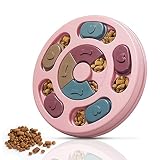
- 【Size】: L9.44" * W9.44"* H1.14" suitable for cats, puppies and small dogs.
- 【Interactive Dog Toys】This is a fun interactive puppy puzzle toy, which can easily become the closest companion and toy for your puppies and cats, and will release pressure for dogs. Find food by sliding parts to improve eating pleasure and IQ.
- 【Slow feeder】This slow feeder encourages pets to eat at a slower speed, helps to slow down the feeding time to help the dog digest, and can provide your dog with a variety of healthy snacks.
- 【Slow Feede toys】 Use this educational game toy to exercise the dog’s brain, which will help meet the dog’s instinct needs, train the pet’s sense of smell, and let the dog enjoy fun feeding when using the nose or paw to move the slider, while providing spirit stimulate.
- 【Dog toys】No toy is indestructible. Do not leave toys with unsupervised pets. Remove and replace toy if damaged.
Households with children
- Teach children not to hug, climb on, chase, corner, disturb while eating or take toys from the dog.
- Use active adult supervision; a child and dog should not be left together simply because they have previously been calm.
- Give the dog a gated rest area and teach children that entering it is not allowed.
- Watch for stiffness, lip licking, turning away, hiding or growling. End the interaction before the dog must escalate.
Introductions to other dogs
- Start outdoors or in a neutral, spacious area with two handlers and slack leashes.
- Walk parallel at a distance where both dogs can eat and respond to their handlers.
- Allow brief approaches, then call each dog away for a reward and a break.
- Stop if either dog freezes, stares, lunges, repeatedly hides or cannot disengage. Do not force face-to-face contact.
Separate dogs for meals, high-value chews and rest until their relationship is reliably peaceful. A qualified behavior professional should guide cases involving fights, serious guarding or repeated threats.
Independent reader supportYour contribution helps us test, update, and keep practical guides available for everyone.What equipment and daily routine support training?
PAWS describes responsible ownership as providing healthy food, clean water, shelter, veterinary care, socialization, training, play and exercise. A practical starter kit includes:
- A flat collar with an identification tag and a comfortable, secure leash.
- A well-fitted harness if it improves handling, selected with veterinary or trainer guidance.
- Small, soft, high-value treats and a pouch for quick delivery.
- A clicker or consistent marker word.
- Food puzzles, durable chew items and toys for retrieving or tug.
- Baby gates, a mat and secure barriers for management.
- A long line for supervised recall practice in an appropriate area.
Inspect equipment for wear, supervise chewing and select toy size and material for the individual dog. Rotate enrichment so it remains interesting, and count treats as part of the daily diet. A simple routine might include a short skill session, a sniffing walk, a meal delivered partly through a puzzle, quiet rest, play with rules and another brief training session.
When should a veterinarian or behavior professional help?
Arrange a veterinary examination for sudden behavior change, new irritability, touch sensitivity, altered sleep, appetite changes or loss of previously reliable skills. Pain, neurological disease, sensory changes and other medical issues can look like a training problem.
Free tools Windows power users keep installed
One-click scans. No signup required.
Seek a qualified behavior professional for aggression, severe fear, separation distress, compulsive behavior, dangerous escape attempts or repeated inability to recover from triggers. A trainer can teach cues and manners; behavior work must also change the dog’s emotional response and may require a veterinarian’s assessment or medication. Ask how the professional handles welfare, what tools are used and how progress will be measured without punishment.
What does the evidence establish about this breed-specific plan?
There is no controlled study identified here that tests a Philippine Forest Dog-specific positive-reinforcement protocol or compares it with another training method. The practical recommendations therefore combine the breed site’s reported characteristics with guidance from veterinary, government and veterinary-behavior sources.
Also popular on Amazon

- RUBBER MATERIAL: HIPPIH treat dispensing dog ball is made of extra-tough rubber with good elasticity, good for your sweet dog grinding and fresh their teeth. ( Blue color-2.75 in, Green color-3.14 in, suitable for medium and large dogs. Not suitable for miniature small dogs, such as Yorkshire Maltese, etc) NOTE: The dog puzzle ball must be wider than your dog's mouth
- STRONG TOOTH: HIPPIH blue dog ball can effectively help strong their teeth and won't hurt pets gums. The green one can put the food in to improve the interest of your cute dogs.
- IMPROVE INTELLIGENCE & IQ TRAINING: HIPPIH dog toy ball can easily attract your pet's attention, help pets intelligence improving and is convenient to train dogs. HIPPIH dog ball toys are perfect for interaction with your dog, promoting the bond between you and your dog.
- FOR AMUSEMENT: Perfect for fetch and interaction with your dog. You can add food or treats into the grooves and this keeps your dog entertained and active. HIPPIH IQ treat ball allow you have more interactive fun with your pets.
- BEST GIFT FOR PETS: HIPPIH dog toys ball can reduce the dog's destructive behavior, protect the home shoes, socks, sheets, sofa are not afraid of dog bite. Your naughty active dogs will be love it to kill the boring time. This dog rubber ball is best gift for your sweet dog.
Use the breed site’s historical claims, reported size and other descriptions as context, not as independently validated scientific findings. Positive reinforcement, gradual exposure, management, enrichment and professional assessment are broadly supported principles; the exact reinforcer, distance and timetable must be individualized.
Frequently Asked Questions
When can a Philippine Forest Dog puppy attend a group class?
Ask your veterinarian to weigh local infectious-disease risk, vaccine status and the class’s cleaning and enrollment policies. A small reward-based class with controlled play is preferable to an uncontrolled gathering, and carrying a puppy outdoors can provide lower-risk observation before full vaccination.
What’s actually slowing this PC down?
Pick the symptom - the matching free tool is one click away.
How many treats should I use during training?
Use very small pieces and account for them within the dog’s daily calories rather than adding unlimited extras. Your veterinarian can help adjust meal portions for growth, body condition, allergies or medical needs.
What should I do if my dog ignores its recall cue outside?
Stop increasing distance and return to a quieter setting where the dog can succeed. Use a long line, a higher-value reward and a new emergency cue while arranging professional guidance if the dog is routinely at risk of running toward hazards.
Is growling always a sign that a dog must be corrected?
Growling is communication that the dog is uncomfortable, threatened or guarding something. Increase distance, remove the trigger safely and seek behavior guidance; punishing the warning can suppress communication without resolving the underlying emotion.





Leave a Reply