The Tool Desk
Outbyte PC Repair FREEClear out junk files and repair common Windows errorsFree Scan →Outbyte Driver Updater FREEScan for outdated or missing drivers - takes under a minuteDriver Scan →A confident cat is one that has more choices: it can approach something it used to avoid, explore a room it once skipped, and recover quickly after a startle. You build that by making the cat’s world more predictable, keeping each challenge small enough that the cat stays calm, and pairing calm moments with things the cat values. Pushing the cat into contact, punishing fearful behavior, or repeatedly exposing it to something that terrifies it works against confidence. Progress is usually slow and uneven, and it should start with a veterinary check whenever the fear is new or has changed.
What fear looks like in a cat
Cats rarely scream or lunge when they are afraid. More often the signs are quiet, and they are easy to miss in a busy household. Common signals include:
- Hiding, retreating under furniture, or staying in one room for long periods
- Crouching low, pressing the body flat, or tucking the tail
- Ears turned sideways or flattened back
- Freezing when a person, sound, or object comes near
- Avoiding the litter box, food bowl, or resting spot when a trigger is present
- Hissing, swatting, or escape attempts when the cat feels cornered
Hiding is not a behavior problem to fix. It is a coping strategy: the cat is putting distance between itself and something it perceives as a threat. That is why the first goal is to give the cat a safe place to retreat, not to drag it out. A cat that can leave a situation is in a better position to learn from it than one that cannot.
When fear is a health question
Pain and physical illness can change how a cat behaves and how it responds emotionally. If a cat that was previously comfortable becomes fearful, withdrawn, or reactive over a short period, book a veterinary examination before starting any training plan. Call your vet promptly if the change comes with:
#1 Best Overall

- New communication tool about you and your puppy.
- Pet Dog Training Clickers for Puppy, Cat, Potty, Bird, Horse, Pet, Trainer Training Tools, Behavior Aids
- Just press to mark desired behavior, then reward for faster learning.
- The spring wrist length : 16cm/6.3inches and can strength to 25cm/9.84inches.
- Package include : Black + Blue,each color 1 pcs.
- A change in appetite or drinking
- Reluctance to jump, climb stairs, or move normally
- Changes in litter box use, such as straining, urinating outside the box, or going more or less often
- A shift in social behavior, such as a previously affectionate cat avoiding everyone or a previously independent cat clinging
The veterinarian can look for medical contributors and advise whether any further treatment is appropriate. Training done without that check can miss a problem that is driving the fear.
Build a secure base first
Before any training begins, the cat needs a space where it feels safe enough to rest and eat without being approached. The veterinary guidance on feline environments points to the same core elements:
- A quiet, predictable area with food, water, a litter box, and a resting spot, ideally away from heavy foot traffic
- Several hiding places at different heights, so the cat can choose the one that feels right
- Scratching and climbing options, which give the cat control over its surroundings
- Play opportunities that let the cat practice hunting and chasing without a person needing to be close
- Clear escape routes, with no hiding spot blocked and no room the cat must pass through to reach its resources
- A carrier kept out and open, so that the cat can treat it as a familiar place rather than a sign that a car ride or vet visit is coming
Introduce changes gradually. Moving the litter box, adding a new pet, or rearranging furniture can each set back progress, so make one change at a time and give the cat several days to adjust.
Rank #2

- Cat Training Clicker Kit - Includes a finger ring clicker and a retractable target stick with yellow ball, giving you two tools for guiding and interacting with your cat during training or play.
- Finger Ring Clicker for Clear Feedback - The included finger clicker produces a crisp, easy-to-press sound, helping guide your cat during training or interactive play without startling them.
- Eye-Catching Yellow Target Ball - The bright yellow ball at the tip of the target stick catches your cat’s attention and supports guided movement for interactive sessions.
- Retractable Stick for Convenient Use - The stainless steel target stick extends and retracts smoothly, allowing adjustable length for comfort, while keeping the target clicker compact and easy to store or carry.
- Versatile Training Accessory - Suitable for kittens and adult cats, this dual clicker kit can be used for a variety of interactive play or guided training sessions, and can also be used with other small pets.
The principle: work below the fear threshold
Confidence training happens in the zone where the cat notices its trigger but stays calm enough to engage. Below that zone, nothing is learned. Above it, the cat is in survival mode and is simply rehearsing fear. The American Association of Hospital Practitioners…
What’s actually slowing this PC down?
Pick the symptom - the matching free tool is one click away.
Two approaches should be avoided entirely:
- Flooding. The AAHA Canine and Feline Behavior Management Guidelines distinguish counterconditioning and desensitization from flooding, which exposes an animal for a prolonged period to a stimulus at a level that causes fear. The guidelines say flooding should be avoided.
- Positive punishment. Merck Veterinary Manual advises against punishing fear behaviors. Punishment teaches the cat that signals of discomfort are dangerous to show, and it can make the fear harder to read and harder to treat.
A training sequence you can follow
- Observe and record. For several days, note what happens just before the cat retreats or tenses: the person, sound, object, distance, and location involved. Record the earliest visible sign and how long the cat takes to return to normal. A simple notebook works. This trigger log is a practical way to organize observations; it is not a validated diagnostic test.
- Make the environment easier. Confirm the secure base described above is in place. Keep routines predictable, keep hiding spots accessible, and make sure the cat never has to pass the trigger to reach food, water, or litter.
- Choose one trigger and reduce its intensity. Pick the single trigger that causes the mildest reaction. Reduce it by distance, volume, or duration. A person can sit across the room and avoid looking directly at the cat. A sound can be played very quietly. An object can stay several feet away. These are examples of the principle, not a fixed protocol, and the cat must always be able to leave.
- Pair the mild trigger with something good. When the cat notices the trigger and stays comfortable, offer a food it already likes or a play session. Counterconditioning, as AAHA describes it, pairs a feared stimulus with something the animal wants. Do not lure the cat closer than it is comfortable approaching.
- Adjust from the cat’s response. Use the signals in the table below to decide whether to hold the current level, reduce it, or pause.
- Increase difficulty one feature at a time. Move closer, extend the duration, add slightly more movement, or raise the volume, but change only one of these at a time. If the cat becomes distressed while you are increasing difficulty, step back to the last level it handled well. Repeatedly exposing a cat while it is distressed is flooding, not confidence training.
- End each session with choice. Let the cat retreat when it wants. A session counts as progress if the cat stayed calm while observing the trigger or approached voluntarily. Touch is not required for a session to succeed.
Reading your cat’s response
These signals come from general behavior guidance and require judgment. They are not a formal scoring scale, and your cat’s normal baseline matters more than any general rule.
| What you see | What it usually suggests | What to do next |
|---|---|---|
| Relaxed, voluntary approach; normal eating; quick return to normal activity | The current level is manageable | Hold this level for another session, or make one small increase |
| Freezing, crouching, flattened or sideways ears, body turned away | Stress is rising | Increase distance, lower volume, or pause the session |
| Retreating to a hiding place and staying there | The level is too intense for now | End the session and let the cat leave on its own |
| Hissing, swatting, or escape attempts | The cat feels cornered or threatened | Stop at once, remove pressure, and check the setup for blocked exits |
| Refusing a food the cat normally values | The cat is too distressed to take food | Reduce the challenge; do not push food toward the cat |
| Recovery takes noticeably longer than in earlier sessions | The previous step was too difficult | Return to the earlier, easier step and progress more slowly |
Using treats and play as rewards
Food and play work best when they are the cat’s own preference. Choose a treat the cat already eats eagerly, and keep the portion small so it does not change the cat’s daily nutrition. Specialized training treats are optional. Play can be just as effective for some cats, particularly with a wand toy that keeps the person at a distance.
Rank #3

- INSIDE THE PACKAGE: Created by a professional animal behaviorist, this complete cat clicker training kit includes everything you need to get started: an all-in-one integrated clicker tool with a 22 inch extendable target stick and a 43-page illustrated training manual with 15 guided lessons to help you confidently train your cat from day one.
- TARGET STICK WITH UPDATED DESIGN: The CAT SCHOOL all-in-one clicker features a new and improved design with a quieter clicker sound and a stronger, more durable construction—perfect for sound-sensitive cats and everyday training use. This versatile tool works as both a target stick and a detachable clicker, giving you flexible training options. Extend the target stick up to 22 inches to easily guide your cat between positions. The large, bright yellow ball tip is easy for cats to see, track, and touch—boosting confidence, accuracy, and calm focus during training.
- QUIET, DETACHABLE CAT-FRIENDLY CLICKER: Designed with your cat’s sensitive ears in mind, this quiet clicker delivers a sound your cat can comfortably learn from. Use it attached to the target stick or slide it off for handheld use. The clicker fits comfortably in your hand and includes a secure finger loop to wear on your finger once removed from the base.
- IMPROVES CAT BEHAVIOR: Clicker training is a positive, rewarding way to teach skills and encourage good behavior. Regular training sessions help increase activity, reduce boredom and stress, and may curb unwanted behaviors like scratching or biting—while strengthening the bond between you and your cat.
- OUR COMMITMENT TO YOUR SUCCESS: Your cat’s training success matters to us. Gain access to supportive video tutorials created by an animal behaviorist and trusted by thousands of successful students. Our proven system helps make training fun, enriching, and rewarding—for both you and your cat.
Use the reward at the moment the cat is calm around the trigger, not after it has already become distressed. If the cat is too frightened to eat, that is a signal to reduce the challenge, not to keep offering food.
Choosing a covered bed or carrier
A covered bed or a carrier with a sheltered interior can give a fearful cat a place to conceal itself and feel secure. Its value comes from the function, not from any claim that a particular product cures fear. The cat should choose to use it. Useful criteria include:
Crashes, No Sound, or Screen Glitches?
Random freezes, missing sound and display glitches usually trace back to one bad driver. Find and replace yours safely.Free scan · under a minuteWindows Errors? Fix Them Before They Spread
Repair common Windows errors and clear accumulated junk for a smoother, more stable PC - no reinstall needed.Free scan · no reinstall- Concealment. Does the cat feel hidden inside it, with a covered top or enclosed sides?
- Stability. Does the bed or carrier stay in place when the cat moves in and out?
- Ease of cleaning. Can you wash or wipe it often enough to keep it fresh?
- Fit in the space. Will it fit in a spot that is quiet and does not block a route the cat needs?
- Voluntary use. Does the cat go in on its own, without being lured or placed inside?
If the cat avoids a new bed or carrier, leave it in place, put a familiar blanket inside, and offer food near the entrance without pushing the cat toward it.
Rank #4

- EASY TO USE - Simple push button with distinct clicking sound.
- Comes with an elastic wrist band so you can leave it on your wrist or clip it to the leash or your pants.
- Not only train the dog but also the cat, bird, chicken, sheep a new behaviors like sit, fetch, roll over, lie down.
- For effective pet training ALWAYS reward with a treat after clicking.
- Can be used to train the dog basic obedience, small trick, and correct the bad behavior; Scientific method of training your pet safely and easily.
Realistic expectations about progress
Behavior change takes time and consistent effort. The veterinary guidance does not establish a standard duration for confidence training, and no reliable success rate is published for it, so avoid judging progress by a calendar. Look instead for a trend across several sessions: the cat recovers faster, stays in the room longer, approaches on its own more often, or eats with the trigger present. A bad day does not erase progress, but a consistent pattern of distress means the step is too hard.
When to ask a veterinarian for more help
Seek professional guidance if any of the following apply:
- The fear started suddenly or has changed significantly
- Eating, movement, litter box use, or social behavior has changed
- The cat shows aggression toward people or other pets, or behavior that is unsafe for the cat or the household
- Fear is severe or persistent, and gradual sessions are not improving it
- You are unsure which trigger to start with or how to read the cat’s signals
A veterinarian can assess medical factors and discuss whether a veterinary behavior consultation or additional treatment is appropriate. Your regular vet is the first place to start.
Best Value
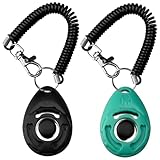
- Instant Attention & Clear Sound: This dog clicker for training produces a sharp, consistent sound that’s perfect for clicker training dogs, puppies, cats, and even birds or horses. Works great as a dog clicker to stop barking and reinforce positive behaviors quickly.
- Lightweight, Durable & Easy to Carry: Made from sturdy, lightweight materials, this pet training clicker is built to last. Comes with a convenient wrist strap so your dog training tools are always within reach during walks, obedience classes, or home sessions.
- Simple One-Button Operation: Whether you’re a new dog trainer or a pro, the large button makes this puppy training clicker and cat training clicker easy to use—just press to mark desired behavior, then reward for faster learning.
- Versatile for Multiple Pets & Purposes: More than just a dog training clicker—this tool is perfect as a cat clicker trainer, training clicker for puppies, or even a clicker cat trainer. Works for potty training, obedience, tricks, and behavior correction.
- Positive Reinforcement Training Made Easy: Trusted by professionals, this dog training & behavior aids device supports humane, reward-based training. Ideal as puppy training tools, dog training aids, or dog training clickers to create a strong bond with your pet.
Sources behind this guidance
The recommendations above draw on feline-focused veterinary guidance from the American Association of Feline Practitioners and the International Cat Care Foundation’s counterpart, the International Society of Feline Medicine (AAFP/ISFM), on cat handling and environments, the AAHA Canine and Feline Behavior Management Guidelines (2015), and behavior references in the Merck Veterinary Manual. The most relevant definition comes from AAHA:
“Counterconditioning: a process in which an animal that is reactive, fearful, or aggressive to a specific stimulus (e.g., the doorbell, an approaching dog) learns to become happy and accepting of that stimulus.”
These are general recommendations. Every cat is different, and the same plan can produce different results in different homes. Adjust each step to your cat’s temperament, health, and history.
Quick Recap
Product prices and availability are accurate as of the date/time indicated and are subject to change. Any price and availability information displayed on Amazon at the time of purchase will apply.
Free tools Windows power users keep installed
One-click scans. No signup required.




