There is no single dewormer that safely treats every internal parasite in fish. First identify the organism and where it is affecting the fish; then choose a treatment and delivery route suited to that parasite, fish species, and whether the fish is ornamental or raised for food. Weight loss, a swollen abdomen, or worms visible near the anus are reasons to seek an examination—not enough to diagnose the cause.
Start with diagnosis, not medication
“Internal parasites” covers several kinds of organisms, including nematodes, cestodes, and protists. They can affect different tissues, and some fish can carry parasites without obvious signs. Similar outward changes can also have causes unrelated to parasites, so treating symptoms alone risks choosing an ineffective or unsafe medicine.

What signs can—and cannot—tell you
- Weight loss or a pot-bellied appearance can occur with some intestinal nematodes, but neither sign identifies a particular parasite.
- Some Camallanus or Philometra worms may be visible near the posterior intestine or protruding from the anus. That observation warrants professional examination; appearance alone may not establish the organism or the right treatment.
- Severe weight loss and a wasted appearance can occur with granulomatous gastritis associated with Cryptobia iubilans. This protistan infection is not treated like a worm infection.
The Merck Veterinary Manual describes fresh-tissue microscopy as crucial to diagnosing most fish parasites. A veterinarian or qualified fish-health professional may examine fresh fecal material and, when available, intestinal or other affected tissue under a microscope. Merck’s guidance is in Management of Aquarium Fish and Parasitic Diseases of Fish.
What to do before treatment
- Record the fish’s species, appetite, weight or body condition, abnormal feces, and when the signs began. If a worm is visible, take a clear photo rather than relying on a visual guess.
- Contact an aquatic veterinarian or qualified fish-health professional and ask what fresh samples are needed. Keep any sample collection and handling instructions they provide.
- Tell the professional whether the fish is ornamental or intended for human consumption, its species, and any medicines already used. These details can change which treatment is appropriate or legally available.
- Do not begin a bath, medicated food, or other antiparasitic treatment solely because a fish is thin, bloated, or producing abnormal feces. Where practical, avoid starting medication before samples are collected, since the examiner needs suitable material to identify the cause.
Match the treatment to the parasite and route
Internal infections are generally treated through medicated food or, in selected cases, injection; baths and topical treatments are more useful for external infections. The organism, affected tissue, fish species, ability to eat, and medicine’s safety margin all matter. A veterinary reference regimen is not a universal over-the-counter instruction.
Quick wins for a faster PC:
Repair Windows errors before they cause bigger problemsFix Now →Scan for outdated or missing drivers - takes under a minuteDriver Scan →Clear out junk files and repair common Windows errorsFree Scan →#1 Best Overall
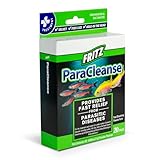
- Broad-Spectrum Parasite Treatment: Fritz ParaCleanse is expertly formulated to treat a wide range of parasitic diseases in aquarium fish, including velvet (Oodinium), hole-in-the-head disease (Hexamita & Spironucleus), fish lice, and gill & skin flukes (Dactylogyrus & Gyrodactylus), ensuring a healthy environment for your fish
- Safe for both freshwater and saltwater systems, this treatment does not, harm plants, invertebrates, or uninfected fish
- Dual Active Ingredients: Containing Metronidazole and Praziquantel, Fritz ParaCleanse is effective against a variety of common parasites in fish but also some internal bacterial infections
- User-Friendly Dosing: The pre-measured easy dosing packets simplifies the application process. Bulk jars are also available for larger systems
- Specific Treatment Indications: While highly effective against specific parasites, it is important to note that ParaCleanse does not treat Nematodes or Roundworms. For these, Fritz Expel-P is recommended
| Identified parasite or group | Approach described in Merck guidance | Important limits |
|---|---|---|
| Certain internal nematodes, including Capillaria and Pseudocapillaria | Merck lists fenbendazole, levamisole, ivermectin, and emamectin among options for these worms. For some cases, treatment may be delivered in food. | These drugs are not interchangeable, and the appropriate medicine and route depend on the fish and infection. Merck warns that ivermectin has a low safety margin. Its management reference reports high mortality with bath or gavage use of fenbendazole and says those routes are not recommended. The listed anthelmintics are not legal for use in food fish in the US, according to Merck. |
| Cestodes (tapeworms) | Merck identifies praziquantel as an anthelmintic of choice for cestodes and describes example feed regimens in its clinical reference. | The reference does not make praziquantel a cure for all internal parasites. Merck states praziquantel is not legal for use in food fish in the US. |
| Particular protistan infections, including Spironucleus | Merck describes metronidazole for certain protistan infections. | It does not appear effective against gastric infections with Cryptobia iubilans. Merck says metronidazole may not be used in food fish in the US. |
These examples are from the Merck Veterinary Manual’s Parasitic Diseases of Fish and Management of Aquarium Fish. They show why a product or ingredient name alone is not enough to select treatment: the correct organism, route, fish-specific safety, and food-fish status must be considered together.
Check food-fish rules before using any medicine
In the United States, Merck states that fenbendazole, levamisole, ivermectin, emamectin, and praziquantel are not legal for use in food fish; it also says metronidazole may not be used in food fish. These are US-specific statements, not a summary of regulations in other countries. If a fish may enter the food supply, get current local regulatory and veterinary advice before administering any medicine.
Rank #2
The aquaculture context can also change the management plan. Merck notes that some internal protistan infections have no feasible chemical control approach in food fish; for those cases, improving environmental conditions and husbandry can help reduce morbidity and mortality. See Parasitic Diseases in Aquaculture.
Independent reader supportYour contribution helps us test, update, and keep practical guides available for everyone.Prevent new infections and check whether treatment worked
Quarantine new fish
Merck recommends quarantining new fish for at least 30 days and using dedicated nets, siphons, and other equipment for the quarantine tank. Its home-aquarium example includes a small tank, sponge filter, aeration pump, and heater. Fecal examination during quarantine can reveal some internal parasites, but quarantine cannot detect every pathogen.
Do these 3 things before closing this tab:
1Scan for outdated or missing drivers - takes under a minute2Clear out junk files and repair common Windows errors3Fix the driver behind crashes, sound loss and screen glitchesRank #3

- Does not adversely affect the filter bed and is easily removed with carbon
- Will treat both internal and external infections regardless of the delivery method
- Can either be dosed into the water or combined with Focus in a medicated food mix
- An effective and safe treatment for several protozoan and anaerobic bacterial diseases of fish
- When used in a medicated food mix, it is excellent for treating parasites in tanks that contain invertebrates
Support recovery and follow-up
- Maintain good water quality and sanitation while the fish is isolated or being treated.
- Monitor appetite and body condition, and note whether the signs that prompted examination are changing.
- Arrange reassessment with the professional who identified or treated the infection. Whether and when to repeat sample testing depends on the organism and treatment plan.
Quarantine and sound husbandry reduce disease-control risks, but they do not identify a parasite or replace targeted treatment when an infection has been diagnosed.
Quick Recap
Best Value

- Contains one (1) API LIQUID SUPER ICK CURE Freshwater and Saltwater Fish Medication 4-Ounce Bottle
- Treats "ich" white spot disease in fish and secondary bacterial fish infections
- Quickly kills ich parasite, typically within 24 hours of first dose
- Use only in freshwater and saltwater aquariums not with reef aquariums
- Dose every day for five days when symptoms first start occurring
Rank #4

- For use in freshwater or marine aquaria.
- Easily absorbed through both skin and gills; ingestion not required.
- Does not adversely affect the filter bed and is easily removed with carbon.
- Safely and effectively treats several fungal, and bacterial fish diseases (dropsy, popeye, fin/tail rot, septicemia).
- When used in a medicated food mix, it is excellent for treating bacterial infections in tanks that contain invertebrates.
Product prices and availability are accurate as of the date/time indicated and are subject to change. Any price and availability information displayed on Amazon at the time of purchase will apply.




