Recommended Free Tools
The Equinest feeding calculator estimates a horse’s daily feed from its weight, age, activity level and forage type. Treat its result as a starting point—not a personalized ration or a guarantee that a horse is getting all the nutrients it needs. The Equinest itself advises consulting a veterinarian or equine nutritionist for an individual plan.
What The Equinest calculator asks and shows
Enter the horse’s weight, age, activity level and forage type on The Equinest feeding calculator. The page displays estimated daily feed, a forage minimum and maximum, and a concentrate amount if one is indicated.
The site does not disclose the calculation formula or explain exactly how each input changes the output. The result is therefore best read as a general estimate in pounds, not as a validated prediction or a complete nutritional analysis.
How to read the suggested amounts
The calculator says horses should consume approximately 1.5% to 3% of body weight daily, with at least 1% to 1.5% coming from forage. Its example equates a 1,000-pound horse with 15–30 pounds of total feed per day. These are The Equinest’s stated guidelines, not universal prescriptions; the calculator page does not state a publication date for them. The Equinest calculator
Do these 3 things before closing this tab:
1Repair Windows errors before they cause bigger problems2Fix the driver behind crashes, sound loss and screen glitches3Clear out junk files and repair common Windows errors#1 Best Overall
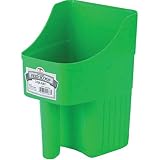
- ERGONOMIC DESIGN - The plastic feed scoop is perfect for big jobs. This large scoop has an enclosed design that reduces spillage and feaures graduation marks that allow for easy measuring.
- ULTRA DURABLE - The plastic bucket scoop is made of highly durable polyethylene resin that is impact resistant, protects against warpage, and helps prevent stress cracks.
- HEAVY DUTY HANDLE - The plastic feed scoop features a strong plastic handle that allows you to easily hold the scoop as well as stabalize the scooping tool upright when set down.
- VERSATILE USE - The heavy duty farm scoop is perfect for a large variety of use cases such as scooping feed, adding supplements, and sorting seed.
- MANY OPTIONS AVAILABLE - These premium feeding scoops are available in 8 other colors, allowing you to pick the option that best fits your needs.
In a companion article published January 15, 2026, The Equinest gives a narrower example: a 1,000-pound horse in moderate work typically gets 15–20 pounds of hay daily. That example is also a general guideline, not a quantity established for every horse at that weight and workload. The Equinest’s feeding-calculator explainer
Extension guidance provides context, but its figures are not interchangeable with the calculator’s pounds of feed:
Rank #2

- Precision Measurements: Our feed scoop is equipped with clear and accurate measurements, allowing you to dispense the perfect portions for your horses. come with Black Horse Measuring Tape as a gift.
- Durable Construction: Crafted from high-quality, durable materials, our feed scoop is built to withstand the demands of daily use in the barn.
- Time-Saving Convenience: The ergonomically designed handle provides a comfortable grip, making the feeding process quick and efficient.
- Multipurpose Functionality: Our scoop is versatile enough to handle a variety of tasks around the stable. Use it for feed, grain, pellets, supplements, water, etc. It's a versatile tool that simplifies various aspects of horse care.
- Transparency in Feeding: The transparent measurements on the scoop allow for easy monitoring of feed levels, helping you keep track of your horse's intake and make adjustments as needed.
- University of Georgia Cooperative Extension says a horse should receive at least 1% of body weight in forage on a dry-matter basis, with 1.5% to 2% described as ideal. It says concentrates should supplement forage when forage alone does not meet nutritional requirements. UGA Cooperative Extension
- University of Minnesota Extension says horses need at least 1% of body weight in roughage daily and notes that horses with free access to hay may consume 2% to 2.5% of body weight. It emphasizes that actual hay needs depend on the horse and forage quality. University of Minnesota Extension
Dry-matter percentages and pounds of feed as served are different kinds of measures. The calculator presents pounds and does not explain a dry-matter conversion, so do not assume its output and an extension guideline use the same basis.
Turn an estimate into a feeding decision
- Check the inputs. Use the best available weight and select the horse’s age, activity level and forage type as accurately as possible. The calculator does not publish enough detail to show how sensitive its result is to any one selection.
- Assess the forage. Forage is the foundation of a horse’s diet, but its quality and the individual horse’s needs matter. A calculator estimate cannot determine whether a particular hay or pasture meets nutritional requirements.
- Measure what you feed. Weigh hay and other feed portions instead of assuming that every flake or scoop has a standard weight. Penn State Extension explains that flakes and scoops vary, and its feed-weighing article was updated August 14, 2026. Penn State Extension: The importance of weighing horse feed
- Use concentrate only for an identified need. Concentrate is not automatically required. UGA Extension describes it as a supplement when forage alone does not meet nutritional requirements; a professional can help determine whether and what to add.
- Ask for an individual assessment. Consult a veterinarian or equine nutritionist when you need a ration tailored to your horse, particularly because age, metabolism, health and breed can affect needs, as The Equinest notes.
What the calculator cannot establish
- Whether a result is accurate for every horse or has been independently validated.
- The exact formula used or how much each input affects the estimate.
- Whether the pounds shown are stated on a dry-matter or as-fed basis.
- Whether a horse’s complete diet meets its nutritional needs.
Those limits do not make the tool useless: it can help organize an initial estimate and a conversation about feed amounts. They do mean its numbers should not replace an individualized feeding assessment.
What’s actually slowing this PC down?
Pick the symptom - the matching free tool is one click away.
Quick Recap
Best Value
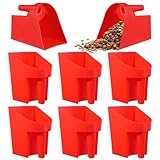
- 【Sufficient Quantity】- Every package comes with 6 pcs plastic enclosed feed scoops, its sufficient quantity ensures you always have a spare on hand whenever you need it, or even cater to a larger scale of animal feeding with ease, you can use these scoops to hold different foods, reducing the possibility of food mixing, and using a feed scoop avoids direct hand contact with the feed, helping to maintain cleanliness.
- 【Ideal Size For Various Feed Types】- With a size of approximately 7.87 x 6.1 x 5.63 inches, this heavy duty feed scoop boasts the reasonable size to handle a variety of feed types, its capacity of about 2 qt ensures that it carries a substantial amount of feed in one scoop, making your feeding tasks quicker and more efficient, and these scoops are stackable for easy storage.
- 【Quality Material】- The stackable horse feed scoop is made of durable and sturdy PP plastic, making it a long lasting and reliable tool for feeding your pets, its red color also adds an appealing aesthetic, making it noticeable even in a cluttered workspace or barn owner's equipment pile.
- 【Heavy Duty Handle】- The plastic feed scoop features a strong plastic handle that allows you to easily hold the scoop as well as stabalize the scooping tool upright when set down.
- 【Versatility】- The plastic feed scoop with handle provides versatile uses, ideal not only for serving pet food or feed for chicken, horse, lamb, goat and more, but also ideal for gardening needs like spreading fertilizer or seeds, this multi purpose tool is a trustworthy companion in every home, zoo, and farm.
Rank #4

- 2-pack 3 Quart Feed Scoops: includes 2 blue plastic feed scoops, each with a 3 quart capacity for daily feeding, measuring, and scooping grain, pellets, oats, and sweet feed
- Clear Measurement Marks: built-in measurement lines help you portion different feeds more consistently, making it easier to manage feeding amounts for horses, goats, sheep, cattle, and other livestock
- Deep Scoop with Easy-pour Design: the deep scoop body helps reduce spills, while the angled front makes pouring feed into buckets, bins, and troughs cleaner and more controlled
- Durable Plastic for Barn Use: made from sturdy plastic for repeated use around barns, stables, feed rooms, and farms; Lightweight enough for daily handling but strong enough for common dry feed
- Multi-use Feeding Tool: great for horse feed, livestock grain, pellets, bird seed, pet food, garden seed, and other dry materials; A practical tool for feed storage bins, barns, farms, and animal care
Rank #3

- The SureScoop is designed to measure both sweet and pellet feeds
Product prices and availability are accurate as of the date/time indicated and are subject to change. Any price and availability information displayed on Amazon at the time of purchase will apply.




