
Quick wins for a faster PC:
Repair Windows errors before they cause bigger problemsFix Now →Fix the driver behind crashes, sound loss and screen glitchesFind Drivers →Some links on this page are affiliate links: if you buy through them we may earn a commission, at no extra cost to you.
Dry the kitten immediately, move it to a warm, draft-free place, and apply gentle indirect heat while you contact a veterinarian, shelter, or rescue. Do not feed a kitten that feels cold: hypothermia can stop intestinal movement and make bottle- or tube-feeding cause fatal regurgitation or aspiration. Newborn kittens are particularly vulnerable because they cannot regulate body temperature reliably until roughly four weeks of age.
First check breathing and responsiveness. Labored or open-mouth breathing, blue or pale gums, collapse, seizures, inability to hold the head up, a very weak pulse, or profound lethargy are emergency signs. Call an emergency clinic before traveling so staff can prepare, then keep the kitten dry and warm during transport.
As an Amazon Associate I earn from qualifying purchases.
What should I do first with a cold, wet kitten?
Use this order: assess breathing, dry the kitten, warm it gradually, and arrange professional care. A wet neonate loses heat rapidly, but aggressive or uncontrolled heating can cause burns, dehydration, or circulatory shock.
- Move it to safety. Bring the kitten indoors or into a vehicle, away from wind, rain, cold floors, and other animals. Put it on a clean, dry towel.
- Assess breathing and circulation. Watch the chest, check gum color if you can do so safely, and note whether the kitten reacts to touch or can hold its head up. Any emergency sign requires immediate veterinary help.
- Dry before warming. Blot and gently rub with soft towels. Replace each towel as it becomes damp. Handle a weak kitten as little as possible, especially if breathing is abnormal.
- Begin indirect heat. Use your body heat, a warm-water bottle wrapped in several towel layers, or a carefully controlled supplemental heat source. Keep a dry barrier between the kitten and heat.
- Monitor continuously. Recheck breathing, color, movement, and temperature. The kitten must be able to move away from the warm area, and you should never leave it unattended with a heat source.
- Call a professional. Contact an emergency veterinarian, regular veterinarian, municipal shelter, or kitten rescue even if the kitten starts moving more normally.
Do not delay professional advice while trying to identify the kitten’s exact age. A lethargic kitten may also be dehydrated, hypoglycemic, infected, injured, or poisoned.
Popular on Amazon

- KITTEN MILK REPLACEMENT - When mom can’t nourish them, KMR can. Scientifically the next best to mother’s milk, KMR provides all the nutritional elements necessary for kittens; newborn to six weeks old.
- COMPLETE, BALANCED NUTRITION - Our formula is closest to mother's milk in protein, fat and carbohydrates. We’ve also added vitamins, minerals and trace nutrients; plus prebiotics and probiotics for healthy immunity and digestion.
- EASY TO DIGEST - KMR is highly palatable and formulated with a special fiber blend for easy digestion and Improved gut health.
- EASY-TO-MIX FORMULA - Whisk or Shake 1 part powdered KMR into 2 parts warm water. Do not mix more KMR than can be consumed in 24 hours. Do not use a blender.
- ABOUT US - PetAg is a trusted leader in pet wellness, with science-backed formulas in our milk replacers, health supplements, and grooming products helping pet owners to proactively enhance the lives of their pets, for more healthy years together.
When is a cold kitten an emergency?
A kitten needs emergency veterinary care when breathing, circulation, consciousness, or neuromuscular function is compromised. Call ahead and follow the clinic’s transport instructions rather than attempting prolonged home treatment.
- Open-mouth, labored, noisy, or rapidly worsening breathing
- Blue, gray, or unusually pale gums or tongue
- Collapse, seizures, inability to stand, or inability to hold the head up
- Unresponsiveness, extreme weakness, or a very weak pulse
- Severe lethargy that does not improve as the kitten is dried and gently warmed
- Known trauma, possible poisoning, or a kitten that is freezing, soaked, or trapped
Keep the kitten horizontal and warm, but do not force food, water, or medication. If breathing worsens, stop unnecessary handling and tell the clinic exactly what you observe.
Recommended Free Tools
How do I dry a wet kitten safely?
Drying is the first physical intervention because evaporation can continue pulling heat from the body even after the kitten is indoors.
Use towels, not friction or a hair dryer
Blot the coat, then use short, gentle strokes with a soft towel. Work around the face without covering the nose or mouth. A hair dryer can overheat delicate skin, frighten a weak kitten, and blow air into the airway; it is safer to use towels and a warm room.
Limit handling when the kitten is unstable
If the kitten is gasping, collapsed, or barely responsive, dry the torso and paws enough to stop active dripping while keeping the airway clear, then leave for emergency care. Do not spend time on cosmetic cleaning before circulation and breathing are addressed.
What is the safest way to warm a cold kitten?
Warm gradually with indirect, controllable heat. A heat source should warm one side of the nest while leaving a cooler area so the kitten can move away; direct contact with a heating pad or hot bottle can burn a neonate that cannot escape.
What’s actually slowing this PC down?
Pick the symptom - the matching free tool is one click away.
| Method | How to use it | Main risk and control |
|---|---|---|
| Body heat | Hold the dry kitten against your chest over a towel while arranging care. | Do not compress the chest or block the nose and mouth; this is temporary support, not a substitute for veterinary treatment. |
| Warm-water bottle | Fill with warm, not boiling, water; seal it and wrap it in multiple dry towels beside the kitten. | Check the bottle and skin frequently. Leave room for the kitten to crawl away. |
| Heating pad or heat disk | Use only a low, controlled setting beneath part of a thickly layered nest, following the manufacturer’s safety instructions. | Neonates may not move away from a burn. Never place the kitten directly on the pad or leave it unsupervised. |
| Warm room or incubator | Maintain a stable, draft-free environment and monitor the kitten rather than relying on room temperature alone. | Overheating and dehydration are possible; professional neonatal equipment should be managed by trained staff. |
How fast should rewarming happen?
Published neonatal-care guidance differs because a clinic’s controlled rewarming protocol is not the same as home foster care. The Merck Veterinary Manual describes slow rewarming of chilled neonates over 30–60 minutes to avoid peripheral vasodilation and dehydration; the ASAP Cats foster manual advises warming a hypothermic kitten over 1–2 hours. Use those intervals as context, not a rigid home timer: warm gradually, watch continuously, and follow the veterinarian’s instructions.
Stop and seek emergency help if breathing, gum color, pulse, or responsiveness deteriorates at any point. Never put a cold kitten directly against a very hot surface or immerse it in hot water.
How can I tell whether the kitten is warm enough?
A rectal thermometer gives more useful information than touching the ears or paws, but taking a temperature should not delay emergency care or risk injury to a struggling kitten. National Kitten Coalition guidance lists a normal newborn rectal temperature of about 97–98°F, increasing approximately one degree per week to about 100°F by four weeks. Red Cross guidance treats a rectal temperature below 98.5°F as a hypothermia warning for cats.
Also popular on Amazon
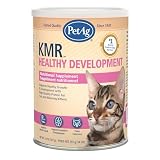
- NUTRITIONAL SUPPLEMENT - KMR Healthy Development supports healthy growth and development with high-quality protein for cats weaning to 6 years.
- SUPPORTS COGNITIVE DEVELOPMENT – With DHA (Omega 3 fatty acids) and Vitamin E, our formula supports visual & cognitive development.
- CONTAINS OMEGA 6 FATTY ACIDS - Our powder contains Omega 6 fatty acids to support a healthy skin and coat.
- GREAT TASTE - KMR Healthy Development is formulated with a great taste cats love. Supports transition to solid foods for weaning kittens.
- ABOUT US - PetAg is a trusted leader in pet wellness, with science-backed formulas in our milk replacers, health supplements, and grooming products helping pet owners to proactively enhance the lives of their pets, for more healthy years together.
| Finding | What it means | Action |
|---|---|---|
| Cold ears, paws, or mouth; weak movement | Possible hypothermia, even without a thermometer. | Continue gentle drying and indirect warming while contacting a professional. |
| Rectal temperature below 98.5°F | Hypothermia warning in Red Cross guidance. | Do not feed; obtain veterinary direction urgently. |
| Newborn around 97–98°F | Within the National Kitten Coalition’s approximate newborn range. | Keep the nest stable and arrange an examination. |
| About 100°F at four weeks | Approximate temperature as thermoregulation matures. | Interpret with age, behavior, and veterinary advice. |
A warmer reading does not prove the underlying problem is solved. Continue watching breathing, gum color, alertness, hydration, and ability to suckle, and have the kitten assessed even after apparent improvement.
Crashes, No Sound, or Screen Glitches?
Random freezes, missing sound and display glitches usually trace back to one bad driver. Find and replace yours safely.Free scan · under a minutePC Slower Than It Used to Be?
A free scan shows the junk files, broken settings and background clutter dragging Windows down - then fixes them in one click.Free scan · Windows 10 & 11Can I feed a kitten if it feels cold?
No. Do not bottle-feed or tube-feed while the kitten is cold, weak, or poorly responsive. The ASAP Cats Kitten Foster Manual states, “Never feed a cold kitten!” and warns that feeding below 98°F can lead to aspiration, pneumonia, and death. Merck explains that hypothermia can cause ileus, so milk may not move through the gut; tube feeding should wait until the neonate is euthermic.
What to do instead
- Dry and warm the kitten gradually.
- Call a veterinarian or experienced rescue for an assessment and feeding plan.
- Once the kitten is warm, alert, and able to swallow normally, use only a kitten milk replacer intended for unweaned kittens, prepared exactly as directed.
- Follow the product label and the rescue or veterinarian’s instructions for volume, frequency, position, and nipple flow.
Never squirt milk into the mouth, feed a limp kitten, or improvise with cow’s milk. Kitten milk replacer addresses nutrition after stabilization; it is not emergency treatment for hypothermia, shock, or respiratory distress.
Should I bathe a flea-covered or dirty kitten?
A lethargic or severely cold kitten should not be bathed to solve fleas or contamination. National Kitten Coalition guidance warns that bathing a compromised kitten can trigger shock.
For fleas
Use a flea comb or remove visible fleas by hand while arranging professional care. Flea shampoos, sprays, collars, and spot-on medicines can be dangerous in very young or hypothermic kittens; use one only when a veterinarian or rescue confirms that the product is safe for the kitten’s age and condition.
For ordinary dirt
After the kitten is stable enough to handle, wipe small soiled areas with a warm, damp cloth. Dry completely immediately afterward and return the kitten to a clean, warm nest. Do not leave a damp coat while deciding what to do next.
How do neonatal and older kittens differ?
Age changes both the risk of hypothermia and the care required after rescue. When age is uncertain, treat a tiny, weak, or unweaned kitten as a neonatal-care case until a professional advises otherwise.
| Care question | Neonatal kitten | Older, mobile kitten |
|---|---|---|
| Temperature control | Thermoregulation is immature until roughly four weeks, so chilling can become life-threatening quickly. | Better able to generate and conserve heat, but a wet, sick, or injured kitten can still become hypothermic. |
| Feeding | May need frequent bottle or other assisted feeding after warming and veterinary assessment. | May eat appropriate wet kitten food, but a cold or lethargic kitten still must not be force-fed. |
| Supervision | Requires frequent, around-the-clock monitoring and care. | Still needs a warm nest, observation, and medical evaluation if found cold or unwell. |
| Reunification | The mother is usually the best caregiver when reunion is safe and she can be located. | Can still benefit from maternal care, but safety and illness determine whether reunion is appropriate. |
Neonatal mortality reported in veterinary references is about 9%–26%, with the highest losses in the first week. That statistic describes a vulnerable population, not a prediction for one rescued kitten, but it explains why prompt professional support matters.
What should the nest and environment be like after warming?
Use a clean, dry, draft-free box or carrier with layered towels and a warm zone beside a cooler escape zone. Keep bedding dry and change it whenever it becomes damp or contaminated.
Also popular on Amazon

- KITTEN MILK REPLACEMENT - When mom can’t nourish them, KMR can. Scientifically the next best to mother’s milk, KMR provides all the nutritional elements necessary for kittens, newborn to six weeks old.
- COMPLETE, BALANCED NUTRITION - Our formula is closest to mother's milk in protein, fat, and carbohydrates. We’ve also added vitamins, minerals, and trace nutrients; plus prebiotics and probiotics for healthy immunity and digestion.
- EASY TO DIGEST - KMR is highly palatable and formulated with a special fiber blend for easy digestion and improved gut health.
- EASY-TO-MIX FORMULA - Whisk or shake 1 part powdered KMR into 2 parts warm water. Do not mix more KMR than can be consumed in 24 hours. Do not use a blender.
- ABOUT US - PetAg is a trusted leader in pet wellness, with science-backed formulas in our milk replacers, health supplements, and grooming products helping pet owners to proactively enhance the lives of their pets, for more healthy years together.
- Check breathing, color, alertness, body warmth, hydration, appetite, urination, and stool regularly.
- Keep other pets and children away from the nest.
- Maintain moderate humidity rather than a very dry environment; Merck lists 55%–65% as recommended environmental humidity for neonatal dogs and cats.
- Record temperatures, feedings, urine, stool, and changes in behavior for the veterinarian or rescue.
- Do not give subcutaneous fluids unless a veterinary professional has trained and directed you to do so.
A kitten that perks up can still be dehydrated, hypoglycemic, infected, injured, or poisoned. Arrange an examination rather than using temporary improvement as a reason to cancel care.
Independent reader supportYour contribution helps us test, update, and keep practical guides available for everyone.Should I look for the mother cat?
If kittens are warm, clean, and in a safe location, observe from a distance to see whether the mother returns. People hovering nearby can prevent a mother from approaching, so move well away while keeping the area under observation.
Immediate intervention takes priority when kittens are cold, wet, injured, unresponsive, or exposed to traffic, predators, flooding, or other danger. Contact a shelter or rescue for help with a reunification plan; never return a medically unstable kitten outdoors simply because the mother may be nearby.
What should I bring or tell the veterinarian?
Transport the kitten in a dry carrier or box lined with towels. Place a wrapped warm-water bottle beside, not directly under, the kitten and leave ventilation clear. Call before arrival and report:
- Where and when the kitten was found
- How wet or cold it was and how long it may have been exposed
- Breathing pattern, gum color, movement, and responsiveness
- Any measured temperature and the time it was taken
- Whether it has urinated, defecated, eaten, vomited, or been exposed to fleas, chemicals, or trauma
- Every warming method, food, medication, or product already used
These details help the clinic prepare for warming, glucose support, fluids, oxygen, parasite treatment, or other care without making you guess at treatment on the way.
Common mistakes that can make a chilled kitten worse
- Feeding before warming: milk can be aspirated and the intestines may not move normally.
- Placing the kitten directly on a heating pad: a weak neonate may be unable to escape a burn.
- Heating too fast: rapid peripheral dilation can worsen dehydration and circulation problems.
- Bathing a collapsed kitten: immersion and handling can precipitate shock.
- Using flea products without age guidance: some chemicals are unsafe for very young kittens.
- Assuming quiet means calm: profound lethargy can indicate hypoglycemia, infection, injury, or shock.
- Waiting for a perfect temperature reading: emergency signs require care even when no thermometer is available.
- Leaving the heat source unattended: burns, overheating, and dehydration can occur quickly.
Frequently Asked Questions
How long can a wet kitten survive outside?
There is no safe universal time limit. Wind, air temperature, age, body size, illness, and how saturated the coat is all change the risk, and a neonatal kitten can deteriorate before it looks dramatically different. Treat any cold, wet, weak kitten as urgent rather than waiting to see whether it recovers outdoors.
Can I use a microwaveable heat pad for a rescued kitten?
Only if a veterinarian or experienced rescue approves the product and you can keep it wrapped, warm rather than hot, and positioned so the kitten can crawl away. Recheck the temperature as the pad cools; never place a microwavable pack directly against the skin or under the entire nest.
What if I cannot find a thermometer tonight?
Use observable signs—cold mouth and paws, weak responsiveness, abnormal breathing, and pale or blue gums—as reasons to call a professional. Tactile checks cannot establish a safe feeding temperature, so do not feed a kitten that is cold or weak simply because you lack a thermometer.
The Tool Desk
Outbyte PC Repair FREERepair Windows errors before they cause bigger problemsFix Now →Outbyte Driver Updater FREEFix the driver behind crashes, sound loss and screen glitchesFind Drivers →How often should a rescued kitten be weighed?
Ask the veterinarian or rescue for a schedule suited to the kitten’s age and condition. Consistent weight records can reveal inadequate intake or illness earlier than appetite alone, but weighing should never delay treatment of breathing problems, collapse, or hypothermia.





Leave a Reply