Yes—some animals benefit from photosynthesis, but they do not become plants. Most host algae or cyanobacteria that capture sunlight; certain sea slugs retain chloroplasts from algae they eat. These arrangements can provide photosynthesis-derived compounds, but they do not show that an animal can reliably live on sunlight alone.
The clearest examples include corals, anemones, sponges, giant clams, and some sea slugs. In each case, the animal remains an animal: it either hosts a photosynthetic partner or, in kleptoplasty, uses chloroplasts acquired from food.
How can an animal use photosynthesis?
In photosynthesis, algae and cyanobacteria use light to make energy-rich compounds. Animals generally do not have the complete machinery to carry out plant-like photosynthesis independently. Instead, some benefit from photosynthesis through one of two arrangements:
- Photosymbiosis: Photosynthetic algae or cyanobacteria live with the animal. Corals, anemones, sponges, giant clams, and tunicates are examples of animal groups with such associations.
- Kleptoplasty: Some animals retain chloroplasts after eating algae. Certain sacoglossan sea slugs use this strategy.
The distinction matters: hosting a photosynthetic partner or retaining its chloroplasts is not the same as an animal becoming a plant or making its own complete photosynthetic system.
#1 Best Overall

- COMPLETE DIY TERRARIUM KIT – NO EXPERIENCE NEEDED — Everything you need to build your own self-sustaining glass ecosystem, all in one box. Just follow the included step-by-step instructions — simple, intuitive, and suitable for all skill levels.
- BEAUTIFUL INDOOR DECORATION & PERFECT GIFT — A stylish accent piece for your home, living room, or office desk. Makes a unique and creative gift for plant lovers, nature enthusiasts, and kids of all ages.
- ALL MATERIALS INCLUDED – NOTHING TO BUY SEPARATELY — Kit contains: glass jar with cork lid (34 fl oz / 1L), coconut soil, decorative stones, sphagnum moss, activated charcoal, bamboo tweezers, bamboo spoon, and cultivation instructions — all pre-measured to fit the included jar perfectly. (Plant not included)
- FULLY CUSTOMIZABLE – CREATE YOUR OWN ECOSYSTEM — Choose the plant you love and design your own unique miniature garden. Best suited for: Fittonia, mini Fern, Tillandsia (air plant), or Moss. Layer the materials your way and make it truly yours.
- SELF-SUSTAINING CLOSED ECOSYSTEM — Once sealed, the terrarium creates its own water cycle through condensation and evaporation, requiring minimal watering. A living decoration that takes care of itself — perfect for beginners and busy plant lovers.
Animals and their photosynthesis strategies
| Example | What is involved? | What the evidence supports | Important limit |
|---|---|---|---|
| Elysia chlorotica | Retains chloroplasts from the alga Vaucheria litorea | Retained plastids can fix carbon in light | Carbon fixation does not prove that photosynthesis is necessary for survival |
| Elysia viridis | Retains algal chloroplasts | Isotope tracing found photosynthesis-derived carbon and nitrogen in host tissues | This demonstrates transfer of products, not that the animal lives entirely on sunlight |
| Corals and anemones | Host whole photosynthetic partners | Photosynthesis occurs through the partner, not through plant-like animal tissue | The animal remains a host animal, not a plant |
| Sponges, giant clams, and tunicates | Some species associate with algae or cyanobacteria | Photosynthetic partnerships occur in these animal groups | Specific benefits and arrangements vary by species |
Sea slugs that keep chloroplasts
Some sacoglossan sea slugs feed on algae and retain the algae’s chloroplasts in cells lining digestive diverticula. The retained plastids are often called kleptoplasts. Elysia chlorotica, for example, acquires chloroplasts from Vaucheria litorea.
In light, retained plastids can fix carbon. In Elysia viridis, isotope labeling showed photosynthesis-derived carbon and nitrogen entering host tissues, evidence that products from the plastids can contribute to the animal’s metabolism.
Rank #2

- COMPLETE DIY TERRARIUM KIT – NO EXPERIENCE NEEDED — Everything you need to build your own self-sustaining glass ecosystem, all in one box. Just follow the included step-by-step instructions — simple, intuitive, and suitable for all skill levels.
- BEAUTIFUL INDOOR DECORATION & PERFECT GIFT — A stylish accent piece for your home, living room, or office desk. Makes a unique and creative gift for plant lovers, nature enthusiasts, and kids of all ages.
- ALL MATERIALS INCLUDED – NOTHING TO BUY SEPARATELY — Kit contains: glass jar with cork lid (1 Gal/ 4L), coconut soil, decorative stones, sphagnum moss, activated charcoal, bamboo tweezers, bamboo spoon, and cultivation instructions — all pre-measured to fit the included jar perfectly. (Plant not included)
- FULLY CUSTOMIZABLE – CREATE YOUR OWN ECOSYSTEM — Choose the plant you love and design your own unique miniature garden. Best suited for: Fittonia, mini Fern, Tillandsia (air plant), or Moss. Layer the materials your way and make it truly yours.
- SELF-SUSTAINING CLOSED ECOSYSTEM — Once sealed, the terrarium creates its own water cycle through condensation and evaporation, requiring minimal watering. A living decoration that takes care of itself — perfect for beginners and busy plant lovers.
Does photosynthesis keep sea slugs alive?
Not necessarily. A study found that plastid-bearing slugs fixed carbon dioxide in light, but did not require photosynthesis to survive under the conditions tested. Photosynthetic activity and transfer of photosynthetic products are not, by themselves, proof that an animal depends on sunlight for survival.
How do stolen chloroplasts keep working?
Chloroplast maintenance in animal cells remains an active research question. An early paper reported evidence related to an algal nuclear gene in Elysia chlorotica. Later analysis found no evidence of horizontal gene transfer into the slug’s germ line and concluded that gene transfer was not the primary explanation for long-term plastid maintenance. The genetic explanation should therefore be described as unresolved, not settled.
Free tools Windows power users keep installed
One-click scans. No signup required.
Rank #3

- Premium Complete Terrarium Kit: Create your own living ecosystem with everything included in one complete kit. Features a premium glass container, real live moss, nutrient soil, decorative pebbles, driftwood, planting tools, spray bottle, wooden base, and an easy-to-follow care guide.
- Real Live Moss Creates a Natural Ecosystem: Unlike artificial decorations, real live moss adds natural texture, vibrant greenery, and authentic biological beauty. Build a living terrarium that continues to evolve with proper care.
- LED Grow Light for Better Indoor Growth: The adjustable LED grow light helps provide supplemental light for terrariums displayed in offices, bedrooms, apartments, or other indoor spaces with limited sunlight, making plant care easier throughout the year.
- Elegant Botanical Decor for Home & Office: Designed to become a beautiful centerpiece for desks, shelves, coffee tables, bedrooms, and offices. Bring nature indoors with a modern glass terrarium that complements any living space.
- Thoughtful Gift for Every Plant Lover: A meaningful gift for birthdays, housewarming parties, Mother’s Day, Father’s Day, Christmas, anniversaries, teachers, coworkers, or anyone who enjoys plants, nature, and creative projects.
Animals that host photosynthetic partners
In photosymbiosis, the animal hosts algae or cyanobacteria rather than keeping only chloroplasts. Corals, anemones, sponges, giant clams, and tunicates are examples of animal groups in which photosynthetic partnerships have evolved.
The photosynthetic partner captures light and makes compounds that may benefit the host. The association does not turn the animal into a photosynthetic plant, and the exact exchange varies among species. It is best to describe a particular benefit only when evidence for that animal and partnership supports it.
Rank #4
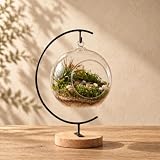
- COMPLETE DIY TERRARIUM KIT — Create your own miniature botanical display with a coordinated set of materials and tools in one kit. The glass globe, live moss, layering materials, decorative pieces and mini tools give you the essentials to build and personalize your terrarium from the ground up
- REAL LIVE MOSS INCLUDED — Unlike kits built only around decorative or artificial materials, this terrarium set includes real live moss to bring natural texture and color into your finished arrangement. Follow the included care guidance to help the moss recover after shipping and maintain it as part of your terrarium.
- LAYER, BUILD & PERSONALIZE — Arrange the included substrates, sand, gravel, moss and decorative accents to create depth, texture and your own miniature landscape. Mini tools help with placing and adjusting smaller details, making the building process part of the experience rather than simply displaying a finished product.
- GLASS GLOBE DISPLAY — The clear glass globe keeps the miniature arrangement visible from multiple angles, while the coordinated wood base and metal frame create a finished display for desks, shelves, tables and other indoor spaces. The compact design turns the completed terrarium into part of your decor.
- STAND OR HANG — Display the finished terrarium on its wood base or use the included hanging rope for another presentation option. The flexible format makes it easy to incorporate the finished piece into a desk, shelf, tabletop or other indoor display area.
What these examples do—and do not—show
- They show that animals can benefit from photosynthesis. That benefit may come from hosting a photosynthetic partner or retaining chloroplasts acquired from algae.
- They do not show that animals have become plants. In kleptoplasty, the animal uses acquired plastids; in photosymbiosis, a partner performs photosynthesis.
- Photosynthetic activity is not the same as dependence. Carbon fixation or transfer of photosynthetic products does not automatically mean an animal needs sunlight to survive.
- The biology is not fully settled. In particular, the mechanism that maintains stolen plastids remains under study.
FAQ
Are there animals that photosynthesize?
Some animals benefit from photosynthesis by hosting algae or cyanobacteria, and some sea slugs retain chloroplasts from algae they eat. That is different from an animal independently carrying out plant-like photosynthesis.
How can a sea slug photosynthesize?
Certain sacoglossan sea slugs retain chloroplasts from algae they eat. Those plastids can fix carbon in light. Isotope tracing in Elysia viridis also found photosynthesis-derived carbon and nitrogen in host tissues.
Recommended Free Tools
Best Value

- COMPLETE DIY PLANTING KIT – NO EXPERIENCE NEEDED — Everything you need to pot any plant or build a self-sustaining glass ecosystem. Just follow the included step-by-step instructions — simple, intuitive, and suitable for all skill levels.
- ALL MATERIALS INCLUDED – JUST BRING YOUR CONTAINER — Kit contains: potting soil, decorative stones, sphagnum moss, activated charcoal, bamboo tweezers, bamboo spoon, and instructions — perfectly dosed for a single project. No waste, no leftovers. (Container & plant not included)
- WORKS WITH ANY PLANT OR CONTAINER — Perfect for terrariums, succulents, cacti, Fittonia, bonsai, moss or any indoor plant. Use a glass jar, vase, bowl or pot — layer the materials your way and create something unique.
- SELF-SUSTAINING OR OPEN PLANTING – YOUR CHOICE — Seal your container for a low-maintenance closed ecosystem with its own water cycle, or use it open for succulents and cacti. One kit, endless possibilities — perfect for beginners and busy plant lovers.
- BEAUTIFUL INDOOR DECORATION & PERFECT GIFT — A stylish addition to any home, living room, or office desk. Makes a unique and creative gift for plant lovers, nature enthusiasts, and kids of all ages.
Can animals live entirely on sunlight?
The evidence described here does not establish that these animals live entirely on sunlight. Photosynthetic activity and a nutritional contribution do not prove that photosynthesis is necessary for survival; a study found plastid-bearing slugs survived without photosynthesis under the tested conditions.
Do sea slugs inherit the genes that keep stolen chloroplasts working?
The mechanism is unresolved. An early study reported evidence related to an algal gene, but later analysis found no evidence of horizontal gene transfer into the germ line and concluded it was not the primary explanation for long-term plastid maintenance.
Are corals plants?
No. Corals are animals. Some host photosynthetic partners, which capture light and may provide products that benefit the coral.
Quick Recap
Product prices and availability are accurate as of the date/time indicated and are subject to change. Any price and availability information displayed on Amazon at the time of purchase will apply.




