Free tools Windows power users keep installed
One-click scans. No signup required.
Indian star tortoises need carefully planned, warm housing, appropriate UV exposure, shade, clean shallow water, and a coarse, high-fiber plant-based diet. They are demanding long-term pets, so arrange reptile-veterinary care and verify the animal’s lawful origin and the rules where you live before acquiring one.
The species is Geochelone elegans and is listed in CITES Appendix I. That status makes international commercial trade highly restricted, but it does not answer whether private ownership is allowed in every jurisdiction. Check current local rules and provenance documents rather than relying on a seller’s assurances.
Is an Indian star tortoise a suitable pet?
An Indian star tortoise can be rewarding for an owner prepared to manage a carefully controlled habitat, but it is a poor choice for an impulse purchase. The commitment includes equipment testing, regular cleaning, food preparation, weight and behavior records, and veterinary care over the animal’s long life. WWF classifies its welfare risk as high because its care, diet, and housing needs can be difficult to meet.
You will need substantially more than a small glass aquarium. The tortoise must be able to walk, turn, forage, bask, cool down, hide, and reach food and water without being trapped in the hot or bright part of the enclosure. You also need reliable heating and UVB equipment, monitoring instruments, safe electrical installation, appropriate plant material, and a plan for veterinary expenses.
#1 Best Overall
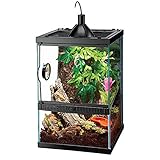
- A perfect reptile habitat for your small arboreal reptile or amphibian
- Front opening door on this reptile terrarium allows for easy access
- Glass terrarium hinged lid allows for additional access and the powder coated screen resists rust
- 5" Deep water tight bottom allows for unique water features, making this vertical terrarium the perfect mini paludarium
- Kit Includes: 12"x12"x18" glass front opening terrarium, Rock Like Foam Background, Front Locking Latch and Pin, Hinged Screen Top, Mini Halogen Dome with Bulb, Coconut Husk Bedding, Humidity and Temperature Gauge, Feeding Dish, and Setup Guide
It should not be treated as a child’s unsupervised pet. Reptiles can carry Salmonella while appearing healthy. CDC guidance identifies children younger than five, older adults, and immunocompromised people as being at greater risk from reptile-associated illness. In households with someone in one of these groups, discuss whether keeping a reptile is appropriate before acquiring the animal.
Identify the species and screen the source before purchase
The Indian star tortoise is Geochelone elegans. Do not confuse it with the Burmese star tortoise, Geochelone platynota. A seller should be able to identify the species clearly and provide credible information about its origin.
The species is native to India, Pakistan, and Sri Lanka, where it uses varied habitats including arid and semi-arid scrub and grassland, as well as agricultural fields, hedgerows, and plantations, according to the 2018 IUCN/SSC species account. Its distinctive shell pattern has made it desirable in the exotic-pet trade, while illegal collection is a conservation concern.
WWF and the Government of India report that Indian star tortoises are listed in CITES Appendix I. India’s Press Information Bureau says the species was upgraded in 2019. CITES status governs international trade; domestic possession, sale, transport, and permits depend on applicable national and local laws. Do not treat India-specific restrictions as a universal ownership rule.
Acquisition checklist
- Confirm that the animal is Geochelone elegans, not a Burmese star tortoise or another species.
- Ask for captive-bred history, the date of birth or a reasonable age estimate, and records showing the animal’s origin.
- Reject sellers who provide vague answers, no paperwork, suspiciously low prices, or implausible shipping stories.
- Before any cross-border movement, check current CITES and official wildlife-trade requirements for the countries involved.
- Check current official wildlife and animal-entry requirements where you live. Rules and permit duties can vary by jurisdiction.
- Keep copies of invoices, permits, breeding records, transport documents, and correspondence with the seller.
If you cannot verify legal provenance, do not buy the animal. A tortoise rescue or documented captive-breeding registry may be a more responsible starting point than a generic seller, but any organization should still be independently checked for legitimacy and lawful records.
Never release an unwanted Indian star tortoise outdoors. It may not survive, may transmit disease, and may create ecological or legal problems. Contact a qualified rescue, wildlife authority, or reptile veterinarian instead.
Build the enclosure before the tortoise arrives
Prepare and test the habitat first. Run the lighting and heating system for several days, record readings at different locations and times, check that the tortoise can reach shade and water, and secure every electrical component. Introduce the animal only after the enclosure is stable.
Rank #2
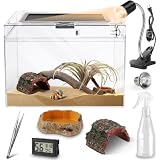
- COMPLETE 7-PIECE STARTER HABITAT KIT: Includes the terrarium, stainless-steel tweezers, digital thermometer/hygrometer, hide cave, sprayer, feeding bowl, and heat lamp. Use it as a compact starter habitat or observation enclosure, giving first-time keepers the essential tools for everyday small-pet care
- TEMPERATURE & HUMIDITY MONITORING FOR DAILY CARE: The included digital thermometer hygrometer measures temperature and humidity, while the waterproof base and sprayer support moisture-focused setups. Designed for hermit crabs, frogs, and other suitable small pets that require closer environmental monitoring
- SECURE LOCKING LID WITH VENTILATION: The seamless one-piece enclosure combines a sturdy locking top with a ventilated mesh lid to support airflow while helping keep small pets safely contained. The accessible top makes daily feeding, misting, observation, and routine habitat maintenance easier
- CLEAR POLYCARBONATE & EASY-CLEAN WATERPROOF BASE: Transparent, shatter-resistant pc provides a clear 360° view, while the seamless waterproof base helps contain moisture and makes routine wipe-downs and substrate changes easier. Customize with species-appropriate hides and heating or lighting equipment
- 3.2-GALLON COMPACT HABITAT FOR SMALL PETS: Measuring 12 x 7 x 9 inches, this terrarium is designed for hermit crabs, frogs, tarantulas, mantises, and other small reptiles, amphibians, or invertebrates. Its compact footprint fits desktops, shelves, classrooms, and reptile rooms
Indoor housing
A low-sided tortoise table or a secure, well-ventilated custom enclosure can work indoors. The usable floor area matters more than the enclosure’s advertised volume. A small aquarium generally does not provide enough room for a meaningful thermal gradient, a retreat from light, a feeding area, and safe movement.
The Tool Desk
Outbyte PC Repair FREERepair Windows errors before they cause bigger problemsFix Now →Outbyte Driver Updater FREEScan for outdated or missing drivers - takes under a minuteDriver Scan →If a ready-made habitat cannot provide the necessary floor space and ventilation, compare a large tortoise enclosure by usable floor area, escape resistance, ventilation, cleanability, and electrical safety—not by appearance alone. Plan for the animal’s eventual needs rather than buying a temporary container that will quickly become inadequate.
Outdoor housing
Outdoor housing can provide natural, unfiltered sunlight where the climate, local law, security, and animal’s health permit it. It must have an escape-resistant perimeter, predator protection, shade, and construction that prevents digging or climbing out. Outdoor exposure should be supervised unless the enclosure is genuinely secure. Direct sun can overheat a tortoise quickly, so shade must always be available.
Essential furnishings
- Shade and hides: Provide stable shaded shelter and, if appropriate for the setup, a separate humid retreat that remains suitably warm.
- Water: Use a clean, shallow dish that the tortoise can enter and leave safely.
- Feeding surface: Offer food on a surface that can be cleaned and that limits contact with contaminated substrate.
- Enrichment: Safe, non-toxic plants and varied textures can encourage natural movement and foraging. Confirm the identity and safety of every plant.
- Electrical safety: Guard every heat emitter against burns and protect cords and equipment from water, chewing, and accidental pulling.
Choose a substrate that balances digging opportunity, humidity management, cleanliness, and low impaction risk. Avoid sharp gravel, dusty particulate material, and untreated soil contaminated with pesticides or fertilizers. Monitor the actual enclosure for dust, ingestion, odor, mold, and wetness.
Heat, UVB, and lighting
Indian star tortoises need warmth and appropriate UV exposure. WWF gives a cool-side reference temperature of 77°F and a basking-area reference range of 95–104°F. These are reference values, not a complete enclosure prescription; monitor conditions and consult a reptile veterinarian about an individualized setup.
Do these 3 things before closing this tab:
1Clear out junk files and repair common Windows errors2Scan for outdated or missing drivers - takes under a minute3Repair Windows errors before they cause bigger problems| Habitat area or option | Guidance | Important caveat |
|---|---|---|
| Cool side | WWF reference: 77°F | Provide a real gradient and a shaded retreat. |
| Basking area | WWF reference: 95–104°F | Measure conditions at the tortoise’s level; do not rely on bulb wattage. |
| Natural sunlight | Can provide natural UV exposure outdoors | Provide shade, predator protection, escape prevention, and overheating control. |
| Indoor UVB | Tortoise Trust describes high-output full-spectrum UVB tubes as an indoor option | Follow equipment instructions and seek species-specific advice; the reviewed sources do not establish a universal product, placement, or replacement schedule. |
A basking bulb creates warmth but does not automatically provide useful UVB. A UVB lamp does not replace the need for a measured basking area. The tortoise must be able to move between warmer and cooler, shaded areas.
For an indoor habitat, a reptile UVB light should be selected and installed according to the manufacturer’s instructions. UVB exposure depends on the lamp and setup; do not assume that a glowing bulb is still delivering adequate UVB.
Use digital thermometers in more than one location and record readings over time. A digital reptile thermometer and hygrometer can help monitor environmental zones. An infrared thermometer for reptile enclosure measures surfaces and complements, rather than replaces, ambient readings.
Ordinary window glass filters much of the useful UVB, so sunlight through glass is not an equivalent substitute for safe outdoor exposure or correctly installed indoor UVB equipment. Outdoor sunlight requires shade, escape prevention, predator protection, and a plan to prevent overheating.
Crashes, No Sound, or Screen Glitches?
Random freezes, missing sound and display glitches usually trace back to one bad driver. Find and replace yours safely.Free scan · under a minutePC Slower Than It Used to Be?
A free scan shows the junk files, broken settings and background clutter dragging Windows down - then fixes them in one click.Free scan · Windows 10 & 11Rank #3
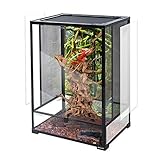
- [Patent Design] 1. Side Meshes and Side Glasses Switched Easily: Great for different needs, the side meshes and side glasses can be switched according to the environment, providing your reptile or amphibian with a long-lasting and comfortable environment.
- 2. Front and Top Opening: The front opening doors allow easy access for maintenance and feeding. A specially designed lock will prevent escape and the doors can be opened separately. Well-ventilated with a removable mesh top allows UVB and infrared penetration, optimum airflow and dome lighting, and easy access while decorating or cleaning.
- 3. Waterproof Base & Raised Bottom Frame: Water-tight base, every terrarium is tested for leaks; Raised bottom frame to fit a substrate heater.
- 4. Easy to assemble: Easy to install, we have installation notes, conveniently flat packed for safety and transport.
- 5.Size and Package : Size : 24 x 18 x 36 inch; Package include : 1pcs *REPTI ZOO reptile glass terrarium,reptile and other decorations not included.
A thermostat may be appropriate for certain heating elements, but it does not remove the need to measure final temperatures at the tortoise’s level. Guard every lamp or ceramic heat emitter so the tortoise cannot touch it.
Humidity and hydration
Humidity is not a single universal target that can be set without observing the enclosure. It depends on age and condition, enclosure design, substrate, ventilation, hide design, and local climate. Provide shelter and shade while avoiding cold, damp, stagnant conditions. Keep ventilation effective and ensure there is a drier option.
Use a reliable hygrometer, observe the substrate and hides, and adjust moisture and ventilation together. The enclosure should not be stagnant, moldy, or continuously waterlogged.
Provide clean drinking water in a shallow dish. Position it away from areas where feces, loose substrate, or food will readily contaminate it, and clean it frequently. A clean, shallow bathing and drinking tray is recommended in the care guidance. Soaking is not a substitute for correct enclosure conditions; ask a reptile veterinarian for individualized advice.
Quick wins for a faster PC:
Clear out junk files and repair common Windows errorsFree Scan →Fix the driver behind crashes, sound loss and screen glitchesFind Drivers →Repair Windows errors before they cause bigger problemsFix Now →Lethargy, poor appetite, a sunken appearance, or abnormal urates can occur with health problems, but none of these signs is diagnostic on its own. If changes persist, seek veterinary assessment rather than repeatedly altering humidity or soaking without identifying the cause.
Diet: high fiber, plant-based, and carefully sourced
The diet should be based on coarse, high-fiber plant material suitable for a grazing herbivore. Tortoise Trust recommends grasses and other coarse plants, and cautions against frequent soft foods and fruit. The IUCN/SSC account describes wild tortoises as largely herbivorous; its observations of occasional scavenging are not a captive feeding recommendation.
Safe leafy plants, grasses, weeds, and appropriate flowers can be offered when their identity and growing conditions are known. Wash produce, avoid plants treated with pesticides or herbicides, and learn the identity of every foraged plant before offering it.
Commercial foods can supplement rather than replace suitable plant material. If you use tortoise food pellets, inspect the ingredients and follow the product directions. A product marketed for tortoises is not automatically appropriate for this species.
Avoid making fruit or soft, watery foods the dietary foundation. Do not feed meat, and do not make high-protein vegetables such as beans a regular feature. Calcium and mineral needs can be important, especially for juveniles and egg-laying females, but the reviewed care guidance does not provide a universal ration or dosing protocol.
Rank #4

- ✅【Suitable for Beginners】- The 6.6 Gallon Reptile Terrariums is water tight and can hold water.it comes with a long Tweezers,a feeding bowl and a spray bottle.Provide a perfect home and a warm habitat for your small reptiles, amphibians and invertebrates. Ideal for spiders, lizard, small turtles, snails, frogs, snakes, tarantulas, hermit crab or any other insects.
- ✅【Provide Your Pet With a Comfy Home】 The top is made of metal screen to provide adequate ventilation and is safe for overhead heat sources and your pet can enjoy optimal airflow, UVB and infrared penetration, and dome lighting to meet the needs of the reptile keepers.
- ✅【Clear Crystal Explosion Proof PC with 360 Degree full View】Made with high quality thick and extremely high hardness crystal explosion proof PC base for more safety. The biggest feature of this terrarium tank is that it is explosion-proof and anti-drop, with a brightness of more than 98%, and it will not yellow after long-term use. The temperature of this reptile tank can withstand -20 °C to 120 °C. An ideal habitat for desert-dwelling animals.
- ✅【Compact Design and Easily Accessible For Feeding】The cover comes with specially designed feeding port that are designed to be functional and also visually appealing.Unique with super convenient feeding port, magnet spring double insurance, light push feeding, automatic closing to prevent escape.
- ✅【After-Sales Service】Not need install, easy to use.If you have problems when assembling the plastic screws, please carefully watch the video on the page. And a replacement or refund is guaranteed if the products are not up to the standard.
If a veterinarian recommends a reptile calcium or mineral supplement, follow veterinary directions. More is not necessarily safer, and supplements cannot compensate for inadequate UV exposure or an unsuitable habitat.
There is no single food quantity that fits every Indian star tortoise. Adjust feeding to age, body condition, growth, activity, and veterinary advice. Weigh juveniles periodically with a gram scale and record trends. Persistent refusal to eat, rapid weight change, abnormal shell growth, or a noticeable change in feces warrants veterinary attention.
Health monitoring and veterinary care
Locate a reptile veterinarian before acquisition rather than waiting until the tortoise is ill. An initial examination can establish a baseline and help create an individualized husbandry plan. Ask the veterinarian about parasite considerations and follow-up monitoring.
WWF recommends access to a veterinarian who specializes in reptiles. Tortoise Trust warns against housing star tortoises with other tortoise species because apparently healthy animals may transmit disease. Keep this species separate from other tortoise species and discuss quarantine and veterinary planning before any new tortoise is introduced.
Do not self-medicate with dewormers, antibiotics, vitamins, or human medicines. The reviewed sources do not establish a symptom-by-symptom diagnostic or treatment protocol; consult a qualified veterinarian when health changes persist or appear urgent.
Cleaning and Salmonella precautions
WWF advises good hygiene and handwashing around tortoises because reptiles can carry Salmonella. Wash your hands with soap and water after handling the tortoise, its food, water dish, substrate, or enclosure. Keep reptile equipment away from kitchens and food-preparation surfaces. Do not wash reptile dishes or habitat items in a sink used for food, household dishes, or food preparation.
Children should not handle the tortoise without close adult supervision, and hands must be washed afterward. Do not allow the tortoise to roam across dining tables, kitchen counters, or food-preparation areas.
Recommended Free Tools
Should Indian star tortoises be housed together?
Keeping multiple tortoises together is not automatically safer or better. Competition for basking areas, hides, food, and water can be subtle, and stress may not be obvious. Tortoise Trust specifically advises against mixing star tortoises with other tortoise species because of disease-transmission risk, including from apparently healthy animals.
Separate housing is the safer default, especially for different species. Do not add a new tortoise directly to an established enclosure; consult a reptile veterinarian about quarantine and housing.
A practical setup sequence
- Confirm legality and provenance. Identify the species, review applicable rules, and obtain credible records before purchase.
- Arrange veterinary access. Find a veterinarian experienced with reptiles or chelonians.
- Build the enclosure. Install the perimeter, hides, water dish, feeding surface, substrate, lighting, heat, and ventilation.
- Protect against hazards. Guard emitters, secure cords, prevent escapes, and eliminate sharp or ingestible materials.
- Test for several days. Measure the basking area, cool area, hides, and humidity at different times. Confirm shade and water remain accessible.
- Prepare supplies. Have suitable plant material, cleaning supplies, a scale, and a record system ready.
- Introduce the tortoise only after conditions stabilize. Continue recording environmental conditions, appetite, feces, activity, and weight.
Common mistakes and how to correct them
| Problem | Why it fails | Better approach |
|---|---|---|
| Buying an undocumented tortoise | It can support illegal trade and create legal or health problems. | Require credible lawful-origin records; walk away if the story is vague. |
| Using a small aquarium | It limits movement, ventilation, hides, and thermal choice. | Choose a secure terrestrial enclosure based on usable floor area. |
| Treating a basking bulb as UVB | Heat and UV exposure are distinct needs. | Provide appropriate heat and UVB, then monitor the setup. |
| Measuring only room temperature | The tortoise experiences different enclosure zones and surfaces. | Measure basking and cool areas and monitor humidity. |
| Keeping the enclosure cold and damp or constantly wet | These conditions can undermine welfare and cleanliness. | Provide warmth, shelter, ventilation, and monitored moisture. |
| Feeding mostly fruit or soft foods | It does not provide the recommended coarse, high-fiber foundation. | Base meals on suitable plant material and use supplements only as advised. |
| Leaving heat equipment unguarded | Contact burns and electrical hazards can result. | Guard emitters and protect wiring from water and chewing. |
| Housing it with another tortoise species | Disease can spread even when animals appear healthy. | Keep species separate and consult a veterinarian about quarantine. |
| Washing reptile dishes in the kitchen sink | It can spread Salmonella to food-preparation areas. | Clean reptile equipment away from food areas and wash hands afterward. |
| Releasing an unwanted tortoise | It may die, spread disease, or create ecological and legal problems. | Contact a qualified rescue, wildlife authority, or reptile veterinarian. |
FAQ
What habitat does an Indian star tortoise need?
It needs secure, spacious terrestrial housing with warmth, shelter, shade, appropriate UV exposure, clean shallow water, and a way to move between warmer and cooler areas. WWF gives reference temperatures of 77°F on the cool side and 95–104°F at the basking area; have a reptile veterinarian help adapt the setup to your animal.
Best Value

- 8-Piece Complete Starter Kit: Includes a clear reptile terrarium, heat lamp, tweezers, hygrometer-thermometer, feeding bowl, sprayer, hide cave, and hammock, providing essential habitat accessories in one convenient set for beginners, first-time reptile owners, hobbyists, classroom educators, and small pet keepers. Designed for reptile lovers and exotic pet enthusiasts who want an easy way to create a comfortable habitat setup
- Secure Locking Mesh Top: Designed with a reliable locking latch to help keep the enclosure securely closed and reduce accidental openings. The top-access mesh lid makes feeding, cleaning, and daily care easier for geckos, frogs, tarantulas, hermit crabs, and other appropriately sized small pets. Ideal for home reptile rooms, bedrooms, offices, classrooms, and hobby display areas
- Multi-Point Ventilation & Humidity Support: The ventilated mesh top promotes steady airflow while allowing heat and light to pass through. The included hygrometer and sprayer help monitor and manage moisture levels, creating a comfortable environment for reptiles, amphibians, and humidity-conscious habitats. Compatible with reptile substrate, moss, climbing decorations, artificial plants, and other habitat accessories for customized setups
- Strong Clear PC & Easy Maintenance: Made from high-strength clear polycarbonate for durability and excellent visibility, this enclosure provides a clear viewing experience while supporting everyday habitat care. The smooth moisture-resistant base works well with misting, humid hides, and habitat decorations, making cleaning and routine maintenance simple for new and experienced keepers
- Spacious Horizontal Habitat: Measuring 15.6 x 8 x 10 inches with a 5.3-gallon capacity, this larger terrarium provides additional floor space for small reptiles, amphibians, and invertebrates, allowing more room for hides, feeding areas, substrate, and habitat decorations. A great choice for reptile enthusiasts who want to create a more customized habitat environment with compatible accessories such as substrate, plants, and climbing decorations
What should an Indian star tortoise eat?
Offer a coarse, high-fiber, plant-based diet, including suitable grasses and other identified safe plants. Tortoise Trust cautions against frequent soft foods and fruit, and says meat should not be given. Ask a reptile veterinarian about supplements.
What’s actually slowing this PC down?
Pick the symptom - the matching free tool is one click away.
Is an Indian star tortoise legal to keep where I live?
There is no single answer for every jurisdiction. CITES Appendix I restricts international commercial trade, while domestic ownership, sale, transport, and permit rules vary. Check current official requirements where you live and verify lawful origin before acquiring or transferring an animal.
Can natural sunlight replace indoor UVB?
Safe, unfiltered outdoor sunlight can provide natural UV exposure, but the tortoise needs shade, predator protection, escape prevention, and protection from overheating. Sunlight through ordinary glass is not an equivalent substitute.
Can I keep an Indian star tortoise with another tortoise species?
No. Tortoise Trust advises against mixing star tortoises with other species because of disease-transmission risk. Keep species separate and seek veterinary guidance about quarantine and housing.
What should I do if I can no longer care for my tortoise?
Do not release it outdoors or give it to an unverified buyer. Contact a qualified tortoise rescue, wildlife authority, or reptile veterinarian for a lawful rehoming plan.
The Bottom Line
Responsible Indian star tortoise care begins before purchase: verify the species and lawful provenance, check local rules, arrange veterinary access, and build and test the enclosure in advance. Provide measured warmth, suitable UV exposure, shade and shelter, clean water, a high-fiber plant-based diet, careful hygiene, and separate housing from other tortoise species. If you cannot provide these consistently, this is not the right pet.
Quick Recap
Product prices and availability are accurate as of the date/time indicated and are subject to change. Any price and availability information displayed on Amazon at the time of purchase will apply.




