Usually, yes—but “bream” is a common name, not one scientifically precise fish. In Europe, it most often means the common or freshwater bream (Abramis brama), a primarily freshwater species that lives in lakes, backwaters, and slow-flowing rivers. In parts of the southern United States, “bream” or “brim” commonly means bluegill, another freshwater fish.
The exception is “sea bream” and other marine fish with bream in their common name. To identify the fish accurately, you need the region, the full common name, or the scientific name.

As an Amazon Associate I earn from qualifying purchases.
What fish does “bream” usually refer to?
The word bream can refer to several unrelated fish. Its meaning changes according to geography and the name used:
What’s actually slowing this PC down?
Pick the symptom - the matching free tool is one click away.
| Name used | Scientific name | Water type |
|---|---|---|
| Common bream or freshwater bream | Abramis brama | Primarily freshwater; can tolerate brackish water |
| Silver bream or white bream | Blicca bjoerkna | Freshwater |
| Bluegill, often called bream or brim in the southern United States | Lepomis macrochirus | Freshwater |
| Atlantic pomfret, sometimes called Ray’s sea bream or black sea bream | Brama brama | Marine |
So the safest general answer is: bream usually refers to a freshwater fish, but the name is also used for some marine species.
#1 Best Overall

- Quality Construction: This 10-foot, telescopic fishing rod designed specifically for bluegills, bream, and other panfish features a sensitive and durable graphite/glass composite blank
- Power And Sensitivity: The rod provides Ultra-Light power making it a versatile choice for chasing panfish, and Slow action that provides a deep flex to keep fish hooked
- Complete Control: A high-density full-length EVA handle is comfortable in the hand and fits securely in rod holders. A stainless steel line holding system and built-in hook keeper simplify every trip
- Effortless Fishing: The telescoping blank simplifies transport and extends your reach. The rod's tether tip cap provides for easy storage
- Top-Rated Versatility: Chase dinner or trophy gills with a purpose-designed fishing pole, packed with features that every panfish angler will appreciate
Common or freshwater bream: Abramis brama
In much of Europe, “bream” means the common bream, also called freshwater bream. Its scientific name is Abramis brama.
Common bream is a freshwater fish found across much of Europe and parts of Asia. Adults commonly live in:
- Lakes and reservoirs
- Backwaters and floodplain waters
- Large, slow-flowing rivers
- Warm, shallow lakes
- Lower river reaches and some estuaries
It is best described as primarily freshwater but tolerant of some brackish conditions. Brackish water is a mixture of fresh and salt water, commonly found where rivers meet the sea. Common bream may forage in brackish estuaries, particularly in lower river sections, but that does not make it a marine fish.
Common bream often forms shoals. Young fish commonly feed on plankton, while adults eat aquatic invertebrates and plant material. Larger individuals may also take small fish.
Is common bream exclusively a freshwater fish?
No. Calling common bream a marine fish would be inaccurate, but calling it exclusively freshwater is also too absolute.
The species is strongly associated with freshwater habitats and spends much of its life in lakes, rivers, and other inland waters. However, it can enter or feed in brackish estuaries. The most precise wording is:
Rank #2
- Quality Construction: This 12-foot, telescopic fishing rod designed specifically for bluegills, bream, and other panfish features a sensitive and durable graphite/glass composite blank
- Power And Sensitivity: The rod provides Ultra-Light power making it a versatile choice for chasing panfish, and Slow action that provides a deep flex to keep fish hooked
- Complete Control: A high-density full-length EVA handle is comfortable in the hand and fits securely in rod holders. A stainless steel line holding system and built-in hook keeper simplify every trip
- Effortless Fishing: The telescoping blank simplifies transport and extends your reach. The rod's tether tip cap provides for easy storage
- Top-Rated Versatility: Chase dinner or trophy gills with a purpose-designed fishing pole, packed with features that every panfish angler will appreciate
Common bream (Abramis brama) is a primarily freshwater fish that can tolerate some brackish water.
Recommended Free Tools
Special offer. See more information about Outbyte and uninstall instructions. Please review EULA and Privacy policy.
What does “bream” mean in the United States?
In parts of the southern United States, anglers and pond owners commonly use “bream” or “brim” as a regional name for bluegill (Lepomis macrochirus). Depending on local usage, the word may also be applied more broadly to other sunfish, including redear sunfish.
Bluegill are freshwater fish that live in ponds, lakes, reservoirs, and slow-moving streams. Therefore, if someone in the southern United States says, “I caught a bream,” they may be talking about a bluegill—not the European common bream.
For clear communication, especially in a fish-care article, species list, or record, use bluegill rather than bream when you mean Lepomis macrochirus.
Readers who use “bream” in this regional fishing sense may find a bluegill fishing book more useful than a guide focused on European common bream. It can help explain bluegill identification, habitat, feeding behavior, and terminology, although no fishing book is needed to answer the basic biological question.
When does “bream” mean a marine fish?
The answer changes when the name includes sea bream or another marine designation.
For example, Brama brama is a marine, highly migratory fish known as the Atlantic pomfret. It may also appear under common names such as Ray’s sea bream or black sea bream. That fish is not the same species as the freshwater common bream, Abramis brama.
“Sea bream” is also used in the common names of various other marine fishes. Common names can overlap across unrelated groups, so a fish described simply as “bream” should not be classified as freshwater without more information.
How to tell which “bream” someone means
Use these clues:
- Look at the full name. “Freshwater bream” or “common bream” generally means Abramis brama. “Sea bream” indicates a marine fish.
- Consider the location. European references usually mean common bream; southern U.S. fishing and pond references often mean bluegill.
- Check the habitat. A fish caught in a freshwater pond is more likely to be bluegill or another sunfish in a U.S. context, while a fish sold as sea bream may come from marine waters.
- Find the scientific name. Abramis brama, Lepomis macrochirus, and Brama brama are different species with different habitats.
- Do not rely on the word alone. Common names are useful in everyday conversation but can be misleading in care instructions, species identification, conservation records, and fishkeeping.
A freshwater fish identification book can be useful when you need to distinguish common bream, bluegill, other sunfish, and similarly named fish. Choose a guide covering the region where the fish was found, because the same common name can mean different animals in different countries.
Free tools Windows power users keep installed
One-click scans. No signup required.
Is silver bream a freshwater fish?
Yes. Silver bream, also called white bream in some references, is a freshwater fish. It is commonly identified as Blicca bjoerkna and is recorded among freshwater fish in Great Britain.
Silver bream is not simply another name for every common bream. It is a separate species, which is another reason scientific names are valuable when exact identification matters.
Independent reader supportYour contribution helps us test, update, and keep practical guides available for everyone.Does “bream” describe one family of fish?
No. The shared word does not mean that all bream are closely related. Common bream, bluegill, and marine fishes called sea bream belong to different taxonomic groups.
Rank #4
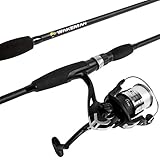
- SPINNING ROD AND REEL COMBO - Measuring 78-inches-long, this fishing combo includes a fiberglass collapsible fishing pole with adjustable drag and a forward or reverse switch. For extended casting, the reel comes with 250-yards of 6lb monofilament line.
- COLLAPSIBLE DESIGN - The medium-action bait caster rod and reel combo features a split EVA foam handle for a secure grip and collapses into two parts for easy storage. This fishing equipment is ideal for catching big fish such as walleye, bass, or trout.
- DURABLE BUILD - This durably made fishing pole and reel combo comes outfitted with stainless-steel eyelets, ceramic guides, a graphite reel seat, and a 5.2:1 gear ratio with a single ball-bearing drive that provides smooth casting action on the lake.
- RIGHT OR LEFT HAND COMPATIBLE - This saltwater fishing rod and reel combo include a reel handle that's easily switched to accommodate left- or right-handed people. Give this must-have survival fishing kit, as a present to a beginner or seasoned fisher.
- PRODUCT DETAILS - Materials: Fiberglass, Aluminum, Stainless-Steel, Ceramic, Graphite, and EVA Foam. Dimensions: (L) 78" x (W) 5.75" x (H) 5". Comes Pre-Spooled with 250-Yards of 6lb Monofilament Line. Color: Matte Black.
This is a general problem with common names. A name may reflect appearance, local tradition, habitat, or fishing custom rather than a formal biological relationship. “Bream” therefore describes a group of familiar names rather than one single, clearly defined kind of fish.
Quick answer by situation
- “Freshwater bream” in a European fish guide: Usually Abramis brama, a primarily freshwater fish.
- “Bream” in a southern U.S. pond or fishing conversation: Often bluegill, Lepomis macrochirus, or sometimes another sunfish.
- “Sea bream” on a marine-fish list or menu: A marine fish; do not assume it is freshwater.
- “Bream” without a location or full name: Ambiguous. Ask for the scientific name or identifying details.
Why the distinction matters
Correctly identifying the fish matters for more than vocabulary. Habitat, diet, legal restrictions, conservation status, fishing methods, and care requirements can differ substantially between species.
For example, a European common bream and a U.S. bluegill are both associated with freshwater, but they are not interchangeable names or identical fish. A marine sea bream has different environmental requirements again. If the fish is being kept, transported, purchased, cooked, or recorded for a scientific or regulatory purpose, use the complete name whenever possible.
Frequently Asked Questions
Is bream freshwater or saltwater?
Usually freshwater. Common bream and the bluegill often called bream in the southern United States are freshwater-associated. However, some fish called sea bream are marine, and common bream can tolerate or enter brackish estuaries.
Is bream the same as bluegill?
Not always. In parts of the southern United States, “bream” or “brim” commonly means bluegill (Lepomis macrochirus). In Europe, “bream” usually means common bream (Abramis brama), which is a different species.
Crashes, No Sound, or Screen Glitches?
Random freezes, missing sound and display glitches usually trace back to one bad driver. Find and replace yours safely.Free scan · under a minuteWindows Errors? Fix Them Before They Spread
Repair common Windows errors and clear accumulated junk for a smoother, more stable PC - no reinstall needed.Free scan · no reinstallWhat is the scientific name of freshwater bream?
The common or freshwater bream is Abramis brama.
Can freshwater bream live in brackish water?
Common bream can tolerate some brackish conditions and may forage in estuaries, especially near lower river reaches. It is still primarily a freshwater fish.
The Bottom Line
Bottom line: Bream is usually a freshwater fish, but the name is ambiguous. In Europe it generally means common bream (Abramis brama); in parts of the United States it often means freshwater bluegill; and “sea bream” refers to marine fish. Check the region and scientific name before assuming which fish is meant.
Quick Recap
Product prices and availability are accurate as of the date/time indicated and are subject to change. Any price and availability information displayed on Amazon at the time of purchase will apply.




