Cod can be either farm-raised or wild-caught. Much of the cod associated with the U.S. seafood market comes from wild fisheries, especially Pacific cod and traditionally harvested Atlantic cod, but farmed Atlantic cod is commercially produced—most notably in Norway. The word “cod” alone does not tell you how the fish was raised or caught. The production-method statement on the package or seafood-counter sign is the deciding evidence.
What “cod” means on a label
“Cod” is a market name that can refer to more than one species. In the United States, the FDA Seafood List identifies Gadus morhua as cod, with “Atlantic cod” as a common name. Pacific cod, Gadus macrocephalus, is a separate species that is also sold under cod-related market names. (FDA Seafood List)
As an Amazon Associate I earn from qualifying purchases.
Species and production method are separate facts. A fish can be Atlantic cod or Pacific cod, and either species may be discussed in relation to wild fishing or aquaculture. Therefore, “Atlantic cod” does not automatically mean farmed, and “Pacific cod” does not by itself prove that the fish was wild-caught.
Quick wins for a faster PC:
Clear out junk files and repair common Windows errorsFree Scan →Fix the driver behind crashes, sound loss and screen glitchesFind Drivers →Repair Windows errors before they cause bigger problemsFix Now →Is most cod wild-caught?
For shoppers in the United States, cod is more commonly associated with wild fisheries than with aquaculture. Wild Atlantic cod and Pacific cod remain important sources of cod products, although the exact mix varies by retailer, country of origin, season, product format, and supply chain.
#1 Best Overall

- 【Premium High Carbon Steel】This professional fish fillet knife is made from high-quality Japanese stainless steel 10Cr15CoMoV, which makes the HOSHANHO fillet knife more durable, harder, and sharper than other meat knives. With a hand polished edge at 15 degrees per side, the boning knife can achieves ultimate sharpness.
- 【Excellent Cutting Results】With a 7 inch long, thin blade, the fillet knife makes it easy to slice, bone, trim, skin and butterfly different types of meat and fish. The slender blade helps to cut through fish bones and flesh with more precision and less waste, resulting in a neat and beautifully cut fillet.
- 【Ergonomic Design】The ergonomic shape of the fish knife's handle provides a more comfortable grip and reduces user fatigue. The handle of the boning knife is made of durable pakkawood, these materials have good resistance to corrosion and abrasion, which ensures a long service life of the fillet knife.
- 【Mutifunctional Use】In addition to easily cutting fish bones and removing fish scales, this fish knife can also be used to cut other types of meat. It is a practical and multifunctional kitchen tool, the frosted texture will be the most unique knife among all your knives and a perfect gift for your family and friends.
- 【Flexible and Lightweight】The blade of the fish knife is relatively soft and can better adapt to the shape of the fish ingredients, making it easier to operate and control. Its portability allows chefs to switch between different kitchen utensils more freely, improving work efficiency.
Wild Atlantic cod is still harvested commercially. NOAA describes Atlantic cod in U.S. waters as a managed groundfish fishery, with the Gulf of Maine and Georges Bank stocks managed under the Northeast Multispecies Fishery Management Plan. Its seafood guidance covers fishing regulations, catch limits, closures, gear, and stock assessments. NOAA’s latest information summarized on that page lists both U.S. Atlantic-cod stocks as overfished and subject to overfishing, which is why “wild-caught” does not automatically mean “sustainably caught.” (NOAA Fisheries: Atlantic cod seafood)
FDA sampling also shows why the label needs closer examination: tested cod products included both Atlantic cod and Pacific cod, with examples from the United States, Iceland, China, and Canada. That report was intended for product identification and labeling—not to calculate the percentage of U.S. cod that is farmed—but it demonstrates that the word “cod” does not identify the species, origin, or production method by itself. (FDA cod and haddock sampling report)
Is farmed cod commercially produced?
Yes. The clearest example is farmed Atlantic cod in Norway. Atlantic-cod aquaculture has been developed commercially for decades, but the industry struggled after expanding during the 2000s. Norwegian government reporting says the sector later became relatively inactive before production began increasing again in recent years. (Norwegian government report on aquaculture and cod farming)
Rank #2
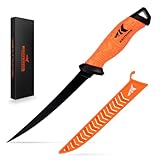
- Razor Sharp Stainless Blades – All new KastKing fishing fillet knives and the 5” Bait Knife utilize premium, razor sharp G4116 German Stainless-Steel blades with a beautiful black finish. KastKing fillet knives will maintain their edge longer in both fresh and saltwater applications and make the job of cutting baits, filleting fish of all sizes and steaking large game fish easier than ever before.
- Non-Slip Super Polymer Grip - We use the most comfortable and slip-resistant, super polymer grips for your safety and comfort. These handles feel great in your hand and ensure that you always have a solid grip on your fillet knife. These handles also clean up easily and stay looking good longer.
- The Right Knife For The Job - The 5” Bait Knife is stiff and strong, it has a serrated top edge that makes cutting frozen bait quick and easy. The razor-sharp leading edge allows the fisherman to easily prepare both chunk and cut plug style baits. The 6”, 7” & 9” Fillet Knives are not only sharp and but also have the perfect flexibility so the knife will follow natural contours for perfect fillets. The 9” Steaking Knife is a powerhouse for steaking big game fish like salmon, tuna and more.
- Includes Protective Knife Sheath – Each knife includes a light-weight and durable sheath to protect the blade and keep you safe in between jobs. The unique design of the sheath will lock the handle in for safety but removes easily when needed. The open slots in the sheath are design to allow water to drain easily so that your knives stay dry and sharp.
- Affordable Innovation – KastKing fishing knives are available in the most requested lengths and shapes so that you’ll always have the right tool for the job. Available from a beautiful 5” bait knife all the way to a tough 9” steaking knife for the biggest game fish. All KastKing fishing tools are covered by our total peace of mind warranty against the workmanship and materials for the original owner. We have total confidence in the quality of all KastKing fishing tools and so will you.
The Aquaculture Stewardship Council’s May 2025 Atlantic-cod whitepaper described Norway as the only country then producing Atlantic cod commercially at meaningful scale. It reported that four Norwegian producers jointly harvested about 11,000 metric tons in 2024. The described production cycle starts with hatchery-produced young fish, which are transferred to sea cages, grown for roughly 14 to 40 months, and harvested at approximately 3 to 4 kilograms. These figures are useful evidence that the industry is real and growing, but they should not be treated as a complete worldwide production census because the document includes sector and producer information. (ASC Atlantic-cod scope-extension whitepaper)
Norcod, a Norwegian producer, announced that it harvested 7,723 metric tons of cod in 2025 and was expanding site approvals and capacity plans. One company’s result cannot establish how much of the cod sold in the United States is farmed, but it confirms that farmed cod is no longer merely an experimental concept. (Norcod 2025 annual-report announcement)
Why farmed cod raises environmental questions
Cod farming is commonly carried out in sea cages, so escaped fish and interactions with wild cod are important concerns. The Norwegian government has identified escapes and spawning by farmed cod in net pens as potential environmental issues because farmed fish could interact or genetically mix with wild populations. Norway clarified restrictions on cod farming in wild-cod spawning areas during winter 2024. (Norwegian government report)
Rank #3
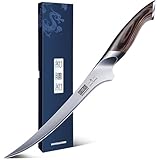
- 【Premium High Carbon Steel】This professional fish fillet knife is made from high-quality Japanese stainless steel 10Cr15CoMoV, which makes the HOSHANHO fillet knife more durable, harder, and sharper than other meat knives. With a hand polished edge at 15 degrees per side, the boning knife can achieves ultimate sharpness.
- 【Excellent Cutting Results】With a 9 inch long, thin blade, the fillet knife makes it easy to slice, bone, trim, skin and butterfly different types of meat and fish. The slender blade helps to cut through fish bones and flesh with more precision and less waste, resulting in a neat and beautifully cut fillet.
- 【Ergonomic Design】The ergonomic shape of the fish knife's handle provides a more comfortable grip and reduces user fatigue. The handle of the boning knife is made of durable pakkawood, these materials have good resistance to corrosion and abrasion, which ensures a long service life of the fillet knife.
- 【Mutifunctional Use】In addition to easily cutting fish bones and removing fish scales, this fish knife can also be used to cut other types of meat. It is a practical and multifunctional kitchen tool, the frosted texture will be the most unique knife among all your knives and a perfect gift for your family and friends.
- 【Flexible and Lightweight】The blade of the fish knife is relatively soft and can better adapt to the shape of the fish ingredients, making it easier to operate and control. Its portability allows chefs to switch between different kitchen utensils more freely, improving work efficiency.
This does not mean that every farmed cod operation has the same environmental impact, nor that every wild fishery is automatically preferable. If sustainability matters to you, evaluate the specific fishery or farm and its certification rather than assuming that “wild” or “farmed” is a complete environmental verdict.
Crashes, No Sound, or Screen Glitches?
Random freezes, missing sound and display glitches usually trace back to one bad driver. Find and replace yours safely.Free scan · under a minutePC Slower Than It Used to Be?
A free scan shows the junk files, broken settings and background clutter dragging Windows down - then fixes them in one click.Free scan · Windows 10 & 11How to tell whether your cod is farmed or wild
- Find the production-method statement. Look for “wild-caught,” “wild harvested,” “farm-raised,” or “aquacultured.” This is the most direct answer to the question.
- Check the species. If listed, Gadus morhua is Atlantic cod and Gadus macrocephalus is Pacific cod. Species information helps identify the fish, but it does not replace the harvest-method statement.
- Check the country of origin. Origin can help you understand the supply chain, but it is not the same as production method. “Product of Norway” does not automatically mean farm-raised, and “Product of the United States” does not automatically mean wild-caught.
- Ask about unpackaged fish. At a seafood counter, ask the fishmonger for the species, country of origin, and whether the fish was wild-caught or farm-raised. Ask whether supplier or harvest documentation is available if the sign is unclear.
- Interpret certification carefully. A sustainability certification may apply to a wild fishery or to an aquaculture operation. Certification is not a synonym for farm-raised, and the name and scope of the program matter.
U.S. food-origin statements must not be false or misleading under FDA guidance. If the production method is not stated and the seller cannot clarify it, do not make a definitive assumption from the word “cod” alone. (FDA guidance on country-of-origin labeling)
What this means if you are buying cod for a dog or cat
If your question is about feeding cod to a pet, whether the fish is farmed or wild is only one part of the decision. More immediately important factors are freshness, proper cooking, bones, portion size, and added ingredients.
Rank #4

- Razor Sharp Stainless Blades – All new KastKing fishing fillet knives and the 5” Bait Knife utilize premium, razor sharp G4116 German Stainless-Steel blades with a beautiful black finish. KastKing fillet knives will maintain their edge longer in both fresh and saltwater applications and make the job of cutting baits, filleting fish of all sizes and steaking large game fish easier than ever before.
- Non-Slip Super Polymer Grip - We use the most comfortable and slip-resistant, super polymer grips for your safety and comfort. These handles feel great in your hand and ensure that you always have a solid grip on your fillet knife. These handles also clean up easily and stay looking good longer.
- The Right Knife For The Job - The 5” Bait Knife is stiff and strong, it has a serrated top edge that makes cutting frozen bait quick and easy. The razor-sharp leading edge allows the fisherman to easily prepare both chunk and cut plug style baits. The 6”, 7” & 9” Fillet Knives are not only sharp and but also have the perfect flexibility so the knife will follow natural contours for perfect fillets. The 9” Steaking Knife is a powerhouse for steaking big game fish like salmon, tuna and more.
- Includes Protective Knife Sheath – Each knife includes a light-weight and durable sheath to protect the blade and keep you safe in between jobs. The unique design of the sheath will lock the handle in for safety but removes easily when needed. The open slots in the sheath are design to allow water to drain easily so that your knives stay dry and sharp.
- Affordable Innovation – KastKing fishing knives are available in the most requested lengths and shapes so that you’ll always have the right tool for the job. Available from a beautiful 5” bait knife all the way to a tough 9” steaking knife for the biggest game fish. All KastKing fishing tools are covered by our total peace of mind warranty against the workmanship and materials for the original owner. We have total confidence in the quality of all KastKing fishing tools and so will you.
- Choose plain cod with no onion, garlic, heavy seasoning, sauces, or excess salt.
- Cook it thoroughly and check carefully for bones before offering it.
- Use cod as an occasional treat or as part of a diet designed with veterinary guidance—not as a replacement for a complete and balanced pet food unless a veterinarian or veterinary nutritionist has formulated the diet.
- Introduce a small amount first and stop if your pet develops vomiting, diarrhea, itching, or another possible food-reaction symptom.
For people comparing products, Pacific cod fillets may be a convenient option, but check the individual listing for species, harvest method, country of origin, ingredients, storage, and delivery region. An online retailer’s category or product title is not enough to establish that every listing is wild-caught or farm-raised.
Independent reader supportYour contribution helps us test, update, and keep practical guides available for everyone.Wild-caught versus farm-raised cod: what can and cannot be inferred
| What the label says | What it tells you | What it does not prove |
|---|---|---|
| Wild-caught | The fish came from a natural fishery rather than an aquaculture facility. | That the fishery has no sustainability concerns. |
| Farm-raised or aquacultured | The fish was produced through aquaculture. | That every farm has the same environmental performance or certification. |
| Atlantic cod | The species is identified as Gadus morhua, when the label is accurate and specific. | Whether it was farmed or wild-caught. |
| Pacific cod | The product refers to a different cod species, commonly Gadus macrocephalus. | Whether it was farmed or wild-caught. |
| Product of Norway, Iceland, Canada, or the United States | Country-of-origin information about the product or supply chain. | The production method. |
| Sustainability certification | That the product falls within the stated scope of a particular certification program, if the claim is valid. | That the fish is farm-raised—or that all cod with the label comes from the same type of operation. |
Can you identify farmed cod by appearance or taste?
Not reliably. Freshness, processing, freezing, storage, cooking method, fish size, and species can all affect appearance and flavor. A fillet’s color, texture, or thickness is not dependable proof of whether it came from a farm or a fishery. Use the label or ask the seller instead.
Is there a precise percentage of farmed cod in the U.S. market?
Not from the evidence available here. Current sources establish that wild cod remains an important part of the market and that Norwegian Atlantic-cod farming is commercially significant and expanding. They do not provide a comprehensive, current 2026 breakdown of all cod consumed in the United States by species, origin, and production method. Claims such as “all cod is wild,” “most cod is farmed,” or a precise U.S. farmed-versus-wild percentage should therefore be treated skeptically unless they cite a directly relevant, current market dataset.
Best Value

- Complete Fishing Tool Combo: The KastKing SteelStream 6 piece Tool Combo includes essential fishing tools for a seamless fishing experience
- High-Quality Materials: Crafted with precision, the combo features a 7” fishing pliers made from S45C carbon steel with a polymer corrosion-resistant coating for longevity. The fishing pliers saltwater also come with a coiled lanyard and a rubber handle
- Razor-Sharp Fillet Knife: The 7” fillet knife is constructed from 420 Stainless steel, known for its toughness, corrosion resistance, and ease of sharpening. With a non-slip rubber handle, the fishing knife offers excellent grip and comfort during use
- Corrosion-Resistant Fishing Scissors: The combo includes braid scissors made from 420 stainless steel, featuring a serrated edge and a corrosion-resistant titanium coating. The soft rubber handle ensures easy and comfortable cutting
- Secure and Durable Accessories: This combo also provides a floating fish lip gripper designed to prevent sinking and fish lip punctures. Additionally, a tool retractor keeps your tools securely tethered to your fishing tackle bag or person
Frequently Asked Questions
Is Atlantic cod farm-raised?
It can be either. Atlantic cod is still caught in wild fisheries, including fisheries described by NOAA in U.S. waters, and it is also commercially farmed, especially in Norway. Check the package or ask the fishmonger for the production method.
Is Pacific cod wild-caught?
Pacific cod is commonly associated with wild fisheries, but the species name alone does not prove the harvest method. Look for “wild-caught” or “farm-raised” on the label.
Does cod from Norway mean it is farmed?
No. Country of origin and production method are different pieces of information. Norwegian cod may be wild-caught or farm-raised, so verify the method statement.
Do these 3 things before closing this tab:
1Clear out junk files and repair common Windows errors2Scan for outdated or missing drivers - takes under a minute3Repair Windows errors before they cause bigger problemsIs farmed cod safe for dogs and cats?
The farming method alone does not answer whether a fish is suitable for a pet. If offering cod, use plain, thoroughly cooked, boneless fish in a small amount and avoid seasonings such as onion, garlic, sauces, and excess salt. Ask your veterinarian about regular feeding or special dietary needs.
The Bottom Line
Bottom line: Cod can be farm-raised, but much of the cod encountered in the U.S. market is associated with wild fisheries. Farmed Atlantic cod—particularly Norwegian cod—is a real and growing commercial sector. To know what you are buying, check the production-method statement, then confirm the species and country of origin; never infer the answer from “cod” or the country name alone.
Quick Recap
Product prices and availability are accurate as of the date/time indicated and are subject to change. Any price and availability information displayed on Amazon at the time of purchase will apply.




