What’s actually slowing this PC down?
Pick the symptom - the matching free tool is one click away.
Evidence from local studies and harvesters’ knowledge points to declining caterpillar fungus production and availability in parts of the Himalayas. Ecological modelling also indicates that warming contributes to lower production, alongside pressures such as overharvesting and habitat degradation. But the evidence does not establish a current, uniform decline rate across the species’ range.
What is caterpillar fungus?
Caterpillar fungus is the wild fungus Ophiocordyceps sinensis, formerly commonly called Cordyceps sinensis. The harvested specimen is not a plant or a fungus growing on an ordinary above-ground caterpillar: it is a fungal fruiting body attached to the remains of its insect host.
As an Amazon Associate I earn from qualifying purchases.
The Tibetan name yartsa gunbu is commonly glossed as “summer grass, winter worm.” The fungus infects larvae of ghost moths in the genus Thitarodes. These larvae live underground and feed on alpine plants. Depending on the species and conditions, larval development can take two to six years. After the fungus consumes its host, it produces a fruiting body that emerges after snowmelt. Collectors look for and gather the combined fungus and host remains in spring. (FAO-hosted overview, 2011: Cordyceps harvesting in the Himalayas.)
Free tools Windows power users keep installed
One-click scans. No signup required.
This lifecycle ties harvest to a particular insect, alpine habitat and season. It also matters when interpreting product names: “Cordyceps” or “cordyceps” on a supplement label does not by itself establish that the product contains wild O. sinensis, much less the whole fungus-and-host specimen collected in the Himalayas.
#1 Best Overall

- Grade:AAAAA.Production date:This year's harvest season.
What evidence shows that it is declining?
The evidence comes from different kinds of observation, taken in different places and years. Recorded trade volumes, collectors’ estimates of their own harvests, harvesters’ perceptions and ecological models each illuminate part of the picture; they are not interchangeable measures of population size.
| Evidence | Scope and period | What it found | What it can establish |
|---|---|---|---|
| Harvest and trade study | Dolpa district, Nepal; study published in 2013, using interviews and local trade data | Recorded trade volume peaked at 2,442.4 kg in 2009 and fell to 1,170.8 kg in 2011. Mean annual harvest reported by harvesters fell from 260.66 ± 212.21 pieces per person in 2006 to 125.82 ± 96.84 in 2010. Of surveyed harvesters, 95.1% said availability in pastures was declining, and 67% considered then-current harvesting unsustainable. | A substantial local decline signal during the study period, measured in more than one way. It is not a current range-wide census. |
| Harvester knowledge and ecological modelling | Bhutan, China, India and Nepal; study published in 2018 | Collectors reported production declines associated with habitat degradation, climate change and especially overexploitation. The models supported a contribution from warming and found greater productivity in colder conditions. | Evidence of concern across the species’ range and support for warming as a contributing pressure, but not a current universal decline percentage or a complete allocation of causes for every locality. |
| Threat assessment | Indian context; TRAFFIC/WWF-India factsheet, February 2023 | Identifies overexploitation driven by increasing demand, illegal wildlife trade, habitat loss associated with unplanned development and climate change as threats. It also describes inconsistent regulation among Indian range states. | A summary of pressures and regulatory concerns in India, rather than a standardized population count. |
The studies support the concern behind claims of depletion, but none supplies a current, comprehensive population census for the full range. A fall in recorded trade or the number of pieces a person collects is not, by itself, a direct measurement of the number of fungi in the ground: trade and harvest figures can reflect several local conditions, while perceptions report what collectors observe and models estimate ecological relationships.
Rank #2

- 100% Pure Natural. No chemicals sprayed or added. No preservatives or additives. No Artificial Flavors or Added Colors. Without irradiated or chemicals. Products lab tested for toxicity.
- Product sourcing with tradional farming opposed to industrial. Ecology footprint conscious. Fair Trade Farming Association. Fair Market Value Cooperative.
- We are commited to Health Benefits. And prioritize maximum nutritional value. Handmade prepare & packaging in the USA. Worked in humane condition.
- Air dried products to preserve nutrients. Mindful low processing involved. Packaging with barrier protection preserving products up to 2 years.
Why may production be falling?
The evidence points to interacting pressures, not one cause that can be applied uniformly across the Himalayas.
The Tool Desk
Outbyte Driver Updater FREEScan for outdated or missing drivers - takes under a minuteDriver Scan →Outbyte PC Repair FREEClear out junk files and repair common Windows errorsFree Scan →- Harvest pressure: Increasing demand can encourage intensive collection. The 2018 range-wide study identified overexploitation as an especially important factor in collectors’ reports of declining production. The Dolpa findings also show why harvesters’ views of sustainability matter, while remaining specific to that district and period.
- Warming: The 2018 ecological models linked warmer conditions with lower production and greater productivity with colder conditions. This supports climate warming as a contributing factor; it does not quantify the same climate effect in every locality or make warming the sole explanation.
- Habitat degradation and loss: Collectors in the 2018 study associated declining production with habitat degradation. TRAFFIC/WWF-India also identifies habitat loss linked to unplanned development as a threat in the Indian context.
- Illegal trade and uneven controls: TRAFFIC/WWF-India identifies illegal wildlife trade and inconsistent regulation among Indian range states as concerns. These are governance and trade pressures, not a substitute for measuring biological abundance.
The relative importance of these pressures can vary from one collecting area to another. The reviewed evidence supports multiple contributors but does not settle a single causal ranking for the species’ entire range.
Rank #3

- Grade:AAAAA.Production date:This year's harvest season.
- Chew:Selected nutritious grass,deep clean,dry at room temperature,no loss of nutrition,can be directly chewed to eat,nutrition is more easily absorbed by human body.
- Make tea:Put boiled water into the cup,add water to soak 3 times until it is tasteless,and take it after the water is cooled.
- Soup:Put chicken and water into stewed pot,stew for 2 hours,put Cordyceps for 3 minutes,and add seasoning.
- Parkling Wine:500 grams of white wine,10 grams of Cordyceps sinensis,sealed for 20 days,10 grams each time,1 or 2 times a day,can be drunk after opening.
Why conservation is also a livelihood issue
Caterpillar fungus is a valuable wild commodity and a crucial source of income for collectors and other people in regional trade. The 2013 Dolpa study documents substantial local harvesting and trade, while the 2018 study situates the resource across several countries. Conservation coverage should therefore recognize both sides of the problem: demand can intensify pressure on a vulnerable wild resource, and collecting income can be important to households and communities.
Describing collectors alone as the cause of scarcity would oversimplify the evidence. Harvest pressure is one part of a system also shaped by habitat conditions, climate and trade. Responses that address conservation while ignoring local dependence risk missing why harvesting continues and who bears the cost of restrictions.
Rank #4
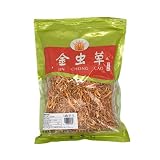
- Premium Cordyceps Flower: Also known as Caterpillar Fungus or Cordyceps militaris, this highly prized edible fungus is not actually a flower but a golden-yellow nutritional powerhouse that has been a staple in Asian cuisine and wellness traditions for centuries, bringing exceptional quality directly to your kitchen
- Traditional Wellness Benefits: This ergot fungus serves as an excellent tonic, is a valuable addition to your daily wellness routine
- Superior Quality Standards: Grown in pristine environments with clean air and soil, our Cordyceps Flower features natural golden-yellow coloring with well-preserved whole strands that are air-dried and meticulously selected to ensure optimal cleanliness and quality in every 8oz package
- Versatile Culinary Uses: Simply rinse briefly without lengthy soaking and add directly to soups, broths, stews, or congee during the last 20-30 minutes of cooking to release its unique flavor and nutrients, enhancing your favorite dishes with its distinctive taste
- Easy Tea Preparation: Steep a small handful of rinsed Cordyceps Flower in hot water for 5-10 minutes to create a delicious beverage with a mildly sweet and earthy flavor profile, perfect for enjoying the natural goodness of this exceptional fungus
What online listings and regulations do—and do not—tell you
A 2024 study by Bashyal and Roberts reported finding 180 online advertisements in a systematic survey. The advertisements were for sales appearing in 2021 and included whole, unprocessed specimens as well as powder. The study establishes that online trade was visible in that dataset at that time; it does not show what is currently available, whether any particular listing is legal, or whether a product is sustainably sourced. (Oryx, 2024.)
PC Slower Than It Used to Be?
A free scan shows the junk files, broken settings and background clutter dragging Windows down - then fixes them in one click.Free scan · Windows 10 & 11Outdated Drivers Are Slowing You Down
One free scan finds every outdated or missing driver and matches the right update for your exact hardware.Free scan · exact hardware matchRules also depend on place and can change. TRAFFIC/WWF-India describes permits, guidelines and policies governing extraction and trade in Indian range states, while noting that the mechanisms are not consistent across states. The 2024 online-trade study describes national legislation as regulating trade to varying degrees and reports that the species was not listed in CITES appendices according to its account. These dated descriptions are not current legal advice: anyone considering collection, purchase, sale or transport needs to check applicable national and local requirements.
Best Value
- Grade:AAAAA.Production date:This year's harvest season.
Historical prices do not resolve the question of today’s market. An older FAO-hosted overview records collector prices as high as US$12,500 per kilogram for top-quality material, but that historical figure is not a current price or a guide to present availability.
How to read the “depleting steadily” claim
The most defensible reading is that decline is documented locally and widely perceived by harvesters, while ecological modelling supports warming as one contributor alongside harvest pressure and habitat degradation. That is serious evidence of risk, but it is not proof that abundance is falling at one measured rate everywhere or that current global stocks and trade volumes are known.
For readers encountering the fungus through wildlife or supplement coverage, the useful distinctions are the organism’s identity, the place and date behind any harvest figure, and whether a claim concerns biological production, local collection, trade or an advertisement. Those categories answer different questions and should not be treated as if they were one global count.
Quick Recap
Product prices and availability are accurate as of the date/time indicated and are subject to change. Any price and availability information displayed on Amazon at the time of purchase will apply.




