
Some links on this page are affiliate links: if you buy through them we may earn a commission, at no extra cost to you.
The safest way to feed a large- or giant-breed puppy is to use a complete and balanced growth food formulated for large-size dogs, measure every meal, and keep the puppy visibly lean. Overfeeding makes puppies grow faster than their developing skeleton can comfortably support, increasing orthopedic stress. Excess calcium or unprescribed mineral supplements can also disrupt normal bone development. Feed the package amount only as a starting point, divide it into measured meals, count treats and table food, and adjust portions using body condition, regular weights, and a veterinarian-reviewed growth curve. Do not switch to adult food early simply to restrict calories: many large breeds mature around 12–18 months, while giant breeds may continue skeletal growth to about 24 months.
Why does rapid growth cause problems in large-breed puppies?
Large-breed puppies do not need to grow as quickly as possible; they need to grow steadily while maintaining a lean body condition. During growth, excess calories increase growth rate, and the developing bones and joints must support a heavier, faster-growing body. The MSD Veterinary Manual summarizes the risk plainly: “Overfeeding during growth increases growth rate.” Veterinary guidance links excessive body condition and poorly controlled mineral intake with developmental orthopedic disease, including abnormal joint development, lameness, and pain.
As an Amazon Associate I earn from qualifying purchases.
Windows Errors? Fix Them Before They Spread
Repair common Windows errors and clear accumulated junk for a smoother, more stable PC - no reinstall needed.Free scan · no reinstallOutdated Drivers Are Slowing You Down
One free scan finds every outdated or missing driver and matches the right update for your exact hardware.Free scan · exact hardware matchSize alone does not determine when a dog is finished growing. Some large dogs reach approximate skeletal maturity around 15–16 months. Typical large-breed maturity is often estimated at 12–18 months, while giant breeds can take up to 24 months. Growth speed, adult size, genetics, and health all vary, so a food change based only on the puppy’s calendar age can be inappropriate.
Purina Institute’s concise warning is useful for owners: “Plump, heavy puppies are not healthy puppies.” A lean puppy still grows normally; the goal is controlled growth, not underfeeding.
Popular on Amazon
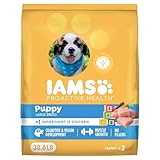
- Veterinarians Recommend IAMS: IAMS large breed dog food recipe is made with real chicken as the #1 ingredient and contains no fillers or artificial flavors; ingredients are natural as defined by the Association of American Feed Control Officials (AAFCO)
- Healthy Cognitive & Vision Development: IAMS Dog Food Proactive Health Large Breed Dry Puppy Food is formulated with Omega-3 DHA to support smarter, more trainable puppies, providing a great start with essential nutrients
- Healthy Bones & Joints: IAMS dog food large breed puppy dry is formulated with essential nutrients and optimal calcium levels to support healthy bones & joints
- Immune System Support: IAMS proactive health dog food is enriched with essential antioxidants Vitamin E and Selenium to help develop a strong immune system
- The Proactive 5 Difference: The Proactive 5 health benefits for IAMS Dog Food Dry Recipe for Large Breed Puppies are scientifically designed to support five key areas of your dog's health, keeping them full of life, for more of life
How do I choose the right large-breed puppy food?
Start with the nutritional adequacy statement, not the front-of-bag marketing. The label should say the food is complete and balanced for growth and include an AAFCO statement covering growth of large-size dogs. In AAFCO terminology, large-size dogs are those expected to weigh at least 32 kilograms (70 pounds) as adults.
Check the growth statement
Look for wording that specifically covers growth of large-size dogs, rather than relying on phrases such as “premium,” “high protein,” or “for all puppies.” A food can be complete for ordinary puppy growth yet fail to provide the formulation intended for a dog that will exceed the large-size threshold. If the statement is difficult to interpret, ask your veterinarian to read the label with you.
Prefer controlled energy density
Large- and giant-breed growth formulas are typically less energy-dense than general puppy foods. That gives you more physical food to portion while reducing the chance that a small measuring error supplies a large calorie surplus. Energy density is not a reason to ignore the feeding directions: the puppy still needs a measured daily amount adjusted for condition and growth.
Compare foods using formulation evidence
When comparing two credible diets, use the same decision axes each time. Protein percentage by itself does not tell you whether a food is suitable for a growing Great Dane, Mastiff, or other large dog.
| What to compare | Why it matters | What to look for |
|---|---|---|
| Large-size growth adequacy | Confirms the food is intended for the skeletal demands of a large adult dog. | An AAFCO statement covering growth of large-size dogs. |
| Metabolizable energy | Determines how many calories are delivered by each gram or cup. | A disclosed calorie value and a formulation that supports controlled intake. |
| Calcium and phosphorus | These minerals must be supplied in balance during bone development. | Declared amounts consistent with a complete large-breed growth diet; do not add minerals yourself. |
| Regulatory or feeding-trial adequacy | Shows how the manufacturer substantiates nutritional completeness. | The adequacy method stated on the label, such as a feeding-trial or formulated standard. |
| Practical feeding plan | A theoretically suitable food is unhelpful if portions cannot be measured consistently. | Clear calorie information, feeding directions, and a texture your household can portion reliably. |
| Body-condition outcome | The useful test is whether the diet and portions keep the puppy lean. | Regular reassessment rather than loyalty to a fixed cup amount. |
AAHA clinical nutrition material gives approximate formulation references for large and giant breeds of 0.7–1.2% calcium on a dry-matter basis, 0.6–1.1% phosphorus, and a calcium-to-phosphorus ratio of 1:1 to 1.5:1. These are formulation targets for a complete food, not instructions to mix calcium powder or other minerals into a home bowl.
Also popular on Amazon

- Diamond Naturals Large Breed Puppy Lamb and Rice dry dog food; REAL PASTURE-RAISED LAMB is the #1 ingredient; specially formulated with carefully determined protein and mineral content to support the needs of LARGE BREED PUPPIES
How much should a large-breed puppy eat?
Use the package feeding chart as a starting estimate, then let body condition and growth determine the next adjustment. Package charts cannot account perfectly for every puppy’s metabolism, activity, adult size, illness, or concurrent treats.
Recommended Free Tools
- Identify the correct row. Use the puppy’s current weight, expected adult size, and age as directed by the manufacturer. If the label has separate large- and giant-breed guidance, select the appropriate one.
- Weigh the daily ration. A digital kitchen scale is more consistent than a scoop, especially when kibble shape and packing change the volume. Weigh the full day’s allowance before dividing it.
- Divide the allowance into meals. Purina guidance suggests up to four meals per day until six months, then two meals daily after six months. Your veterinarian may recommend a different schedule for a particular puppy, medical condition, or household routine.
- Reserve rewards from the daily total. Put training treats, food used to give medication, and any table-food allowance aside before meals so they do not become invisible extra calories.
- Reassess before making a large change. If the puppy is becoming rounder or gaining faster than the veterinarian’s growth plan, reduce the measured portion in small increments. If weight gain is poor, investigate health, stool quality, appetite, and the food’s calorie density instead of adding large amounts at once.
Free-choice feeding is a poor fit for large-breed growth. Leaving food available all day makes it difficult to know how many calories were eaten and can encourage rapid gain. Scheduled, measured meals create a record you can adjust.
How can I tell whether my puppy is lean enough?
Body condition is more useful than a target number on the scale. VCA’s practical target for growing puppies is a body-condition score of 4–5 on a nine-point scale. AAHA clinical nutrition material describes a lean range of approximately 2.5–3 on a five-point scale. These scoring systems are different, so use one system consistently and have a veterinarian confirm your assessment.
Hands-on checks
- Feel the ribs with light pressure. They should be easy to locate without a thick layer of fat.
- Look from above for a waist behind the ribs.
- Look from the side for an abdominal tuck rather than a level or hanging belly.
- Run your hands over the spine, hips, and shoulders. You should feel bones without sharp prominence or a heavy fat cover.
- Photograph the puppy from the side and above under similar conditions so gradual changes are easier to notice.
Fluffy coats can hide a changing waist, and a single weigh-in can be misleading during a growth spurt. AAHA material recommends body-condition reassessment at least every two weeks. If you cannot agree with another adult in the household about the score, ask the veterinary team to demonstrate the scale and record the result in the medical notes.
Does a large-breed puppy need extra calcium?
Usually, no. A complete and balanced large-breed growth diet already supplies calcium, phosphorus, and vitamin D in a deliberate relationship. MSD guidance says supplementation beyond a complete growth diet is rarely necessary and can be contraindicated. Purina warns that excess calcium can contribute to skeletal malformations.
Also popular on Amazon

- Real chicken is the number 1 ingredient in this dry puppy food to help provide the protein he needs for strong, growing muscles, including a healthy heart
- Purina ONE puppy food made with DHA, a nutrient found in mothers' milk, to support vision and brain development and four antioxidant sources for immune support for dogs
- Purina large breed dry puppy food with high protein and glucosamine for dogs helps maintain an appropriate growth rate and supports dog joint health
- Deliciously crunchy bites and tender meaty morsels deliver great taste in this Purina ONE dry dog food for large breed puppies made with no artificial flavors or preservatives
- Crafted in Purina-owned, U.S. facilities with a SmartBlend of high-quality ingredients, including omega-6 fatty acids, vitamins and minerals to support a shiny, healthy skin and coat for dogs
Do not add bone meal, calcium tablets, mineral powders, vitamin products, or dairy products as a routine growth aid. A supplement can push total intake beyond the intended range even when the food itself is correctly formulated. The exception is a documented medical need diagnosed and monitored by a veterinarian; follow the prescribed product and dose rather than substituting a human supplement.
How many calories can come from treats and table food?
Count every edible item: training rewards, chews that contain calories, table scraps, pill pockets, and food used to encourage medication. VCA’s growing-puppy guidance recommends keeping treats and other non-complete foods to no more than 10% of daily calories when appropriate for the individual dog’s situation. A puppy with a medical diet or unusual calorie requirement may need a stricter plan.
The simplest way to stay within the limit is to remove a small portion of the puppy’s measured kibble each morning and use those pieces for training. If you use a separate treat, record its calorie value and subtract the corresponding food from the meal allowance. Family members should share one written daily limit; otherwise several small “extras” can exceed the puppy’s needs.
How should I monitor weight and growth?
Regular measurements reveal a trend before excess fat or orthopedic signs become obvious. MSD recommends weekly weight monitoring. AAHA clinical nutrition guidance recommends body-condition checks at least every two weeks and portion changes of about 10% when an adjustment is indicated.
Build a simple record
- Date and body weight, measured on the same scale when possible.
- Body-condition score and a brief description of the ribs, waist, and abdominal tuck.
- Food brand, exact product, daily grams or measured amount, and meal times.
- Treats, chews, table food, and calories used for medication.
- Stool quality, appetite, activity, and any limping or reluctance to move.
Bring the record and the food label to veterinary appointments. A veterinarian can plot the puppy on a breed-appropriate growth curve and decide whether the trend is appropriate. Giant-breed curves differ from large-breed curves; applying one chart indiscriminately can make a normal pattern look abnormal or hide excessive gain.
Also popular on Amazon

- Growing bones and teeth supported by balanced minerals
- Healthy brain and eye development supported by DHA and Fish Oil
- Developing immune system supported by antioxidant blend
- Growing muscles fueled by high quality proteins
- Made with natural ingredients
Make small, deliberate adjustments
If the puppy’s ribs are becoming harder to feel or the growth trend is steeper than expected, adjust the daily amount modestly and reassess rather than making repeated large cuts. If the puppy is underconditioned, losing weight, or failing to gain, do not simply double the ration. The cause may be parasites, digestive disease, poor food tolerance, or another medical problem that needs diagnosis.
Should I feed adult food to slow a giant-breed puppy?
Not automatically. Switching early to an adult diet can remove nutrients needed for continued skeletal growth, while an adult food that is energy-dense may not solve the calorie problem. Large breeds commonly mature skeletally around 12–18 months, and giant breeds may continue to about 24 months, so the timing should be individualized rather than tied to an arbitrary birthday.
Ask the veterinarian when the puppy has reached enough skeletal maturity for a transition and which adult formula fits the dog’s size and body condition. Until then, control calories through a complete large-size growth diet, measured portions, and body-condition monitoring. A puppy should not remain on a growth formula indefinitely without reassessment, but neither should it be moved early solely because the dog looks big.
What’s actually slowing this PC down?
Pick the symptom - the matching free tool is one click away.
What mistakes most often lead to excessive growth?
- Free-feeding: Food is available without a reliable calorie record.
- Using a scoop as the only measure: Volume varies with kibble size and how tightly it is packed.
- Following the chart forever: The printed amount is a starting point, not a guarantee that the puppy will remain lean.
- Choosing by marketing alone: Protein percentage, impressive ingredient claims, or a “premium” label do not establish large-size growth adequacy.
- Adding calcium “for strong bones”: Extra minerals can upset the balance already provided by a complete diet.
- Ignoring snacks: Treats, chews, scraps, and medication foods can quietly raise daily calories.
- Using the wrong growth curve: Giant breeds and large breeds do not follow identical trajectories.
- Waiting for severe lameness: Persistent weight gain, an abnormal gait, or pain deserves earlier veterinary attention.
When should a veterinarian assess my puppy’s diet or joints?
Arrange a nutrition and growth review if the puppy remains overweight despite measured meals, is not gaining appropriately, or cannot stay lean on the calculated ration. Seek prompt veterinary advice for lameness, pain, reluctance to rise or exercise, an abnormal gait, or sudden changes in appetite and weight. AAHA describes nutritional management as “a central component of a complete healthcare plan for canine and feline patients.” An individualized assessment can combine the label, calorie intake, body-condition score, growth curve, breed size, and orthopedic examination instead of treating any single number in isolation.
What does a practical feeding routine look like?
A repeatable routine makes the safe plan easier for every caregiver to follow.
Also popular on Amazon

- Formulated to support an appropriate growth rate for large breed puppies
- Glucosamine supports developing joints and cartilage
- Vitamin A and omega-6 fatty acids to nourish skin and coat
- High protein formula, with real chicken as the first ingredient
- DHA from omega-rich fish oil nourishes brain and vision development
- Read the adequacy statement and confirm that it covers growth of large-size dogs.
- Record the food’s calorie information and the puppy’s current weight.
- Weigh the full day’s food with a digital kitchen scale.
- Remove the amount reserved for training or medication before serving meals.
- Divide the remainder into the veterinarian-approved number of meals.
- Feed at scheduled times and remove uneaten food rather than topping up the bowl.
- Record treats and unusual foods the same day they are given.
- Weigh weekly, score body condition at least every two weeks, and review the trend with your veterinarian.
This process does not require starving a puppy or suppressing normal development. It prevents the avoidable calorie surplus that makes a large puppy grow faster and heavier than its joints can comfortably manage.
Frequently Asked Questions
Can I use my puppy’s kibble as training rewards?
Yes. Set aside part of the measured daily ration before meals and use those pieces during training. This keeps the reward connected to the food plan without adding a separate source of calories.
What should I take to a puppy nutrition appointment?
Bring the food package or a clear photograph of every label panel, a record of daily portions, a complete treat and chew list, recent weights, and notes about appetite, stools, activity, or gait. Side and top photographs taken over time can help the veterinarian see changes hidden by a thick coat.
Why can a puppy look thin while still growing too fast?
Height and body length can increase rapidly before fat becomes obvious, so visual size is not a reliable measure of safe growth. A growth curve, weekly weight trend, and hands-on body-condition score together give a better picture than appearance alone.
Are homemade mineral mixes safer than commercial puppy food?
Not without formulation by a veterinary nutrition professional. Small errors in calcium, phosphorus, vitamin D, energy, or other nutrients can be significant during large-breed growth, and a complete commercial diet avoids the need for guesswork.
What signs suggest a joint problem rather than ordinary puppy clumsiness?
Persistent or worsening limping, pain when rising, reluctance to climb or exercise, an uneven gait, or a sudden reduction in activity warrants veterinary assessment. Do not wait for the puppy to become unable to walk before seeking advice.
Free tools Windows power users keep installed
One-click scans. No signup required.





Leave a Reply