
Some links on this page are affiliate links: if you buy through them we may earn a commission, at no extra cost to you.
Yes—large and small dogs can live together and enjoy play when their temperaments, communication signals, and play styles are compatible. The size gap does not determine success, but it raises the stakes: an accidental body slam, chase, or warning bite can injure the smaller dog more severely. Introduce them in stages, supervise every interaction while you assess the relationship, provide barriers and small-dog retreats, and stop play at the first sign that either dog cannot disengage. If conflict persists, worsens, or includes repeated aggression, separate the dogs and involve a veterinarian or veterinary behaviorist.
Can a large dog and a small dog live together safely?
They can, provided the individual dogs are a good match and the household is arranged to prevent avoidable pressure. Size is only one risk factor. A calm, socially skilled large dog may be safer for a small dog than a similarly sized dog with poor impulse control, while a small dog that repeatedly darts, guards food, or ignores warnings can also create conflict.
As an Amazon Associate I earn from qualifying purchases.
Think in terms of management rather than a one-time meeting. The dogs need compatible communication, places to separate, separate resources, and a gradual increase in freedom. The larger the size difference, the greater the potential injury if play becomes a collision or an escalation, as the American Kennel Club (AKC) cautions.
How do I assess compatibility before introducing the dogs?
Evaluate each dog’s history and behavior instead of relying on breed or weight labels. A meeting should be postponed or professionally planned if either dog has a serious bite history, cannot disengage from another dog, or shows intense predatory behavior toward small animals.
Popular on Amazon

- Auto-Close Baby Gate: Designed with an intelligent self-closing system, this dog gate automatically swings shut at angle under 90°, providing reliable protection against accidental openings
- Dual-Lock Safety: This baby gate for stairs features a secure dual-lock mechanism, ensuring curious children and pets stay safely contained while allowing adults to open it effortlessly with one hand. Parents can pass through the baby gates for doorways with ease even while carrying groceries or a baby
- Tool-Free Installation: The pressure-mounted dog gate indoor provides a secure hold while protecting your walls or furniture from damage, ideal for renters and hassle-free setups. The dog gates for doorways offer a quick, temporary solution that's both safe and convenient. The attached sticky pads are provided to keep the wall cups in place, so you don't need to drill
- Stroller-Friendly Baby Gate for Stairs: Features an anti-stumble pedal, ensuring a seamless transition between the pet gate and the floor. This design reduces the risk of tripping and allows strollers to roll through the child gate effortlessly, making the pressure mounted baby gate ideal for families with elderly members and young children
- Adjustable Pet Gate Indoor: With an adjustable width from 29 to 40 inches, the baby gate with door fits most standard doorways and stair openings, creating a safety environment for your little ones and furry friends while giving you peace of mind. Please measure the width of the openings you want to place the child gate before installation
Temperament and dog-dog history
Prior friendly interactions are encouraging because they show that a dog can share space and recover from excitement. A history of fights, repeated bullying, or fear around dogs calls for slower steps, more distance, and guidance from a qualified behavior professional. Ask the caretakers for specific examples rather than a general description such as “good with dogs.”
Play style and communication
Good matches use compatible signals. The Association of Veterinary Behaviorists (AVSAB) describes healthy play as reciprocal: dogs take turns chasing, pause when play becomes too rough or vocal, and use play bows, sniffing, or brief disengagement to reset. A dog that relentlessly body-slams, pins, chases, or ignores another dog’s attempts to leave is not a safe play partner, regardless of how friendly it appears.
Age, health, energy, and vaccines
An energetic puppy can overwhelm an older or painful dog, and a fragile dog may react defensively when bumped. Arrange a veterinary check when pain, arthritis, vision loss, or other illness could affect tolerance. Keep vaccinations current before close contact, particularly when a dog’s medical history is incomplete.
Predatory tendencies and arousal
AKC recommends considering whether the larger dog views small animals as prey. Investigate the individual dog’s behavior around squirrels, cats, rabbits, and very small dogs. Stalking, silent fixation, explosive chasing, grabbing, or an inability to respond to the handler are serious warning signs. This is an individual risk factor, not a verdict based on breed.
Resource guarding
Food, chews, toys, beds, doorways, and even a favorite person can become conflict points. Guarding may look like freezing, hovering over an item, hard staring, growling, or snapping when another dog approaches. Plan to feed and provide high-value items separately from the first day; do not test whether a dog will “share.”
Also popular on Amazon

- [Worry-Free Safety]: Our expandable dog gate is great for doorways and blocking off other indoor spaces to keep your pet safe and secure. This durable puppy gate is made of strong, appealing fieldstone gray plastic with adorable paw print accents.
- [Convenient and Portable]: This gate for dogs is 23" tall, fits a variety of openings 26" - 40" wide. Please measure carefully: it will not work in a wider doorway. It is easy to take down and install - which means you can use it anywhere you need it!
- [Perfect for Modern Homes]: Our portable, adjustable pet gate features rubber bumpers that protect your walls and are positioned higher than other gates to accommodate up to 4" molding. It's an ideal indoor dog gate.
- [Easy and Comfortable to Use]: The sturdy, curved handle allows for a firm grip, which makes mounting and disassembling a breeze!
- [Proud USA-Owned Company]: Our rigorously tested gates & yards bring peace of mind to your family. We stand for the highest safety & quality standards while creating the ideal products for your furry friends. This item is proudly made in the USA!
| Assessment area | Signs that support a cautious introduction | Reasons to slow down or seek help |
|---|---|---|
| Social history | Previous relaxed greetings and ability to recover after excitement | Fights, repeated bullying, panic, or a bite history |
| Play communication | Loose bodies, turn-taking, pauses, and response to a retreat | One-sided pursuit, pinning, body slams, or ignored warnings |
| Energy and health | Similar activity needs and no unmanaged pain | Large energy mismatch, frailty, pain, or illness |
| Small-animal response | Can notice small animals and redirect to the handler | Stalking, grabbing, silent fixation, or explosive chase |
| Resources | Can eat and rest separately without conflict | Guarding food, chews, toys, spaces, or people |
How do I introduce my big dog to my small dog?
Use a staged introduction. The aim is not to force a greeting; it is to keep both dogs relaxed enough to learn that the other dog predicts calm, controlled experiences.
Do these 3 things before closing this tab:
1Repair Windows errors before they cause bigger problems2Fix the driver behind crashes, sound loss and screen glitches3Clear out junk files and repair common Windows errors- Prepare separate spaces. Give each dog a retreat with its own bed, water, and safe enrichment. Install baby gates or another divider before the dogs meet. Remove food bowls, chews, bones, and high-value toys from shared areas so neither dog has to defend an item.
- Exchange scents first. Let each dog investigate bedding or another scent item from the other dog without direct contact. Pair the scent with meals, calm petting, or a food puzzle only if the dog does not guard those items. This step lets each dog gather information without the pressure of a face-to-face approach.
- Meet on neutral ground. Use two handlers, secure but loose leashes, and a spacious outdoor location unfamiliar to both dogs. Start far enough apart that each dog can look at the other and still eat a treat, respond to its name, and move normally. If either dog stiffens, stares, vocalizes, or pulls hard, increase distance.
- Walk in parallel. Move in the same direction with the dogs separated laterally. Reward calm glances and relaxed movement. Close the gap in small increments only while both dogs remain loose; there is no benefit to rushing toward a nose-to-nose greeting.
- Allow brief sniffing. When both dogs can pass calmly, permit a short, curved approach and sniff. Call them apart after a few seconds, reward the response, and resume walking. Several short, successful contacts are safer than one prolonged interaction.
- Enter a neutral home area. Use an open room that is not the resident dog’s sleeping or feeding area. Keep leashes attached initially if they can be handled safely, remove clutter, and keep the first indoor session brief. End while both dogs are still responsive and relaxed.
- Increase time gradually. Add interaction time only after repeated calm sessions. Give breaks whenever either dog becomes overexcited, worried, or tired. Unsupervised access is earned after a sustained pattern of safe, relaxed interactions, not after one good meeting.
Two handlers should stay close enough to interrupt without grabbing collars. Keep treats, a gate, and a clear route to each retreat ready. A supervised drag line on the larger dog can provide a quick way to guide it away, but it must never be left on an unattended dog or allowed to snag furniture.
What does safe play between a big and small dog look like?
Safe play is loose, reciprocal, and interruptible. Both dogs choose to re-engage, and either dog can leave without being pursued. The larger dog should adjust its speed and body position when the smaller dog slows, turns away, or signals discomfort.
| Observable behavior | What it tells you |
|---|---|
| Wiggly body, relaxed mouth, soft eyes | The dogs are not showing obvious defensive tension. |
| Play bows and curved approaches | The approach is social and gives the other dog room to respond. |
| Reciprocal chasing or role changes | Neither dog is trapped in a constant victim or pursuer role. |
| Pauses to sniff, drink, or look at the handler | Arousal is low enough for recovery and self-regulation. |
| Either dog can disengage and return voluntarily | The interaction remains consensual rather than coercive. |
Vocal play is not automatically dangerous, but volume and body language matter. A brief growl during a loose wrestling bout may be communication; a deep, sustained growl paired with stiffness, staring, or pursuit requires an immediate break. Watch the smaller dog especially closely because it may continue moving simply to escape, not because it is enjoying the chase.
How do I know if dog play is too rough?
Interrupt at the first cluster of tension signals rather than waiting for a bite. Add distance and let the dogs recover before deciding whether another short interaction is appropriate.
Outdated Drivers Are Slowing You Down
One free scan finds every outdated or missing driver and matches the right update for your exact hardware.Free scan · exact hardware matchPC Slower Than It Used to Be?
A free scan shows the junk files, broken settings and background clutter dragging Windows down - then fixes them in one click.Free scan · Windows 10 & 11Also popular on Amazon

- ✅ TESTED & TRUSTED BABY SAFETY GATE FOR OVER 30 YEARS: Parent-trusted baby safety product certified by the Baby Safety Alliance. Designed to support everyday baby proofing and help keep babies and toddlers safe at home.
- ❤️AMERICAN DESIGNED & FAMILY OWNED BABY GATE BRAND: Designed in the USA by parents, for parents. Regalo delivers dependable baby gates and baby safety products trusted by families for over 30 years.
- 🔒EXTRA WIDE BABY GATE FOR DOORWAYS & BOTTOM OF STAIRS: Expands to fit openings 29–38.5" wide and stands 30" tall. Ideal for bottom of stairs, hallways, and wide openings. FITS OPENINGS: 29–32" no extension, 35.5–38.5" with 6". DOES NOT FIT OPENINGS: 32–35.5".
- EASY SETUP WITH PRESSURE MOUNT DESIGN: ⚠️Install according to manufacturer’s instructions. ⚠️Wall cups must be used to keep the gate securely in place. ⚠️ To prevent falls, never use at the top of stairs.
- 🐾 CHILD & PET SAFE | PUERTA DE SEGURIDAD PARA BEBÉS Y MASCOTAS: Walk-through safety gate designed for babies ⚠️6–24 months and small to medium pets. Features a secure safety locking system for parent convenience.
- Stiff posture, standing tall, freezing, or a hard stare
- A raised or fast, stiff tail; pinned ears; or raised hackles
- Teeth-baring, snapping, lunging, or a deep growl
- Repeated escape attempts, hiding, yelping, or refusing to return
- Persistent pursuit after the other dog turns away or seeks a barrier
- One dog repeatedly pinning, body-slamming, neck-grabbing, or blocking the other’s route
- Neither dog can respond to its handler, take a treat, or pause
Wisconsin Humane Society advises immediate redirection when tension, prolonged staring, teeth-baring, or deep growls appear. Call the dogs away in a calm voice, guide them behind a gate or to separate rooms, and allow several minutes of quiet. Do not punish a growl or other warning; suppressing the warning can remove the signal without changing the underlying discomfort.
What should I do if the large dog chases or overwhelms the small dog?
End the chase and create a physical escape route for the smaller dog. Do not allow the smaller dog to “work it out” if it is cornered, repeatedly fleeing, or unable to make the larger dog stop.
- Call the larger dog to you and reward the turn-away if it can respond.
- Use a gate, door, exercise pen, or another solid barrier to separate the dogs.
- Give the smaller dog access to a retreat the larger dog cannot enter.
- Lower arousal with a quiet break, sniffing activity, or rest; do not immediately restart the chase.
- Review the trigger: moving toys, doorways, overtiredness, food, or a particular room may need separate management.
- Return to parallel walking or barrier work at a greater distance before allowing play again.
If the larger dog repeatedly ignores recalls, stalks, grabs, or pursues despite barriers and breaks, stop free interaction and arrange a veterinary behavior consultation. The smaller dog’s repeated flight can become a pattern that increases arousal and injury risk.
How do I manage the size gap in daily life?
Management prevents conflicts when no one is actively training. The dogs do not need constant interaction to have a successful household; predictable separation is a normal part of a safe setup.
Quick wins for a faster PC:
Repair Windows errors before they cause bigger problemsFix Now →Fix the driver behind crashes, sound loss and screen glitchesFind Drivers →- Supervise play directly. Stay present and attentive, especially during the adjustment period. Watching from another room does not count as supervision.
- Maintain a small-dog safe zone. Use a gate, pen, or room that the larger dog cannot enter. The smaller dog should be able to rest, eat, and approach water without being followed.
- Separate meals and chews. Feed behind closed doors or barriers. Pick up bowls after meals and provide bones, stuffed toys, and other high-value items only when the dogs are separated.
- Use dividers whenever you leave. Baby gates and closed doors are safer than relying on a dog to self-limit. Check that the barrier cannot be pushed over or climbed through.
- Interrupt regularly. Call each dog away often enough to confirm that both can refocus on a handler. A recall that works only at low excitement is not yet reliable for free play.
- Protect rest. Keep each dog’s individual sleep, exercise, and attention routine. Overtired dogs often lose the ability to pause politely.
- Control narrow spaces. Manage hallways, stairs, doorways, and furniture where a small dog can be trapped or a larger dog can block an exit. Move dogs through these areas one at a time when arousal is high.
- Keep enrichment separate when needed. A stuffable toy or food puzzle can make retreat time positive, but use it only behind a barrier if either dog guards food or objects.
How can I tell whether progress is real?
Look for a repeated pattern, not a single quiet afternoon. Progress means both dogs can share space, disengage on cue, recover quickly after excitement, and rest without guarding or stalking.
Also popular on Amazon

- WORRY FREE SAFETY: Our expandable dog gate is great for doorways and blocking off other indoor spaces to keep your pet safe and secure. This durable puppy gate is made of strong, appealing light gray plastic with adorable paw print accents.
- CONVENIENT AND PORTABLE: This gate for dogs is 23" tall, fits a variety of openings 26" - 40" wide. Please measure carefully: it will not work in a wider doorway. It is easy to take down and install - which means you can use it anywhere you need it!
- PERFECT FOR MODERN HOMES: Our portable, adjustable pet gate features rubber bumpers that protect your walls and are positioned higher than other gates to accommodate up to 4" molding. It's an ideal indoor dog gate.
- EASY AND COMFORTABLE TO USE: The sturdy, curved handle allows for a firm grip, which makes mounting and disassembling a breeze!
- PROUDLY MADE IN THE USA: Our rigorously tested gates, yards & pens bring peace of mind to the entire family. We stand for the highest safety, quality and operational standards while creating the ideal collection of products for your furry friends. This item is proudly made in the USA!
Signs the plan is working
- Each dog chooses to approach and can also walk away.
- Play includes pauses, role changes, and handler check-ins.
- Barriers can be opened briefly without immediate chasing or guarding.
- Both dogs eat, sleep, and use their retreat normally.
- Arousal falls quickly after an interruption.
Signs to step back
- Warnings appear earlier or become more intense.
- The smaller dog hides, avoids rooms, or stops resting.
- The larger dog fixates on movement and cannot redirect.
- Resource guarding spreads to more items or locations.
- Either dog sustains an injury, even if it seems minor.
When a setback appears, return to the last stage at which both dogs were relaxed. Increase distance, shorten sessions, and use barriers more often rather than trying to make the dogs spend more time together.
Independent reader supportYour contribution helps us test, update, and keep practical guides available for everyone.What if the dogs actually fight?
Protect people first. Never put your hands, face, or body between fighting dogs and do not grab collars in the middle of the struggle. The San Francisco SPCA recommends using your voice, a loud noise, water, or a large object to create separation, then securing each dog behind a closed door or sturdy barrier.
Once separated, allow both dogs to cool down and check them carefully for punctures, swelling, limping, eye injuries, or pain. Small punctures can hide under fur and become infected, so contact a veterinarian when there is any bite, repeated contact, or uncertainty about injury. Do not stage another meeting to see whether the fight was a one-off.
When should I get professional help?
Separate the dogs and contact a veterinarian or veterinary behaviorist when conflict persists, worsens, includes repeated aggression, or one dog cannot disengage safely. A veterinarian can assess pain or illness that lowers tolerance. A veterinary behaviorist can design a behavior-modification and management plan and determine whether medication is appropriate.
The RSPCA notes that some dogs learn to get along while others are not compatible. Short-term separation, structured behavior modification, and, in some cases, medication may be necessary. Be candid about the size difference, chase behavior, guarding, and every incident; accurate details determine whether cohabitation is realistic and how much separation is required.
Also popular on Amazon
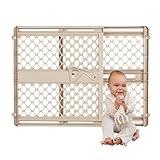
- PROVIDES PEACE OF MIND - The kids gate creates a secure barrier to help prevent access to stairs, bathrooms, kitchens, and other off-limit areas, so your little one can safely explore.
- ADJUSTABLE SAFETY GATE - This plastic child safety gate is adjustable, fits openings 26 to 42 inches wide, and is 26 inches tall. It is designed to be difficult for kids to climb. Our baby gate is perfect for stairs, doorways, hallways, and more.
- EASY TO INSTALL - Two installation options, pressure-mounted baby gate for a quick setup or hardware-mounted for use as a stairway safety gate that swings open. All necessary hardware is included. For stairway use, hardware mounting is required.
- COMFORTABLE HANDLE - Our baby gate for doorways features an ergonomic, easy-press handle that allows smooth opening and secure locking in seconds, even with one hand.
- MADE IN USA - Our JPMA-certified baby gate brings peace of mind to the entire family. We stand for the highest safety, quality, and operational standards while creating the ideal collection of products for babies ages 6-24 months. Proudly made in the USA!
Frequently Asked Questions
Can I leave a large and small dog alone together after a few good play sessions?
No. Calm sessions are encouraging but do not prove that the dogs will cope with a sudden noise, food spill, visitor, or tiredness without supervision. Use a secure gate or separate rooms whenever no responsible adult can actively watch them, and reconsider freedom only after a long, consistent pattern of relaxed behavior.
Should a puppy play with a senior small dog?
Only if the senior dog can move away easily and the puppy can be interrupted before it becomes frantic. Keep sessions short, protect the senior dog’s rest, and have a veterinarian address pain or mobility problems that could make normal puppy contact uncomfortable.
Is it normal for dogs to growl during play?
Some dogs make brief play sounds while their bodies stay loose and they continue to pause or trade roles. Treat a growl as a reason to read the whole picture, not to punish: stiffness, staring, teeth-baring, persistent pursuit, or an inability to disengage means the interaction should stop.
How long should introductions take?
There is no safe universal timetable. Progress depends on history, health, arousal, and the size of the gap; some pairs need many short sessions over an extended period. Advance only when both dogs repeatedly remain relaxed, responsive, and able to retreat at the current stage.





Leave a Reply