
Free tools Windows power users keep installed
One-click scans. No signup required.
Some links on this page are affiliate links: if you buy through them we may earn a commission, at no extra cost to you.
Neither method is safest in every situation. A healthy, feeding tarantula can usually be offered an appropriately sized, captive-bred live insect when you can supervise and remove it promptly. Freshly pre-killed prey is safer when the spider is approaching a molt, is molting or has recently molted, is a tiny sling, or the feeder could burrow or inflict a serious bite. The compromise is that many tarantulas detect prey through movement and may ignore food that no longer moves.
The practical rule is simple: use live prey for a watched feeding, and use pre-killed prey—or skip feeding—during vulnerable periods. Never leave a live cricket or other feeder in an enclosure unattended.
As an Amazon Associate I earn from qualifying purchases.
Do these 3 things before closing this tab:
1Clear out junk files and repair common Windows errors2Fix the driver behind crashes, sound loss and screen glitches3Repair Windows errors before they cause bigger problemsThe safety decision in one view
| Situation | Safer choice | Reason |
|---|---|---|
| Healthy, active tarantula and an attentive keeper | Appropriately sized, live captive-bred insect | Movement usually produces a stronger feeding response; the insect can be removed as soon as it is ignored. |
| Premolt, molt or a recently molted spider | No food until safe, or freshly pre-killed food only when appropriate | A live feeder can bite a vulnerable tarantula. Fangs also need time to harden after a molt. |
| Tiny sling | Finely sized, freshly pre-killed pieces | Small spiders are easily injured by oversized or aggressive feeders, although some slings will accept only movement. |
| Burrowing, fast or strong-jawed feeder | Pre-kill or disable before offering | This prevents the insect from vanishing into the substrate or attacking the spider out of sight. |
| Repeated refusal of dead food | Supervised live prey after checking molt status and size | Many tarantulas do not recognize motionless food as prey. |
There is no established percentage showing that live or pre-killed food is safer overall. Veterinary and husbandry sources give qualitative recommendations rather than a controlled live-versus-dead injury or survival comparison. Safety therefore depends on the spider’s condition, the feeder’s behavior, prey size and your ability to watch the feeding.
Why live insects are the routine diet
Tarantulas generally locate prey through movement and vibration. The University of Illinois College of Veterinary Medicine lists gut-loaded crickets, mealworms, king worms, silkworms, dubia roaches and hornworms as practical food sources. An Avian & Exotic Veterinary Care handout likewise describes tarantulas as animals that eat live prey.
Popular on Amazon
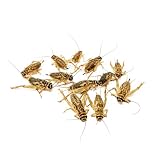
- 110 live banded crickets per order
- Small size: approximately 1/4 to 3/8 inch in body length, excluding legs and antennae
- Live feeder crickets for insect-eating reptiles, including leopard geckos and bearded dragons; select a size appropriate for your pet
- Packaging: crickets are shipped in a cotton bag inside a box. Care instructions are not included.
- Before opening the cotton bag, prepare a suitable ventilated, escape-resistant enclosure. Open the bag inside the enclosure and transfer the crickets carefully.
Live insects also let you offer a complete, recognizable prey item rather than a piece whose texture and scent may have changed. Captive-bred feeders are preferable because their source and diet are known, while wild-caught insects may carry pesticides, parasites or other contaminants. Feeders should be no larger than the tarantula’s abdomen; a smaller item is safer than one that can overpower or seriously injure the spider.
“Live” does not mean “leave it in the tank.” It means the insect is introduced for a supervised feeding opportunity. If the tarantula does not take it, remove the feeder rather than assuming the spider will deal with it later.
Recommended Free Tools
How an unattended feeder can injure a tarantula
Crickets and other insects defend themselves. A hungry feeder left in an enclosure can chew on a tarantula, especially when the spider is resting, hiding or unable to respond. Dr. Krista Keller of the University of Illinois College of Veterinary Medicine cautions that dropping several crickets into an enclosure to feed a spider throughout the week may lead to injuries from prey insects biting the tarantula.
The risk is not limited to crickets. A feeder can hide under bark or in substrate, emerge when the tarantula is vulnerable, or remain close to a freshly molted animal. A large mealworm may burrow and become difficult to retrieve. A powerful feeder’s jaws can cause damage before you notice it. Multiple insects multiply these opportunities and make it harder to identify which one is still present.
Removal times
- The Illinois guidance recommends removing leftovers after about 10 minutes.
- Tree of Life advises removal within 24 hours in ordinary circumstances, but immediately when premolt is suspected.
- For a spider showing clear premolt or lying in a molt, do not wait for a routine time limit: remove the feeder at once if it can be done without disturbing the tarantula.
These intervals are husbandry limits, not permission to leave prey unattended. A tarantula that retreats, refuses food or begins premolt can become unsafe to feed even if the insect was accepted earlier.
Molt is the highest-risk period
During premolt, a tarantula may stop eating, become sluggish and spend more time in a retreat. During the molt itself it is largely defenseless. Tree of Life specifically warns that an in-molt tarantula is vulnerable to feeder attacks. A live insect can bite the soft body or disturb the spider while it is trying to complete the molt.
Also popular on Amazon

- FRESH LIVE ARRIVAL FOR HEALTHY FEEDING: Our live crickets ship in a ventilated, secure box with care to keep feeder crickets live and active on arrival, giving your reptile fresh, lively prey at every mealtime.
- COMPLETE FEEDER NUTRITION: Crickets in a box arrive nourished with Fluker's Insect Care essentials including High Calcium Cricket Diet, Orange Cube, and Quencher, passing calcium, vitamins, and hydration to your pet.
- SIZED RIGHT FOR HEALTHY GROWTH: From tiny pinhead crickets for hatchlings to small crickets for juveniles and large live crickets for adults, every size fuels strong development and sparks natural hunting instincts.
- PROUDLY USA RAISED: Fluker's has bred quality live crickets on American soil since 1956, earning the trust of reptile keepers, anglers, and breeding crickets hobbyists across generations.
- FAVORITE MEAL FOR MANY PETS: Feed live crickets to bearded dragons, leopard geckos, frogs, tarantulas, chameleons, turtles, and birds. They also work as live crickets for fishing bait when chasing bass and panfish.
The Royal Veterinary College advises not feeding during premolt or molt and waiting until the fangs have hardened afterward. Its guidance gives a typical post-molt wait of 7–14 days for adults and 3–7 days for juveniles. These are typical windows, not guarantees; wait longer if the fangs are still pale or soft, the spider remains weak, or a qualified exotics veterinarian gives different advice.
What to do when a molt may be starting
- Remove any live feeder immediately if you can do so without touching or shifting the tarantula.
- Do not add more prey to test whether the spider is hungry.
- Keep the enclosure stable, with the species’ normal temperature, humidity and a full water dish.
- After the molt, wait for the appropriate fang-hardening period before offering food.
- Start with one small feeder and observe the response; remove it promptly if ignored.
Pre-killing an insect reduces the attack risk, but it does not make feeding during an active molt appropriate. A dead item can still foul the enclosure, and handling a molting tarantula to place food is more dangerous than simply waiting.
Will a tarantula eat pre-killed food?
Sometimes. The Avian & Exotic Veterinary Care handout notes that some tarantulas eat dead food, while many are stimulated by movement and will not recognize motionless meat as food. Individual behavior varies by species, age, feeding history and the particular spider.
Offer a freshly killed, appropriately sized piece rather than an old carcass. Place it where the tarantula can encounter it without digging through the enclosure. If there is no response, remove the piece and clean any residue. Do not keep adding dead food until it rots or attracts mites.
How to improve acceptance
- Use a feeder the spider has previously accepted live.
- Make the piece small enough to handle safely, especially for a sling.
- Offer it after the spider has completed its post-molt fasting period.
- Using feeding tongs, gently move the piece near the tarantula’s legs; do not poke or chase the spider.
- If the spider backs away, stop and remove the food instead of repeatedly disturbing it.
Failure to accept dead food is not proof of illness. First check molt status, prey size, enclosure conditions and the freshness of the offering. A tarantula that repeatedly refuses both live and pre-killed food, loses weight or appears injured needs veterinary advice.
Choosing the safer method for your tarantula
Healthy adult or juvenile that is alert at feeding time
A supervised live insect is usually the most reliable option. Select a captive-bred feeder no larger than the abdomen, introduce one at a time, and watch the interaction. If the tarantula does not strike or continues to avoid the insect, remove it within the recommended interval rather than leaving it overnight.
Also popular on Amazon
- FRESH LIVE ARRIVAL FOR HEALTHY FEEDING: Our live crickets ship in a ventilated, secure box with care to keep feeder crickets live and active on arrival, giving your reptile fresh, lively prey at every mealtime.
- COMPLETE FEEDER NUTRITION: Crickets in a box arrive nourished with Fluker's Insect Care essentials including High Calcium Cricket Diet, Orange Cube, and Quencher, passing calcium, vitamins, and hydration to your pet.
- SIZED RIGHT FOR HEALTHY GROWTH: From tiny pinhead crickets for hatchlings to small crickets for juveniles and large live crickets for adults, every size fuels strong development and sparks natural hunting instincts.
- PROUDLY USA RAISED: Fluker's has bred quality live crickets on American soil since 1956, earning the trust of reptile keepers, anglers, and breeding crickets hobbyists across generations.
- FAVORITE MEAL FOR MANY PETS: Feed live crickets to bearded dragons, leopard geckos, frogs, tarantulas, chameleons, turtles, and birds. They also work as live crickets for fishing bait when chasing bass and panfish.
Premolt, in molt or newly molted
Do not offer live prey. During premolt and molt, wait. Afterward, follow the Royal Veterinary College’s typical fang-hardening window—7–14 days for adults and 3–7 days for juveniles—and confirm that the spider is moving normally. A pre-killed item can be considered only after this vulnerable period has passed.
Tiny spiderling
A sling has less body mass and fewer options for escaping an aggressive feeder. Freshly pre-killed, finely sized prey can remove the feeder’s ability to bite. Acceptance is less predictable, so monitor the spider rather than assuming it has eaten. If a sling repeatedly ignores dead pieces, offer a very small live feeder only under direct supervision and remove it immediately if the spider does not engage.
Windows Errors? Fix Them Before They Spread
Repair common Windows errors and clear accumulated junk for a smoother, more stable PC - no reinstall needed.Free scan · no reinstallCrashes, No Sound, or Screen Glitches?
Random freezes, missing sound and display glitches usually trace back to one bad driver. Find and replace yours safely.Free scan · under a minuteBurrowing feeders
Mealworms tend to burrow and are described by the Royal Veterinary College as low in nutritional value. A buried worm can be difficult to remove and may encounter the tarantula later. Pre-kill or disable the feeder before placement, or select a different appropriately sized captive-bred insect that remains visible.
Strong-jawed or unusually active feeders
Use pre-killed food when the insect can bite hard, moves too quickly to retrieve safely or repeatedly disappears from view. If you use it live, keep the enclosure open only as long as needed and maintain uninterrupted visual contact.
A safe live-feeding procedure
- Check the spider. Look for premolt signs, a current molt, a very recent molt, unusual weakness or an injury. If any are present, do not introduce live prey.
- Confirm the feeder. Use a captive-bred insect from a reliable source. Avoid wild-caught insects and prey that is larger than the tarantula’s abdomen.
- Prepare retrieval tools. Have long tweezers or feeding tongs, a catch cup and a lid ready before opening the enclosure.
- Offer one insect. Place it near, not on, the tarantula. Never drop several feeders into the enclosure for later meals.
- Watch continuously. Look for a strike, a retreat, an attempted escape or the feeder hiding. Do not leave the room while prey remains inside.
- Remove leftovers. If the insect is ignored, retrieve it after about 10 minutes under the Illinois guidance. Remove it sooner if premolt is suspected.
- Inspect the enclosure. Check hides, corners and substrate for a missed feeder. Keep the water dish available and restore the lid securely.
If the tarantula captures the insect, avoid prodding it. Feeding can take time, and unnecessary disturbance may cause the spider to abandon the meal.
Independent reader supportYour contribution helps us test, update, and keep practical guides available for everyone.A safe pre-killed feeding procedure
- Select a known feeder. Use a captive-bred insect the tarantula has previously tolerated, sized no larger than the abdomen.
- Kill it immediately before feeding. Freshness matters; do not store a dead insect at room temperature and offer it later.
- Reduce the piece for small spiders. Cut or crush it into a manageable portion for a sling, while avoiding sharp fragments.
- Place it carefully. Set it near the tarantula with clean tongs. Do not bury it or leave it against the spider’s body.
- Allow a brief response window. Gentle movement with tongs may help a movement-oriented tarantula notice the food, but do not harass the spider.
- Remove what is ignored. Take out the piece promptly if the tarantula does not feed. Discard any remains and clean visible residue.
Pre-killed food removes the feeder’s bite risk, but it does not eliminate hygiene concerns. A warm, damp enclosure can turn uneaten material into a source of odor, mold or scavenging pests.
Also popular on Amazon

- Includes 110 live banded crickets.
- Large size range: approximately 3/4 inch and up
- Live feeder insects for insect-eating reptiles and amphibians
- Keep in a ventilated enclosure with appropriate food and moisture after arrival
- Individual size, appearance, and activity may vary because crickets are living animals.
Feeder quality, size and nutrition
Offer a varied selection of suitable captive-bred insects rather than relying on one type indefinitely. The University of Illinois list includes crickets, mealworms, king worms, silkworms, dubia roaches and hornworms; gut-loading feeder insects improves the nutrients they carry into the meal.
Size is a safety control. Tree of Life recommends prey no larger than the abdomen. Oversized prey is harder for a tarantula to subdue and more capable of defending itself. The Royal Veterinary College advises against meat and pinky prey because of obesity and other health problems. Those foods also remove the normal whole-insect feeding context and are unnecessary when suitable feeders are available.
Mealworms deserve extra caution because they tend to burrow and the Royal Veterinary College describes them as low in nutritional value. If used, supervise closely and remove them before they disappear. A different feeder may be more practical for a burrowing-sensitive enclosure.
Freshness and enclosure hygiene
Whether food begins alive or dead, remove leftovers. A live insect can injure the spider; a dead insect can decay. Uneaten material may attract mites, flies or mold and can make it harder to tell whether a tarantula has produced normal waste.
Quick wins for a faster PC:
Clear out junk files and repair common Windows errorsFree Scan →Scan for outdated or missing drivers - takes under a minuteDriver Scan →Repair Windows errors before they cause bigger problemsFix Now →- Use clean tongs for pre-killed pieces.
- Do not return a feeder that has contacted dirty substrate to a culture or storage container.
- Remove shed insect parts and uneaten fragments when the tarantula is not being disturbed.
- Keep fresh water available at all times.
- Do not add food simply because the previous meal was refused; tarantulas commonly stop eating around molt.
When refusal signals a problem
One missed meal is usually a husbandry observation, not an emergency. Check whether the tarantula is in premolt, whether the prey was too large, whether a dead item lacked movement, and whether the enclosure’s water and environmental conditions are appropriate for that species.
Seek an exotics veterinarian if refusal persists alongside weight loss, a visibly damaged leg or abdomen, abnormal posture, inability to right itself, unexplained bleeding, a foul-smelling enclosure or a suspected feeder bite. Do not attempt to pull a stuck feeder from a molting tarantula or handle the spider unnecessarily.
Common mistakes and their fixes
| Mistake | Why it is unsafe or ineffective | Fix |
|---|---|---|
| Leaving several crickets in for the week | Hungry insects may bite the tarantula and remain hidden. | Offer one feeder, supervise, and remove it promptly. |
| Feeding during premolt or molt | The spider cannot defend itself effectively. | Remove live prey and wait through molt and the post-molt fang-hardening period. |
| Assuming a dead insect is always accepted | Many tarantulas use movement cues and ignore motionless food. | Offer a fresh, small piece once; if refused, remove it and reassess the spider’s condition. |
| Using oversized prey | The feeder can overpower or injure the spider. | Choose prey no larger than the abdomen. |
| Using wild-caught insects | Pesticides and parasites are uncontrolled. | Use captive-bred feeders from a known source. |
| Letting mealworms disappear into substrate | A buried feeder may be impossible to retrieve and can encounter the spider later. | Pre-kill, use a visible feeding dish where suitable, or choose another feeder. |
| Offering meat or pinky prey | The Royal Veterinary College associates these foods with obesity and other health problems. | Use suitable whole feeder insects instead. |
Bottom line for everyday feeding
For an alert, healthy tarantula, a properly sized captive-bred live insect is usually the most readily accepted food—but only during a watched feeding. Remove it promptly if ignored. For premolt, molt, the vulnerable post-molt period, tiny slings or feeders that burrow or bite strongly, pre-killed food removes the feeder’s attack risk; if the spider will not recognize it, waiting is safer than leaving live prey inside. Species, life stage, prey size and molt status should determine the choice each time.





Leave a Reply