Recommended Free Tools
Liver disease in cats is an umbrella term, not a single diagnosis. The two conditions owners most often hear about are hepatic lipidosis, also called fatty liver syndrome, and cholangiohepatitis, inflammation of the liver and its biliary system (the bile ducts and gallbladder). Their signs overlap with many other illnesses, and the two can occur together, so the cause cannot be read from symptoms alone. A cat with liver-related signs, and especially one that has stopped eating, needs a veterinary examination promptly. Treatment depends on which condition is present, and so does the outlook.
Signs that call for a vet visit
The sign owners most often notice first is appetite loss, usually described as a cat that “is not eating.” Veterinarians call this anorexia. It is a broad clinical sign with many possible causes, not a diagnosis of liver disease. Carolyn McDaniel, VMD, a lecturer in clinical sciences at Cornell University College of Veterinary Medicine, puts the standard plainly:
“A cat that is not eating deserves to have a full veterinary workup—a thorough physical exam followed by any lab work and imaging that’s indicated by the exam.”
Signs reported with cholangiohepatitis include:
- Vomiting
- Weight loss
- Loss of appetite
- Jaundice, a yellow tint to the skin or gums
- Fever
Hepatic lipidosis is associated with food avoidance and jaundice. Signs can be vague and can progress slowly, so a cat that seems only a little off may still have a significant problem. Any yellowing of the skin or gums should be reported to a veterinarian promptly.
#1 Best Overall

- COMPLETE LIVER SUPPORT FOR CATS: Formulated by feline health experts, Doctor By Cat Liver Guard combines science-backed ingredients with a pet-friendly format to support optimal liver function. Whether your cat is aging, recovering, or simply in need of daily liver maintenance, this gentle yet effective supplement helps promote detox, energy, and overall well-being—without the stress of pills or powders.
- EASY, TASTY SQUEEZE-AND-SERVE FORMAT: Half the battle with any supplement is palatability. If they won't eat it, it won't matter how good a product is. Just squeeze up and serve! A specialized formula designed for liver support, yet as easy and enjoyable as a treat. Helps support healthy liver function, antioxidant protection, and overall vitality in a way your cat will love!
- POWERED BY ARTEMISIA ANNUA (SPB-201) – NATURE’S ANTIOXIDANT HERO: Our formula features SPB-201, a premium extract of Artemisia annua (Sweet Wormwood), known for its powerful antioxidant and hepatoprotective properties. SPB-201 helps defend liver cells from oxidative stress and supports the body’s natural detoxification process, making it a key ingredient for long-term liver health.
- WITH MILK THISTLE – TRUSTED HERBAL SUPPORT FOR LIVER REGENERATION: Milk Thistle (Silymarin) has been used for centuries to promote liver cell regeneration and protect against toxin-related damage. Included in Doctor By Cat Liver Guard for its clinically supported benefits, this ingredient helps maintain normal liver enzyme levels and supports healthy bile flow for better digestion and nutrient absorption.
- PRINCIPLES FOR DEVELOPING NUTRITION FOR OUR BELOVED PETS: The key to developing Doctor By’s nutritional supplements is to support simple, consistent feeding while minimizing stress for both pets and caregivers. Build better daily health through a happy and delicious routine! Doctor By Cat Liver Guard is a gentle formula that can be given to cats from kittenhood through their senior years.
The two main forms of liver disease
Hepatic lipidosis (fatty liver syndrome)
Hepatic lipidosis occurs when triglycerides build up inside liver cells until the liver cannot function properly. Sharon Center, DVM, a professor of medicine at Cornell University College of Veterinary Medicine, describes the tendency this way:
“For some unknown reason, cats have a notable tendency to accumulate triglycerides in their hepatocytes, and when these cells become filled with fat, the liver is unable to function properly.”
Cornell Feline Health Center reports that more than 90 percent of hepatic lipidosis cases are secondary to another underlying condition, and that the disorder is almost always accompanied or preceded by anorexia. The page attributes this figure to Dr. Center; it does not display a publication year. The underlying conditions Cornell names include obesity, diabetes, cancer, hyperthyroidism, pancreatitis, kidney disease, and other liver problems. These associations describe patterns across cats and do not identify the cause in any individual cat.
Neutrophilic cholangiohepatitis
Cholangiohepatitis is inflammation involving the liver and biliary system. Cornell describes two forms, distinguished by the type of inflammatory cell involved. The neutrophilic form is associated with bacterial infection and tends to present acutely and severely.
The Tool Desk
Outbyte PC Repair FREEClear out junk files and repair common Windows errorsFree Scan →Outbyte Driver Updater FREEScan for outdated or missing drivers - takes under a minuteDriver Scan →Rank #2

- Liver Support for Dogs & Cats: Denamarin is the #1 veterinarian recommended liver support supplement for dogs and cats. This supplement contains s-adenosylmethionine (SAMe) to help increase levels of the antioxidant glutathione - one of the liver’s main detoxifying agents
- High-Quality Ingredients: The Silybin found in Denamarin has shown better absorption by dogs and cats than the standardized milk thistle extract found in many other products
- Support Your Dog and Cat's Liver Health: The liver is one of the most vital organs in your pet and is responsible for removing toxins, storing energy, aiding digestion, and supporting the immune system
- From the #1 Veterinarian Recommended Supplement Company*: Nutramax Laboratories Veterinary Sciences has been a leader in pet health for over 30 years, and provides supplements to support joint health, digestive health, and overall wellness
- Backed by Science: Nutramax Laboratories Veterinary Sciences supplements are veterinarian formulated with high-quality ingredients to ensure your pet is receiving a safe supplement
Concurrent inflammation is common in this form. Cornell Feline Health Center (updated March 2025) notes that more than 50% of cats diagnosed with neutrophilic cholangiohepatitis also have intestinal and/or pancreatic inflammation. When the liver, pancreas, and intestines are all inflamed, the combination is sometimes called “triaditis.”
Lymphocytic cholangiohepatitis
The lymphocytic form is immune-mediated and tends to be more chronic and progressive. It can have the least obvious presentation of any form. A cat may show no obvious signs at first, or may show gradual weight loss, episodic vomiting, and listlessness.
How the forms compare
Where Cornell’s guidance does not state a monitoring plan for a form, the table says so rather than filling the gap.
| Feature | Hepatic lipidosis | Neutrophilic cholangiohepatitis | Lymphocytic cholangiohepatitis |
|---|---|---|---|
| Mechanism | Triglyceride accumulation in liver cells | Inflammation associated with bacterial infection | Immune-mediated inflammation |
| Typical course | Commonly preceded by appetite loss; often secondary to another illness | Tends to present acutely and severely | Tends to be chronic and progressive |
| Diagnostic workup | Routine laboratory tests, ultrasound, and fine-needle aspiration | Bloodwork, coagulation testing, abdominal ultrasound, bile sampling, and biopsy | The same general workup; biopsy helps distinguish the forms |
| Treatment emphasis | Nutritional support plus treatment of the illness that caused appetite loss | Antibiotics; hospital care for severe cases | Immunosuppressive drugs such as prednisolone, reduced over months |
| Monitoring | Not stated in Cornell’s guidance on this form | Not stated in Cornell’s guidance on this form | Long-term monitoring |
How diagnosis works
No single test settles every liver case. Veterinarians choose tests based on the cat’s examination and the suspected condition. For cholangiohepatitis, Cornell describes the following:
Rank #3

- 🍃NATURAL INGREDIENTS: We crafted this herbal supplement completely pure. Here is only Milk Thistle (333 mg) as a main ingredient: no GMOs, artificial colorants, or components.
- 💫CAT LIVER SUPPORT: This natural supplement may be helpful with liver moments in cats, supporting their well-being and providing gentle and herbal action.
- 💚KIDNEY SUPPORT FOR CATS: Our product may support the kidney system in cats, allowing proper urination. Care for your cat’s bladder and urinary tract.
- 🐈FOR ALL CAT BREEDS: Sphynx cat, British Shorthair, Abyssinian, or other breeds. This liquid supplement is a solution for different cat breeds, ages, and sizes.
- 🍗APPROPRIATE FLAVOR FOR CATS: We know cats like the chicken taste, so we provide this supplement with this taste to give our beloved cat the best feeling.
- Bloodwork showing changes in liver values and bilirubin, the yellow pigment that causes jaundice.
- Coagulation testing, because liver injury can affect clotting.
- Abdominal ultrasound to assess the liver, gallbladder, pancreas, intestines, stones, or bile duct obstruction.
- Bile sampling, which can sometimes be examined under a microscope and cultured.
- Liver biopsy, which provides a definitive diagnosis and helps distinguish the two forms. When a biopsy is not possible, a presumptive diagnosis can rest on signs, bloodwork, and ultrasound.
For hepatic lipidosis, early diagnosis can involve routine laboratory tests, ultrasound, and fine-needle aspiration. Cornell’s hospital guidance describes blood tests and ultrasound as initial investigations and notes that biopsy is usually needed for a definitive diagnosis of many liver disorders.
Treatment and care
Treatment is set by the diagnosis and by how sick the cat is. The approaches differ enough that a plan for one form should not be assumed to apply to another.
Hospital care for severe cholangiohepatitis
Some severe cholangiohepatitis cases are hospitalized for intravenous fluids, antibiotics, and anti-nausea medication.
Antibiotics in neutrophilic cholangiohepatitis
Antibiotic courses for the neutrophilic form generally continue for four to six weeks after discharge. The veterinarian sets the exact length for each cat.
Rank #4

- Comprehensive liver support Designed to help promote healthy liver function, supporting its metabolic activity and aiding in its crucial role in overall health.
- Aids natural detoxification Supports the body's normal waste elimination and detoxification processes, helping to protect the liver from environmental toxins.
- Enhances kidney health Contributes to the maintenance of normal kidney functions, essential for filtering waste and maintaining internal balance in your cat.
- Supports cognitive function Features S-Adenosylmethionine (SAMe), which aids in supporting normal nerve conduction, memory recall, and overall brain function.
- Promotes hepatic cleansing Assists with the normal cleansing of the liver from impurities, contributing to its proper functioning and health.
Immunosuppression in lymphocytic cholangiohepatitis
The lymphocytic form may be treated with immunosuppressive drugs such as prednisolone. The dose is reduced over months. Some cats need long-term low-dose treatment, with ongoing monitoring.
Nutritional support and feeding tubes in hepatic lipidosis
Nutritional support is central to hepatic lipidosis, and the clinical team also has to find and treat whatever caused the cat to stop eating. When a cat cannot eat enough on its own, veterinary sources describe feeding tubes as the way to deliver nutrition, and tube feeding may continue after discharge. Placement and feeding are carried out by the veterinary team. Do not try to place a feeding tube or force-feed a cat at home.
Supplements Cornell lists
Cornell lists SAMe, N-acetylcysteine, and B-complex supplementation as possible additional therapies in cholangiohepatitis. These are options a veterinarian may weigh, not a recommendation to self-prescribe. Whether any supplement fits depends on the cat’s full assessment. Cornell’s guidance does not establish how well any of these works in cats, and it does not compare products.
Independent reader supportYour contribution helps us test, update, and keep practical guides available for everyone.Prognosis
There is no single survival percentage for liver disease in cats. The outlook depends on the form, how severe the illness is, whether complications such as bile duct obstruction are present, and how early treatment starts. Treatment begun before extensive liver damage or biliary cirrhosis has developed gives the best chance of success.
Quick wins for a faster PC:
Clear out junk files and repair common Windows errorsFree Scan →Fix the driver behind crashes, sound loss and screen glitchesFind Drivers →Repair Windows errors before they cause bigger problemsFix Now →Best Value
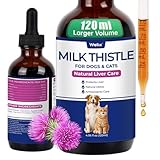
- ADVANCED & NATURAL FORMULA - Wellix High-potency cat & dog milk thistle with dandelion, astaxanthin, and vitamins E & C supports liver health and provides antioxidant protection. Safe, effective, and free from additives and artificial flavors, making it a trusted milk thistle supplement for dogs and cats
- LIVER CARE - Wellix Milk Thistle Liquid promotes liver detoxification, eliminates toxins, and enhances cellular antioxidant capacity, providing cat liver support as well as serving as one of the trusted liver supplements for dogs. Ideal for daily liver care and for pets with diabetes or obesity
- EASY TO USE - Wellix milk thistle for dog and cat is flavored with chicken, making it irresistible even for picky pets. Simply add the liquid milk thistle directly to food or water for clean, stress-free daily supplementation
- PRECISE SUPPORT - Veterinarian-recommended Wellix milk thistle drops provide professional feeding guidelines. Use the marked dropper for precise nutritional support, delivering reliable liver support for dogs and cats of all sizes and ages
- LARGE CAPACITY - Each 120ml bottle of Wellix liquid milk thistle provides ample supply for daily and long-term liver care. Perfect for multi-pet households, it lasts several months even for large dogs, allowing you to easily support your pets’ liver health continuously and making daily care more reassuring
Hepatic lipidosis
Cornell describes hepatic lipidosis as potentially fatal if it is not promptly reversed. Its hospital guidance says most affected cats can recover with appropriate supportive care. The underlying illness and the cat’s overall condition shape the individual outlook.
Neutrophilic cholangiohepatitis
Cornell says this form can return to normal with aggressive, prompt treatment. Obstruction and other concurrent disease can worsen the outlook.
Lymphocytic cholangiohepatitis
This form may enter long-term remission, though some cats need lifelong treatment and monitoring.
Quick Recap
Questions to ask your veterinarian
- Do the test results point to hepatic lipidosis, one form of cholangiohepatitis, or both?
- Does my cat need ultrasound, bile sampling, or a biopsy, and what can each one not tell us?
- If nutritional support is needed, what is the feeding plan, and will it continue at home?
- If antibiotics or immunosuppressive drugs are prescribed, how long will treatment last and how will progress be checked?
- Is any supplement worth discussing, and how would it fit with the main treatment?
Product prices and availability are accurate as of the date/time indicated and are subject to change. Any price and availability information displayed on Amazon at the time of purchase will apply.
What’s actually slowing this PC down?
Pick the symptom - the matching free tool is one click away.




