
What’s actually slowing this PC down?
Pick the symptom - the matching free tool is one click away.
Some links on this page are affiliate links: if you buy through them we may earn a commission, at no extra cost to you.
For most beach walks, a fixed-length long line attached to a properly fitted chest or body harness is safer than a retractable leash. It gives a dog room to explore while preserving a line you can retrieve and manage quickly. A retractable leash is a poor choice for beaches because its thin cord can create burn, trip, entanglement, breakage and delayed-control hazards.
Use a shorter, sturdy leash when the beach is crowded, near wildlife, around unfamiliar dogs, beside changing surf or anywhere immediate close control matters. No leash makes a hazardous beach safe by itself: local access rules, heat, tides, currents, water quality and the dog’s training determine whether the walk should proceed.
As an Amazon Associate I earn from qualifying purchases.
Which is safer for beach walks: a long line or a retractable leash?
A fixed-length long line is generally the safer option for supervised exploration on an open, relatively quiet beach. PetMD veterinarian Barri J. Morrison, DVM, summarizes the benefit this way: “A long leash gives your dog room to explore while allowing you to quickly bring them back if a hazard arises.” A retractable leash lets the dog range out too, but the locking handle, thin cord and constantly changing length make close control harder when something changes suddenly.
The recommendation is not absolute. A long line can wrap around a dog, another person or an object, and it can cause injury if allowed to trail through play. When people, dogs, rocks, surf, wildlife or narrow access points reduce your working space, switch to a sturdy standard leash in the 4–6-foot range. VCA describes that length as providing tangible control and says retractables are not the best restraint for exercise.
Popular on Amazon
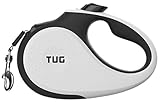
- Small Retractable Dog Leash is Suitable for Dogs Under 35 lbs; Medium For Dogs Under 55 lbs; Large For Dogs Under 110 lbs; Retractable Leashes Not Suitable For Chewing
- 16 ft Tape Retractable Dog Leash With Easy-Adjust Retraction; 360 Degree Tangle-Free Inlet
- Quick Lock And Unlock Feature - Easy Roll-On and Roll-Off With Your Thumb
- Super Comfortable Grip For Those Long Walks! Ergonomic Anti-Slip Handle
- Heavy Duty Internal Coil For Consistent Retraction and Recoil
There is no reliable comparative injury-rate statistic in the cited guidance. The safer choice therefore rests on documented failure modes and handling requirements rather than a claimed percentage reduction in accidents.
Quick comparison
| Safety factor | Fixed-length long line | Retractable leash | What it means on a beach |
|---|---|---|---|
| Emergency control | You can gather, step on or pull in a known amount of line, provided it is handled correctly. | The dog may be far away; locking and shortening can take time, and the handle can be dropped. | Use the option that lets you bring the dog close before a wave, dog, person or wildlife encounter. |
| Freedom to explore | Common guidance gives examples from 10–30 feet, 15–50 feet or 5–20 metres. | Variable distance is built into the device. | Either can increase roaming distance, but a fixed line is easier to size for the available space. |
| Entanglement and burns | The line can wrap around legs, objects or the dog during play. | The thin cord can cause rope or friction burns, trips and tangles. | Keep any line out of crowded areas and never allow it to run through active play. |
| Neck loading | Should be attached to a properly fitted chest or body harness. | A sudden lock or lunge can transmit force through a collar and injure the neck. | Harness attachment and gradual handling reduce, but do not eliminate, loading risk. |
| Visibility around people and dogs | A thicker, fixed line is easier to see, but its length still creates a barrier and trip risk. | The cord can be difficult for other beach users to see. | Shorten to a standard leash before entering traffic or meeting others. |
| Surface, surf and crowding | Works best in open space where the handler can see the whole line. | Works poorly when rapid shortening or a secure anchor is needed. | Changing conditions should override the desire for extra distance. |
How does a fixed-length long line work at the beach?
A long line is a non-retracting leash that gives a dog a defined radius. You control the radius by choosing the line’s length and by gathering slack; there is no spring-loaded spool to maintain tension. This makes the line predictable, but only if the handler actively manages it.
Choose a length you can physically manage
The San Francisco SPCA describes 10–30 feet as useful for recall training and open-area exploration. VCA gives 15–50 feet as an option for safe exploration, while FOUR PAWS describes 5–20 metres for nature walks and recall work. These are examples from different organizations, not a universal specification.
Start with the shortest length that gives the dog useful sniffing and movement room without crossing other people, dogs, vehicles or hazards. A 10-foot line may be practical on a busy access path; a longer line may be manageable on a broad, empty stretch. Wind, wet sand, dunes, rocks and the number of beach users all reduce the amount of line you can safely supervise.
Attach it to a chest or body harness
FOUR PAWS states: “A long-line leash should only ever be attached to a chest harness.” A properly fitted chest or body harness distributes pulling forces more safely than relying on the neck. Check that the harness cannot be backed out of, rubs neither the armpits nor the chest, and has a secure attachment point before entering the sand.
Do not treat the harness as permission to let the line run unattended. A dog can still accelerate, wrap the line around its legs or drag the line into a person. Hold the line in controlled coils or folds, keep slack visible, and release or gather it deliberately rather than letting a loop accumulate near feet.
Use active line management
- Scan the line’s entire path before allowing the dog to move away.
- Keep the line out of games in which dogs chase, wrestle or sprint around one another.
- Gather line before passing people, dogs, beach furniture, rocks, posts or access gates.
- Never wrap the line around your hand or body; a sudden lunge can injure fingers or joints.
- Practice a recall and a stop cue in a quiet area before relying on distance at the beach.
Why are retractable leashes risky on sand and near surf?
Retractable leashes combine a handheld housing, a thin cord or tape and a locking mechanism. They can offer extra freedom on a potty walk, and VCA acknowledges that limited use, but says they are not the best restraint for exercise. A beach magnifies their weaknesses because footing, visibility and hazards change quickly.
Also popular on Amazon

- 【Professional Retractable Dog Leash】 The ultimate combination: 16 ft strong nylon reflective tape, impact-resistant ABS housing, and a stainless steel anti-chew cable. This design greatly reduces the risk of being bitten through, extending the leash’s lifespan. Augwind’s retractable leash is specifically designed for small to medium dogs under 50 lbs, offering the best value on the market
- 【Safe & Effective】16 ft Strong Reflective nylon webbing; Over 100,000 retraction times; Max anti-jerk tensile strength: 350 lbs; . Whether day or night, on the street or lawn, the Augwind retractable leash makes every walk safe and easy
- 【Quick Lock System】 Operate the pause, lock, and unlock buttons with a single thumb. Enjoy smooth braking and instant response. The Augwind retractable dog leash ensures the safety of both you and your pet on every outing
- 【2026 Equipment Upgrades】1. Reflective webbing 2. Chrome-plated, rust-proof 360° rotating clasp 3. Ergonomic soft silicone handle 4. Reserved slot for poop bag holder 5. Stainless steel anti-chew cable
- 【2-Year Warranty】 We are a professional pet products company committed to bringing the safest, most practical, and affordable pet products to pets and their owners. We promise to solve any quality issues within 2 years. We provide 24/7 after-sales service. If you have any questions, please feel free to contact us
The dog may be farther away than it appears
A retractable handle can suggest control even when the dog is at the end of a long cord. If a wave, wildlife sighting, loose dog or dropped food triggers a sprint, the handler has to operate the lock and shorten the line while the dog is already moving. San Francisco SPCA lists false control at a distance and escape after cord breakage among the risks.
The cord can injure people and dogs
San Francisco SPCA warns about rope burns and trip hazards from a hard-to-see cord. VCA warns that retractable lines can cause serious friction burns. The cord can cut across a person’s legs, catch around another dog or wrap around the dog’s body before the handler can release tension.
Locks, cords and housings can fail
San Francisco SPCA identifies sudden-lock neck injury, cord breakage and escape. MSPCA-Angell adds that cords can snap under force, internal wear is difficult to inspect, and a dropped handle can make a frightening noise while chasing the dog. Its behavior team and adoption centers do not recommend retractables in most situations because of these safety risks.
Salt, sand and water can also enter moving parts, but the cited organizations do not provide a beach-specific failure rate. Inspecting a retractable does not remove the basic problem that its thin line is difficult for others to see and its length can be difficult to shorten quickly.
How long should a beach leash be?
There is no single correct length. Select the shortest line that provides the exploration your dog needs while leaving you enough space to keep the line clear of every person, animal and hazard in view. The published examples—10–30 feet, 15–50 feet and 5–20 metres—show the range used for training and open-area walks, not a prescription for every beach.
Match length to the setting
| Beach situation | More suitable setup | Reason |
|---|---|---|
| Open, quiet sand with clear sightlines | A manageable fixed long line on a chest harness | There is room to maintain a visible corridor and gather slack. |
| Moderate traffic or narrow access | A shorter fixed line or standard leash | Long loops can cross paths and create trips. |
| Crowds, events, boardwalks or parking areas | Sturdy 4–6-foot leash | Immediate close control is more valuable than roaming distance. |
| Wildlife, steep rocks, strong surf or changing currents | Sturdy 4–6-foot leash, or leave the area | A distant dog can reach danger before a long line is gathered. |
Increase length only when the dog responds reliably to recall and the handler can keep the entire line visible. Decrease it as soon as other users, obstacles or water make that visibility impossible.
When should I use a standard short leash instead?
Use a sturdy 4–6-foot leash whenever the priority changes from exploration to immediate restraint. This includes the route from the car to the sand, crowded beaches, lifeguard stations, beach entrances, areas with unfamiliar dogs, wildlife zones, rocky edges and any place where surf or currents can carry a dog away.
Do these 3 things before closing this tab:
1Fix the driver behind crashes, sound loss and screen glitches2Repair Windows errors before they cause bigger problems3Scan for outdated or missing drivers - takes under a minuteAlso popular on Amazon

- INSTANT CONTROL WITH ONE CLICK LOCK - Stop your dog instantly with a smooth one-click lock and brake system that responds fast in any situation. Stay in full control during walks, even in crowded areas or around other dogs.
- STRONG TAPE BUILT FOR REAL PULLING - Reinforced nylon tape and durable internal mechanism handle daily pulling with ease. Designed for small, medium, and large dogs up to 100 lbs without compromising control or safety.
- 20.1 FT FREEDOM WITHOUT TANGLES - Enjoy 16.4 ft of smooth extension with a 360° tangle-free system that prevents twisting and jamming. Your dog explores freely while you maintain steady, controlled movement.
- COMFORTABLE GRIP THAT REDUCES STRAIN - Ergonomic anti-slip handle fits naturally in your hand, reducing fatigue during long walks. Ideal for daily use, jogging, and training with dogs that pull or move unpredictably.
- RELIABLE FOR DAILY WALKS & TRAINING - Designed for real-life use—walking, training, and outdoor activity. Smooth retraction, consistent performance, and easy handling make every walk safer and more enjoyable.
A short leash also helps when another beach user appears unexpectedly. Gather the long line before the dog reaches the person, then switch leashes if the crowd will continue. Do not wait until the dog is already tangled or pulling toward a hazard.
Beach rules may require a specific leash length or prohibit dogs at certain hours. Check the local authority’s current dog-access hours and leash rules before leaving; requirements differ by location and can override equipment preferences.
What should I check before a beach walk?
Make the leash decision only after checking the beach and the day’s conditions. PetMD identifies strong currents, sharp shells, debris, wildlife and toxic algae as hazards; VCA adds the risk of very hot sand burning paw pads.
- Confirm access rules. Check dog-access hours, off-leash restrictions and any maximum leash length posted by the beach authority.
- Assess heat and sand. Avoid periods when sand is dangerously hot and check the dog’s paw pads after the walk for burns or irritation.
- Check tides and water conditions. Look for tide changes, surf, currents and posted water-quality advisories before entering the shoreline.
- Pack fresh water. Bring a bowl and enough fresh drinking water. PetMD warns that drinking large amounts of saltwater can cause dangerous hypernatremia.
- Inspect the harness and line. Verify fit, stitching, clips and the attachment point. Do not use damaged equipment or a harness the dog can back out of.
- Choose the control level. Start with the standard leash if conditions are uncertain; move to a long line only in a clear, manageable area.
- Carry basic supplies. Shade, a collapsible bowl and a basic first-aid kit are practical additions identified in beach-safety guidance.
How should I manage the walk once we arrive?
Begin in close control
Keep the dog on the short leash while crossing the entrance, parking area and crowded sections. This gives you time to observe other dogs, wildlife, surf and the condition of the sand before adding distance.
Free tools Windows power users keep installed
One-click scans. No signup required.
Deploy the long line only in open space
Attach the long line to the chest harness, face the direction of travel and let out only the amount that remains visible. Keep your attention on the dog’s path and the line’s path; watching only the dog is not enough.
Gather before every interaction
When another dog, person, child, cyclist, vehicle or animal approaches, gather the line before the distance closes. A line that is safe in an empty stretch can become a trip hazard within seconds.
End the long-line period early when conditions change
Return to the short leash if wind blows the line across paths, the sand becomes crowded, the dog becomes overexcited, surf rises or visibility deteriorates. A long line is an option for controlled exploration, not a requirement to maintain distance for the entire outing.
Also popular on Amazon
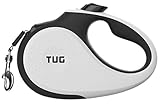
- Small Leash is Suitable for Dogs Under 35 lbs; Medium For Dogs Under 55 lbs; Large For Dogs Under 110 lbs; Retractable Leashes Not Suitable For Chewing
- 16 ft Tape Leash With Easy-Adjust Retraction; Tangle Free 360 Degree Tape Movement
- Quick Lock And Unlock Feature - Easy Roll-On and Roll-Off With Your Thumb
- Super Comfortable Grip For Those Long Walks! Ergonomic Anti-Slip Handle
- Note: Large Leash May Be Larger Than Expected; Please Review Dimensions Before Purchase
Inspect the dog after the walk
Rinse and examine the dog for sand, salt, cuts, abrasions and skin irritation. Check paws carefully, and remove debris before it causes further rubbing. Offer fresh water rather than allowing the dog to drink seawater.
Recommended Free Tools
How can I prevent long-line entanglement?
The San Francisco SPCA warns that a long line can tangle around objects or people’s legs and wrap around a dog during play, causing injury. Preventing that risk requires changing how the line is used, not merely buying a thicker one.
- Choose an area with clear sightlines and few fixed objects.
- Do not allow the line to trail through wrestling, chasing or group play.
- Keep a hand on the line or maintain controlled coils; never leave it unattended while attached.
- Move the dog away from posts, beach furniture, driftwood, rocks and other places where the line can snag.
- Ask other people not to step over or grab the line; gather it yourself before moving through a group.
- If the line wraps, stop the dog, reduce tension and unwind it calmly rather than pulling harder.
These precautions do not make a long line suitable for every beach. They explain why the line is safer only when the handler has enough room and attention to manage it.
Independent reader supportYour contribution helps us test, update, and keep practical guides available for everyone.Should a long line attach to a collar or harness?
Attach it to a properly fitted chest or body harness, not directly to a neck collar. FOUR PAWS gives the strongest wording in the cited guidance: “A long-line leash should only ever be attached to a chest harness.” A harness does not remove the need for training, inspection or supervision, but it avoids making the neck the primary point of force when the dog reaches the end of the line.
Fit matters. The harness should stay secure during backward movement, leave the dog’s breathing and shoulder movement unrestricted, and have hardware rated for the dog’s size and force. Recheck the fit after the dog becomes wet, since wet fur and movement can change how securely it sits.
Quick wins for a faster PC:
Scan for outdated or missing drivers - takes under a minuteDriver Scan →Repair Windows errors before they cause bigger problemsFix Now →Fix the driver behind crashes, sound loss and screen glitchesFind Drivers →Can a retractable leash ever make sense at the beach?
Its narrowest possible use is a quiet, short potty break where the dog remains close, the handler can see the cord and no other users or hazards are present. VCA notes that retractables may provide extra freedom on potty walks, while still distinguishing that use from exercise.
That limited scenario is not a recommendation for beach exercise. MSPCA-Angell does not recommend retractables in most situations, and the documented risks—cord burns, trips, tangles, breakage, dropped-handle noise and delayed shortening—remain relevant even on an empty shoreline. A fixed line or a standard leash gives a more predictable response when the dog must be brought back.
Also popular on Amazon
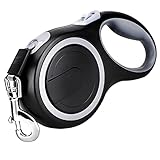
- 1.Simple, practical and comfortable. A ergonomic and anti-slip rubberized handle fits in your hand well for those long walks.
- 2.26ft tape leash with easy-adjust retraction that allows your canine pal to explore but still remain within safe distance. Tangle-free 360 degree tape movement.
- 3.Professional strap ---extremely sturdy 26ft strap---for medium and large dogs up to 110lbs.
- 4.You can push the button all the way down to lock the leash, or click the button back to easily reel your dog back in. It will remains locked as long as the button is pressed. For safety reasons, the lock is locked when the belt is tensioned; when you need to unlock, pull the dog back, or push the dog leash forward.
- 5.Note:1.Do not let your dog chewing the leash, a 5 pound dog can easily pull off the leash if it has a little breakage.2.Don't pull the rope to the end, it is easy to damage the spring, so it won't retractable. Stop it in time.
What equipment supports a safer beach walk?
- Fixed-length long line: Choose a length you can manage in the specific space, rather than selecting the longest available line.
- Chest or body harness: Use a secure attachment point designed for controlled line work.
- Standard 4–6-foot leash: Keep it available for crowds, hazards and transitions.
- Fresh water and bowl: Prevent saltwater drinking and dehydration.
- Shade: Provide a way to cool the dog when heat is a concern.
- Basic first-aid kit: Useful for minor paw or skin problems while you arrange veterinary care if needed.
Equipment cannot compensate for a beach that is too hot, too crowded, contaminated or dangerous. If conditions exceed what you can see and control, shorten the leash or leave.
What is the safest practical routine?
- Check the beach’s current rules, tides, surf, water advisories, temperature and wildlife warnings.
- Pack fresh water, a bowl, shade and basic first-aid supplies.
- Fit the chest harness and inspect the line, clips and standard leash.
- Walk from the vehicle or entrance on the 4–6-foot leash.
- In a clear area, attach the fixed long line to the harness and deploy only a manageable length.
- Keep the line visible, gather it before every encounter and stop play that could wrap it.
- Return to the short leash before crowds, hazards, narrow paths or changing surf.
- Rinse and inspect the dog, especially paws and skin, and provide fresh water.
This routine preserves the main benefit of a long line—controlled freedom—without treating extra distance as the goal in every part of the beach.
Frequently Asked Questions
Can I use a long line for recall training away from the beach?
Yes. The San Francisco SPCA and VCA both describe fixed long lines as tools for recall work and open-area exploration. Begin in a low-distraction space, keep the line attached to a chest harness and increase distance only while you can maintain clear control.
What should I do if a beach requires dogs to stay within a specific leash length?
Follow the beach authority’s rule even if a longer line would otherwise be manageable. Keep a compliant standard leash available, and check for seasonal or time-of-day changes before each visit.
Does a harness make a long line risk-free?
No. A harness addresses neck loading, but it does not prevent burns, trips or entanglement. The handler still must supervise the entire line and gather it before people, dogs and obstacles.
Why is a dropped retractable handle a problem?
MSPCA-Angell notes that the moving handle can make a frightening noise when dropped, potentially causing a dog to flee while the device follows. The event can turn a routine slip into an escape, especially when the dog is already far away.
The Tool Desk
Outbyte Driver Updater FREEFix the driver behind crashes, sound loss and screen glitchesFind Drivers →Outbyte PC Repair FREERepair Windows errors before they cause bigger problemsFix Now →




Leave a Reply