
Some links on this page are affiliate links: if you buy through them we may earn a commission, at no extra cost to you.
The easiest cat to live with is not necessarily the one with the shortest coat. A British Shorthair usually combines modest grooming with a calm temperament, an American Shorthair offers a balanced short-haired option, and an adult domestic shorthair lets you judge the individual’s personality before adoption. Burmese and Bengal cats can be simple to brush but are not low-supervision choices: both need daily interaction, exercise and enrichment. “Low-maintenance” means lower grooming and supervision demands, never no care. Every cat still needs appropriate food, a clean litter area, play, social contact, preventive veterinary care and prompt attention to illness.
What does “low-maintenance cat” actually mean?
For this comparison, low maintenance means relatively little coat work and a manageable level of supervision for the household—not a cat that can be left alone or skipped at the veterinary clinic. The American Veterinary Medical Association notes that cats require feeding, social interaction, exercise, play, elimination care and veterinary attention. Long or thick coats can require daily grooming, while a short coat often reduces brushing time.
As an Amazon Associate I earn from qualifying purchases.
Coat length and temperament are separate traits. A sleek-coated Bengal may need only a light weekly brush yet demand far more climbing, play and problem-solving than a fluffy but placid individual. Conversely, a quiet cat can still gain weight if its food intake and activity are not monitored. Adult cats generally require less intensive supervision than kittens, and an adult rescue gives you the advantage of seeing an established personality rather than guessing how a kitten will mature.
Which cat breeds are the lowest-maintenance overall?
For a busy home seeking a calm companion, the British Shorthair is the clearest pedigree fit. For a more adaptable, even-tempered short-haired cat, consider an American Shorthair. An adult domestic shorthair or mixed-breed cat is often the most practical choice when matching a known personality matters more than predictable pedigree traits.
Popular on Amazon
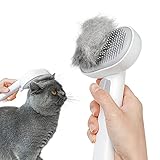
- 【Professional Cat Hair Brush】Perfect gift for pet owners, vets, and pet groomers. Using this cat brush for long haired cats on a regular basis can gently and effectively remove loose hair, tangles, knots, dander and trapped dirt. Suitable for short, medium or long, thick, thin or curly haired dogs/cats/rabbits, making your pets shiny and healthy.
- 【Skin-friendly Massage Needles】The mental pins on the cat brush with release button have round rubber tips on the ends. As a cat deshedding brush, it's perfect for shedding and massaging your pets without scratching your pet's skin, even the sensitive skin. After use, you can hang it with the silicone loop strap to protect the bent needle.
- 【Upgraded High Quality Material】The our long hair cat grooming brush made of durable 304 stainless steel and fine ABS material. Our wire bristles is 1.2 times as thick as bristles of other deshedding brush for cats. More sturdy and not easy to deform, can be used for a long time. 150° bent needles designed to penetrate deep into the coat are really easier to groom the undercoat well.
- 【One-click Cleaning Button】After brushing your pet, simply click the button. The shutter will pop out, separating the brushed hair from the metal needle, then wipe the hair off. The button of cat shedding brush on the handle saves time and energy when grooming and cleaning.
- 【SUPPORT · 365 Days】If the pet hair brush have any problems during use, we will provide you with replacement or 100% money back. And we have a professional customer service team and pet experts to provide you with the pre-sales and after-sales service. aumuca is always at your side.
| Option | Coat upkeep | Energy and interaction | Health points to investigate | Best fit |
|---|---|---|---|---|
| British Shorthair | Dense short coat; weekly combing, with extra attention during moulting. | Calm, quiet and relatively inactive compared with more demanding breeds. | Ask about hypertrophic cardiomyopathy (HCM) screening and polycystic kidney disease (PKD); monitor body weight. | Apartment or busy households able to provide routine play, weight control and veterinary care. |
| American Shorthair | Short coat generally requiring less grooming than a long-haired coat. | An even temperament is characteristic, but each cat still needs daily play and social contact. | Investigate PKD1-associated polycystic kidney disease and whether breed-appropriate genetic screening is available. | Owners wanting a balanced, adaptable pedigree cat. |
| Burmese | Weekly brushing is usually sufficient. | Energetic, social, playful and fond of climbing; plan daily interaction and vertical space. | Discuss family history and available testing for diabetes mellitus and hypokalaemic polymyopathy. | Engaged households wanting an interactive companion. |
| Bengal | A light weekly brush and comb generally keeps the short coat in condition. | High-energy, athletic and curious; needs structured enrichment such as toys, tunnels and shelves. | Ask about screening for HCM, progressive retinal atrophy, pyruvate kinase deficiency and relevant orthopedic problems. | Active owners prepared to provide substantial daily enrichment; not the easiest choice for a quiet household. |
| Adult domestic shorthair or mixed-breed | A short coat often means less brushing, but the individual coat determines the actual routine. | An adult’s temperament can be assessed directly; ancestry alone does not reliably predict behavior. | No single breed risk profile exists. Obtain the medical history and arrange a veterinary assessment. | Adopters who value a known personality and flexible matching over pedigree predictability. |
The strongest grooming-versus-energy contrast is between British Shorthairs and Bengals. Both can have manageable coats, but the British Shorthair is generally calmer while the Bengal needs considerably more activity and environmental complexity. Burmese cats sit between those examples for coat work but are still highly social and active.
Which cats need the least grooming?
Short-haired cats usually need less brushing than long-haired cats, but every coat benefits from a routine. Singapore’s Animal and Veterinary Service recommends brushing once or twice a week to keep a coat in good condition. During moulting, a dense coat may need more frequent combing, and an individual cat that mats, sheds heavily or cannot groom itself may need additional help.
British Shorthair
The coat is short but unusually dense. A weekly comb removes loose undercoat; increase the frequency during seasonal moulting. Keep sessions brief and reward cooperation, because the goal is a sustainable routine rather than an occasional wrestling match.
American Shorthair
The short coat is generally straightforward. Weekly brushing is a practical starting point, with adjustments for shedding, age and the cat’s tolerance. A smooth coat does not remove the need to inspect the skin for parasites, scabs or new lumps.
Burmese
Weekly brushing is normally enough for the coat. The more demanding part of Burmese care is social and physical engagement: grooming is easy, but a bored Burmese may seek its own entertainment by climbing, vocalizing or getting into cupboards.
Also popular on Amazon

- Cat brushes for long haired cats and short haired cats
- Soft Tip Bristles:Cat comb with soft tip bristles, helping to break up tangles and mats effectively,Your pet will enjoy the gentle massaging
- Soft Gel Handle:Super soft handle with anti-skid curved silicone gel, keeps your hand comfortable while grooming
- Self-Cleaning Button:Simply push the release button, and all the fur will come off the bristles, no more digging in between bristles to get the hair out
- Premium Material:The cat grooming brush is made of resistant and durable material, free of toxins and chemicals, healthy and easy to use
Bengal
GCCF guidance describes a light weekly brush and comb for keeping the short coat in condition. Coat care is therefore not the reason Bengals are challenging; their athleticism and need for stimulation are. Introduce grooming, nail care and handling early so routine maintenance does not become a source of conflict.
Adult domestic shorthair or mixed-breed
Many have easy-care coats, but “domestic shorthair” describes coat type rather than a guaranteed breed or temperament. Ask a shelter or foster carer how often that particular cat sheds, whether it accepts brushing and whether it has any skin or mobility issue that makes self-grooming difficult.
Regardless of breed, regular nail trimming and periodic ear checks belong in the routine. Sudden dandruff, greasy fur, bald patches, a bad smell or a cat that stops grooming itself warrants veterinary advice rather than simply more brushing.
Which low-grooming cats are calm, and which are highly active?
Temperament is the deciding factor for many busy owners. The following profiles describe tendencies, not guarantees; early socialization, age, health, household noise and the individual cat can change the outcome.
British Shorthair: calm but not maintenance-free
British Shorthairs are commonly described as quiet, calm and relatively inactive. They can suit apartments and predictable work schedules, provided they receive daily play and their food intake and body condition are watched. Their lower activity does not mean they should be ignored; short play sessions, scratching options and climbing opportunities help prevent boredom and excess weight.
Also popular on Amazon

- 【Easy Desheding】: Swihauk self cleaning dog brush for long haired dogs with release bottom helps effortlessly reduce shedding. A must have dog brush for short haired dogs, cat brush for indoor cats, cat brush for shedding, slicker brush for dogs.
- 【Safe Design】: Soft and protective plastic round head bristles creating a comfortable feeling while deshedding without hurting your pet. Ideal puppy brush for small dogs, dog brush for shedding and grooming.
- 【Sturdy & Durable】: Premium stainless steel metal and compact design make our product sturdy and durable for long term use.
- 【Ergonomic Design】: Press bottom for easy cleaning, high-quality & lightweight TPR handle make your grooming effortlessly.
- 【Effective to Remove Loose Fur】: Swihauk pet grooming brush is effective to remove loose fur, suitable for dogs, cat with long and short hair, perfect for your lovely pet like puppies, golden retriever, rabbit, kitten, bunny, yokie and more.
American Shorthair: adaptable and even-tempered
The Cat Fanciers’ Association describes an even temperament in the American Shorthair. Many adapt well to different homes, but an “easy” temperament is not a substitute for interaction. Provide daily play, places to rest away from foot traffic and a consistent feeding and litter routine.
Burmese: easy coat, high social demand
Burmese cats are energetic, playful and social. A cat tree or other safe vertical route, interactive toys and daily time with people are appropriate. They may be a poor match for someone who wants a cat that mostly sleeps while the household is away, even though their coat takes little work.
Bengal: athletic and enrichment-intensive
Bengals are curious, athletic and high energy. Plan several forms of enrichment: wand play, chase toys, tunnels, shelves, puzzle feeders and opportunities to climb. Rotate toys and make the environment interesting; a single food bowl and a short evening cuddle are unlikely to meet this breed’s activity needs.
Adult domestic shorthair or mixed-breed: behavior you can evaluate
An adult cat’s foster or shelter history can reveal whether it enjoys handling, tolerates visitors, uses the litter box reliably and copes with being alone for a workday. Mixed ancestry makes breed-based predictions less precise, but that is often an advantage when you can select the individual whose established behavior fits your home.
Free tools Windows power users keep installed
One-click scans. No signup required.
How should you investigate inherited health before choosing a breed?
Breed labels describe tendencies, not guarantees. Purebred lines can have a higher frequency of inherited disease, and complex conditions can affect any cat. A “healthy breed” claim should never replace a veterinary examination, a review of medical records and a realistic budget for preventive and emergency care.
Also popular on Amazon

- WORLD’S #1 CAT HAIR BRUSH: Our cat grooming brush / cat shedding brush is the world's best patented pet grooming brush for cats, small dogs, and rabbits. It is the perfect cat deshedding brush, short hair cat brush, & cat brush for long haired cats.
- EASY AND FAST CLEANUP: SleekEZ Deshedding Grooming Tool is great for removing hair and fur from carpets, pet bedding, cat trees, and more! Our cat comb for shedding is also an amazing pet hair remover and cat fur remover / cat hair remover brush.
- ALL HAIR & FUR TYPES: It is the perfect cat comb for long haired cats and cat brush for short haired cats. SleekEZ works as a deshedding brush for cats, cat deshedding tool, undercoat brush for cats, cat fur brush, cat deshedder, & small dog brush.
- PAINLESS AND ENJOYABLE: SleekEZ serves as a versatile kitten brush, puppy brush for small dogs, & bunny brush / rabbit brush. It's the best pet hair brush on the market and is an absolute essential for cat shedding control!
- GREAT GIFT: SleekEZ makes the industry's leading cat combs for indoor cats & shedding brush cat hair. It is a must have for any cat grooming kit, cat essentials for indoor cats, & cat supplies. Also an amazing cat dander remover & cat undercoat brush
Questions for a British Shorthair breeder
- What HCM screening has been performed on both parents, and when?
- What is known about PKD in the family line?
- How are kittens’ body condition, activity and socialization monitored?
Questions for an American Shorthair breeder
- Is PKD1 genetic screening available for the parents?
- Can you see veterinary records and the results of any breed-appropriate tests?
- Have relatives developed kidney disease, and at what ages?
Questions for a Burmese breeder
- Is there a family history of diabetes mellitus?
- What testing or veterinary evaluation has been used for hypokalaemic polymyopathy?
- How are adult cats monitored for weight, muscle strength and metabolic disease?
Questions for a Bengal breeder
- Have breeding cats undergone echocardiography for HCM?
- What retinal and red-cell testing is available for progressive retinal atrophy and pyruvate kinase deficiency?
- Are there orthopedic problems in the line, and how are breeding decisions made to reduce them?
Questions for an adult rescue or mixed-breed cat
- What medical history, vaccination record and previous diagnoses are available?
- Has a veterinarian assessed the heart, teeth, joints, weight and urinary system?
- How does the cat behave around people, other animals, handling and periods alone?
The RSPCA’s Alice Potter, Senior Scientific and Policy Officer, summarizes the welfare issue plainly: “Sadly, some purebred cats are more likely to inherit conditions which can negatively impact their welfare. To help protect them, responsible breeding, which includes testing and screening, is essential.” Screening reduces avoidable risk; it cannot guarantee a disease-free lifetime.
What care does every cat need, even if the breed is low-maintenance?
Lower grooming or lower activity changes the workload; it does not remove the basics. Build the following into your weekly and annual schedule.
- Food and weight control: Feed complete, age-appropriate food and monitor body condition. Less-active cats may need carefully measured portions rather than unrestricted access.
- Litter provision: Cornell Feline Health Center recommends one litter box per cat plus one extra. Scoop regularly, keep boxes in quiet accessible locations and investigate a sudden change in urination or defecation.
- Enrichment: Supply scratching posts, safe climbing platforms, toys and puzzle feeders. Rotate activities so an indoor cat can stalk, chase, explore and rest.
- Coat and body checks: Brush according to coat density, trim nails and check ears. Use handling practice to notice changes in skin, lumps, teeth, eyes or mobility.
- Veterinary care: Schedule annual checks and seek prompt advice for changes in appetite, breathing, urination, mobility or behavior. Older cats or those with diagnosed conditions may need more frequent visits.
How can a busy person choose the right cat?
Start with the household’s available time and space, then match the individual cat rather than shopping by coat color or a single breed description.
Do these 3 things before closing this tab:
1Clear out junk files and repair common Windows errors2Fix the driver behind crashes, sound loss and screen glitches3Repair Windows errors before they cause bigger problems- Define your realistic routine. Note how many minutes you can give to play on workdays, whether someone is home during the day, and whether you can provide vertical space and daily interaction.
- Choose the energy range first. If you want quiet companionship, prioritize a calm adult or a British Shorthair-type temperament. If interactive play is a pleasure rather than a chore, Burmese or Bengal traits may suit you.
- Decide whether pedigree predictability is worth the screening work. A pedigree can make likely coat and temperament tendencies easier to discuss, but it also makes breeder transparency and relevant health testing essential.
- Meet an adult whenever possible. Observe how the cat responds to handling, visitors, toys, being picked up, other animals and a short separation. Ask the foster carer what happens outside the meeting room.
- Budget for routine and unexpected care. Include food, litter, parasite prevention where indicated, grooming supplies, annual examinations, dental needs and emergency treatment. A low-maintenance coat does not create low veterinary costs.
- Prepare the home before arrival. Set up litter boxes, scratching surfaces, hiding places, food and water stations, and safe enrichment. A predictable first week makes it easier to distinguish normal settling-in behavior from a health problem.
What are the common mistakes when looking for an easy cat?
- Equating short hair with low supervision: Bengals and Burmese disprove that assumption; their coats are simple while their activity and social needs are high.
- Assuming calm means inactive forever: A British Shorthair still needs play, weight management and environmental choice.
- Buying a kitten for convenience: Kittens need frequent feeding guidance, litter supervision, socialization, play and safety management. An adult’s established habits are easier to evaluate.
- Treating a breed label as a health certificate: Request documented screening and a veterinary examination. No pedigree eliminates risk.
- Underestimating indoor enrichment: An indoor cat without scratching, climbing, hiding and hunting-style activities may develop frustration or unwanted behavior, regardless of breed.
- Ignoring a change in routine: Reduced grooming, appetite, movement or litter-box use can be an early illness sign. Do not write it off as laziness or age without veterinary advice.
Is a pedigree cat healthier than a mixed-breed cat?
Not automatically. The UK government review notes that complex diseases can affect any cat, while the RSPCA warns that inherited disease may be more frequent in some purebred lines. Responsible screening and a veterinary assessment matter more than the presence of a pedigree certificate.
What is the best low-maintenance cat for an apartment?
A calm adult individual or a British Shorthair is often a better apartment match than a Bengal, provided the home includes scratching surfaces, play and vertical options. Square footage alone is not the deciding factor; the cat’s activity level, daily interaction and ability to retreat from noise are more important.
Also popular on Amazon

- REMOVES LOOSE FUR & UNDERCOAT: The 5-inch EquiGroomer deshedding brush gently lifts loose hair and undercoat from cats and dogs without cutting, pulling, or irritating healthy fur - just a calm, comfortable brushing feel.
- PERFECT SIZE FOR CATS & SMALL DOGS: The compact 5-inch stainless-steel blade reaches faces, legs, paws, and tight spots with ease, giving you precise control for quick, stress-free grooming on smaller pets.
- WORKS ON SHORT & LONG HAIR: Rounded stainless-steel teeth glide through any coat, pulling out the dead undercoat that drives shedding while leaving the healthy topcoat untouched.
- LESS SHEDDING, LESS MESS: Regular use dramatically cuts loose hair on furniture, floors, clothes, and car seats, and leaves your pet with a softer, shinier, healthier-looking coat.
- TRUSTED GROOMING TOOL, MADE IN THE USA: Crafted with a smooth wood handle and a durable stainless-steel blade for a secure grip and years of easy, pet-safe grooming at home.
Can a low-maintenance cat be left alone all day?
“Low-maintenance” does not mean socially independent. Before leaving a cat for a full workday, arrange reliable food, water, litter care and a safe enriched environment, and consider whether the individual becomes distressed when alone. Kittens, highly social adults and cats with medical needs generally require more frequent supervision.
How do I know whether a shelter cat will fit my lifestyle?
Ask for observations from foster carers or shelter staff over multiple days, not just a single brief introduction. Request details about play intensity, nighttime activity, tolerance of handling, reactions to visitors and how the cat behaves after a change in routine; those details are often more useful than an estimated breed mix.
PC Slower Than It Used to Be?
A free scan shows the junk files, broken settings and background clutter dragging Windows down - then fixes them in one click.Free scan · Windows 10 & 11Outdated Drivers Are Slowing You Down
One free scan finds every outdated or missing driver and matches the right update for your exact hardware.Free scan · exact hardware matchDo short-haired cats still need professional grooming?
Most healthy short-haired cats can be maintained at home with regular brushing, nail care and occasional ear checks. Professional help may be appropriate for severe shedding, mats, obesity, arthritis, anxiety or a medical condition that prevents normal self-grooming, but it is not a routine substitute for veterinary diagnosis.
Frequently Asked Questions
Are adult cats easier to care for than kittens?
Usually, yes. Adults have more predictable size, litter habits and temperament, while kittens need closer supervision for feeding, socialization, play and household safety. An adult’s established behavior also makes it easier to match the cat to your work schedule.
What should I ask before adopting a supposedly calm cat?
Ask how the cat behaves during noisy periods, overnight, around visitors and after its routine changes. Also ask whether it has shown pain, litter-box or separation-related behavior, because illness or stress can look like a temperament trait.
Is weekly brushing enough for every short-haired cat?
It is a sensible starting point, not a universal rule. Dense coats, seasonal shedding, reduced self-grooming or skin disease can require more frequent care, while a cat’s tolerance may determine whether several short sessions work better than one long session.
Recommended Free Tools
Should I get two cats to prevent loneliness?
Not necessarily. Compatibility, space and introductions matter more than a fixed rule about pairs. A well-matched adult may thrive alone with daily human interaction, whereas two incompatible cats can create chronic stress; ask a behavior professional or rescue about your specific situation.





Leave a Reply